
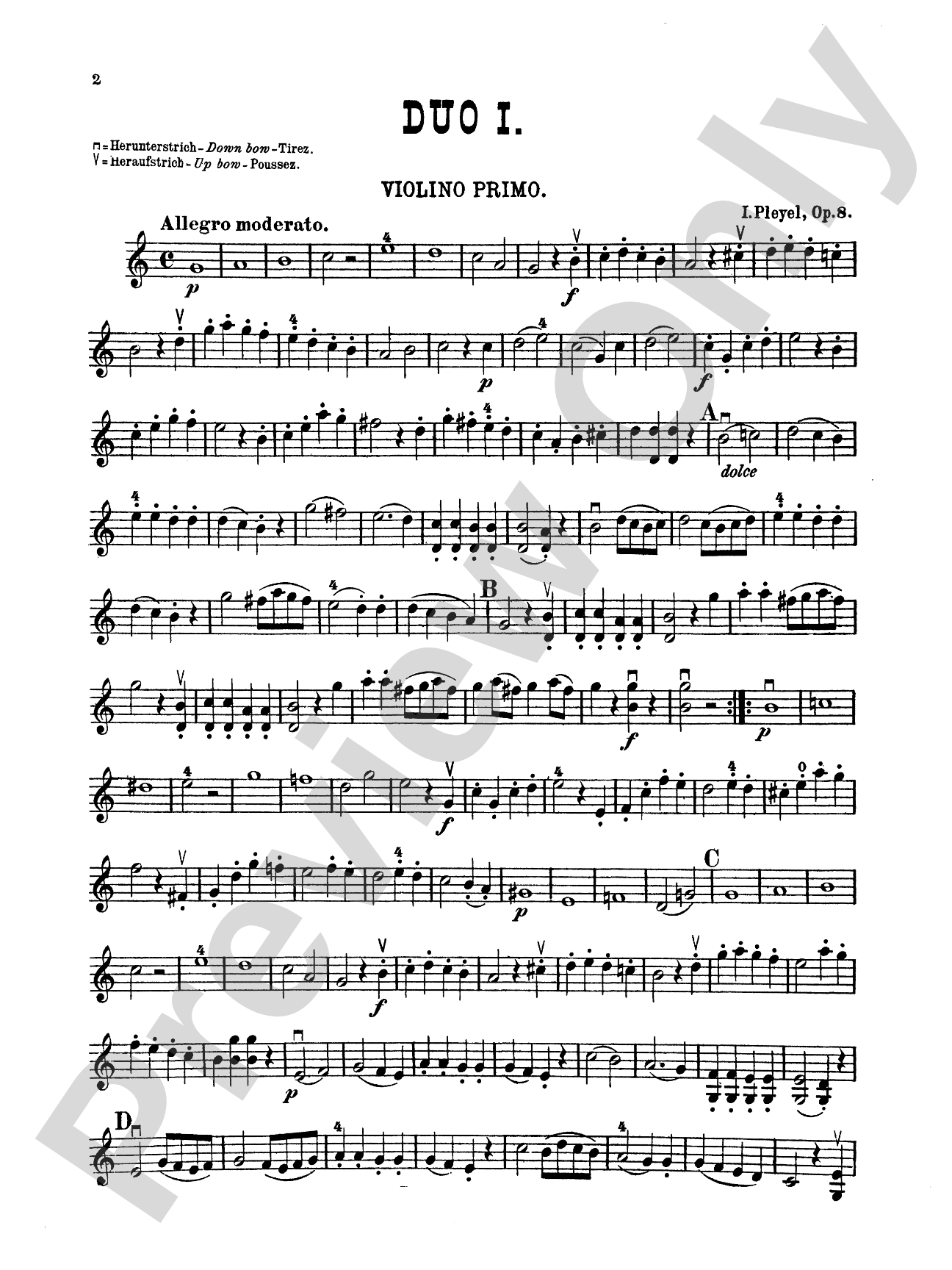
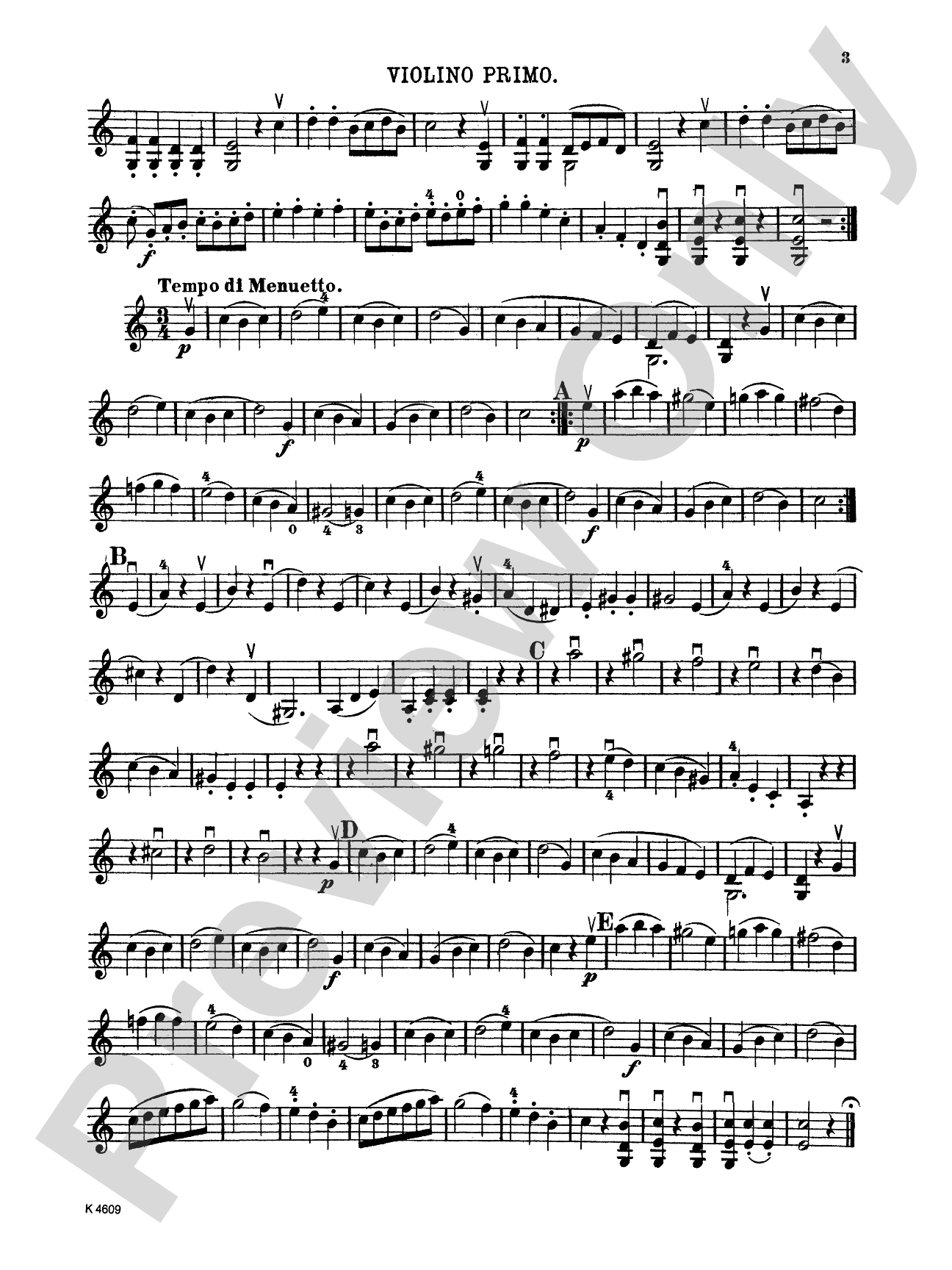

Pleyel: Six Easy Duets, Op. 8: Violin Book
By Ignaz Pleyel
Item: 00-PK-0003568

$9.99
Pickup currently not available
Buy Extra Parts (Digital PDF Download)
| Product | Price | Quantity |
|---|---|---|
| Pleyel: Six Easy Duets, Op. 8 | $0.99 | |
| Pleyel: Six Easy Duets, Op. 8 | $0.99 | |
| Pleyel: Six Easy Duets, Op. 8 | $0.99 | |
| Pleyel: Six Easy Duets, Op. 8 | $0.99 | |
| Pleyel: Six Easy Duets, Op. 8 | $0.99 | |
| Pleyel: Six Easy Duets, Op. 8 | $0.99 | |
| Pleyel: Six Easy Duets, Op. 8 | $0.99 | |
| Pleyel: Six Easy Duets, Op. 8 | $0.99 | |
| Pleyel: Six Easy Duets, Op. 8 | $0.99 | |
| Pleyel: Six Easy Duets, Op. 8 | $0.99 | |
| Pleyel: Six Easy Duets, Op. 8 | $0.99 | |
| Pleyel: Six Easy Duets, Op. 8 | $0.99 |
Parts Added to Cart!
Related Items
Six Easy Duets, Opus 8: Violin Book |
$9.95
|
View |
Description
A collection of string duets for 2 Violins, composed by Ignaz Pleyel.


Don't just read it, hear it, play along with it, and watch your students grow with it. In MakeMusic Cloud, Pleyel: Six Easy Duets, Op. 8: Violin Book comes alive with professional accompaniment, adjustable tempo, and built-in practice tools that turn solo practice into real progress.
Open in the Player
Jump straight in and assign it today.
Start Your Free Trial
Open this title and explore the full library in minutes.
Sample Audio
No sample audio found.
Sample Video
No sample videos found.
Additional Details
Series:
Kalmus Edition
Publisher:
Alfred Music
Page Count:
28
SKU:
00-PK-0003568
More about this title
About the Composer: Ignaz Pleyel
Ignaz Pleyel (1757-1831) was an Austrian-Bohemian composer and instrument maker whose prolific output spanned symphonies, concertos, string quartets, and chamber music. A student of Haydn and a contemporary of Mozart, Pleyel wrote accessibly without sacrificing musical substance, making him a staple of chamber music repertoire for developing ensemble players.
Beyond composition, Pleyel founded a piano manufacturing business that became one of Europe's most respected instrument makers. His business acumen matched his musical gift, and his works were widely published and performed throughout his lifetime. For music educators, Pleyel represents the Classical mastery available at intermediate levels when pieces are chosen thoughtfully.
Why we love this
These duets strike the rare balance of being genuinely musical while remaining within reach of advancing students. The writing is transparent and logical, with clear phrase structures and balanced parts that give both violins something real to do. Programming a Pleyel duet signals serious musicianship without overshooting your players' technical or reading abilities.
What to expect
Graceful and direct, with the clarity of Classical design and the warmth of Pleyel's naturally flowing melodies. These duets breathe easily, never feeling stiff or exercise-like, yet they reward careful attention to phrasing and intonation. The writing feels conversational, with both violins speaking in voices that respect each other.
Who it's for
Intermediate to early-advanced violinists working toward ensemble maturity. These duets suit students ready to carry a full musical line while learning to blend, balance, and listen across equal partnerships. They work equally well as recital pieces, festival entries, or classroom duets.
How to get the most out of it
- Listen for independent phrase shapes in each violin part. Avoid the trap of treating them as a melody-and-accompaniment pairing; both voices deserve equal attention and projection.
- Shape the longer note values with subtle vibrato and dynamic tapering to maintain momentum across phrase endings, especially in slower movements.
- Establish tuning discipline early in rehearsal. The exposed nature of two-violin writing makes intonation immediately audible, so lock in unison sections before moving to harmonic ones.
- Balance articulation between the parts. If the first violin carries a running figure, the second should maintain evenness in its supporting role rather than mirroring every accent.
How to use it
Pleyel duets fit well in chamber music recitals, string festival showcases, or school concerts featuring developing ensemble work. They pair naturally with other Classical duet literature and offer a sensible stepping stone between solo repertoire and larger chamber works. Consider programming one as a prelude to a quartet or as an intermission offering on a longer concert.
Skills your students will build
- Listening across equal instrumental voices in duo texture
- Balancing harmonic clarity with melodic shape
- Phrasing in exposed two-part writing
- Independent rhythmic security without a harmonic cushion
- Stylistic sensitivity to Classical era articulation and ornamentation