
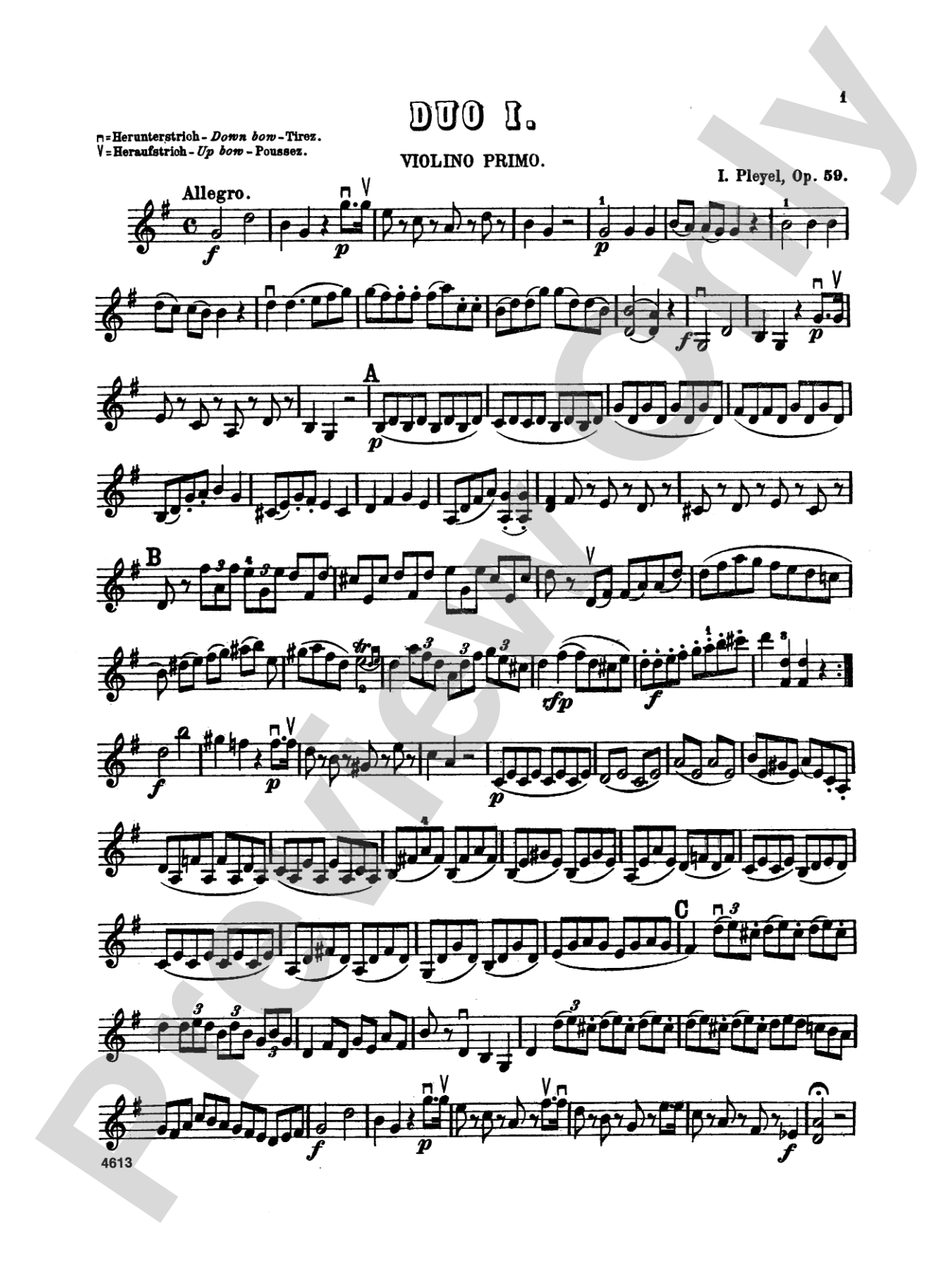
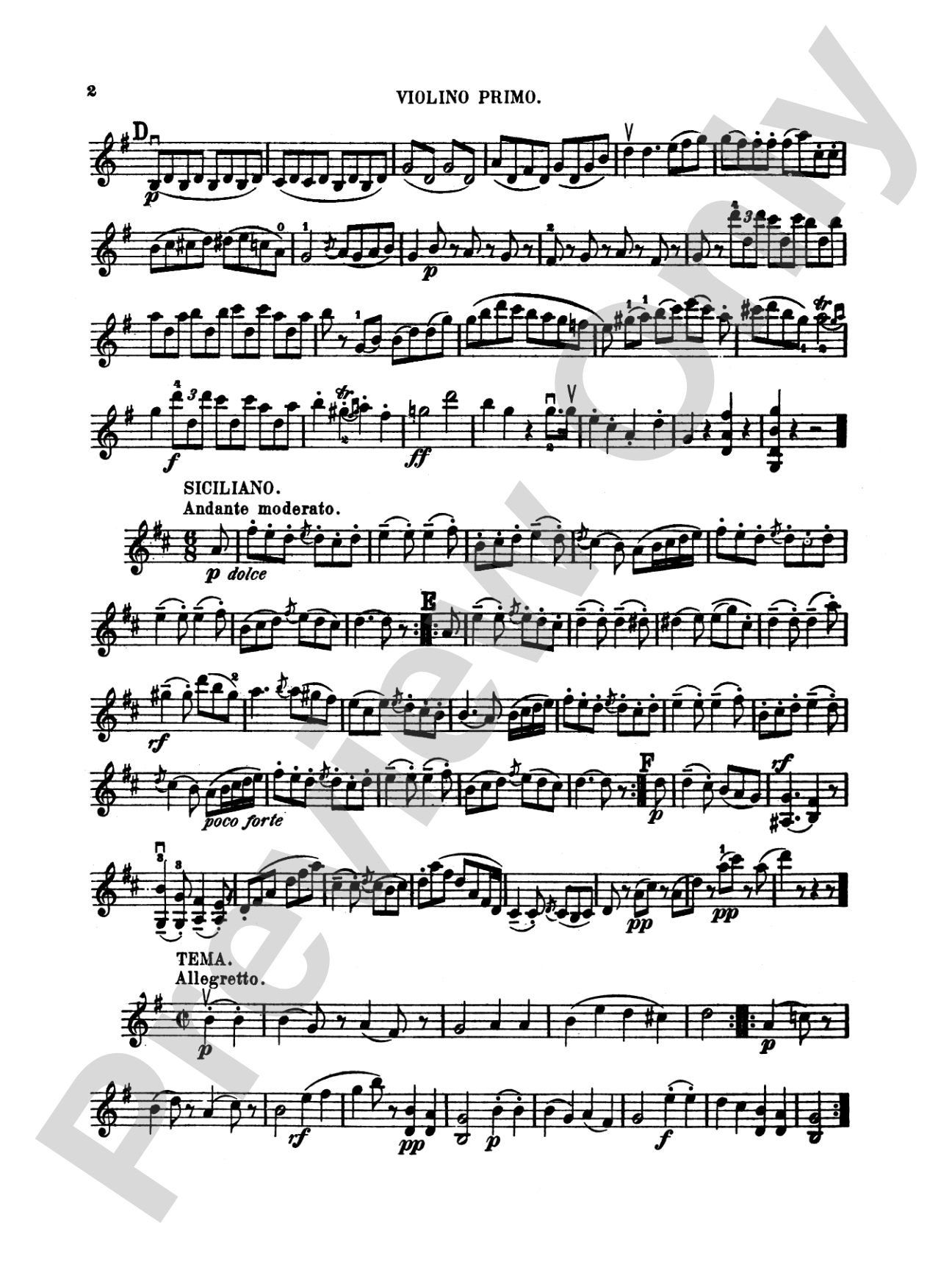
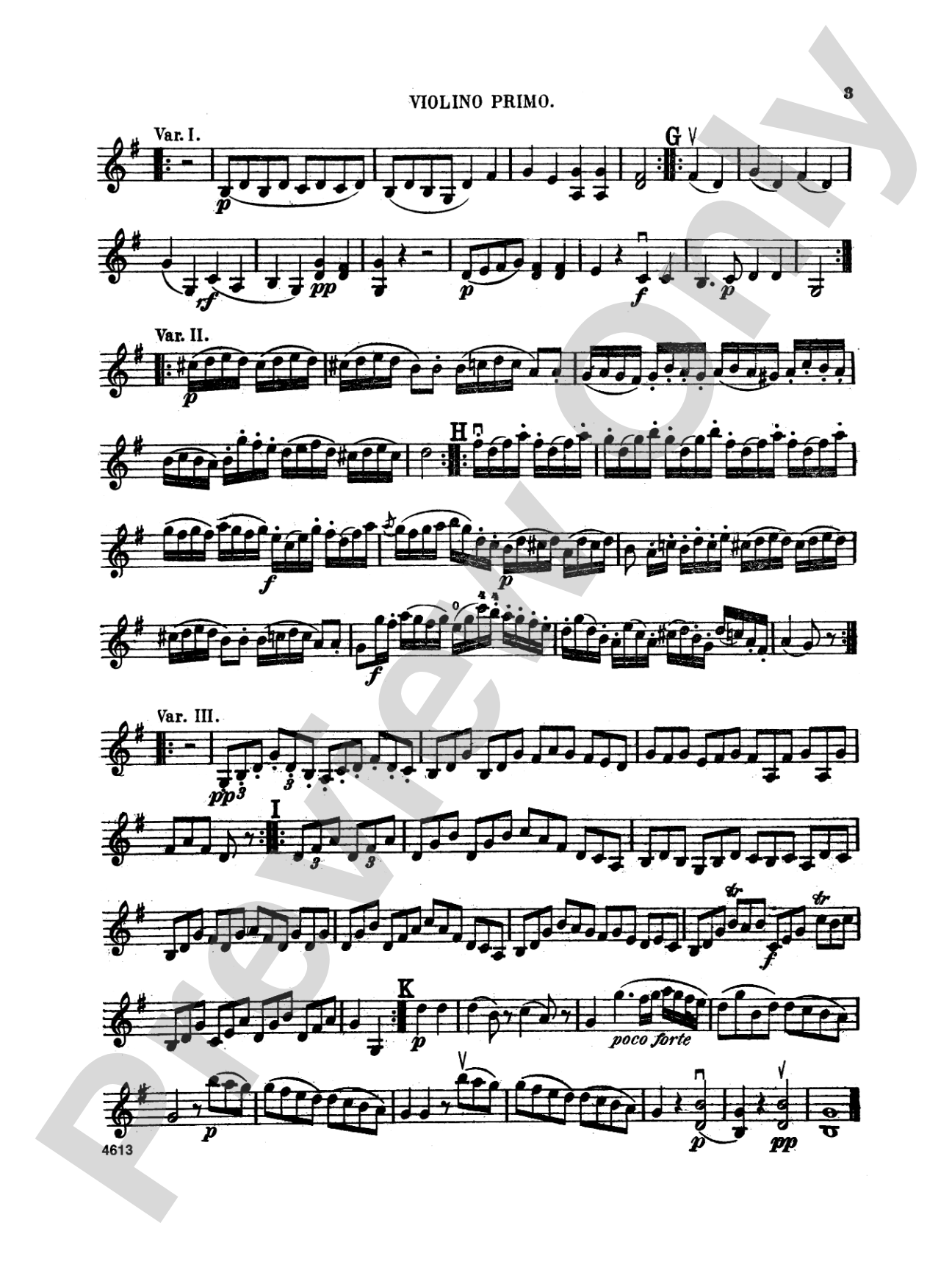

Pleyel: Six Easy Duets, Op. 59: Violin Book
By Ignaz Pleyel
Item: 00-PK-0003571

$11.99
Pickup currently not available
Buy Extra Parts (Digital PDF Download)
| Product | Price | Quantity |
|---|---|---|
| Pleyel: Six Easy Duets, Op. 59 | $0.99 | |
| Pleyel: Six Easy Duets, Op. 59 | $0.99 | |
| Pleyel: Six Easy Duets, Op. 59 | $0.99 | |
| Pleyel: Six Easy Duets, Op. 59 | $0.99 | |
| Pleyel: Six Easy Duets, Op. 59 | $0.99 | |
| Pleyel: Six Easy Duets, Op. 59 | $0.99 | |
| Pleyel: Six Easy Duets, Op. 59 | $0.99 | |
| Pleyel: Six Easy Duets, Op. 59 | $0.99 | |
| Pleyel: Six Easy Duets, Op. 59 | $0.99 | |
| Pleyel: Six Easy Duets, Op. 59 | $0.99 | |
| Pleyel: Six Easy Duets, Op. 59 | $0.99 | |
| Pleyel: Six Easy Duets, Op. 59 | $0.99 |
Parts Added to Cart!
Related Items
Six Little Duets, Opus 59: Violin Book |
$11.95
|
View |
Description
Expertly arranged Violin Duets by Ignaz Pleyel from the Kalmus Edition series. This is from the Classical era.


Don't just read it, hear it, play along with it, and watch your students grow with it. In MakeMusic Cloud, Pleyel: Six Easy Duets, Op. 59: Violin Book comes alive with professional accompaniment, adjustable tempo, and built-in practice tools that turn solo practice into real progress.
Open in the Player
Jump straight in and assign it today.
Start Your Free Trial
Open this title and explore the full library in minutes.
Sample Audio
No sample audio found.
Sample Video
No sample videos found.
Additional Details
Series:
Kalmus Edition
Publisher:
Alfred Music
Page Count:
44
SKU:
00-PK-0003571
More about this title
About the Composer: Ignaz Pleyel
Ignaz Pleyel (1757-1831) was an Austrian-Bohemian composer and instrument maker whose prolific output helped define the Classical style alongside his contemporaries Haydn and Mozart. A student of Haydn himself, Pleyel developed a gift for writing music that balanced structural clarity with genuine melodic charm, qualities that made his works staples of European concert halls and private music rooms during his lifetime.
Beyond composition, Pleyel established himself as a business innovator, founding a piano manufacturing firm that became one of Europe's most respected makers. His duets for strings occupy a unique position in the pedagogical and amateur chamber music repertoire: they demand musical maturity while remaining accessible to players still building technical facility, a balance that accounts for their enduring appeal in studios and ensembles today.
Why we love this
Pleyel's Six Easy Duets offer a rare combination of authentic Classical voice-leading and practical playability. The writing respects both violins equally without resorting to gimmicks, allowing advanced students and community musicians to experience the satisfaction of genuine ensemble playing at their level.
What to expect
These duets breathe with the refinement and conversational grace of the Classical period. Elegant phrasing alternates between the two voices, creating an intimate dialogue that feels both intellectually satisfying and genuinely musical, never pedagogical.
Who it's for
Upper-level student violinists seeking substantial duet literature, community string ensembles, and teachers assembling contest or recital material for advancing young musicians. These duets work equally well for two equal partners or for pairing a stronger player with an advancing student.
How to get the most out of it
- Establish a clear hierarchy of melodic interest between the two lines; while Pleyel writes both parts with care, one violin typically leads each phrase. Identify these moments early and shape them accordingly.
- Attend to Classical phrase structure by observing breath points and avoiding excessive vibrato in passage work. The style demands clarity that modern vibrato can obscure.
- Balance dynamic contrast between the parts; coordinate crescendos and diminuendos so neither player dominates unless the music calls for it.
- Use a light bow hold and quick bow changes to articulate the Classical idiom without dragging through transitions between phrases.
How to use it
Program these as a standalone group, or select individual duets to punctuate a larger recital without requiring additional collaboration. They also serve well in student showcase events where the focus is on demonstrating partnership and musical maturity rather than technical pyrotechnics.
Skills your students will build
- Balanced ensemble tone and intonation across two equal voices
- Recognition and execution of Classical phrase structure and proportions
- Collaborative musicianship and shared responsibility for the musical line
- Coordination of articulation and dynamics within a Classical aesthetic
- Sight-reading and independence from a score partner