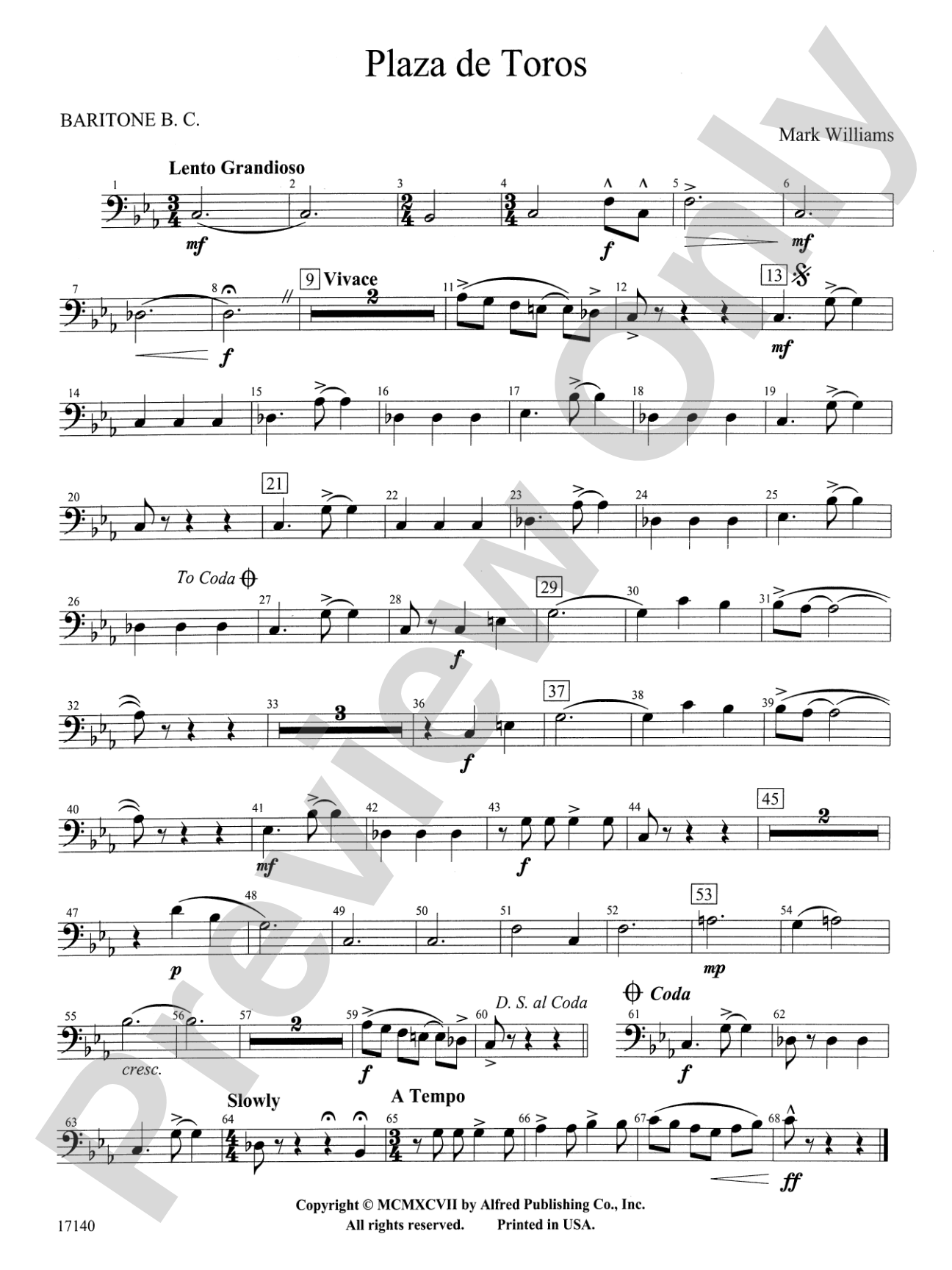
Plaza de Toros: Baritone B.C. Sheet Music Preview

Plaza de Toros: Baritone B.C.

By Mark Williams

Grade: 1.5 (Easy)

Item: 00-PC-0000218_BBC1

Digital Download
$3.00
Description
The excitement of the bullring abounds in this Spanish-flavored original by Mark Williams. Written in 3/4 time, a syncopated bass line with lots of percussion creates an atmosphere of high energy and drama. Sure to be popular with students and parents alike, this work will provide an excellent change of pace for your next concert program.

Don't just read it, hear it, play along with it, and watch your students grow with it. In MakeMusic Cloud, Plaza de Toros: Baritone B.C. comes alive with professional accompaniment, adjustable tempo, and built-in practice tools that turn solo practice into real progress.

Sample Audio
0:00
0:00
Sample Video
Additional Details
Series: Challenger Band Series
Publisher: Alfred Music
Page Count: 118
SKU: 00-PC-0000218_BBC1

More about this title

About the Composer: Mark Williams

Mark Williams

Mark Williams established himself as one of the most prolific composers for school bands, with over 200 published works spanning band, orchestra, and choral repertoire. Beyond the page, he was deeply committed to music education, co-authoring the Accent on Achievement Band Method and specializing in elementary band instruction during his years teaching in Washington state. His credentials included degrees from Eastern Washington University and service as a woodwind performer and arranger for the 560th Air Force Band.

Williams earned recognition from major organizations including the Western International Band Clinic's Gralia Competition and multiple ASCAP Special Awards. As a clinician and guest conductor, he shaped music programs across 34 states, five Canadian provinces, and Australia. A skilled bassoonist himself, he also served as Conductor and Artistic Director for the Spokane British Brass Band, bringing the same attention to detail and musicality that defined his compositions.

Why we love this

Williams nails the energy and character you need for a concert breaker without overcomplicating the writing. At Grade 1.5, students get a genuine Spanish flavor through syncopation and percussion color rather than empty markers of style, and the 3/4 framework keeps everyone engaged without requiring advanced rhythmic reading. This is the kind of piece that sounds bigger and more sophisticated than its difficulty level suggests, which audiences notice immediately.

What to expect

You're in the stands at a Spanish plaza, alive with movement and anticipation. The syncopated rhythms pulse beneath bright percussion, creating tension and release that feels both playful and dramatic. It's music that moves bodies and quickens pulses from the first downbeat.

Who it's for

Band directors seeking repertoire that energizes young ensembles without sacrificing musicality. This Grade 1.5 work serves early-intermediate and developing groups, offering genuine style and excitement that audiences recognize and students enjoy learning.

How to get the most out of it

  • Anchor the syncopated bass line with confidence in your lower voices and tuba; the percussion sits on top of that foundation, not the other way around.
  • Balance the Spanish percussion colors so they complement rather than dominate. The triangle and woodblock should shimmer, not overpower.
  • Let the 3/4 breathe. Avoid rushing the syncopation; rhythmic clarity comes from subdividing cleanly, not racing through.
  • Shape the energy arc across the full work. Build intensity strategically rather than playing at one dynamic throughout.

How to use it

Program this as your energizer on a concert dominated by ballads or classical repertoire. It works equally well as an opener to grab attention or a closer to send the audience out in high spirits. The piece is short enough to pair with a longer work in the same program, or stand alone as a festival or contest selection.

Skills your students will build

  • Reading and executing syncopated rhythmic patterns in 3/4 time
  • Balancing independent melodic lines with accompaniment textures
  • Responding to Latin percussion styling and articulation
  • Maintaining groove and pulse through metric feel rather than strict counting
  • Blending colors across the section while maintaining rhythmic precision

You May Also Like