
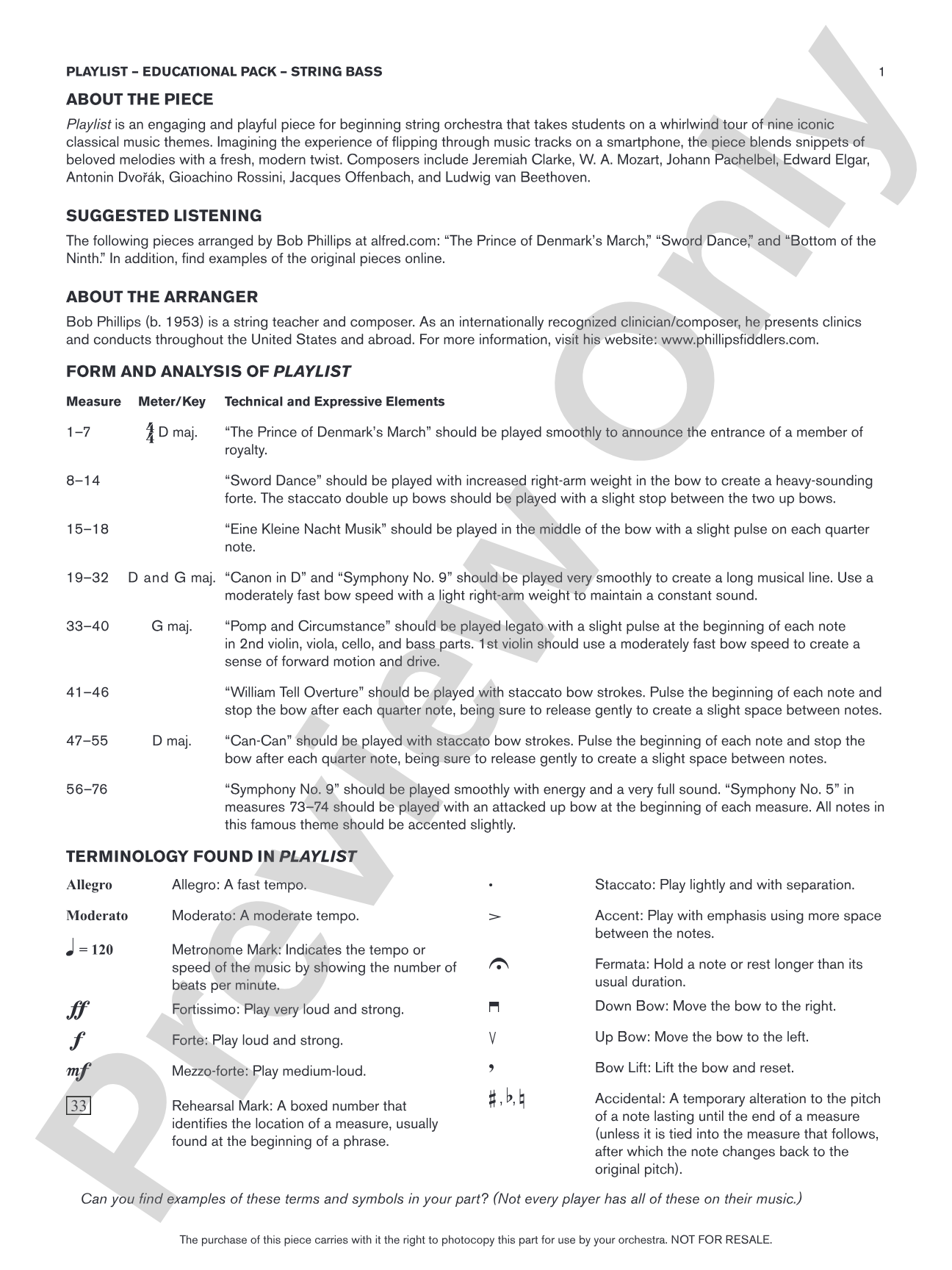

Playlist: Bass Educational Pack
Featuring The Prince of Demark's March, Sword Dance, Eine Kleine Nacht Musik, Canon in D, Dvorák Symphony No. 9, Pomp and Circumstance, William Tell Overture, Can-Can, and Beethoven Symphony No. 9 and Symphony No. 5
Various Composers / arr. Bob Phillips and Pam Phillips
Grade: 1.5
Item: 00-PC-0019830_SB_EDPAK
$3.00
Pickup currently not available
Description
An engaging and playful piece for beginning string orchestra, Playlist takes students on a whirlwind tour of nine iconic classical themes. Imagining the experience of flipping through tracks on a smartphone, the piece blends beloved melodies with a fresh, modern twist. It even includes a part for a guest performer, such as your principal. Perfect for developing young players' listening skills and ensemble awareness while introducing them to the classics, Playlist is written in the keys of D and G and stays in first position (except for the basses), making it accessible and fun. Fast-paced, flexible, and educational, Playlist by Bob Phillips and Pam Phillips is sure to be a favorite with students and audiences alike.


Don't just read it, hear it, play along with it, and watch your students grow with it. In MakeMusic Cloud, Playlist: Bass Educational Pack comes alive with professional accompaniment, adjustable tempo, and built-in practice tools that turn solo practice into real progress.
Open in the Player
Jump straight in and assign it today.
Start Your Free Trial
Open this title and explore the full library in minutes.
Sample Audio
1
Audio File
--:--
0:00
0:00
Sample Video
Additional Details
Series:
Sound Innovations Series for Strings
Publisher:
Alfred Music
SKU:
00-PC-0019830_SB_EDPAK
More about this title
About the Arranger: Bob Phillips

Bob Phillips (b. 1953) has shaped string education across North America through decades of innovative composition and pedagogy. A conductor, teacher trainer, and prolific educational composer, he built a nationally recognized string program in Saline, Michigan, and created foundational curricula including all six levels of Sound Innovations. His work spans 200+ published pieces for orchestras and bands, and he has served as resident conductor and arranger for prestigious festivals and youth ensembles from Interlochen to the Queensland Honour Ensemble Program.
Pam Phillips collaborates with Bob on developing accessible, engaging repertoire for young string players. Together, they have created materials performed by thousands of students annually, blending rigorous pedagogy with the eclectic styles that define their approach to string education, from jazz and rock to folk and world music traditions.
Why we love this
This piece solves a real programming challenge: how to engage beginning players while building listening skills and introducing the classical canon without overwhelming young musicians. The smartphone-flip concept hooks students immediately, and the nine-theme tour gives them genuine exposure to recognizable masterworks rather than abstract exercises. Directors consistently find that Playlist generates audience applause and student enthusiasm in equal measure, making it ideal for building ensemble confidence early in the year.
What to expect
Imagine scrolling through a music streaming app and landing on snippets of musical treasures, each one a quick dopamine hit of recognition and delight. The piece captures that modern, punchy energy while honoring the melodies themselves, moving fluidly from theme to theme with humor and charm. Young players feel capable and modern playing it, while audiences hear familiar beauty presented with freshness.
Who it's for
Playlist works beautifully for string orchestras in grades 3-5 and beginning high school programs. Any director seeking an accessible, high-engagement piece that simultaneously introduces classical repertoire and develops ensemble listening will find this invaluable. The built-in flexibility and guest performer option make it equally suited to concert showcases and festival competitions.
How to get the most out of it
- Treat the transitions between themes like track changes on a device: crisp attacks and clear releases help students feel the shift in musical "playlists."
- Encourage your principal or featured guest performer to engage visually with the ensemble during their solo passage; young players respond to energy and connection from stage presence.
- Keep the D and G major tonality simple by checking intonation during warm-up with open strings; students in first position will naturally track better when tonic is crystal clear.
- Resist the urge to slow down the faster sections; the "whirlwind" quality relies on forward momentum, and beginning players often find tempo control easier than young musicians assume.
How to use it
Program Playlist early in the concert year to build morale and demonstrate to students that orchestra can be fun and immediately rewarding. It pairs well alongside traditional full-orchestra works, offering contrast through its contemporary framing while introducing audiences to the classical themes that will anchor more serious repertoire later. Consider featuring a different guest soloist for each performance to create a sense of occasion and variety.
Skills your students will build
- Clear articulation and note separation in first position across D and G major contexts
- Listening and section balance awareness through rapid thematic transitions
- Ensemble precision and synchronized attacks when shifting between contrasting classical melodies
- Intonation control in two keys without position shifts (except bass part)
- Rhythmic responsiveness to tempo and phrasing changes within a fast-paced structure