Playing Ping Pong Sheet Music Preview

Playing Ping Pong: Piano

By Emilie Lin

Item: 98-DP2013

Digital Download
$2.95
Description
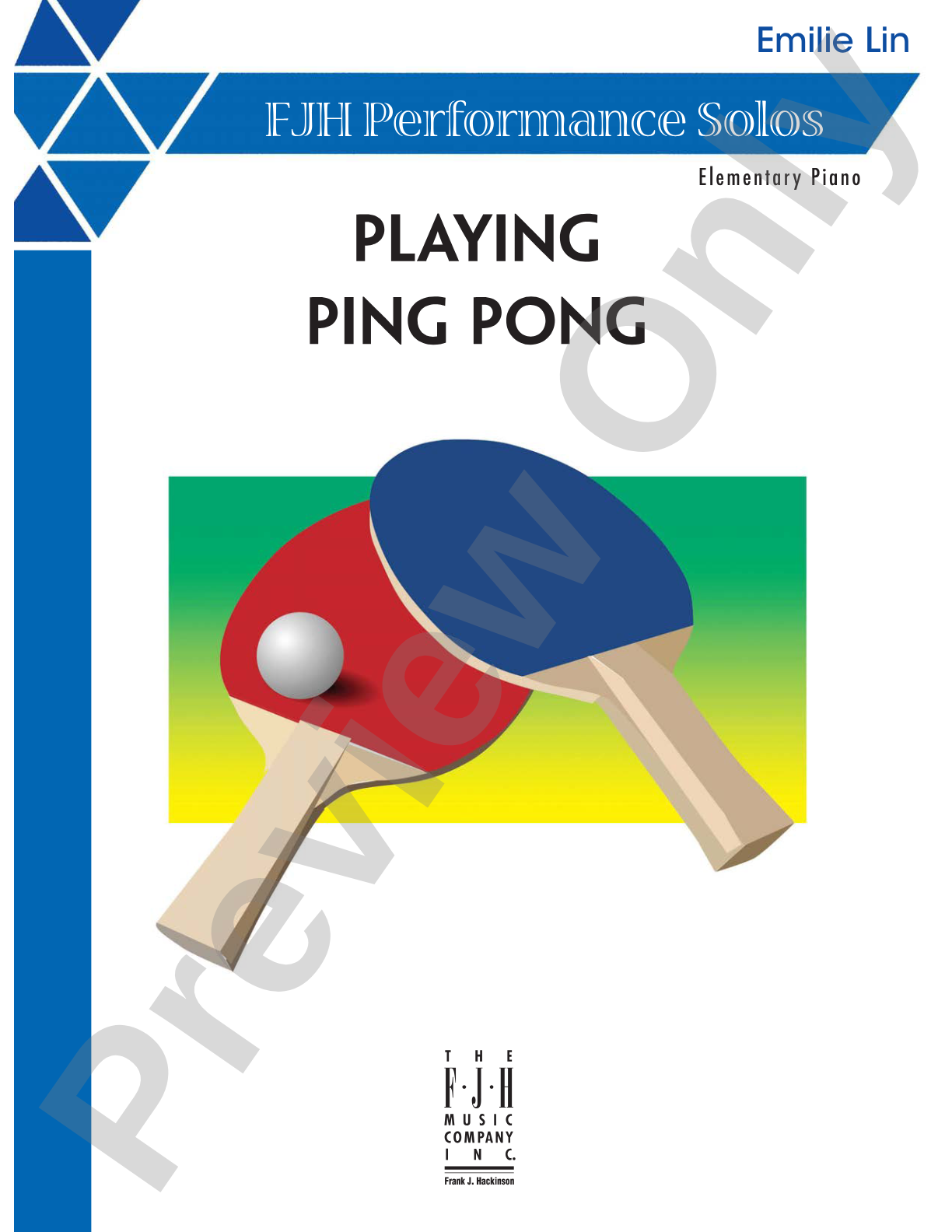
The bouncing staccatos of this cheerful solo sound just like ping-pong balls bouncing back and forth across the table. Although a staccato touch is predominant, legato phrases appear in Section B. There is a fun interplay as the melody weaves between the hands. This 3-page piece in the key of F fits anywhere---lessons, recitals and auditions.

Playing Ping Pong: Piano isn't in MakeMusic Cloud just yet...but it could be. Let us know you'd like to see it, and you'll help shape what comes next. In the meantime, start a free trial and dive into thousands of interactive titles your students can play along with today.

Sample Audio
No sample audio found.
Sample Video
Additional Details
Series: FJH Performance Solos
Publisher: The FJH Music Company, Inc.
SKU: 98-DP2013

More about this title

Why we love this

The staccato writing in this piece is genuinely playful without feeling gimmicky. Lin nails that balance between technical clarity and genuine character, giving young pianists a chance to master crisp articulation while actually enjoying what they're playing. The shift into legato in Section B prevents the piece from becoming one-dimensional and rewards students who can make a real stylistic adjustment.

What to expect

Like watching a rally unfold in fast motion, the staccatos create that percussive, rhythmic energy of balls bouncing back and forth. When the music shifts to legato in the middle, the mood softens briefly, like a moment of calm before the action picks back up again.

Who it's for

Elementary students who can handle basic hand independence and who are ready to explore articulation as a tool for musical storytelling. This works for pianists preparing for recitals or lessons who need a short, accessible piece with real personality.

How to get the most out of it

  • Keep the staccatos light and bouncy in your wrist. Think of the keys as a trampoline, not a target. The notes should pop cleanly without sounding harsh or percussive.
  • When the melody moves between hands in the early sections, maintain consistent weight and tone so the listener hears one continuous line, not a handoff.
  • Let Section B breathe. The legato phrases need genuine singing tone to create contrast, so give yourself permission to slow slightly and use the pedal thoughtfully.

How to use it

Ideal as an opener or a lighter moment on a recital where heavier pieces dominate. The cheerful character and compact three-page length make it a smart choice for group performances or studio showcases where variety keeps the audience engaged.

Skills your students will build

  • Staccato articulation with independent wrist control
  • Hand independence and melody transfer between left and right hands
  • Legato touch and tone quality in contrasting sections
  • Dynamic control in F major
  • Stylistic awareness (switching between articulated and connected playing)

You May Also Like