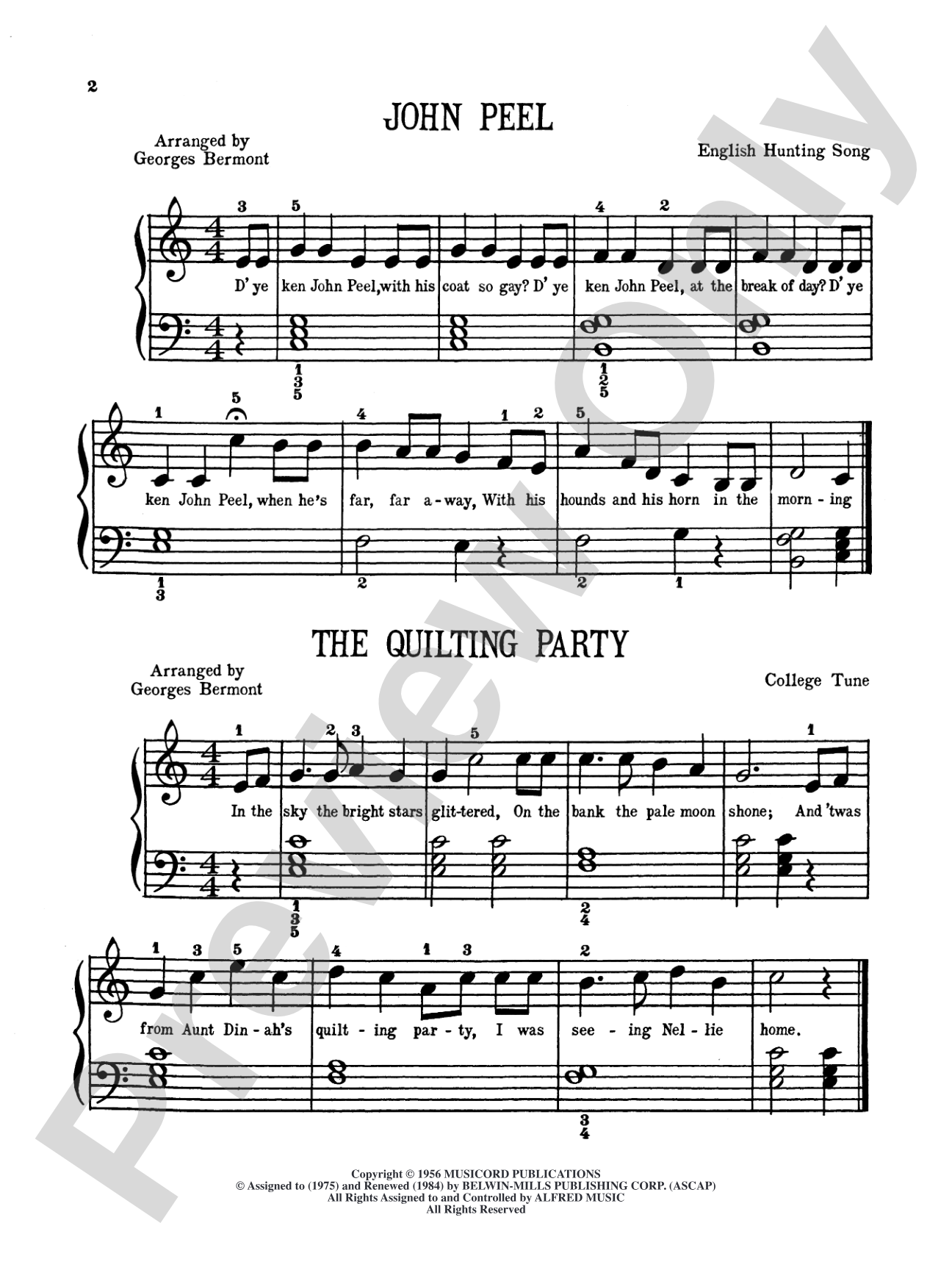
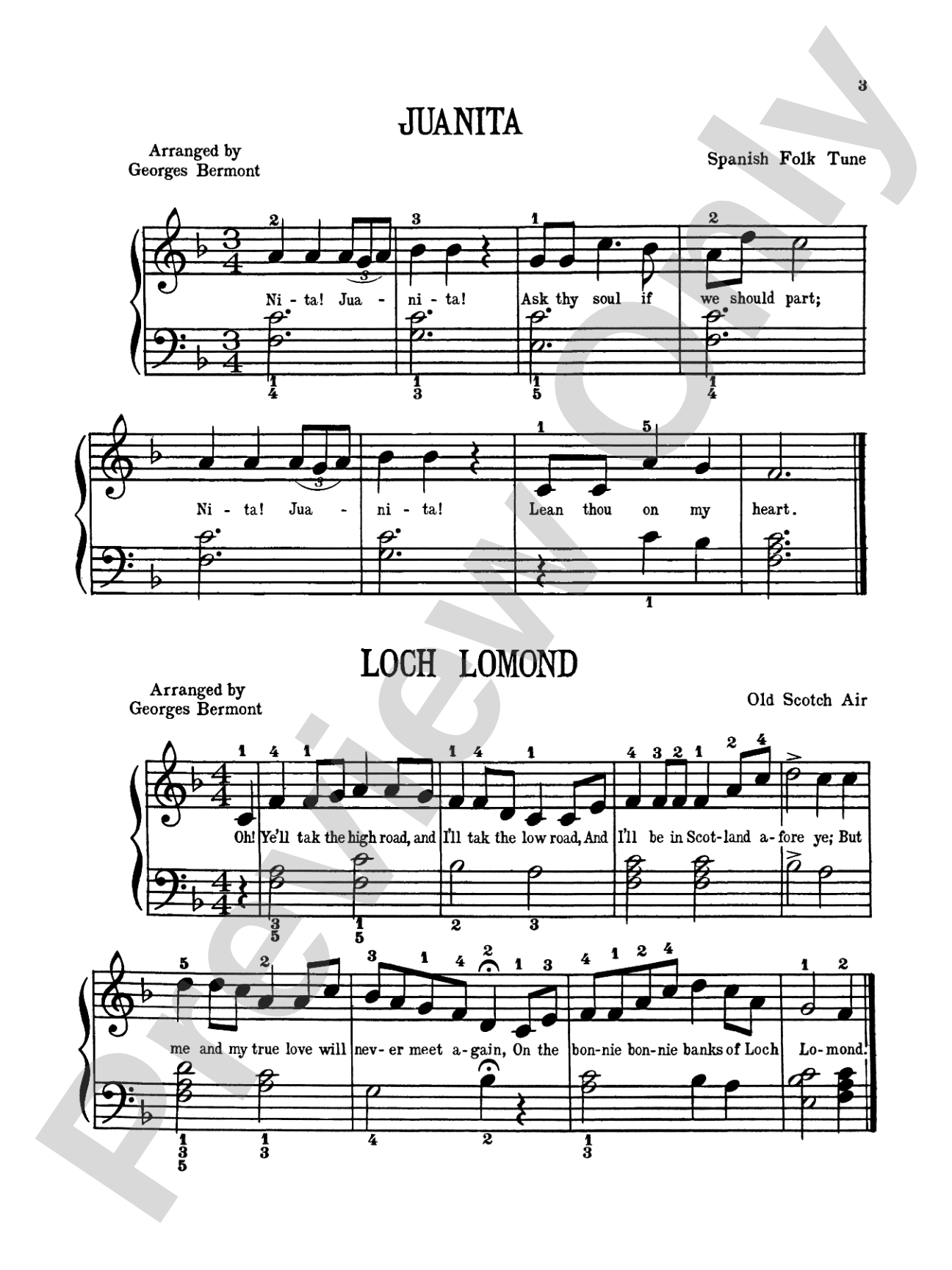
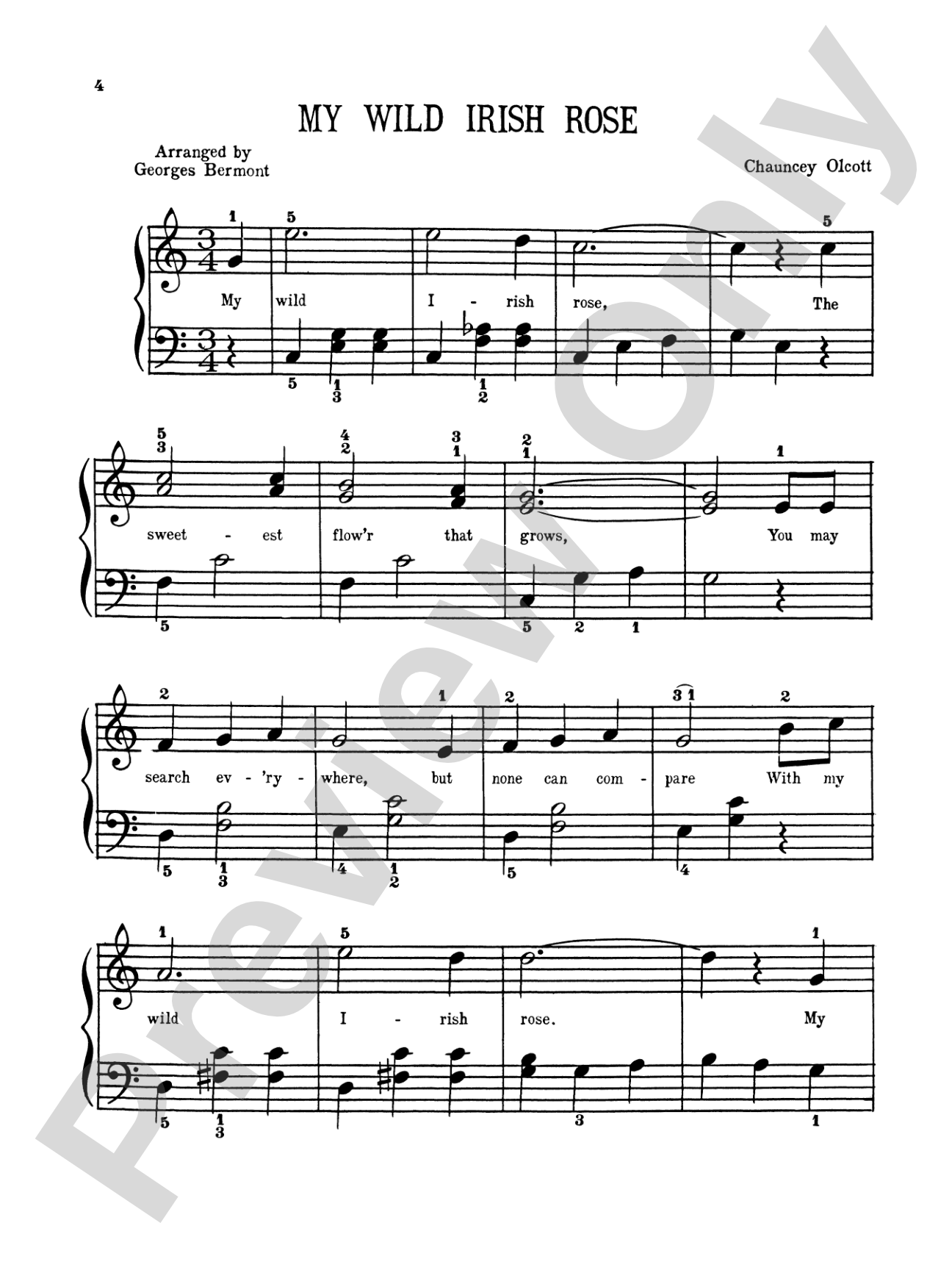
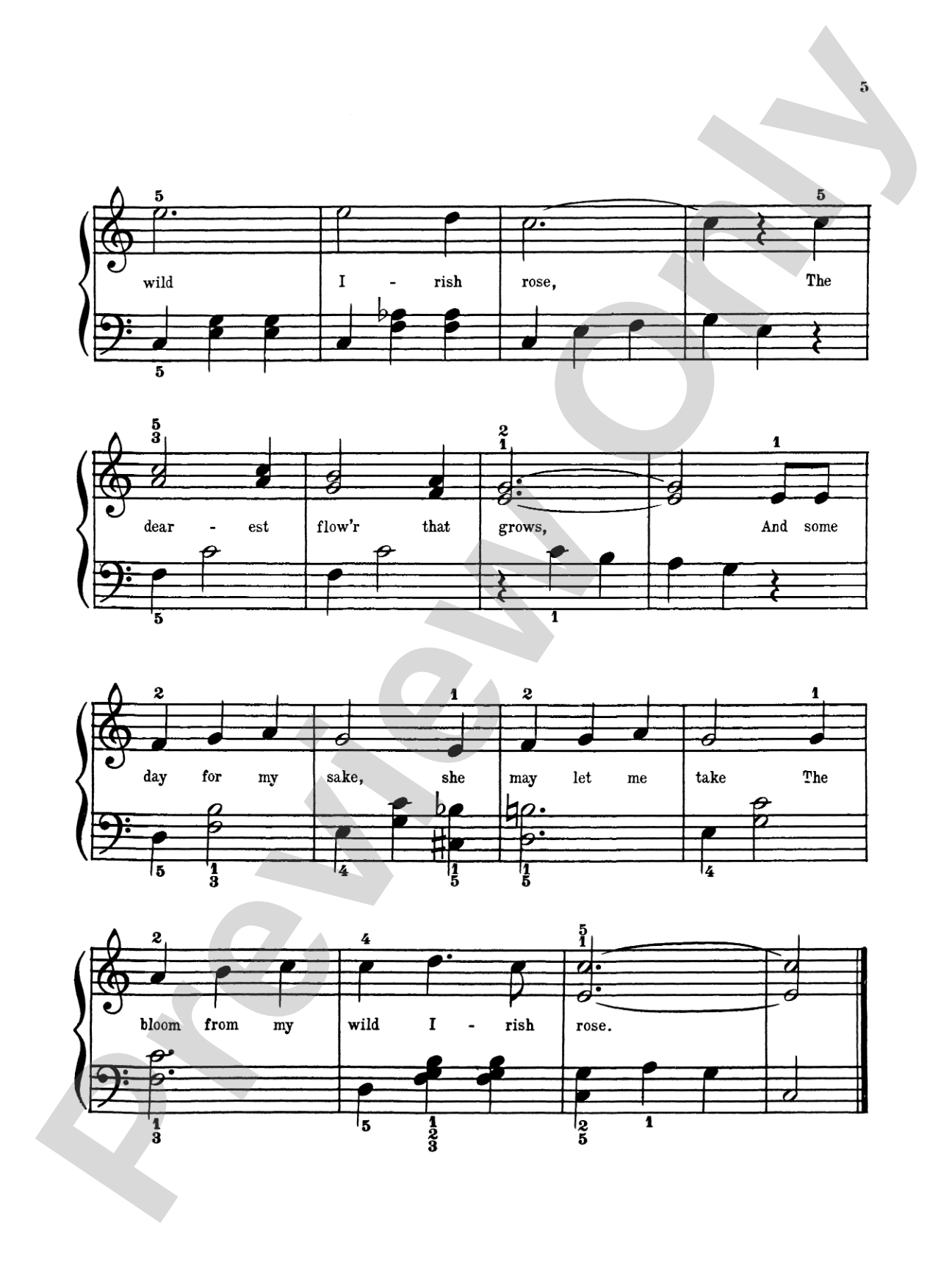
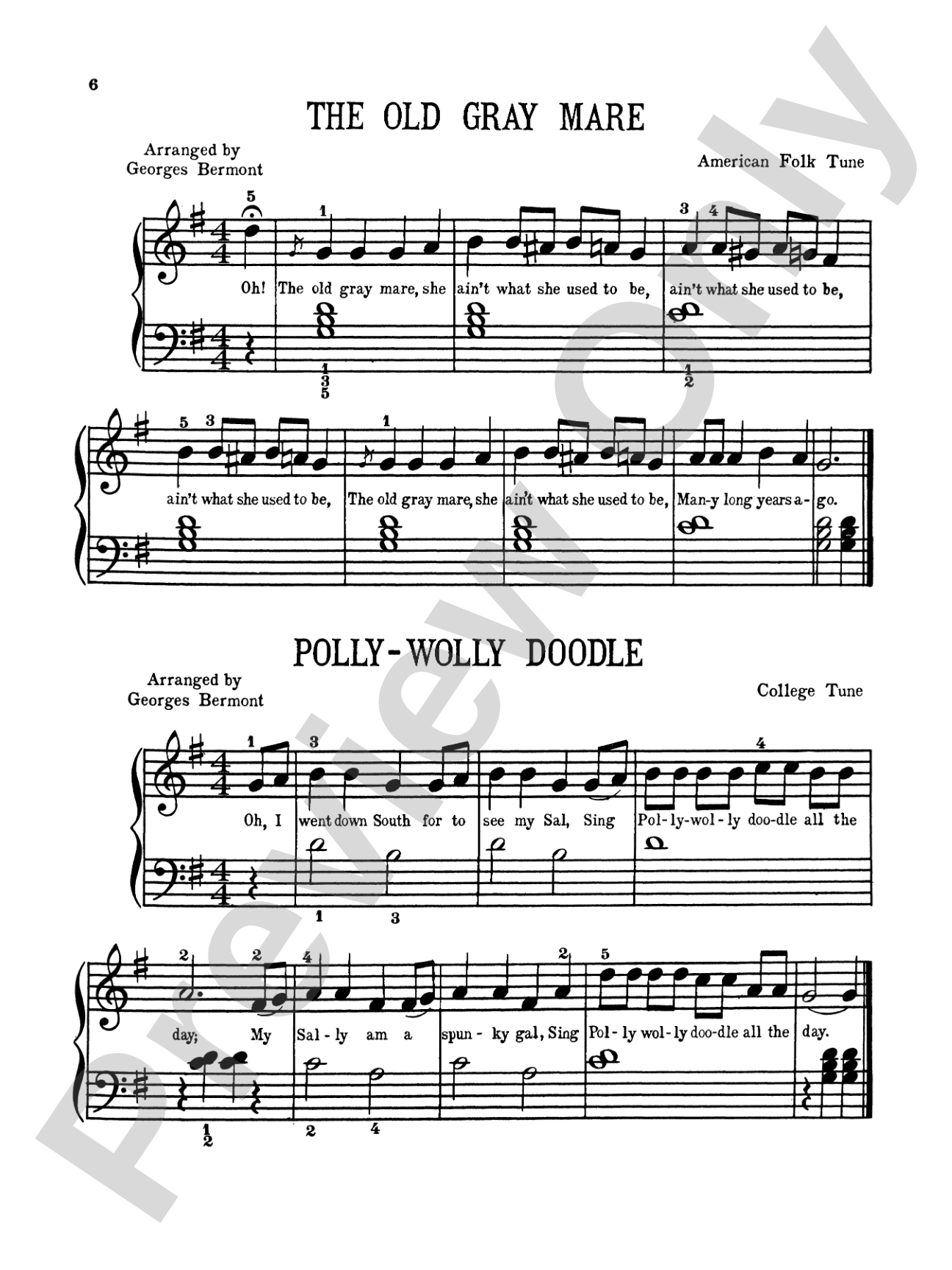
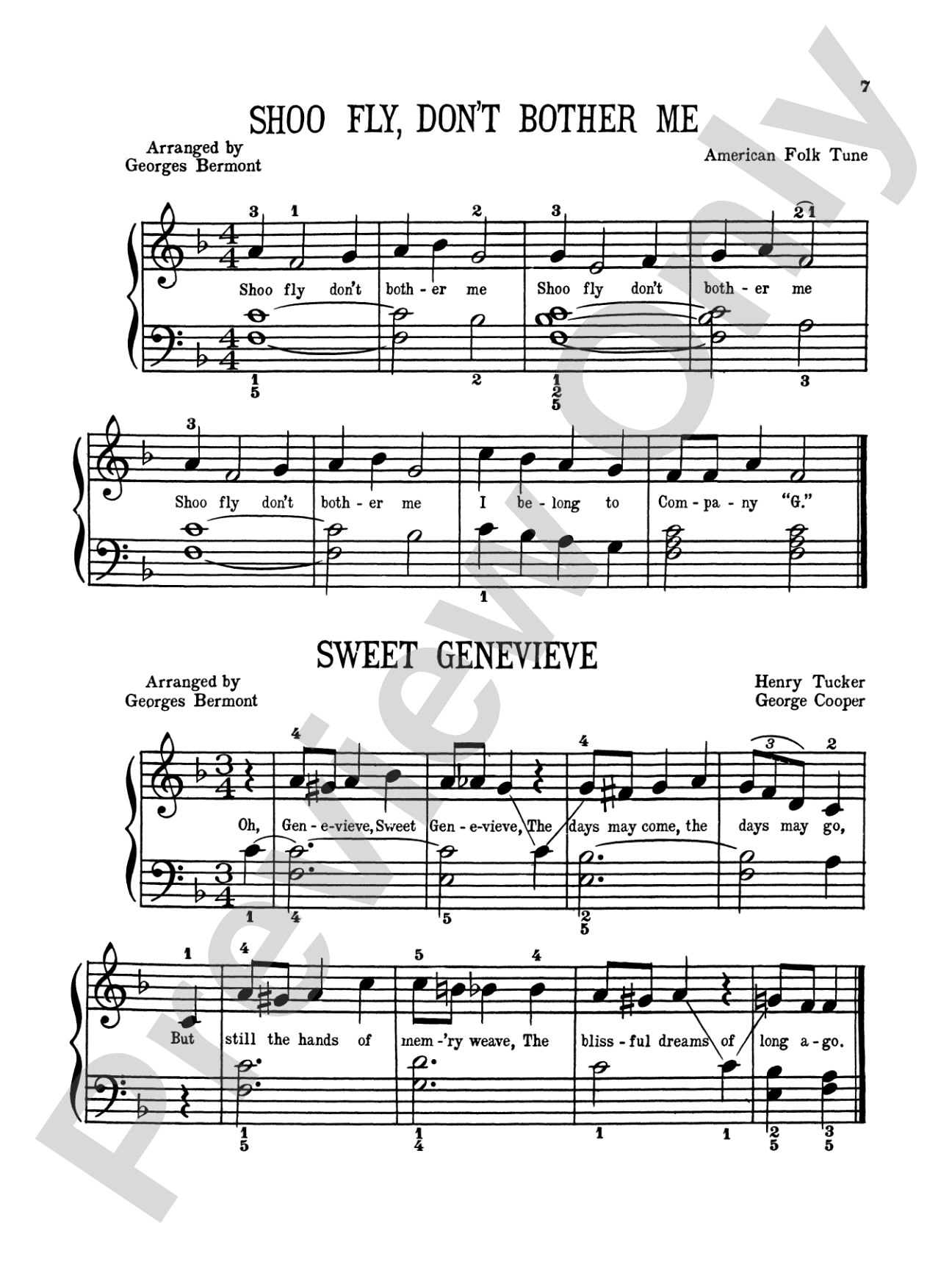
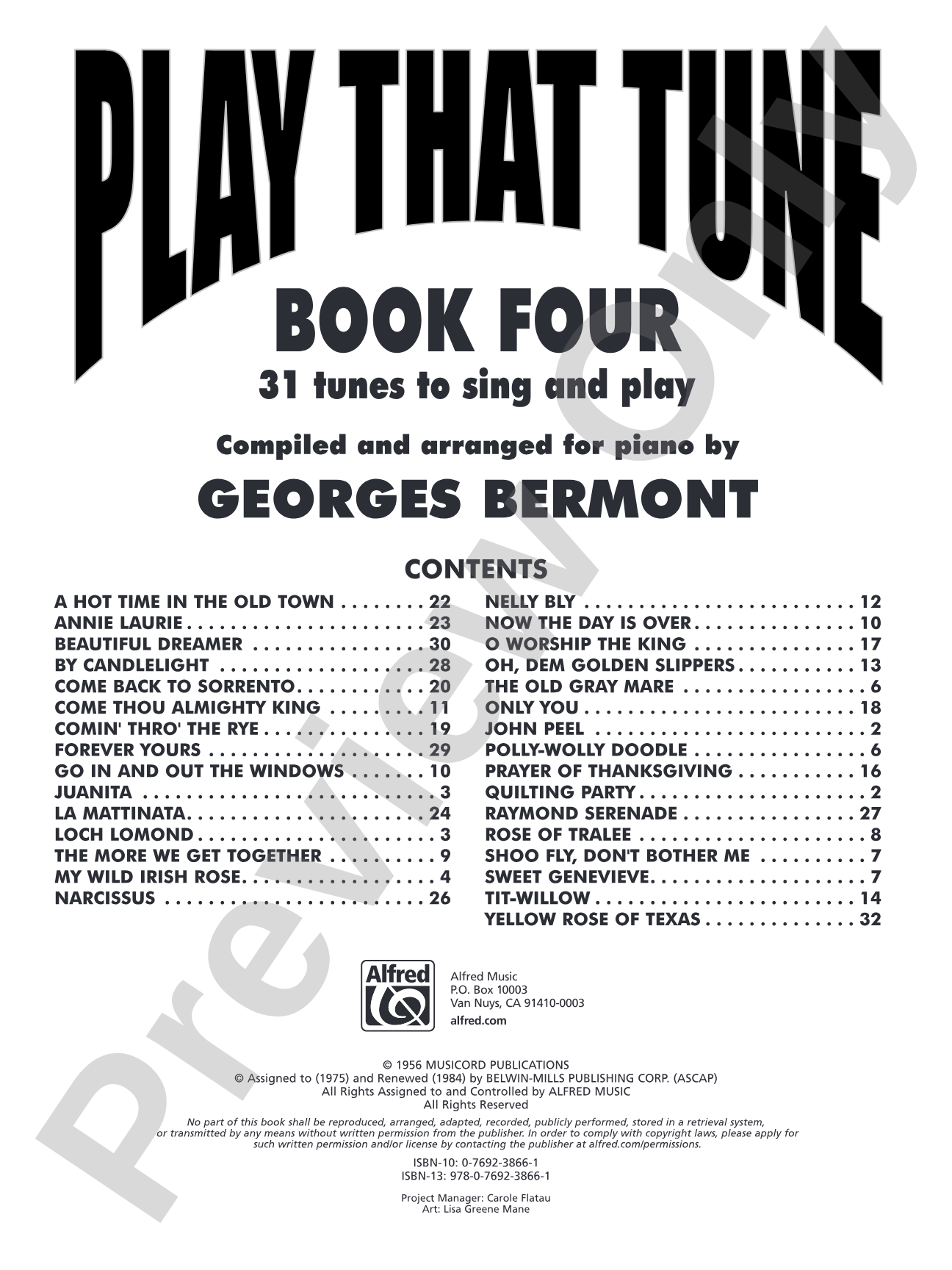
Play That Tune, Book 4: 31 Tunes to Sing and Play Sheet Music Preview

Play That Tune, Book 4: 31 Tunes to Sing and Play: Piano

31 Tunes to Sing and Play

Composed and arranged by Georges Bermont

Item: 00-PB-0000920

Digital Download
$7.99
Description
31 best tunes made easy to sing and play.

Play That Tune, Book 4: 31 Tunes to Sing and Play: Piano isn't in MakeMusic Cloud just yet...but it could be. Let us know you'd like to see it, and you'll help shape what comes next. In the meantime, start a free trial and dive into thousands of interactive titles your students can play along with today.

Sample Audio
No sample audio found.
Sample Video
Additional Details
Publisher: Alfred Music
Page Count: 32
SKU: 00-PB-0000920

More about this title

Why we love this

Bermont's collection strips away the complexity that often prevents young pianists from playing recognizable melodies. The 31 tunes span familiar territory, standards and folk music students actually want to play, making this book a reliable tool for building confidence and sight-reading fluency without the frustration of overly simplified arrangements.

What to expect

Straightforward and inviting. These are tunes people know and want to play, arranged without unnecessary complexity or decoration. The melodies sit naturally under the fingers and reward clean, honest playing.

Who it's for

Students in early intermediate stages of piano study who benefit from repertoire that feels singable and approachable. Teachers looking for supplementary material that reinforces reading skills while keeping enthusiasm high through recognizable material.

How to get the most out of it

  • Sing the melody aloud while playing to internalize the line, then gradually let the fingers take over. This builds the connection between vocal expression and keyboard technique.
  • Listen for where the melody wants to breathe. Mark those phrase endings lightly in pencil so you remember to lift gently rather than play straight through.
  • Practice hands separately at first, especially if the left hand has any rhythmic independence. This prevents the melody from rushing when both hands enter together.

How to use it

Use individual selections as sight-reading material during lesson warm-ups or as quick learning tasks between method book assignments. A few pieces work well for student recitals, especially when paired with accompaniment from a teacher or ensemble member.

Skills your students will build

  • Reading simple melodies across both treble and bass clefs
  • Basic left-hand accompaniment patterns
  • Phrase awareness and musical phrasing at the keyboard
  • Coordination of melody and accompaniment
  • Sight-reading fluency with familiar material

You May Also Like