
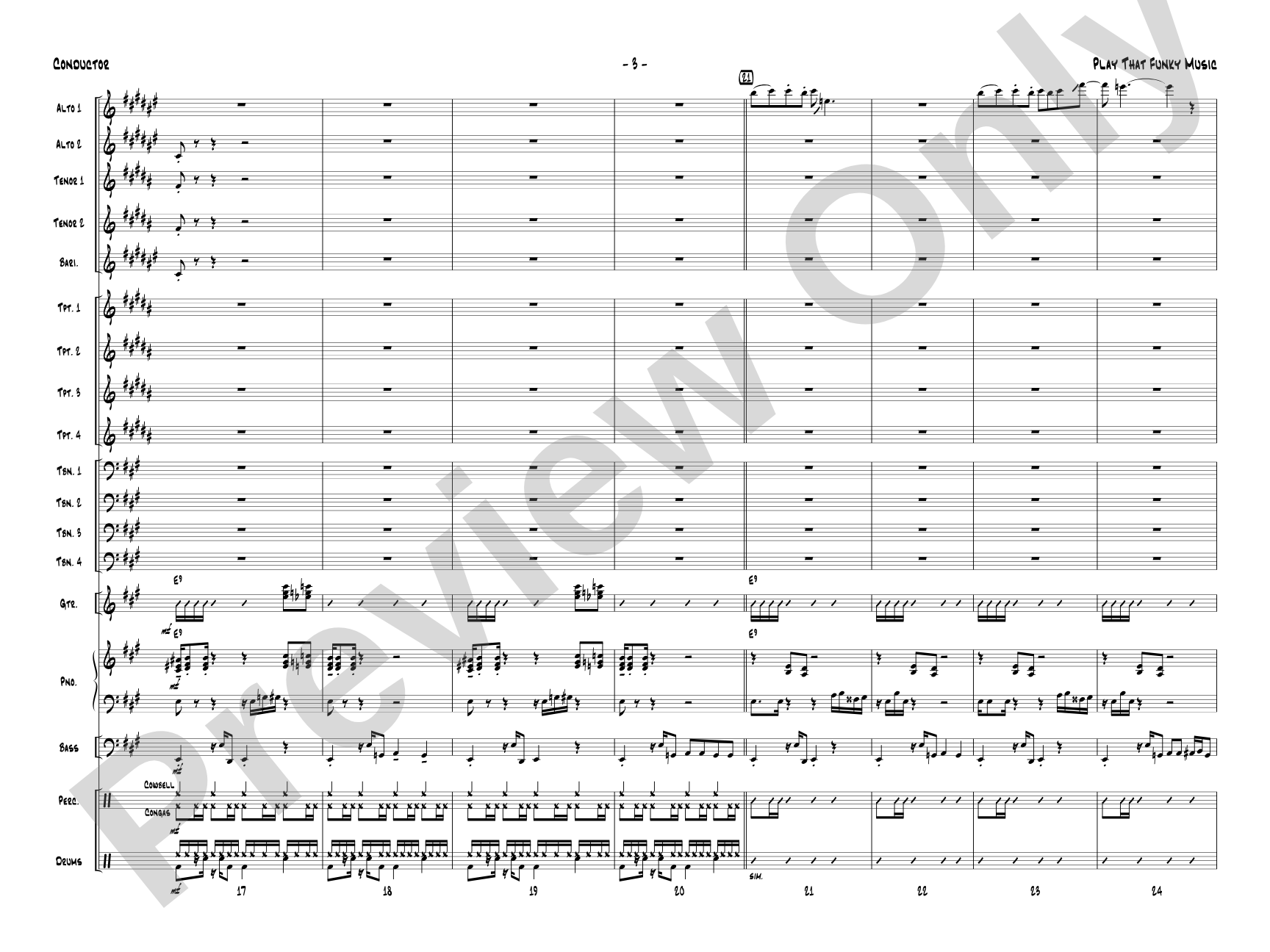
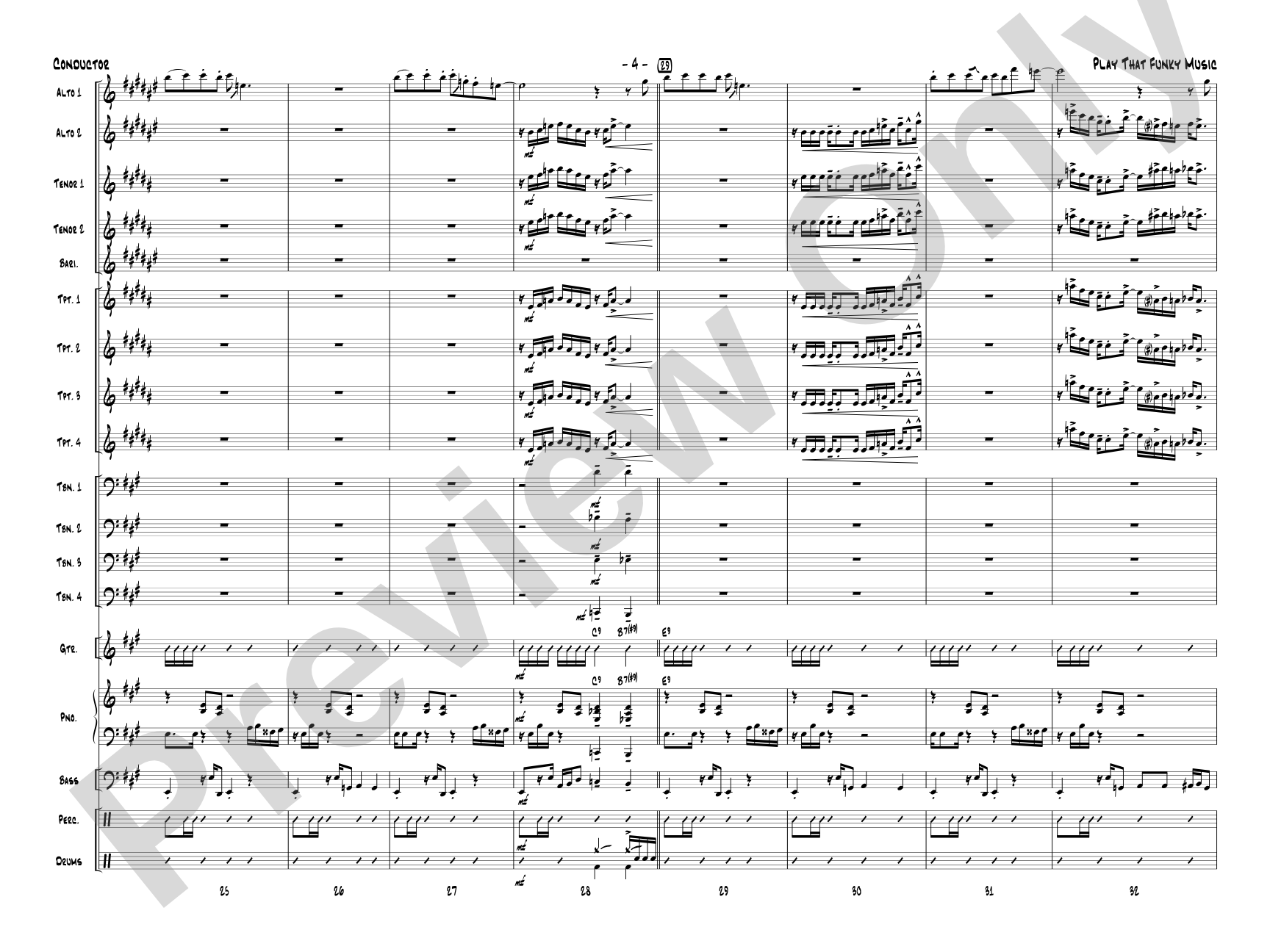
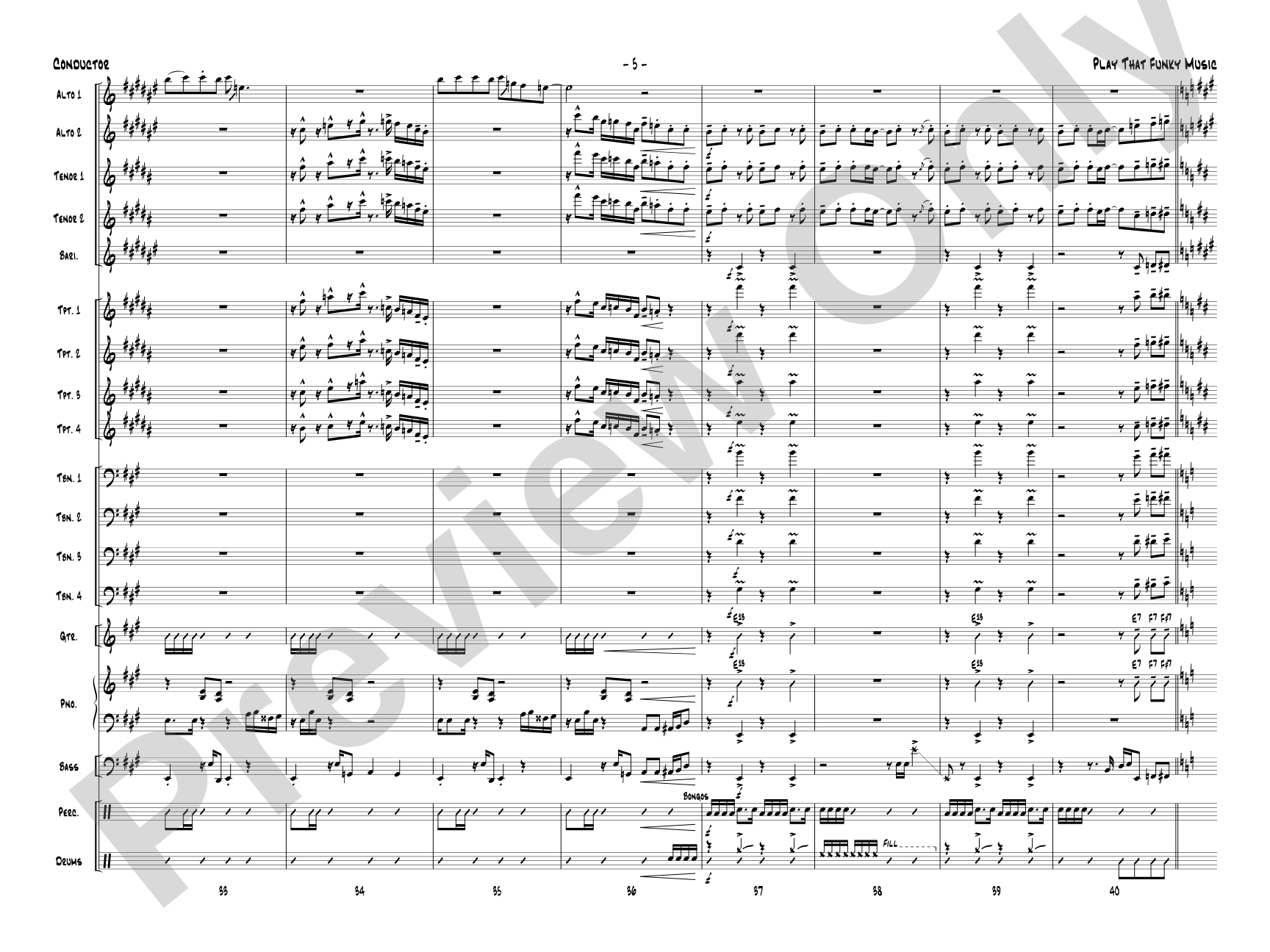
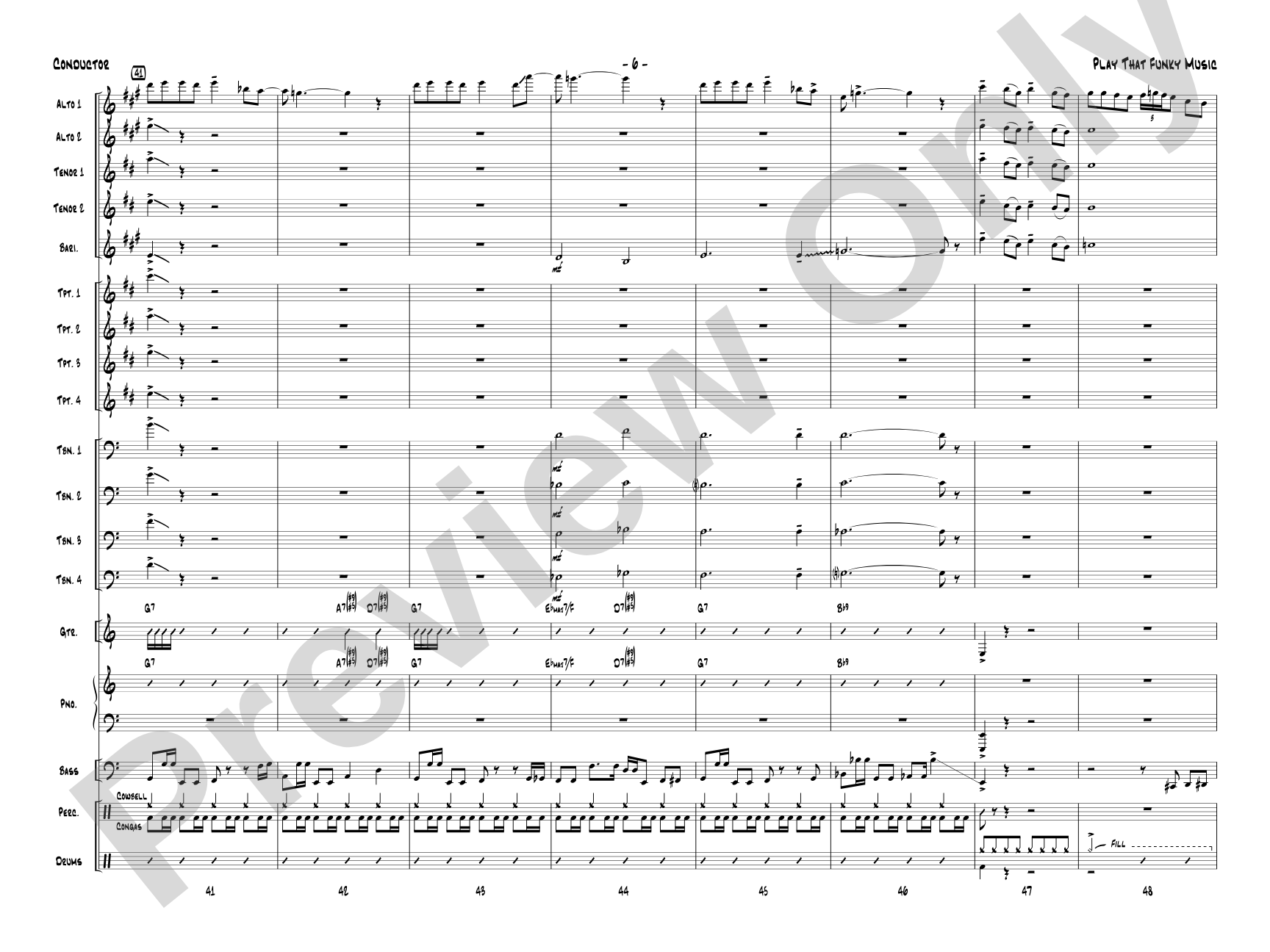
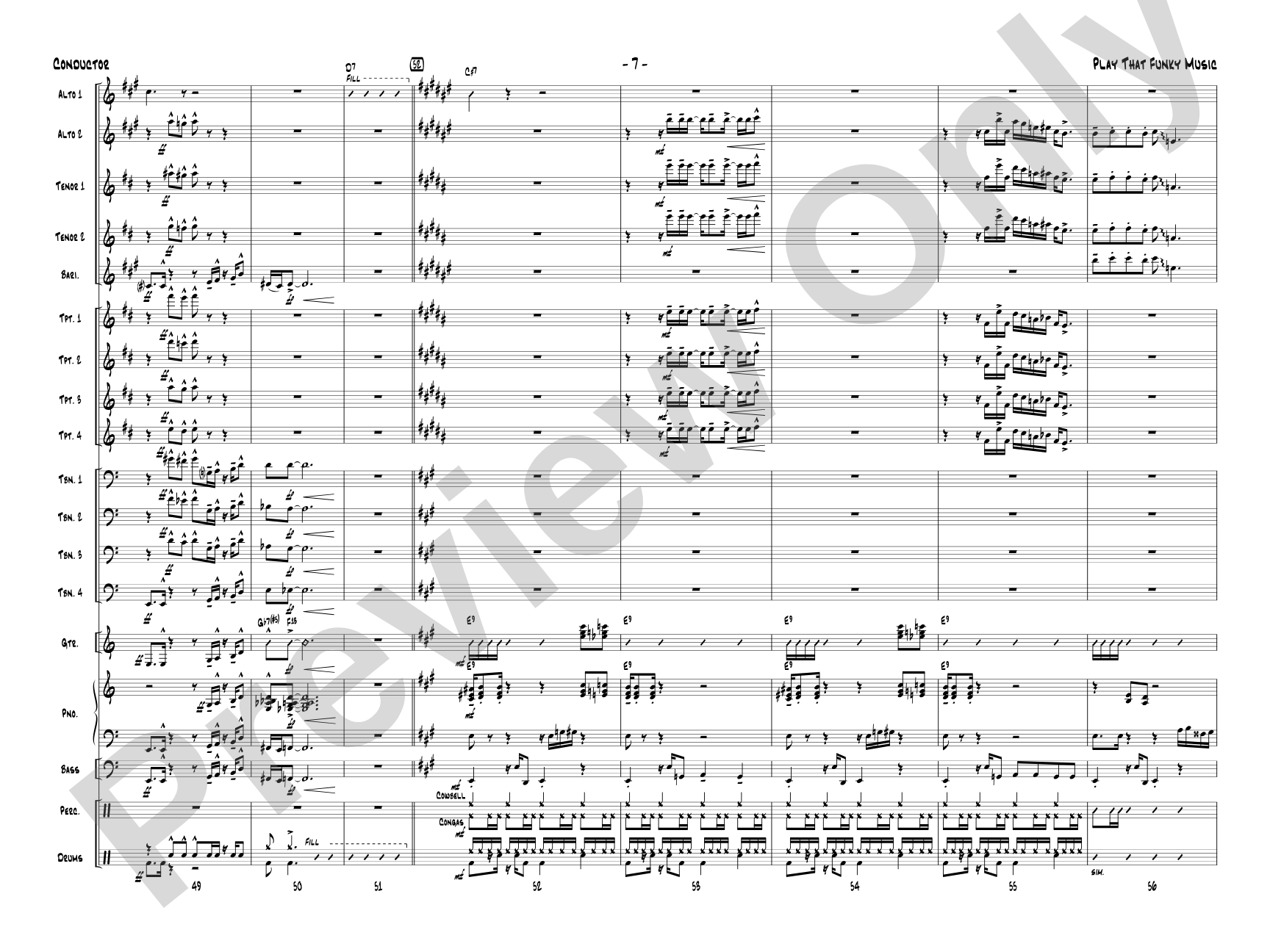
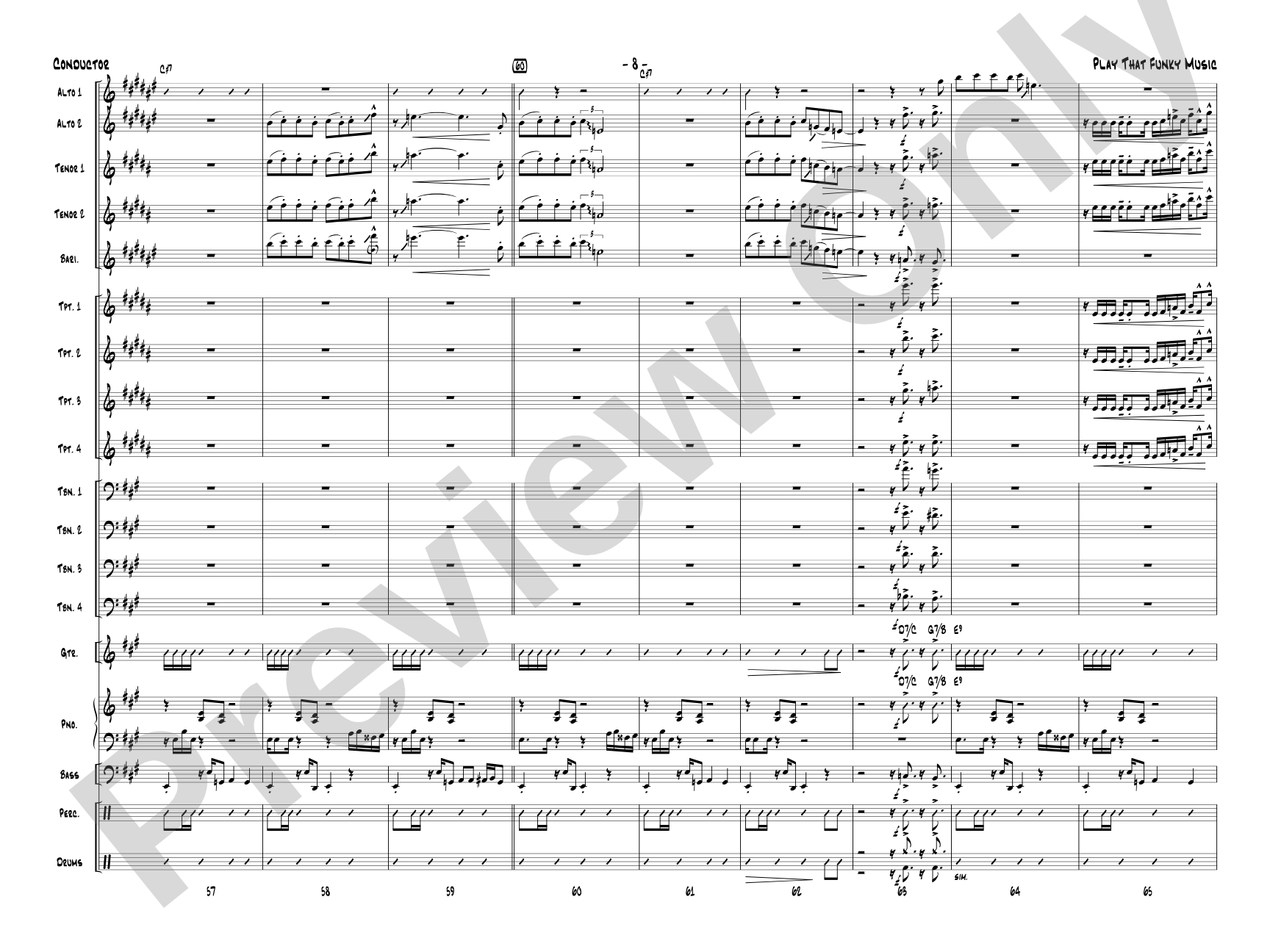
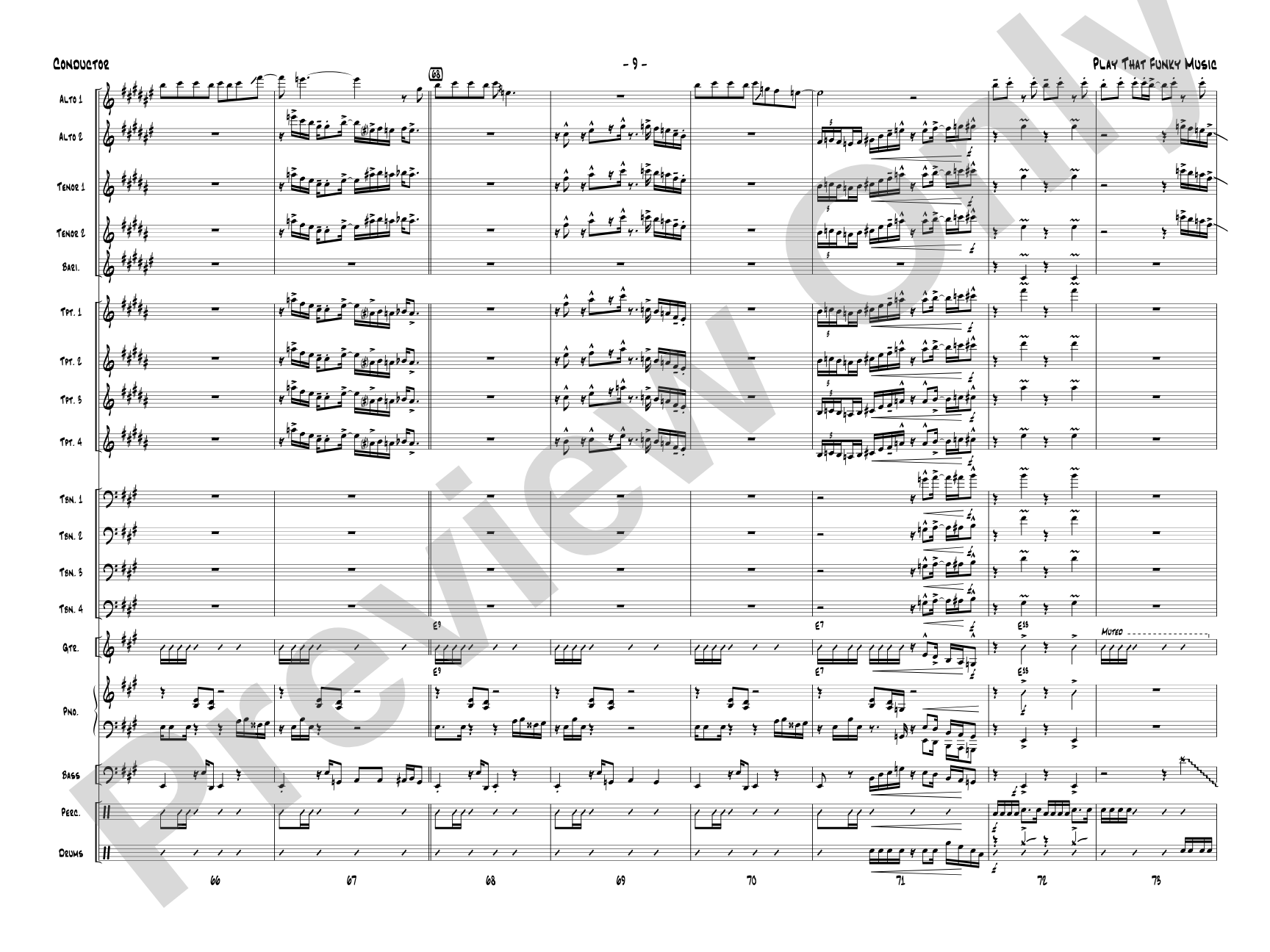
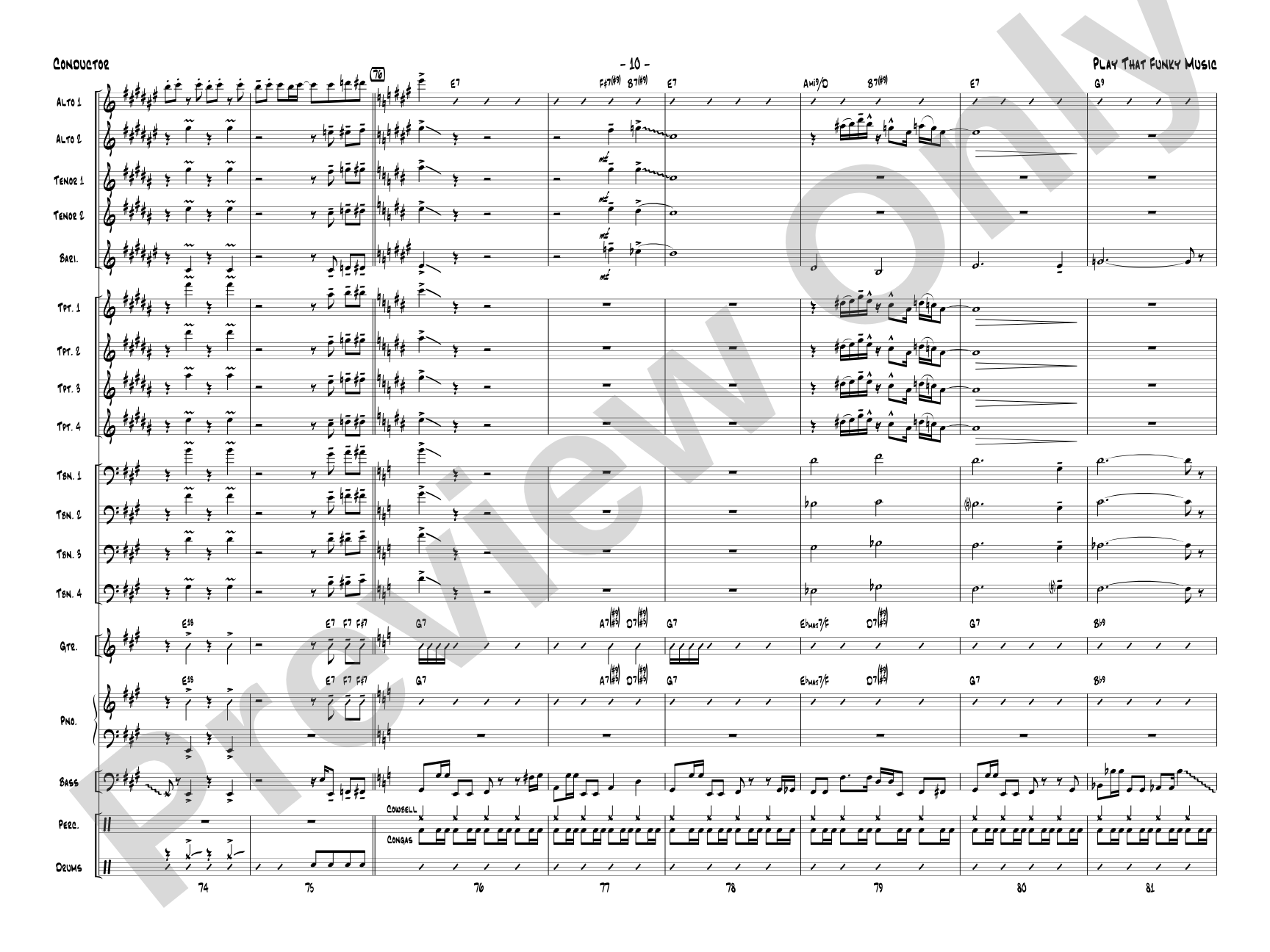
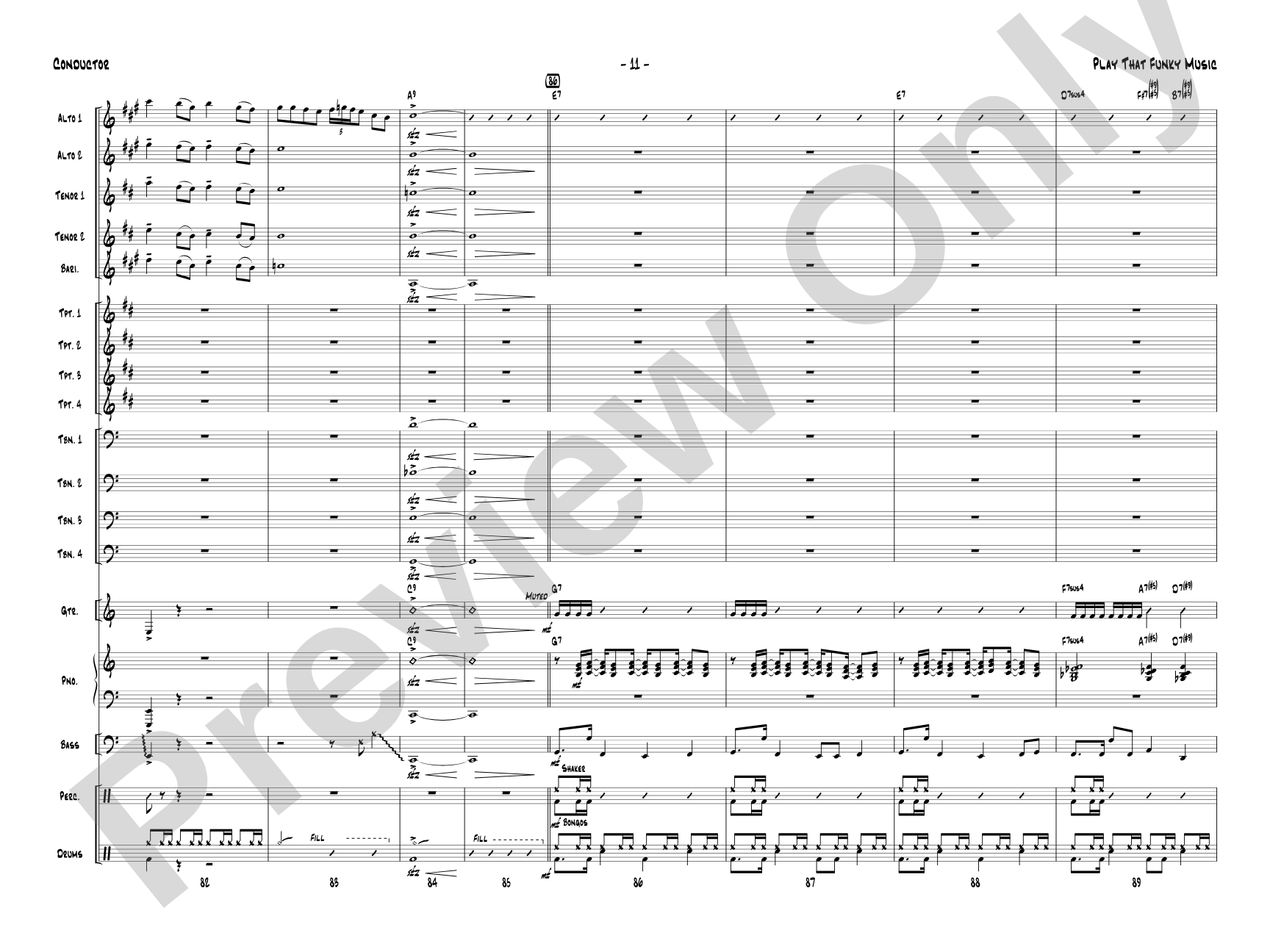
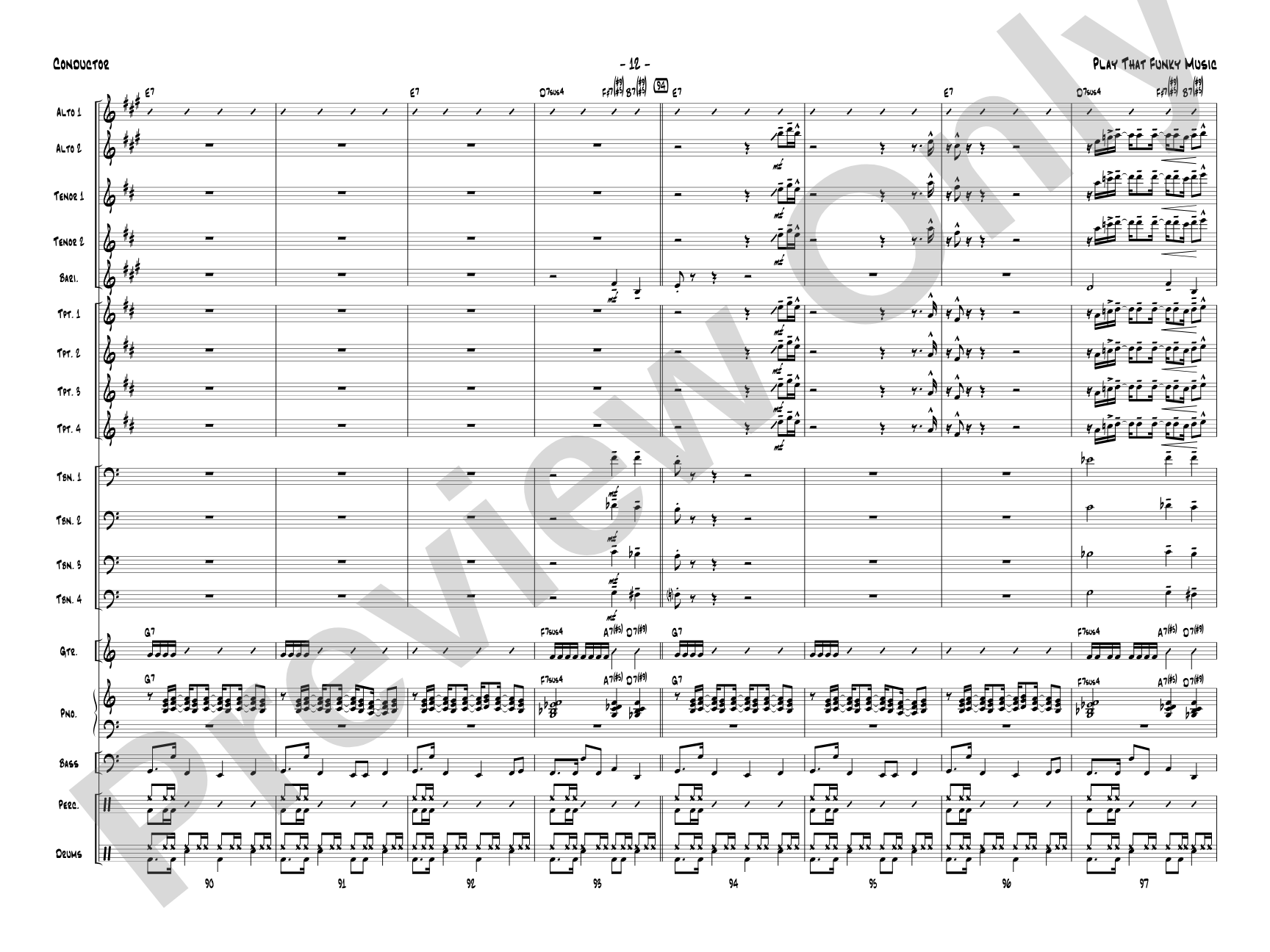
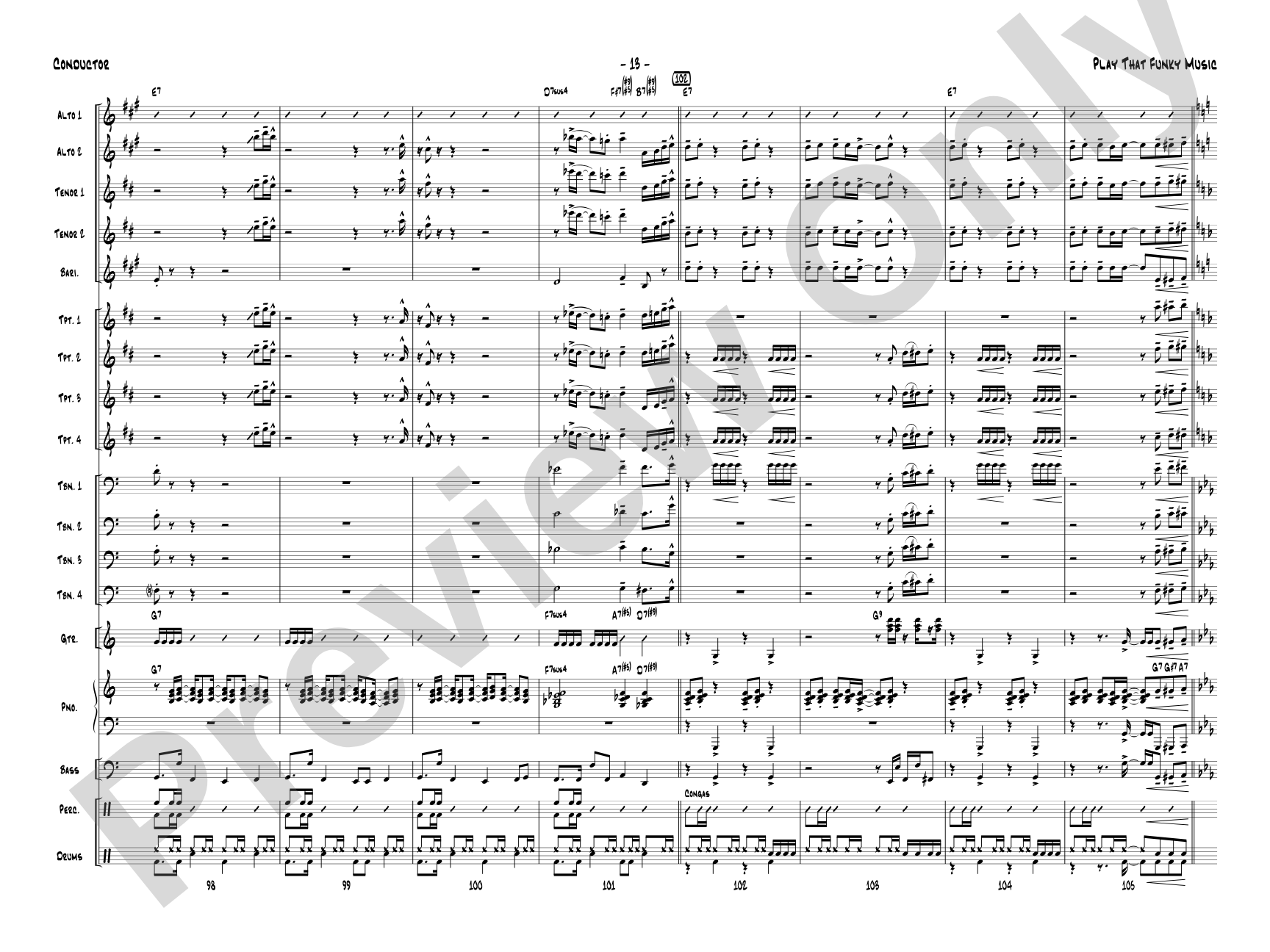
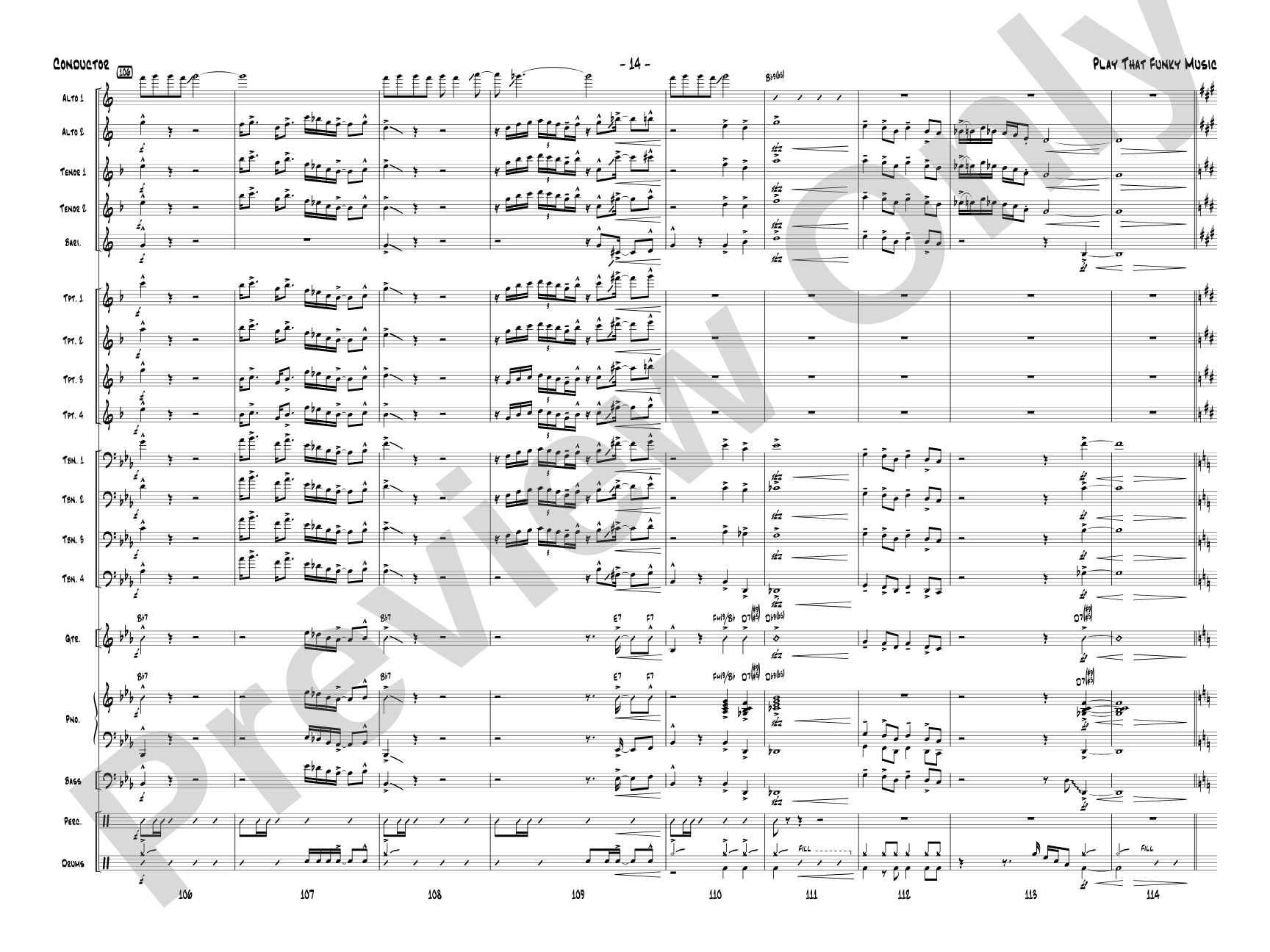
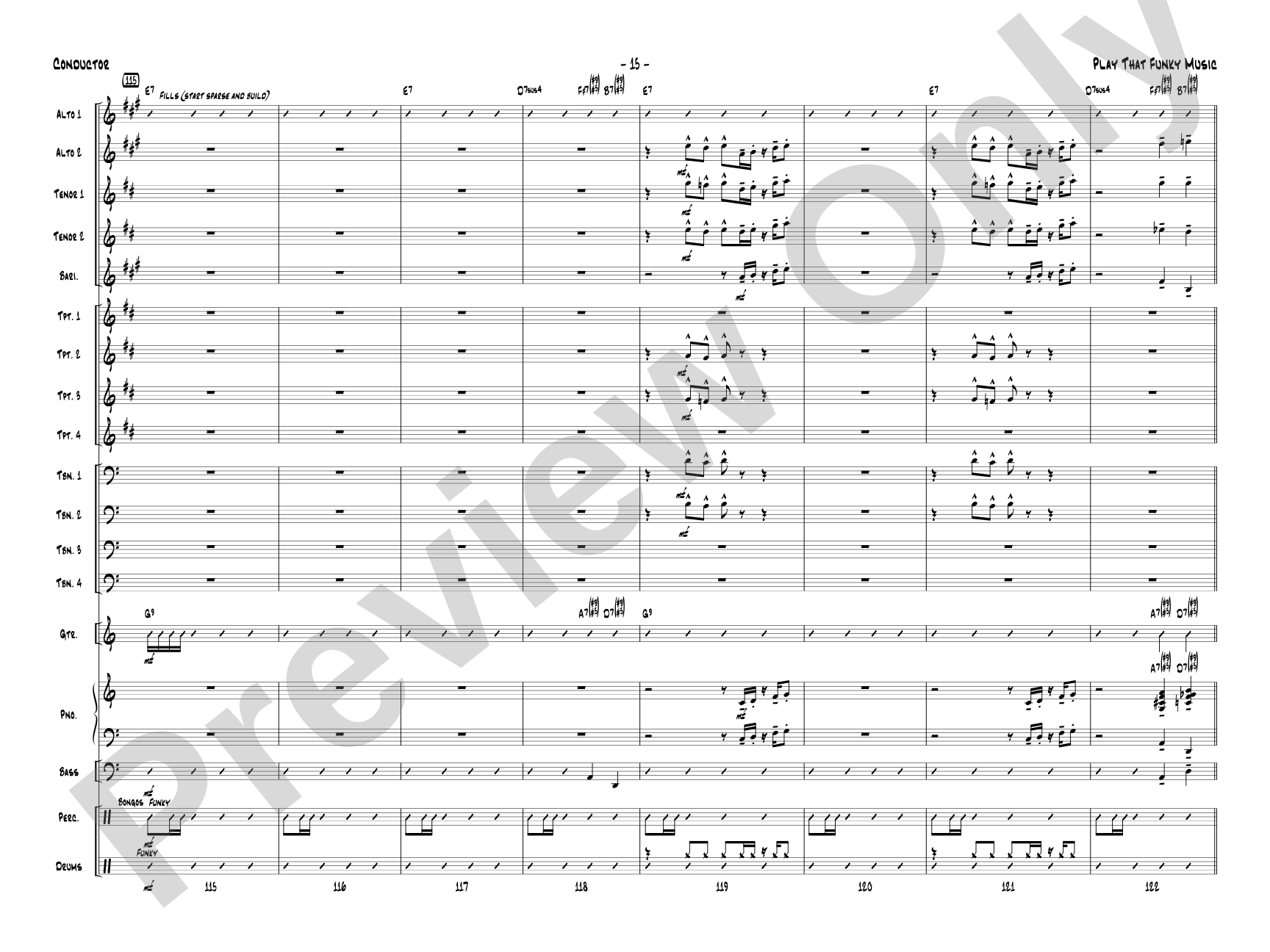
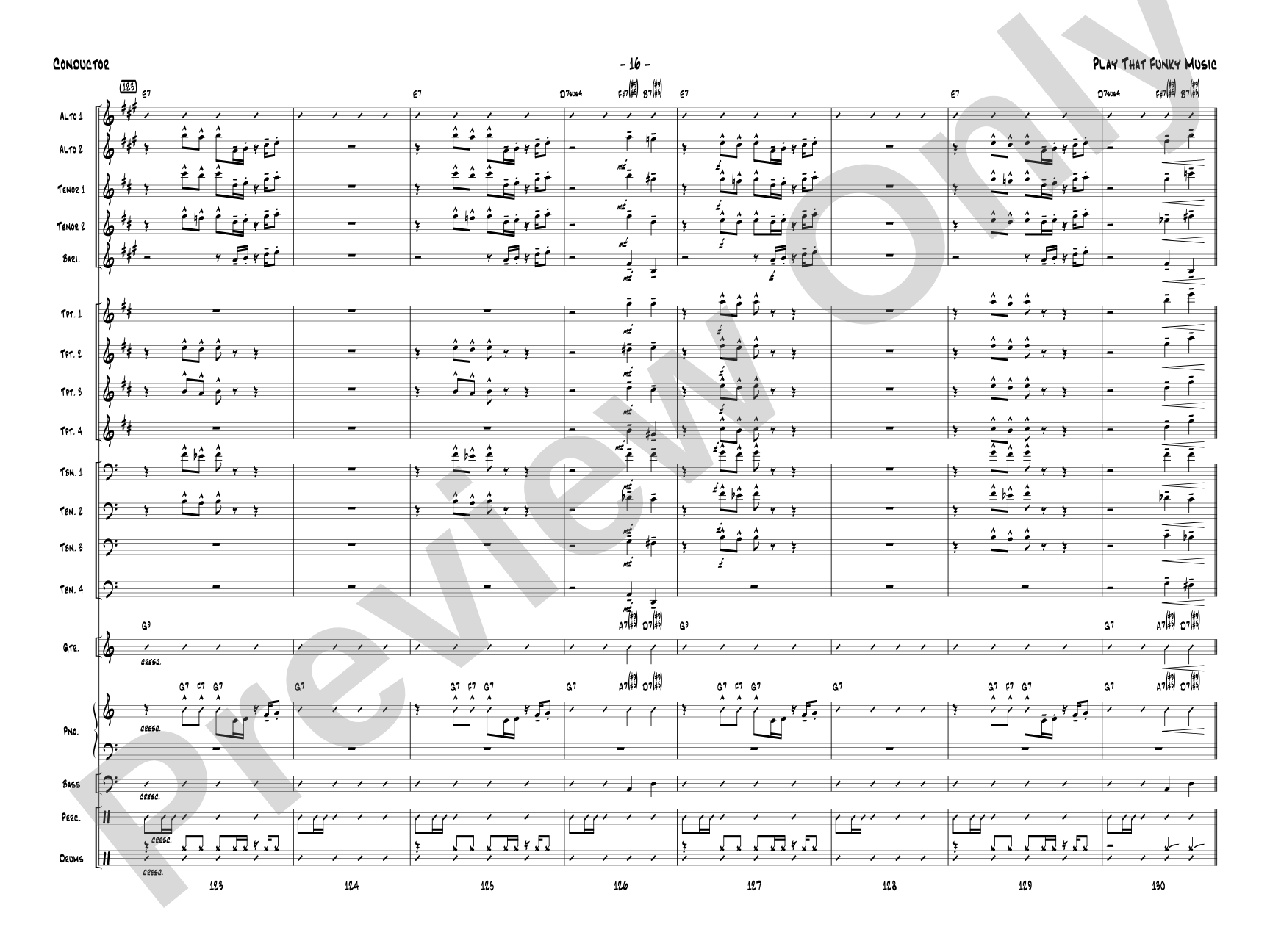
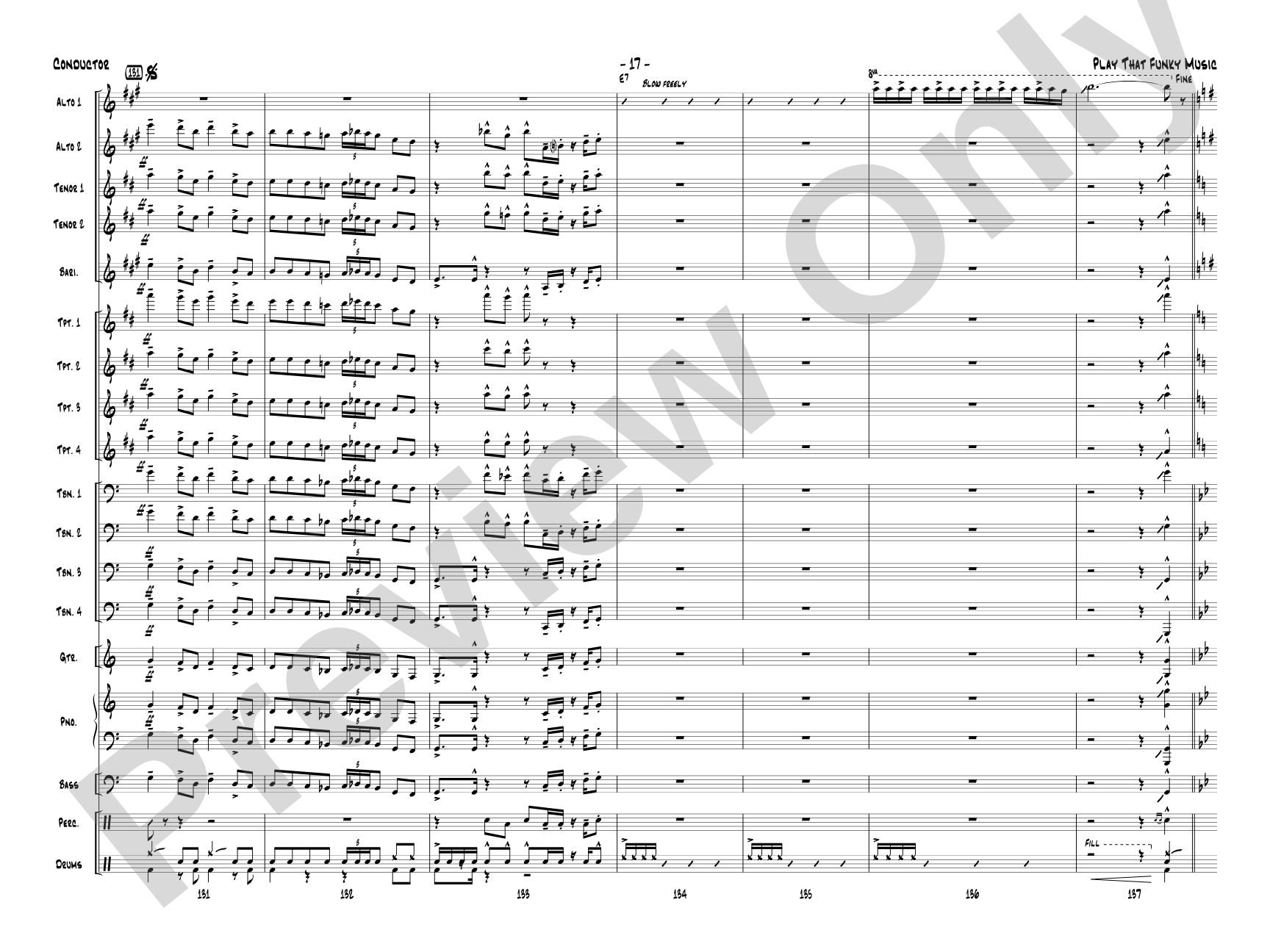
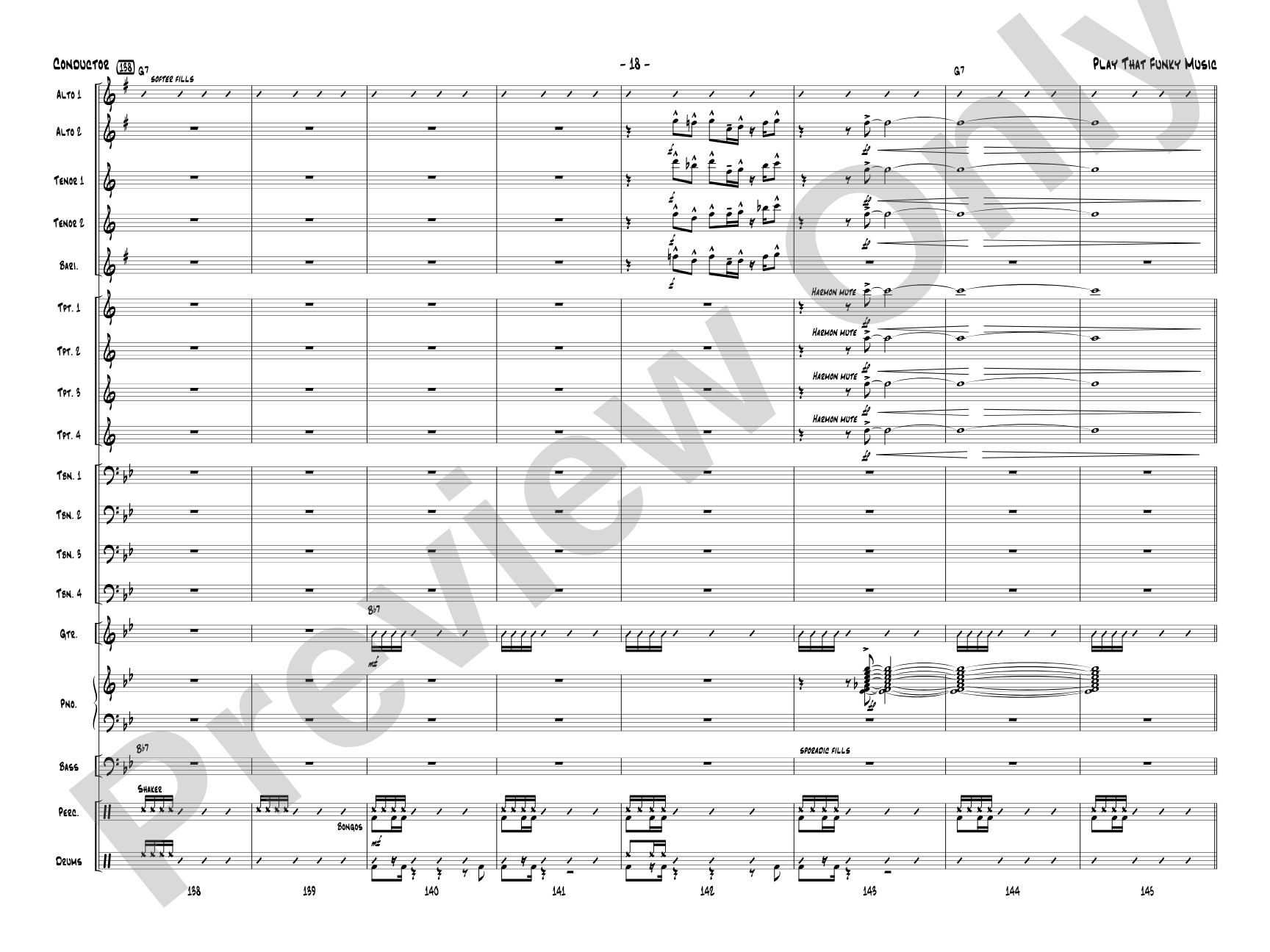
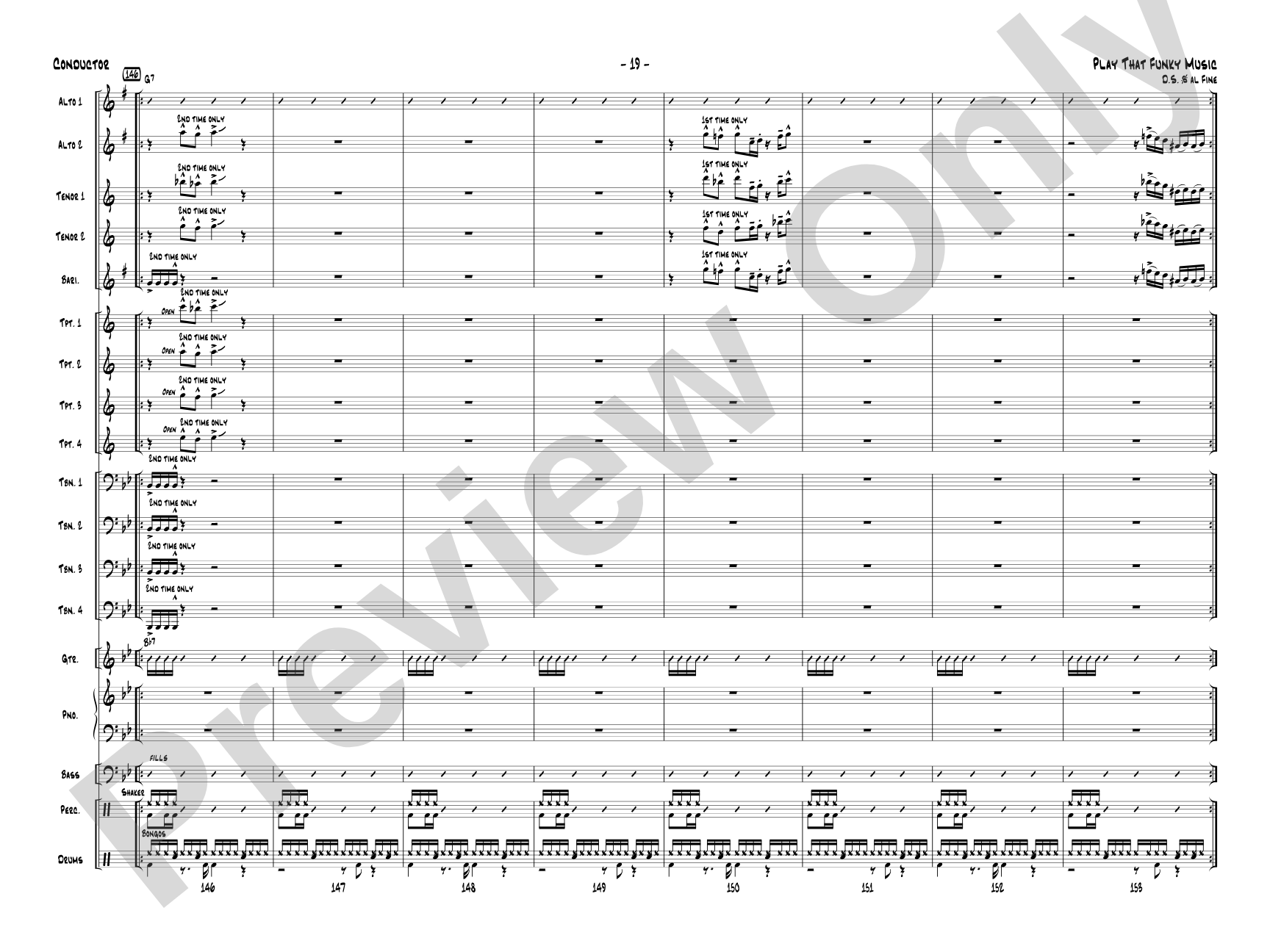

Play That Funky Music: Jazz Ensemble Conductor Score & Parts
By Robert Parissi / arr. Gordon Goodwin
Grade: 5 (Advanced / Difficult)
Item: 00-PK-0005910

$70.00
One moment…
Description
Funky, funkier, funkiest. This Gordon Goodwin chart on the classic funk rock tune "Play That Funky Music" is a showcase for your lead alto saxophone soloist from start to finish. This one demands a contemporary alto sax soloist with style and some altissimo chops too. Groove is essential for the rhythm section. If you have the rhythm section funk groove and the alto player, this is IT! As recorded on "The Phat Pack," Gordon's newest CD.


Don't just read it, hear it, play along with it, and watch your students grow with it. In MakeMusic Cloud, Play That Funky Music: Jazz Ensemble Conductor Score & Parts comes alive with professional accompaniment, adjustable tempo, and built-in practice tools that turn solo practice into real progress.
Open in the Player
Jump straight in and assign it today.
Start Your Free Trial
Open this title and explore the full library in minutes.
Sample Audio
1
Audio File
--:--
0:00
0:00
Sample Video
No sample videos found.
Additional Details
Series:
Gordon Goodwin Series
Publisher:
Alfred Music
Page Count:
86
SKU:
00-PK-0005910
More about this title
About the Composer: Robert Parissi
Robert Parissi wrote "Play That Funky Music" in 1976 as the title track and lead single for Wild Cherry's debut album. The song became a massive crossover hit, reaching number one on the Billboard Hot 100 and establishing itself as a funk rock standard. Parissi's composition has remained a staple of popular music for nearly five decades, instantly recognizable for its infectious groove and memorable melodic hook.
Why we love this
Gordon Goodwin's arrangement captures everything that makes the original irresistible while giving your ensemble genuine ownership of the groove. The alto sax spotlight is a gift for a player with attitude and technical command, and the rhythm section responsibility means everyone from drums through bass must stay locked and funky throughout. This chart swings with personality while remaining playable at the advanced level.
What to expect
Immediate, infectious, and unapologetically funky. The chart maintains the original's swagger and groove sensibility while expanding the arrangement to showcase ensemble colors and harmonic sophistication. From the first notes through the extended alto showcase, the music invites listeners into a confident, contemporary sound that feels both grounded in funk tradition and energized by jazz voices.
Who it's for
Directors with a solid jazz ensemble and an alto saxophonist who has both contemporary chops and the stylistic maturity to carry a feature solo. This chart rewards tight rhythm sections that understand funk pocket and ensemble members who can lock into a groove while supporting a strong soloist. Advanced high school and college ensembles will find genuine musicianship challenges here.
How to get the most out of it
- Build the rhythm section's confidence in the pocket before rehearsing with the full ensemble. Have drums, bass, and piano establish the groove independently so their collective lock feels inevitable rather than fought.
- Balance the alto sax feature carefully. This soloist needs to soar above the ensemble without losing the groove; the band's job is to push the rhythm harder when the sax pushes the melody.
- The altissimo passages demand pure air support and confident voicing from your alto player. Encourage exploration of those high register colors in sectional rehearsals so they arrive at the full ensemble performance with ownership.
- Let the funk breathe. Temper the urge to clean up every rhythmic edge. The chart thrives on a slightly behind-the-beat feel and relaxed phrasing that reads as cool, not sloppy.
How to use it
Program this as a showstopper in a jazz concert where you want to highlight a standout alto saxophonist while giving the full ensemble a showcase number. The contemporary funk-rock foundation makes it an excellent partner for other Goodwin charts or as a bridge between straight-ahead jazz standards and modern ensemble writing. Save it for the second half when the energy is right.
Skills your students will build
- Maintaining rhythmic pocket in funk grooves with syncopated ensemble figures
- Solo development and altissimo saxophone technique
- Ensemble cohesion during sustained rhythmic patterns and groove-based playing
- Jazz phrasing and behind-the-beat articulation across all sections
- Rhythm section interplay and lock (drums, bass, piano coordination in funk context)