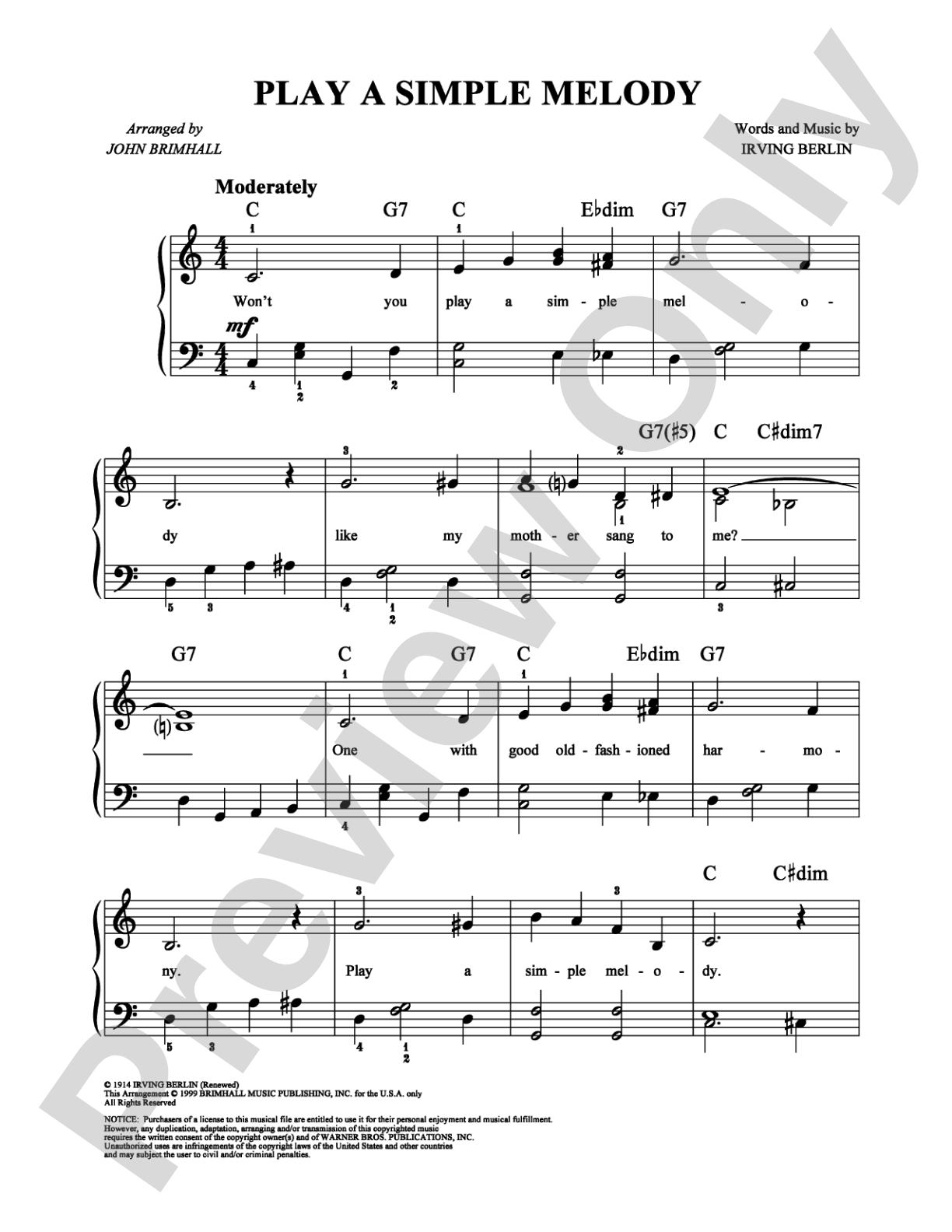
Play A Simple Melody: Easy Piano Digital Sheet Music

Play A Simple Melody: Easy Piano Digital Sheet Music

Irving Berlin

Item: 00-PS-0001264

Digital Download
$3.99
Description

Play A Simple Melody: Easy Piano Digital Sheet Music isn't in MakeMusic Cloud just yet...but it could be. Let us know you'd like to see it, and you'll help shape what comes next. In the meantime, start a free trial and dive into thousands of interactive titles your students can play along with today.

Sample Audio
No sample audio found.
Sample Video
Additional Details
SKU: 00-PS-0001264

More about this title

Why we love this

This piece captures the essence of early twentieth-century simplicity—the kind of melody that sits naturally under the fingers and rewards steady practice with immediate musical payoff. Students hear themselves making real music from the first lesson, which builds confidence faster than most beginner repertoire allows.

What to expect

Warm and unhurried, with a gentle charm that evokes a simpler time. The melody unfolds naturally, inviting the player to discover the music rather than labor through it.

Who it's for

Early-stage piano students who are ready to move beyond exercise patterns and play recognizable melodies. Teachers looking for material that fits between method book lessons and simple folk song arrangements will find this especially useful.

How to get the most out of it

  • Keep a steady tempo throughout. A metronome at a comfortable speed (around 60-80 bpm) helps early pianists stay grounded and prevents rushing through easy passages.
  • Shape the melody with gentle dynamic changes rather than playing at one volume. Slight crescendos and diminuendos bring out the tune's nostalgic character without requiring technical complexity.
  • Separate the hands mentally before combining them. Master the melody line first, then add the left hand, then bring them together at a slower tempo than your goal speed.

How to use it

Use this as a confidence builder in beginner recitals or as a supplementary piece between method book assignments. It works well in student showcases where families want to hear recognizable, accessible music alongside more formal classical selections.

Skills your students will build

  • Reading and executing single-line melodies with basic rhythmic patterns
  • Coordinating both hands in simple harmonic textures
  • Maintaining steady tempo without external assistance
  • Phrasing and shaping melody through dynamic variation
  • Building finger independence on the white keys

You May Also Like