
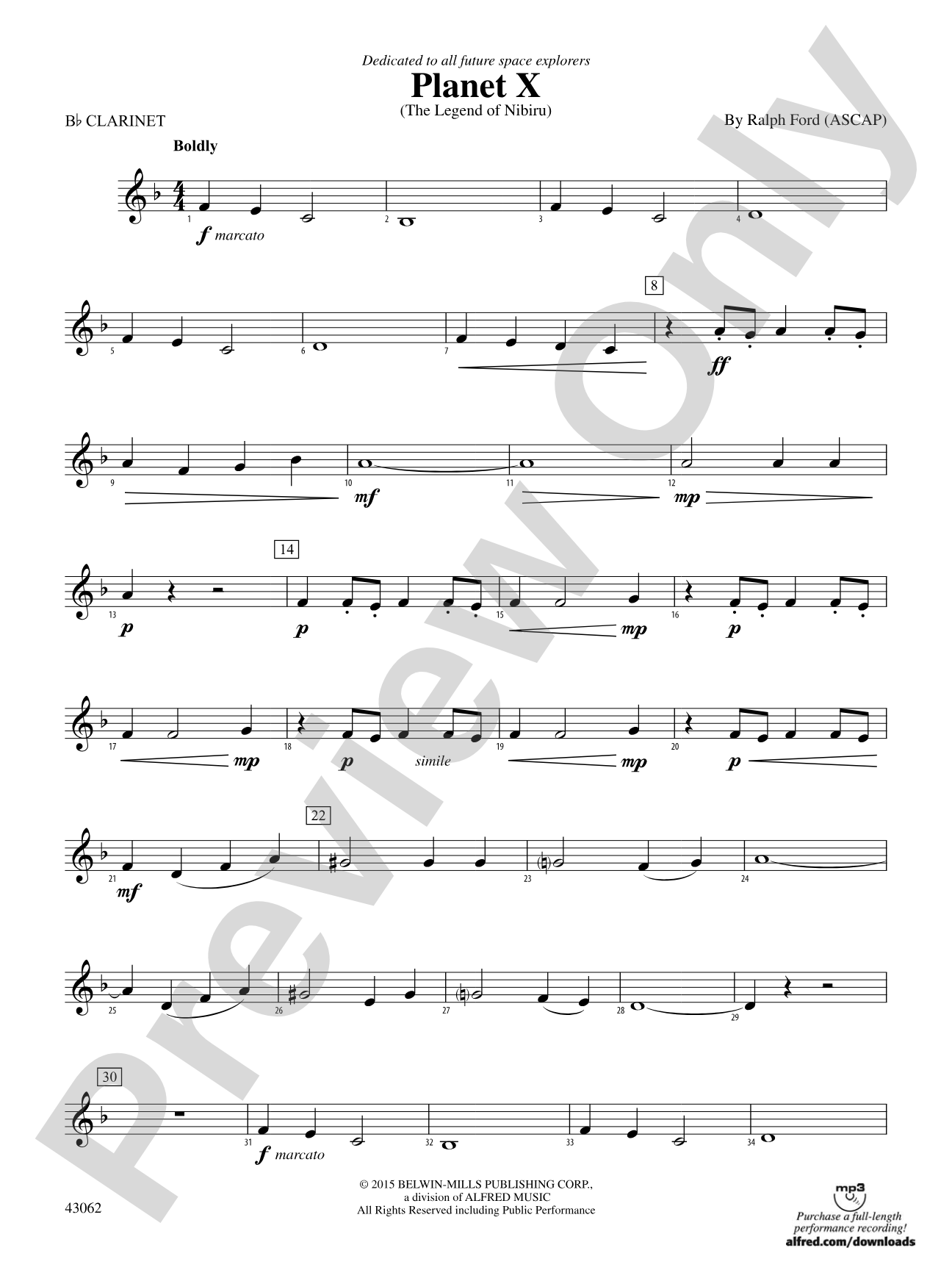

Planet X: 1st B-flat Clarinet
(The Legend of Nibiru)
By Ralph Ford
Grade: 1 (Very Easy)
Item: 00-PC-0017526_C1
$3.00
Pickup currently not available
Description
Planet X, Nemesis, or Nibiru---this "planet" has generated multiple scientific theories and been the subject of hypothetical speculation since the discovery of Neptune. The compelling basic chromatic themes have been intergalactically scored with delicious sci-fi flavor especially for your beginners, and is charged with energy and intrigue. The existence of Planet X was rebuked by NASA as early as 1993. Or was it? (2:30)


Don't just read it, hear it, play along with it, and watch your students grow with it. In MakeMusic Cloud, Planet X: 1st B-flat Clarinet comes alive with professional accompaniment, adjustable tempo, and built-in practice tools that turn solo practice into real progress.
Open in the Player
Jump straight in and assign it today.
Start Your Free Trial
Open this title and explore the full library in minutes.
Sample Audio
1
Audio File
--:--
0:00
0:00
Sample Video
Additional Details
Series:
Belwin Beginning Band
Publisher:
Alfred Music
Page Count:
256
SKU:
00-PC-0017526_C1
More about this title
About the Composer: Ralph Ford

Ralph Ford has spent nearly three decades teaching music at the university level while maintaining an active career as a composer, arranger, and conductor. His professional trajectory spans multiple industries: he has worked extensively in media production, broadcast, and advertising, earning international recognition for his commercial music work. He began arranging professionally at fifteen and has since produced over 250 published titles across orchestra, concert band, jazz ensemble, and marching band repertoire.
As an exclusive composer and arranger for the Belwin division of Alfred Music, Ford's works have been premiered and performed by university ensembles, military bands, professional orchestras, and school programs worldwide. His background includes appointments as Director of Jazz Ensemble and staff arranger at Troy State University, where he completed his Master of Science degree while serving as a full-time faculty member. Beyond composition, he has conducted live musical productions, overseen recording sessions, and produced music packages for national network affiliates.
Why we love this
Ford knows exactly what beginning band students need: energy, accessibility, and a reason to care about the music they're playing. The sci-fi storyline gives young musicians narrative fuel without complicating the technical demands, and the straightforward chromatic themes make this rewarding to rehearse at Grade 1 level. This is the kind of opener that makes kids want to come back to band.
What to expect
Intriguing and propulsive. The chromatic writing suggests cosmic mystery while the energetic pacing keeps the piece moving forward with scientific intrigue. It's playful in its speculation about what might be out there, delivering sci-fi flavor without demanding advanced technique.
Who it's for
Beginning concert band students who benefit from a programmatic hook and straightforward technical demands. This works equally well for young players who need encouragement and for directors seeking engaging material that doesn't sacrifice musicality for accessibility.
How to get the most out of it
- Establish a steady, driving pulse from the first downbeat. The sci-fi atmosphere depends on rhythmic precision, so lock the tempo early in rehearsals and maintain it consistently.
- Balance the chromatic themes so they cut through the harmonic accompaniment without overshadowing it. Use dynamic shaping to highlight melodic contours, especially in the upper woodwinds.
- Lean into the space and mystery suggested by the title. Allow slight breathing room in phrased sections; this isn't a march, even though it has forward momentum.
How to use it
This is an excellent choice for fall festival season or a "space" themed concert. The brief 2:30 duration makes it ideal as an opener to establish momentum, or pair it with other Grade 1 selections to demonstrate your band's growing range and confidence.
Skills your students will build
- Reading and executing chromatic passages with accuracy
- Maintaining steady tempo and pulse within an energetic, driving framework
- Balancing melody and accompaniment in a fuller ensemble texture
- Responding to program-based imagery and storytelling in music
- Sustaining energy and focus across short, well-structured phrases