
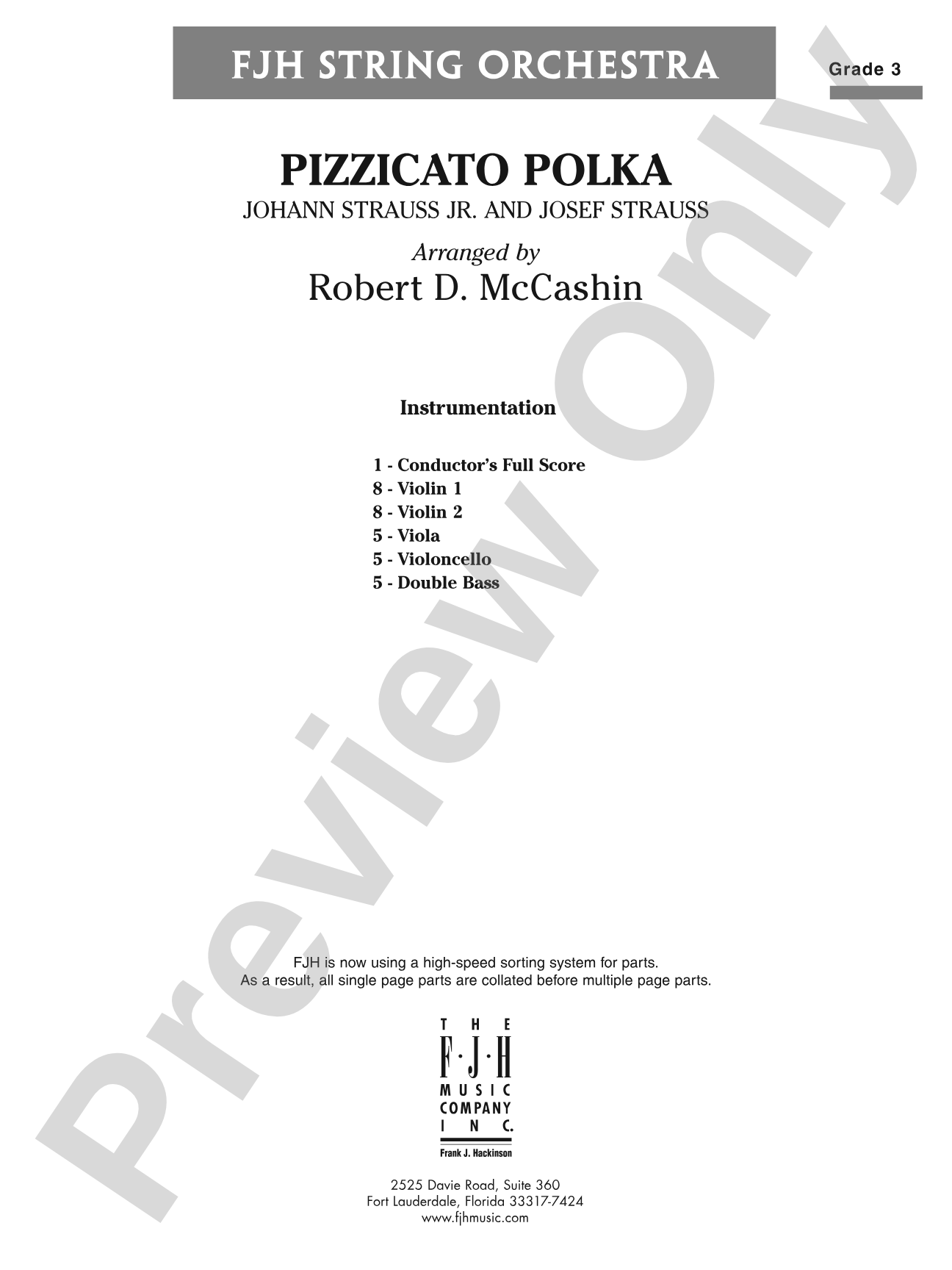
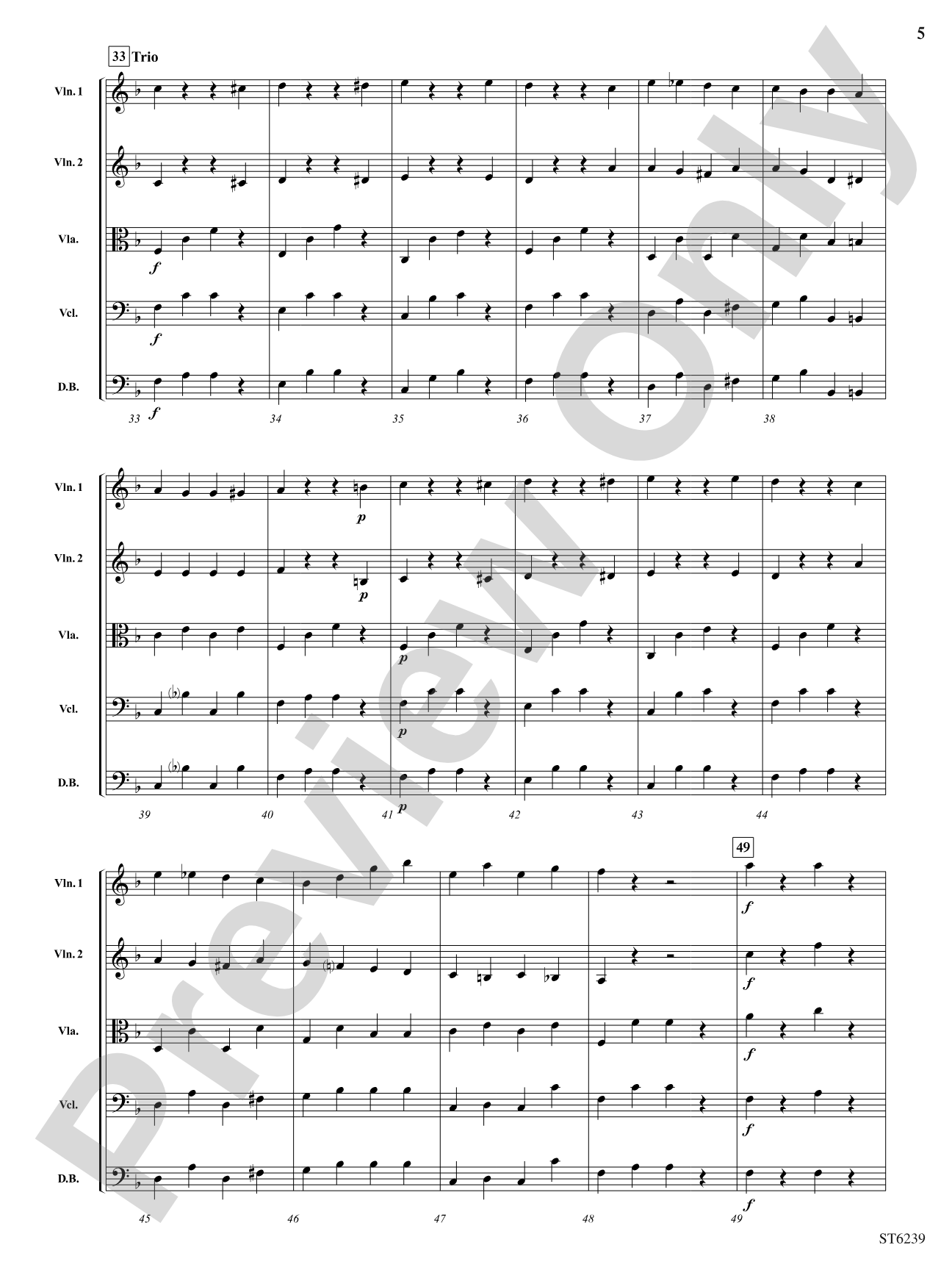
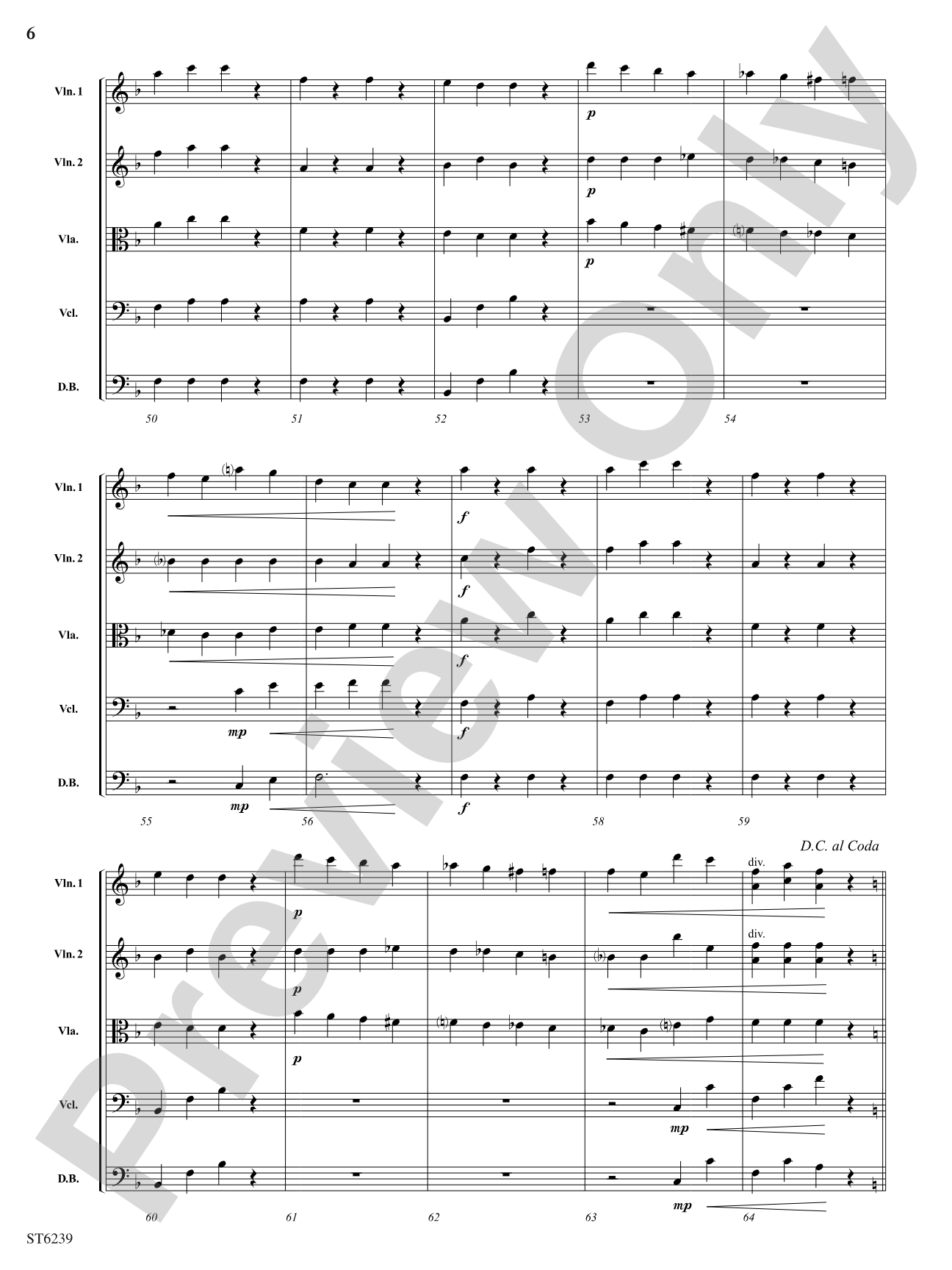
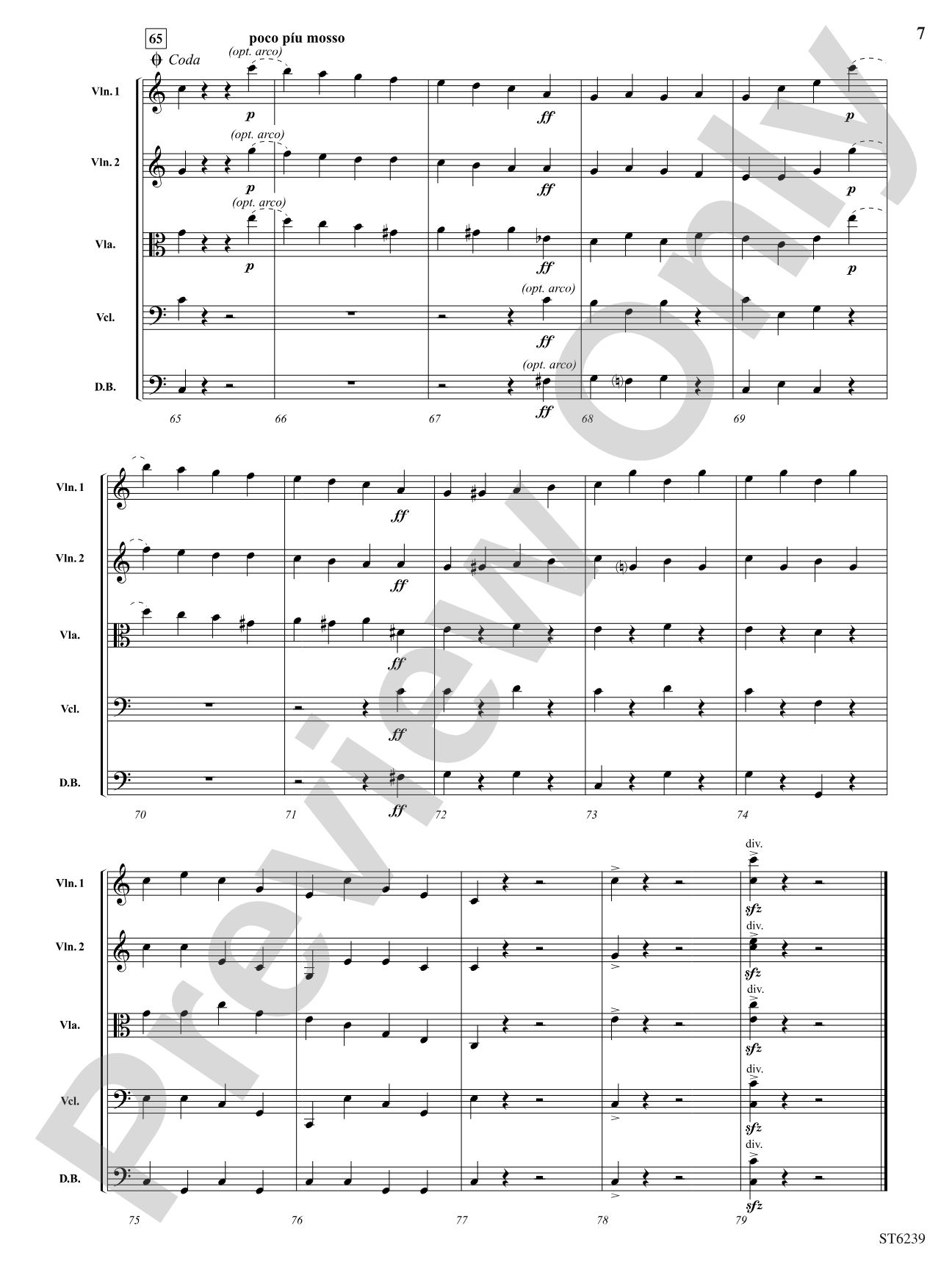

Pizzicato Polka: Score
Arranged by Robert D. McCashin
Grade: 3
Item: 98-DST6239S
$5.00
Pickup currently not available
Description
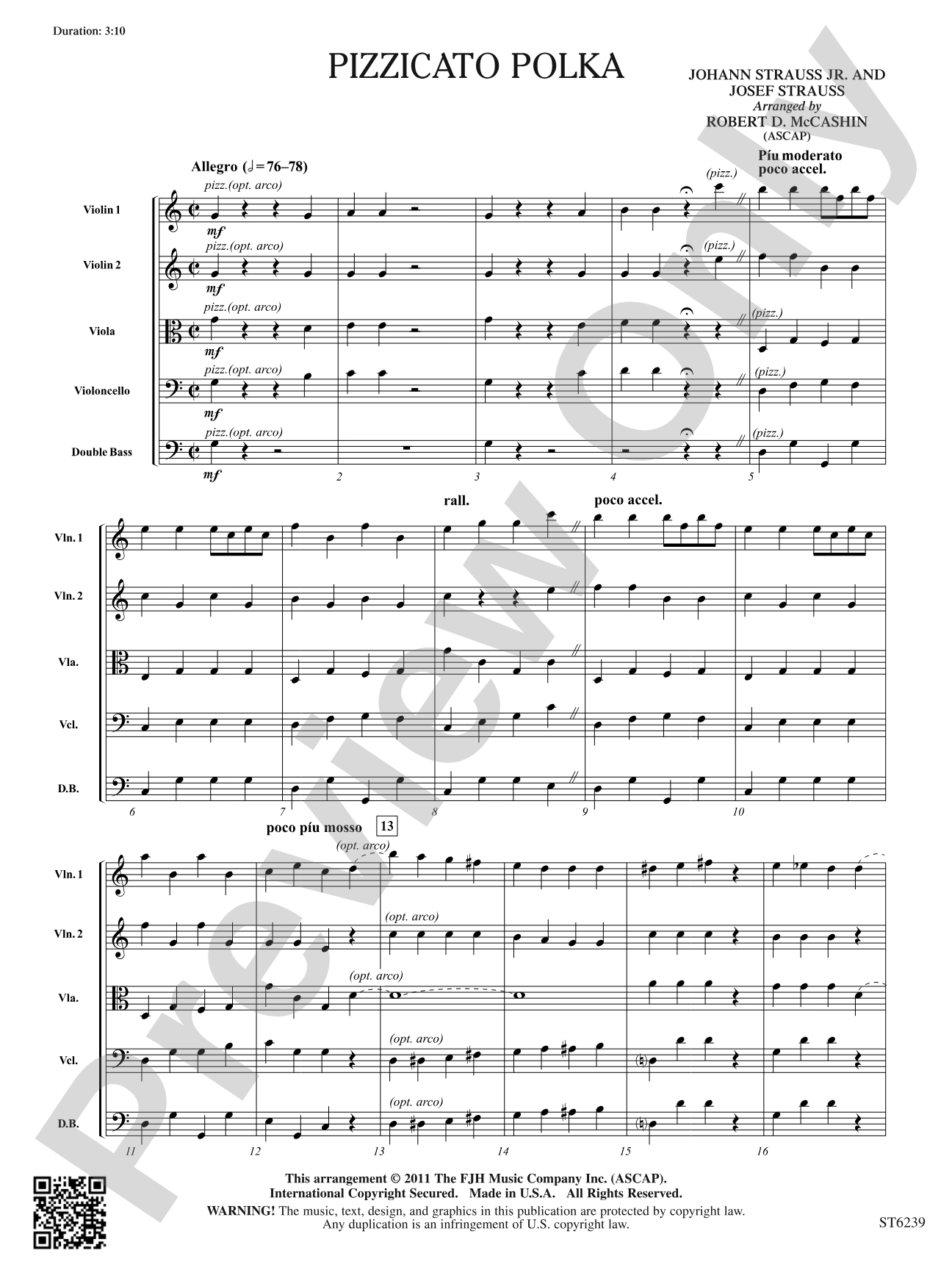
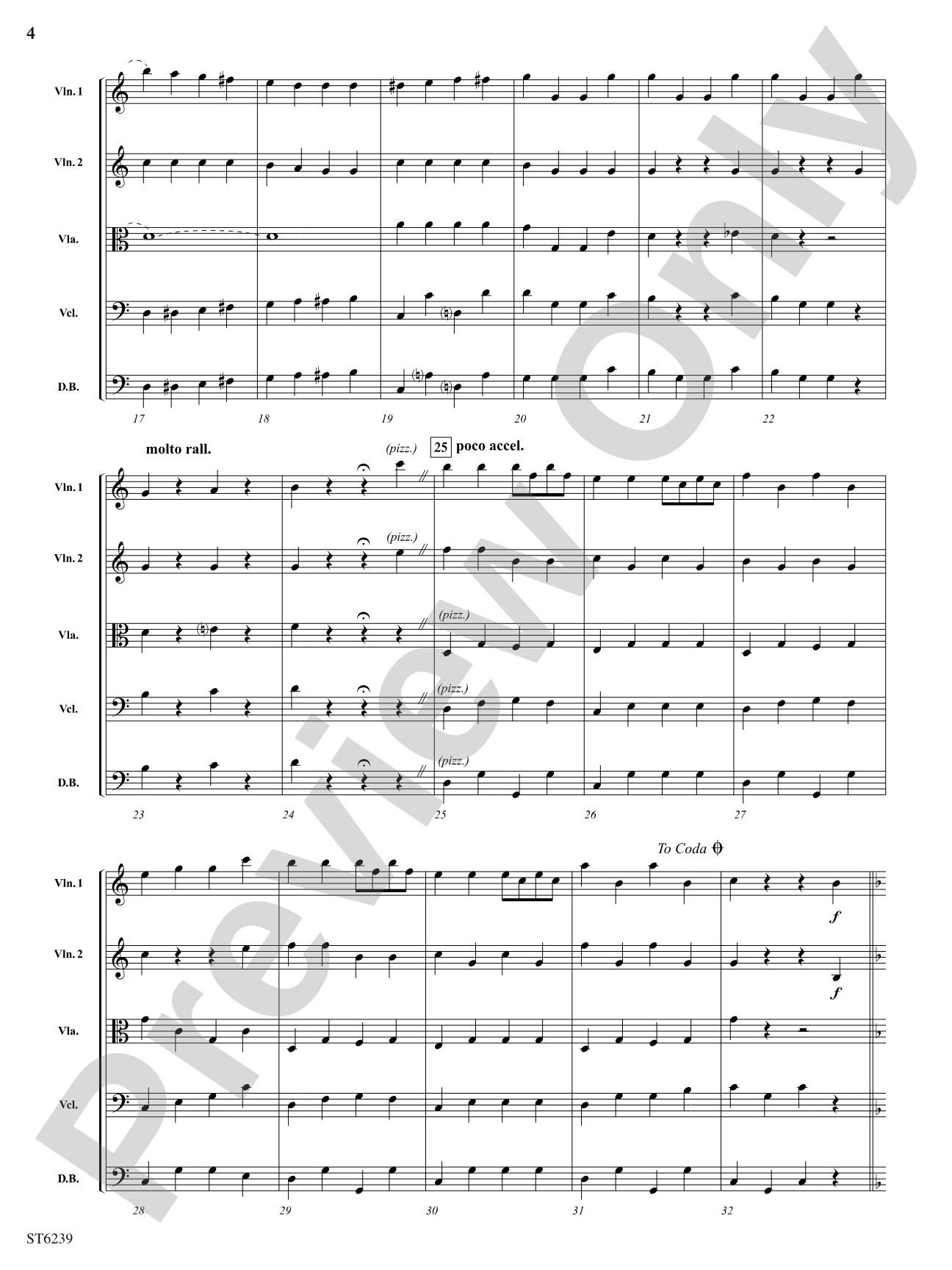
This delightful arrangement highlights all the charm and spirit of the original by Johann (Jr.) and Josef Strauss. To add performance options consistent with some modern interpretations, indications are included for passages that may be played arco. A wonderful change of pace for your next program.


Don't just read it, hear it, play along with it, and watch your students grow with it. In MakeMusic Cloud, Pizzicato Polka: Score comes alive with professional accompaniment, adjustable tempo, and built-in practice tools that turn solo practice into real progress.
Open in the Player
Jump straight in and assign it today.
Start Your Free Trial
Open this title and explore the full library in minutes.
Sample Audio
1
Audio File
--:--
0:00
0:00
Sample Video
No sample videos found.
Additional Details
Series:
FJH String Orchestra
Publisher:
The FJH Music Company, Inc.
SKU:
98-DST6239S
More about this title
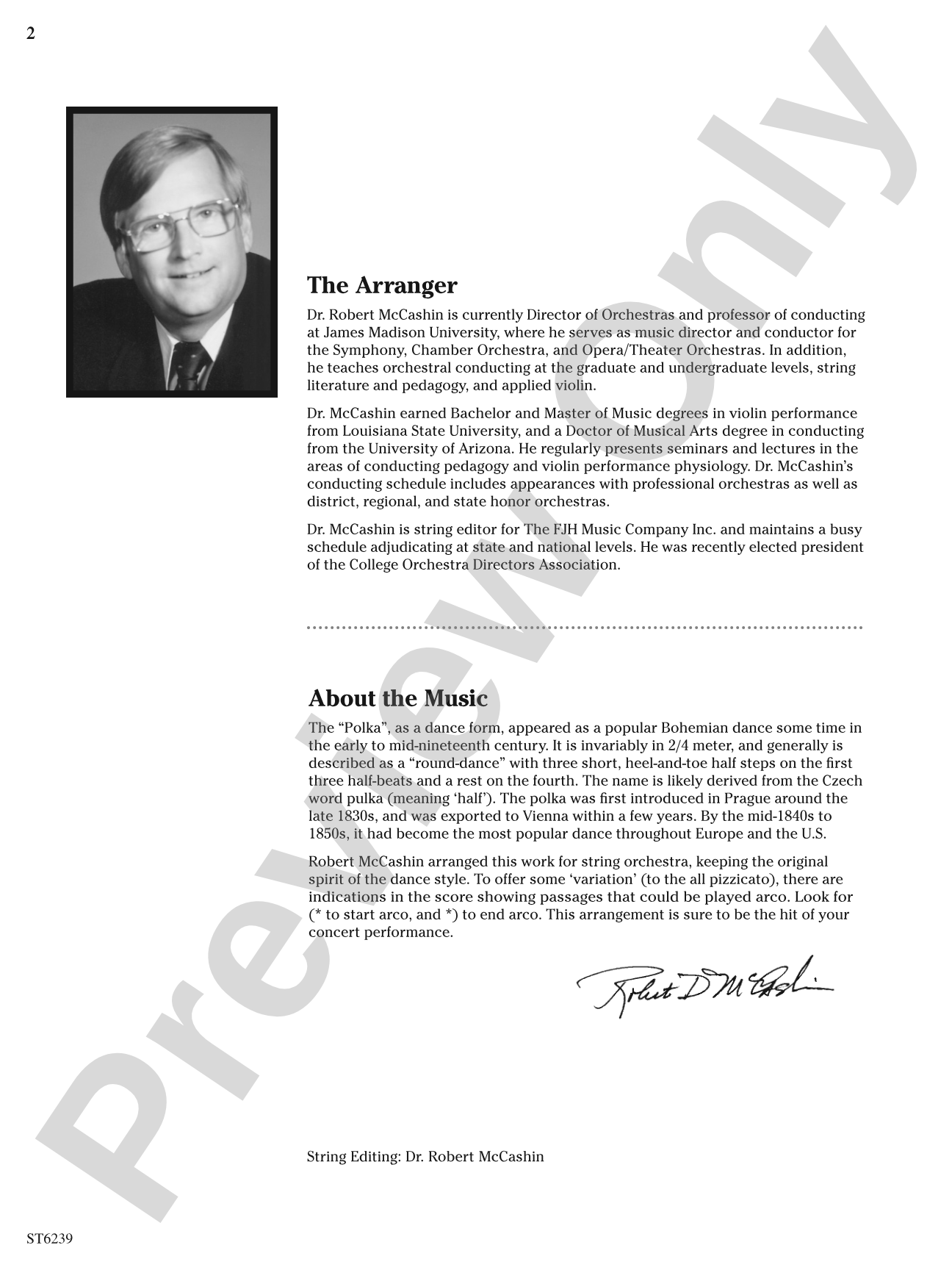
About the Arranger: Robert D. McCashin
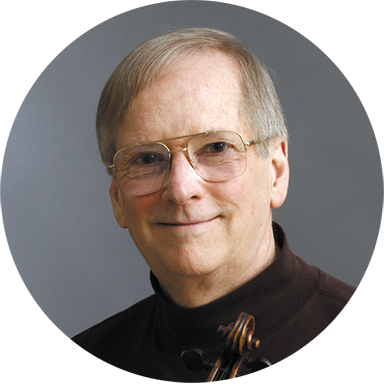
Robert D. McCashin brings four decades of orchestral conducting and string pedagogy to his arrangement work. A violinist trained at Louisiana State University and the University of Arizona (DMA in conducting), he spent his career as Director of Orchestras and conducting professor at James Madison University, where he led the symphony, chamber, and opera orchestras while maintaining an active applied studio. His Distinguished Teacher Award from JMU recognizes his commitment to rigorous musical training.
McCashin has published nearly 80 educational arrangements and original works spanning grades 1-5, many becoming standard repertoire in school and university programs. His deep experience as both a performer and educator informs every aspect of his writing, from orchestration clarity to pedagogical pacing. He is also co-author of the widely used string class methods New Directions for Strings and A Scale in Time.
Why we love this
McCashin's arrangement captures the infectious energy of this Strauss favorite while keeping the orchestration clean and transparent at grade 3. The optional arco passages give you real programming flexibility, letting you shape the character based on your ensemble's strengths and the concert context. It's the kind of piece that reminds audiences why string music sparkles.
What to expect
Bright, buoyant, and irresistible. The pizzicato work gives it a dancing, almost percussive character that audiences find instantly appealing, while the optional arco sections allow for moments of elegance. It's the kind of piece that makes people smile before you even finish the opening measures.
Who it's for
String orchestras at the intermediate level who are ready to tackle rhythmic complexity and articulation control without heavy technical demands. This works equally well for a full program string orchestra or a classroom ensemble with solid foundational skills.
How to get the most out of it
- Emphasize the rhythmic precision of the pizzicato sections by drilling the rhythmic figures in isolation before layering them with melody. Lock the section vertically so the rhythmic pulse feels unified rather than scattered.
- Shape the arco passages as true melodic moments that contrast with the pizzicato energy. These transitions should feel intentional and musical, not like technical switches.
- Let the second violins and violas sit slightly forward during their pizzicato accompaniment figures. These rhythmic underpinnings deserve clarity so the texture doesn't collapse into the lowest voices.
- Take the tempo with confidence. This piece thrives on momentum, so maintain a bright, steady pulse that lets the Strauss character shine without rushing.
How to use it
Deploy this as an energetic concert opener or a palate-cleanser between heavier works. It's also an excellent festival selection, as it demonstrates rhythmic maturity and ensemble control in an accessible, musically satisfying package. The novelty appeal makes it perfect for a family concert or young people's concert setting.
Skills your students will build
- Precision pizzicato articulation and rhythm clarity
- Smooth arco to pizzicato transitions
- Maintaining ensemble pulse through rhythmic figures
- Balancing harmonic and rhythmic accompaniment voices
- Stylistic interpretation of light concert music