
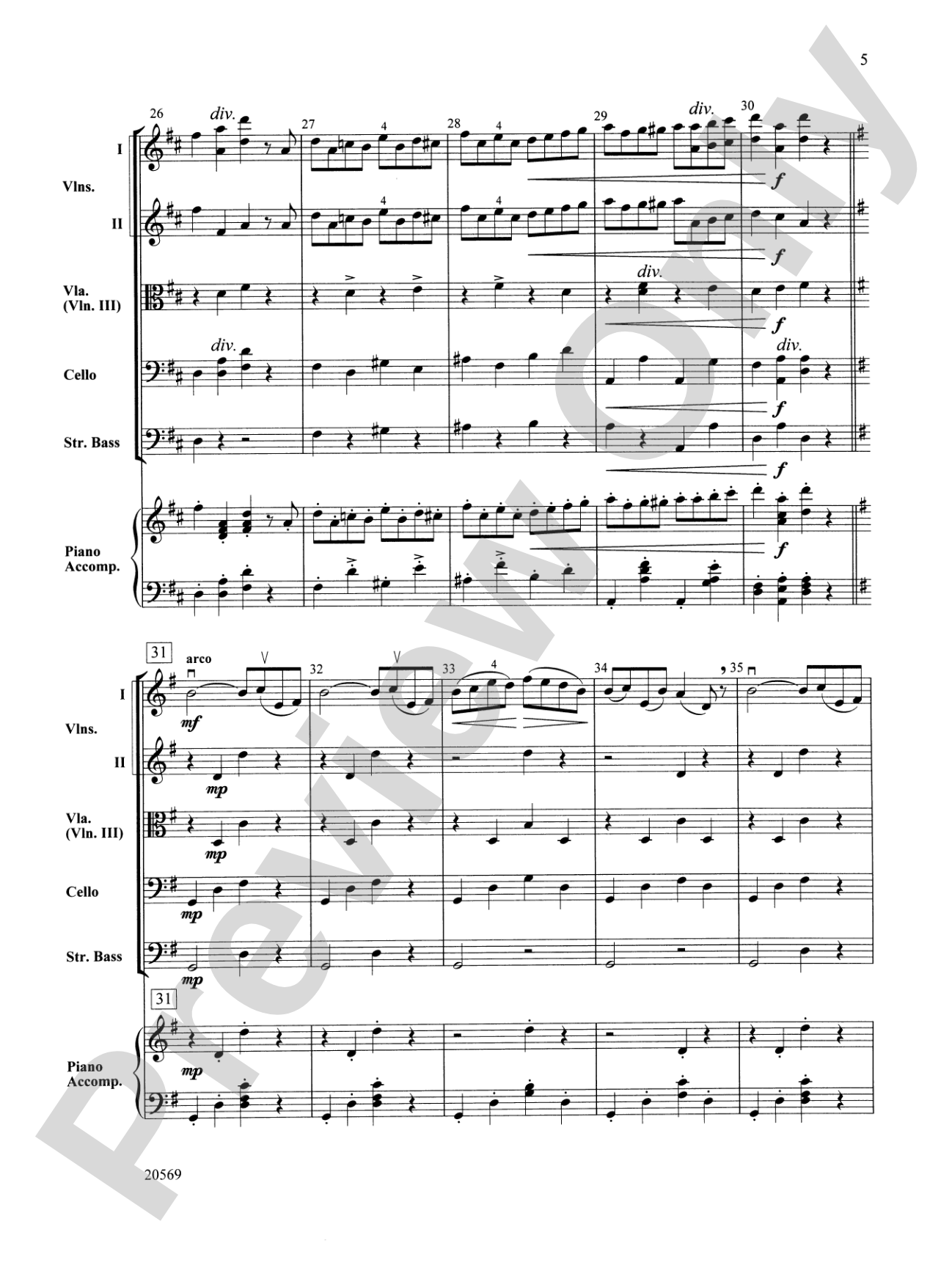
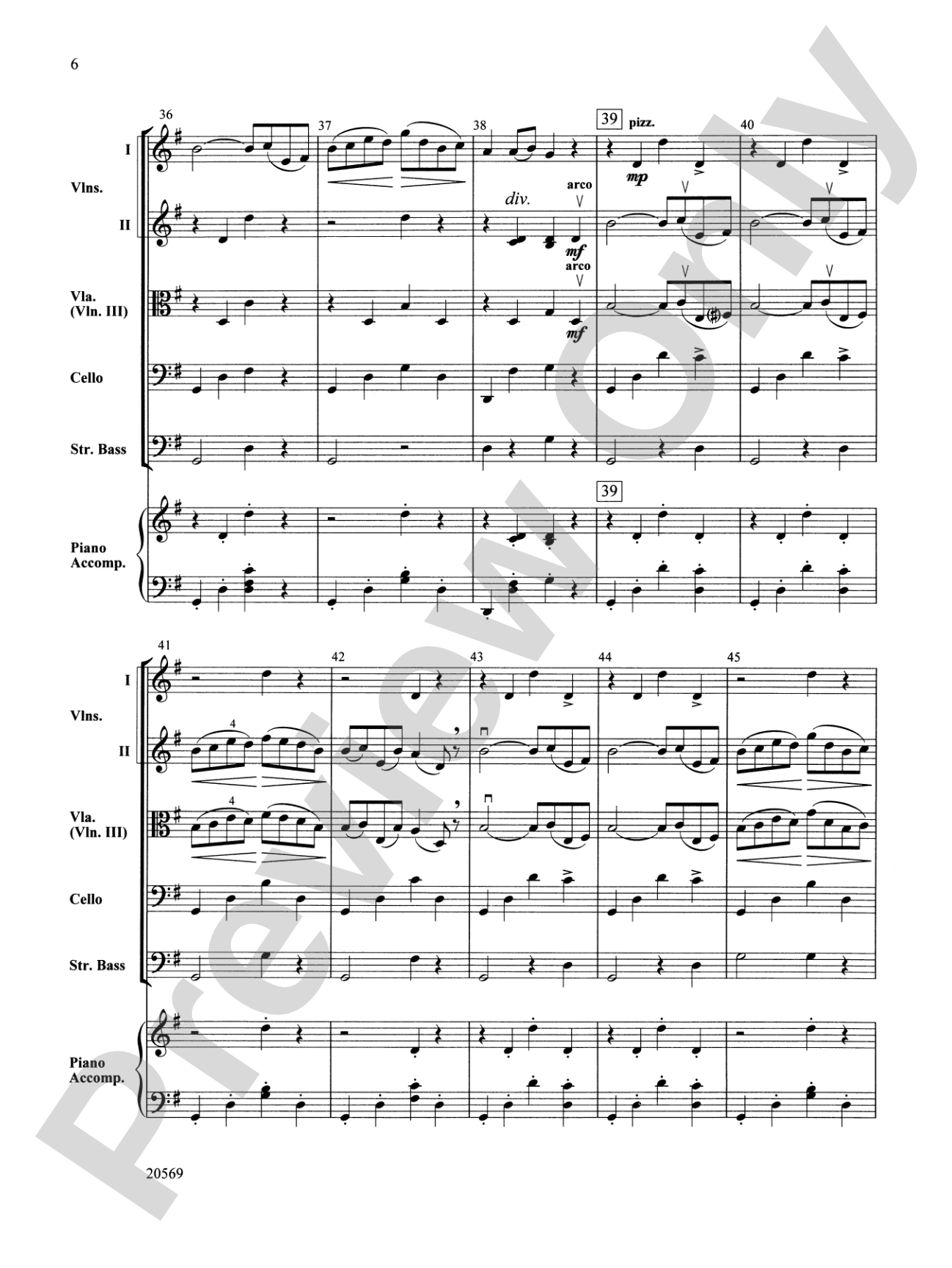
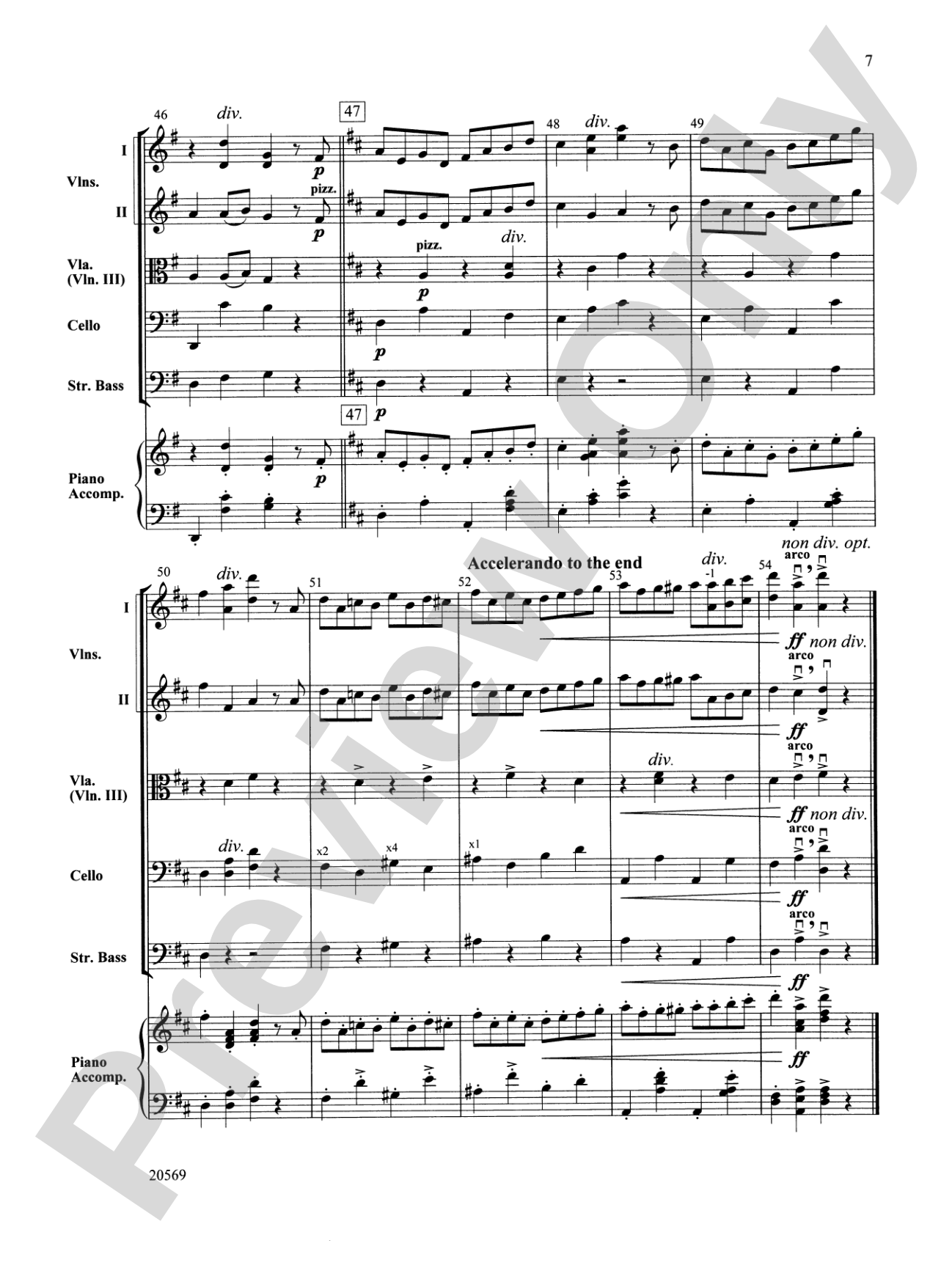


Pizzicato Polka (from the ballet Sylvia): String Orchestra Conductor Score & Parts
From the Ballet Sylvia
By Léo Delibes / arr. Mark Williams
Grade: 2
Item: 00-PK-0000414

$42.00
Pickup currently not available
Buy Extra Parts (Digital PDF Download)
Parts Added to Cart!
Related Items
Pizzicato Polka: String Orchestra Conductor Score & Parts |
$42.00
|
View |
Description
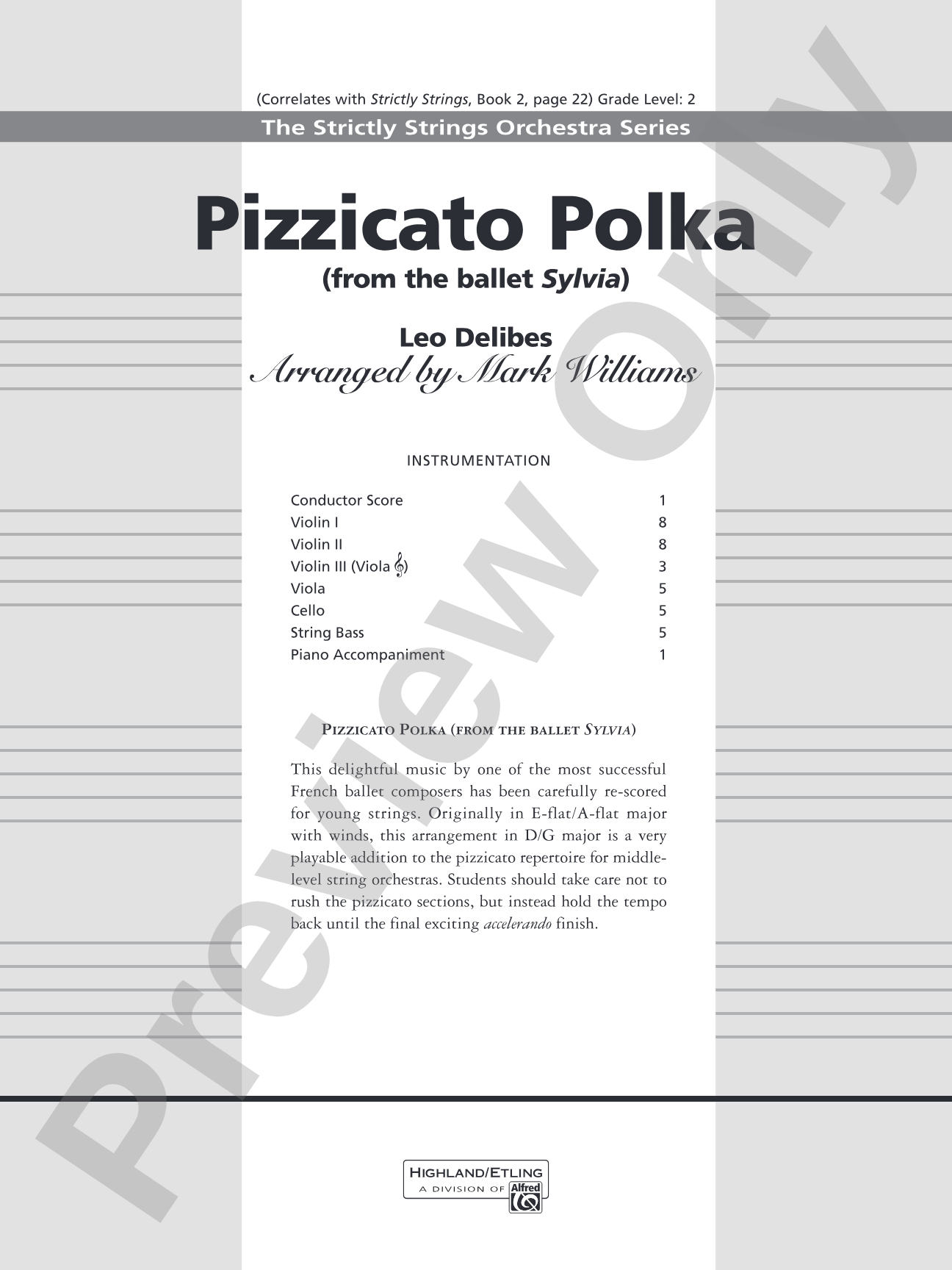
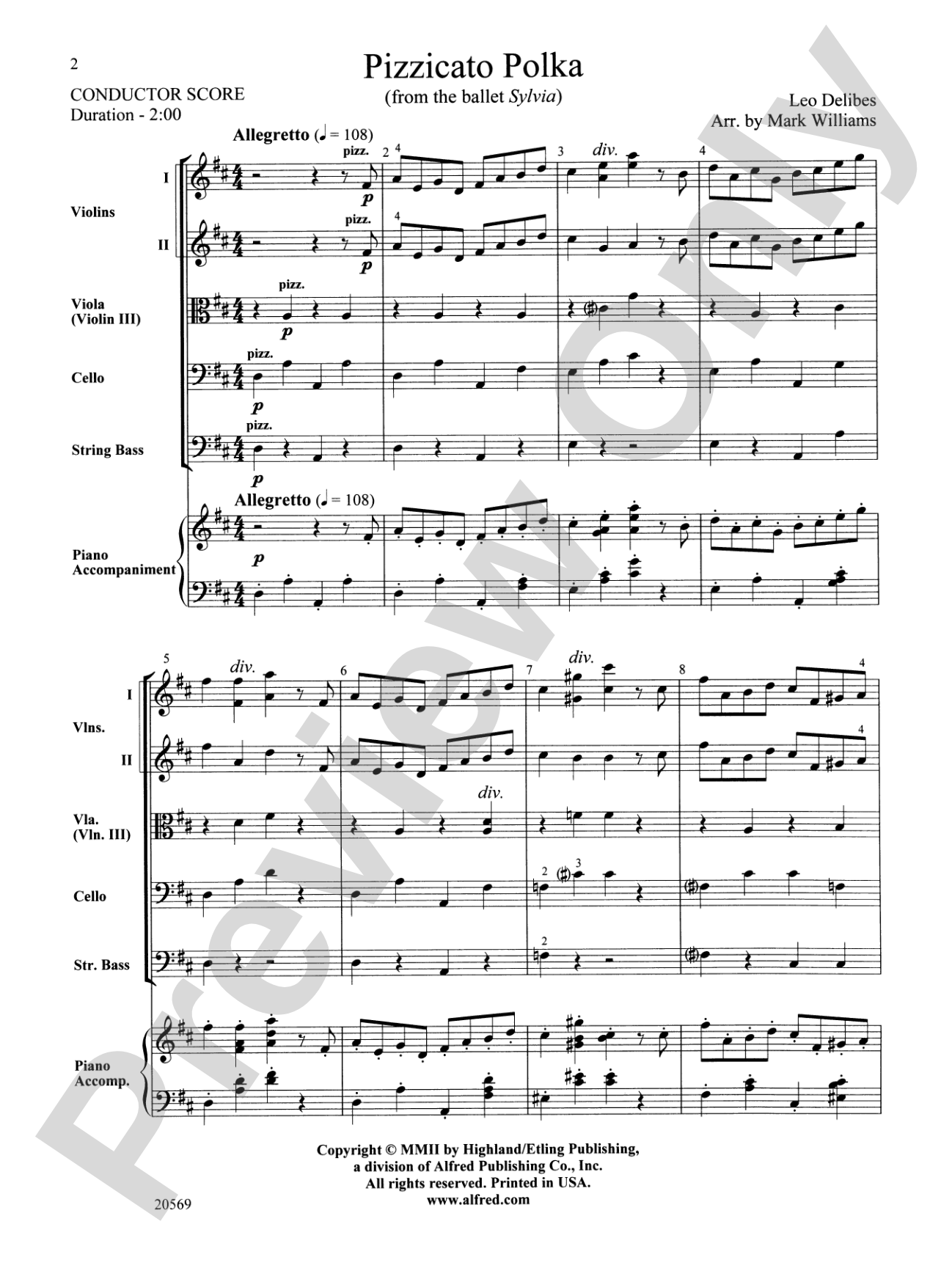
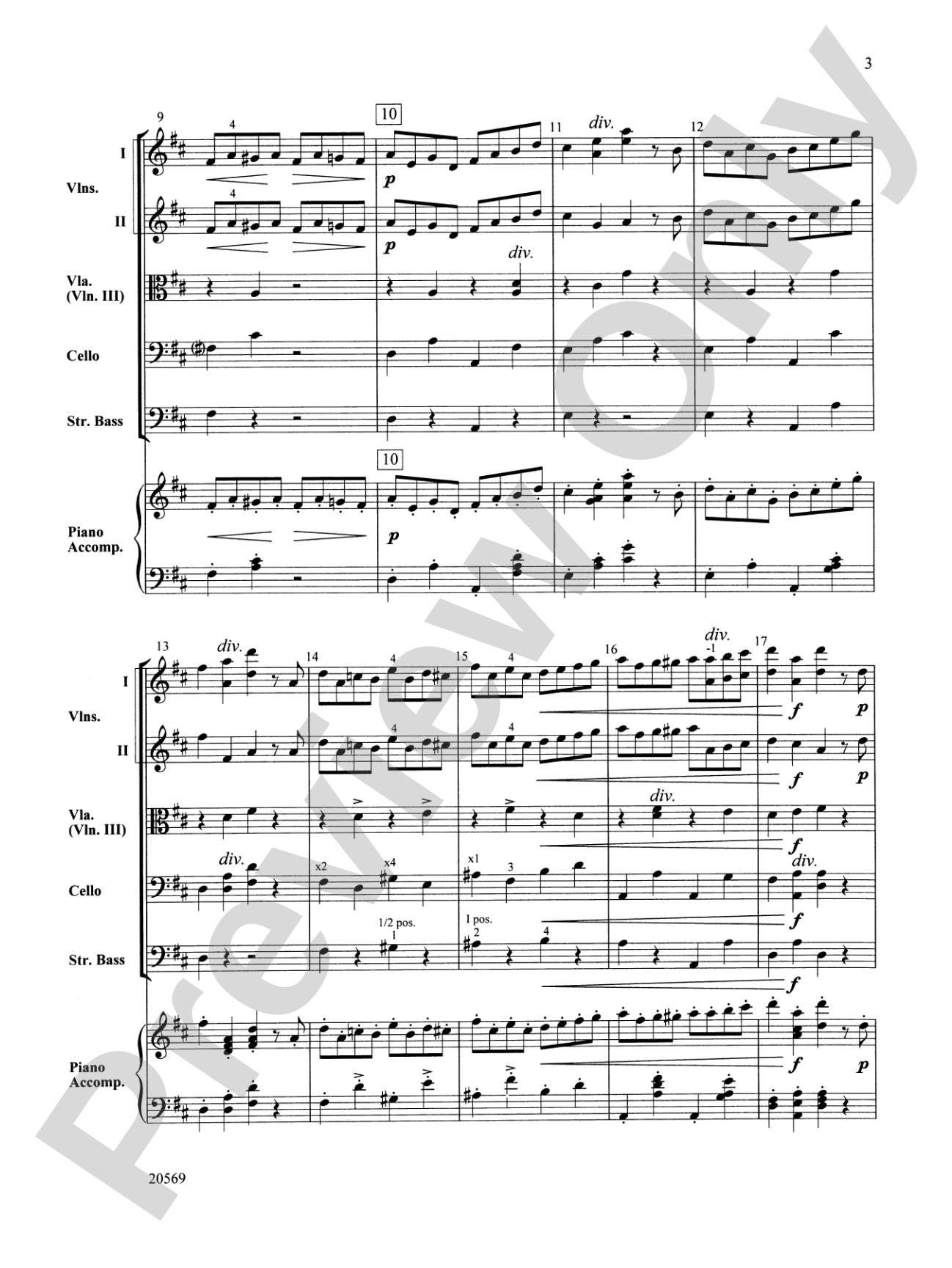
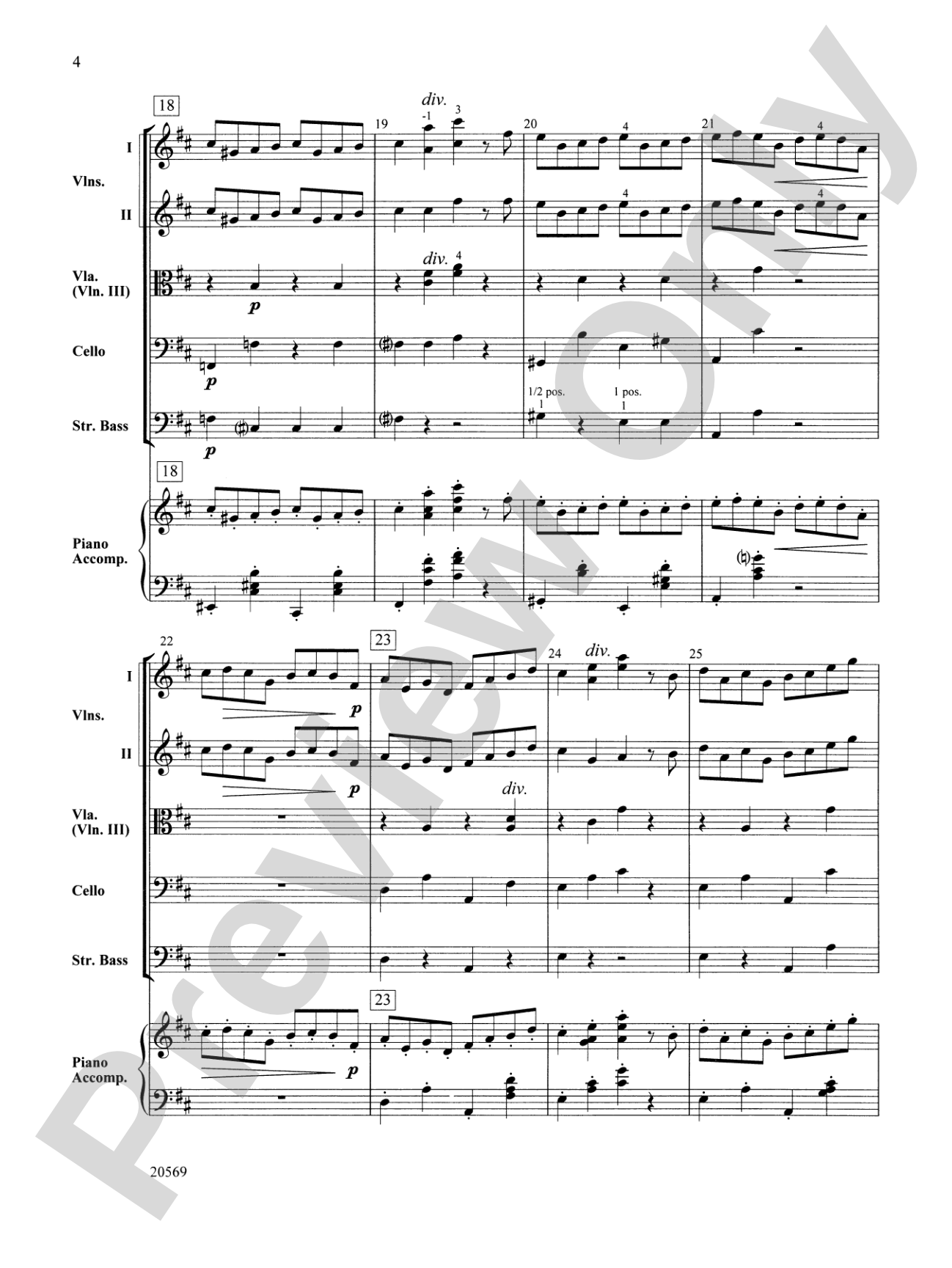
You may not recognize the title, but you're sure to recognize the tune! This delightful music by one of the most successful French ballet composers has been carefully re-scored for young strings. Your students will love the final exciting accelerando finish. Correlated with Strictly Strings, Book 2, page 22.


Don't just read it, hear it, play along with it, and watch your students grow with it. In MakeMusic Cloud, Pizzicato Polka (from the ballet Sylvia): String Orchestra Conductor Score & Parts comes alive with professional accompaniment, adjustable tempo, and built-in practice tools that turn solo practice into real progress.
Open in the Player
Jump straight in and assign it today.
Start Your Free Trial
Open this title and explore the full library in minutes.
Sample Audio
1
Audio File
--:--
0:00
0:00
Sample Video
Additional Details
Series:
Highland/Etling Strictly Strings
Publisher:
Alfred Music
Page Count:
36
SKU:
00-PK-0000414
More about this title
About the Composer: Léo Delibes
Léo Delibes (1836, 1891) shaped French ballet music during the Second Empire, composing three masterworks, Coppélia, Sylvia, and Lakmé, that remain pillars of the lyric stage. His genius lay in writing melodies that were instantly memorable yet sophisticated enough to sustain full-length narratives; he understood exactly how to support dancers while keeping audiences engaged.
Delibes elevated ballet music from mere accompaniment to genuine art form. His orchestrations are models of clarity and color, making him an ideal composer for young string players learning to execute well-crafted concert pieces. Teachers have long recognized his ballets as a gateway to serious repertoire.
Why we love this
Mark Williams's rescoring keeps Delibes's melodic charm intact while respecting the technical ceiling of Grade 2 players. That accelerando finale gives your ensemble a genuine showstopper moment, the kind of controlled excitement that makes audiences remember a performance and convinces young musicians why they practice.
What to expect
Bouncy and bright, with a mischievous energy that keeps audiences smiling from start to finish. The pizzicato texture gives the piece a charming lightness, and that final acceleration sends everyone home happy.
Who it's for
String orchestra directors working with Grade 2 ensembles who want an engaging arrangement of recognizable music that doesn't sacrifice musical substance. This works beautifully for students in their second or third year of instruction who are ready for slightly more sophisticated phrasing and coordinated ensemble playing.
How to get the most out of it
- Shape the opening phrases with gentle dynamic contours; the pizzicato articulation can easily flatten if every note lands with the same weight. Let the natural pulse breathe.
- Lock the accelerando sections early in rehearsal so players understand the target tempo before attempting the passage at full speed. Mark clear increments on the conductor score and use those as checkpoints during run-throughs.
- Balance the inner voices carefully during passages where the melody moves between sections. Young players often disappear when they're not on top; remind them that supporting the tune is just as musical as playing it.
- Maintain articulate pizzicato throughout; sloppy left-hand placement muddies the crisp character this piece demands. Spend time on evenness and clarity rather than speed.
How to use it
Perfect as a concert opener or a energetic closer; it fits comfortably on spring pops programs or young musicians' showcase concerts. Place it alongside other accessible masterwork arrangements to demonstrate your students' growing musicianship without requiring major technical leaps in the program.
Skills your students will build
- Articulate pizzicato control and evenness
- Responding to tempo changes and conducting clear accelerando
- Balancing melody and accompaniment voices
- Phrasing in a tuneful, song-like style
- Reading score notation from conductor perspective (for rehearsal awareness)