Pizzicato Parade: Percussion Sheet Music Preview

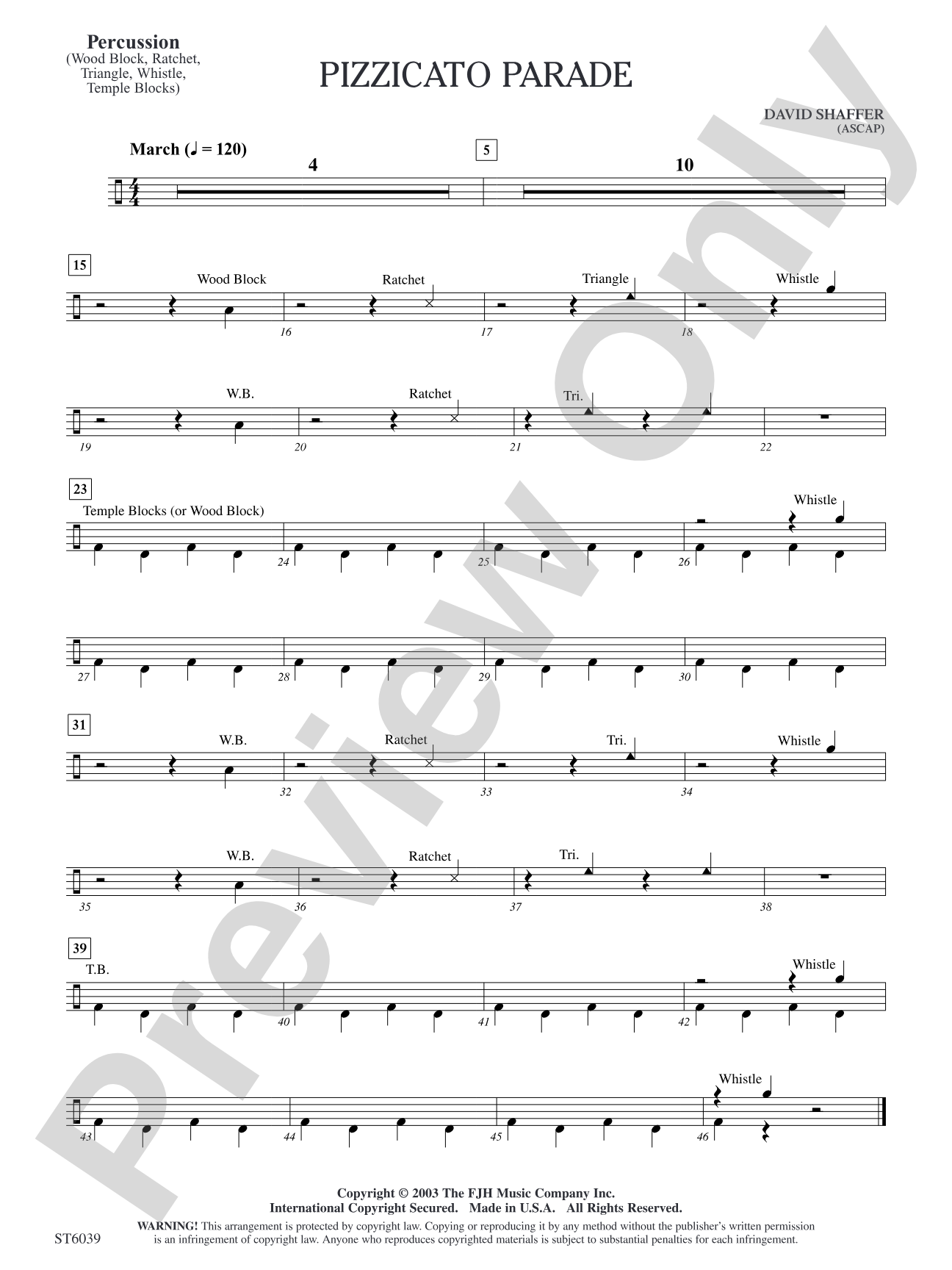
Pizzicato Parade: Percussion

By David Shaffer

Grade: 1

Item: 98-PC-DST6039_BDTDCYM

Digital Download
$7.00
Description
David Shaffer provides this excellent teaching tool which focuses entirely on pizzicato technique. Written as a march, this piece is perfect for changing the pace of your concert, and even includes some optional percussion to enhance the overall effect. Very easy and sure to be a delight.

Pizzicato Parade: Percussion isn't in MakeMusic Cloud just yet...but it could be. Let us know you'd like to see it, and you'll help shape what comes next. In the meantime, start a free trial and dive into thousands of interactive titles your students can play along with today.

Sample Audio
0:00
0:00
Sample Video
Additional Details
Series: FJH Beginning Strings
Publisher: The FJH Music Company, Inc.
SKU: 98-PC-DST6039_BDTDCYM

More about this title

About the Composer: David Shaffer

David Shaffer has built a career writing accessible string orchestra and beginning band music that prioritizes teachable moments without sacrificing musicality. His work for FJH Music Publishing has become standard repertoire in school string programs across North America, where his understanding of young players' technical capabilities shapes every compositional choice.

Why we love this

Shaffer zeroes in on pizzicato with pedagogical precision, giving every player a clear technical focus without overwhelming the ensemble. The march form keeps energy high while the optional percussion parts add flavor without demanding extra instrumentation, making this a flexible choice for concerts where you need a mood shift and a payoff moment.

What to expect

Bouncy and purposeful. The march meter propels the music forward while pizzicato strokes keep it playful and rhythmically crisp, landing somewhere between a novelty number and a teaching etude that never sounds like a teaching etude.

Who it's for

Beginning string orchestras in Grades 1-2 who need a vehicle for focused pizzicato work and concert variety. Ideal for ensembles looking to add lightness and humor to a program without sacrificing pedagogical value.

How to get the most out of it

  • Establish a steady, even pulse in rehearsal before layering in articulation; pizzicato clarity depends on rhythmic precision from the downbeat.
  • Balance the melodic line across your first violins and violas; the march structure will feel flat if the tune gets buried under accompaniment figures.
  • If adding percussion, keep the parts light and conversational rather than dominant; they're meant to enhance the character, not overtake the strings.
  • Work pizzicato consistency as a section before combining parts; this gives each stand time to lock in finger placement and release timing.

How to use it

Place this strategically in the second half of a concert when audiences need an energy reset and your ensemble has warmed into their technical ease. It works beautifully as a palate cleanser between sustained, lyrical pieces or as an opener to a lighter-themed portion of your program.

Skills your students will build

  • Consistent pizzicato articulation and hand position across the ensemble
  • Reading and executing march rhythm patterns at various subdivisions
  • Balance between melody and accompaniment figures in a homophonic texture
  • Rhythmic precision and ensemble cohesion without conductor reliance on every beat

You May Also Like