Pizzicato Holidays: Viola Sheet Music Preview

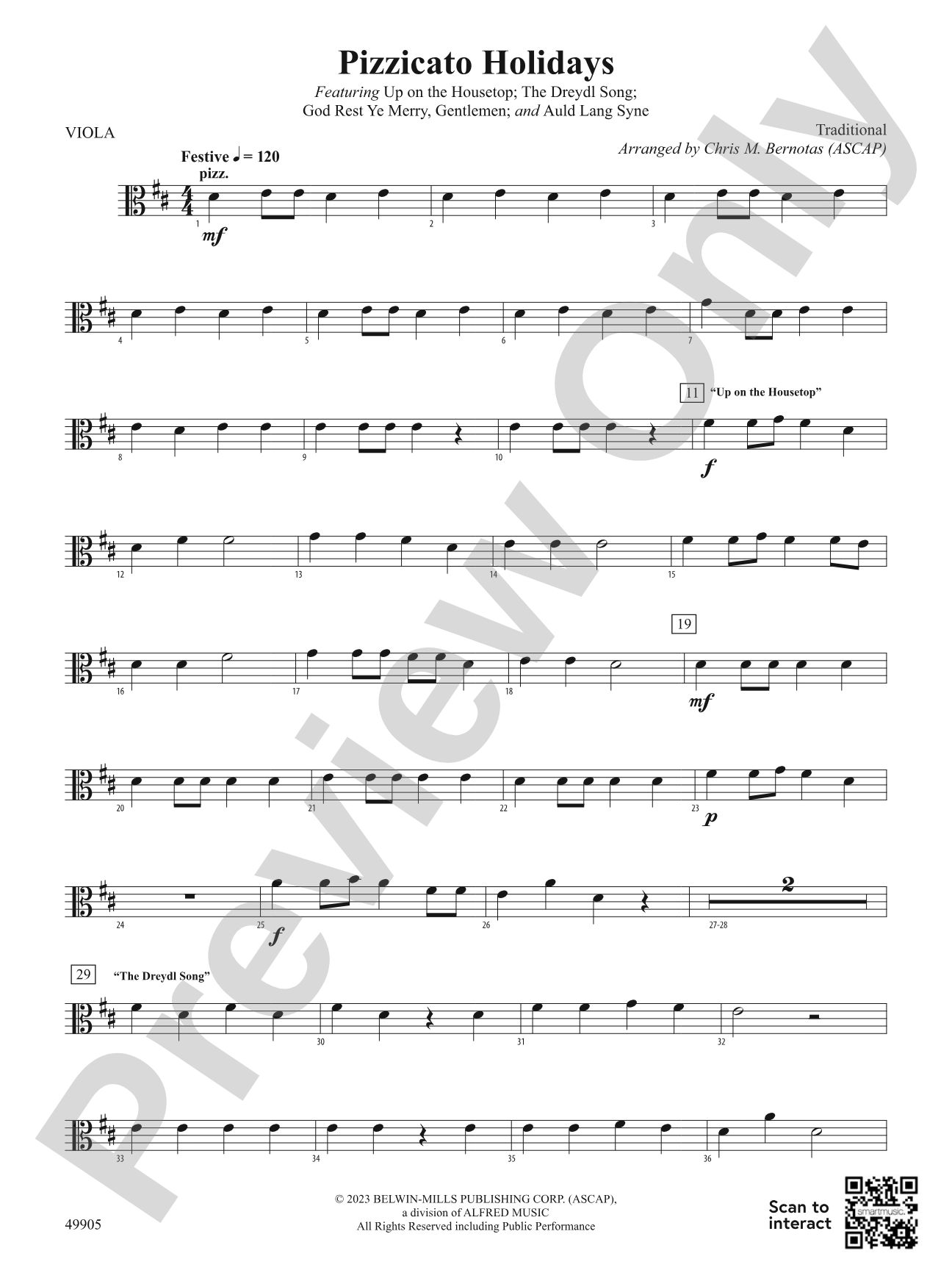
Pizzicato Holidays: Viola

Featuring Up on the Housetop; Dreydl Song; God Rest Ye Merry, Gentlemen; and Auld Lang Syne

Traditional / arr. Chris M. Bernotas

Grade: 0.5

Item: 00-PC-0018944_VA1

Digital Download
$3.00
Description
Using only the first six notes of D major and easy rhythms, Pizzicato Holidays, arranged by Chris M. Bernotas, is perfect for beginning string students' first concert. The introduction and ending bookends include a hint of "O Christmas Tree," along with "Up on the Housetop"; "The Dreydl Song;" "God Rest Ye Merry, Gentlemen"; and "Auld Lang Syne." All sections play the melody in turn and have interesting parts throughout. Violin 2 and viola are doubled, as are cello and string bass. A simple sleigh bell part is included but optional. A wonderful selection to ring in the holidays! (2:25)

Don't just read it, hear it, play along with it, and watch your students grow with it. In MakeMusic Cloud, Pizzicato Holidays: Viola comes alive with professional accompaniment, adjustable tempo, and built-in practice tools that turn solo practice into real progress.

Sample Audio
0:00
0:00
Sample Video
Additional Details
Series: Belwin Very Beginning String Orchestra
Publisher: Alfred Music
SKU: 00-PC-0018944_VA1

More about this title

About the Arranger: Chris M. Bernotas

Chris M. Bernotas

Chris M. Bernotas leads instrumental publication development at Alfred Music, where he has spent over 25 years shaping educational resources for band and orchestra programs. His work bridges the gap between accessibility and artistry, creating pieces that meet students where they are while maintaining genuine musical value.

Beyond the publishing office, Bernotas remains active in classrooms and on the podium as a guest conductor and clinician. He has co-authored several pedagogical titles including the Sound Innovations series, and his insight into the real challenges teachers face informs every arrangement and composition he creates. His commitment to supporting both student growth and teacher success has made his work a cornerstone of beginning and intermediate string curricula worldwide.

Why we love this

This arrangement delivers genuine musicality within severe technical constraints, allowing beginning string students to experience the joy of playing real holiday melodies together on their first concert. The rotating melody parts and doubled sections ensure every player feels engaged and heard, while the optional sleigh bells offer a simple way to add color without disrupting the ensemble's balance.

What to expect

Warm and accessible, with a gentle bounce from the pizzicato articulation. The familiar holiday melodies create immediate recognition and joy without requiring students to stretch beyond their comfort zone musically or technically.

Who it's for

Beginning string orchestras performing their first winter concert, particularly programs serving early elementary or mixed-level groups with minimal technical facility. This works equally well for younger players and for mixed-age ensembles where part of the group is just starting out.

How to get the most out of it

  • Keep the pizzicato light and bouncy, especially during the opening hint of 'O Christmas Tree.' Even at this level, clarity matters more than volume.
  • Work the doubled sections (Violin 2/viola and cello/string bass) as unified pairs during rehearsal so they lock in tonally and rhythmically.
  • If using sleigh bells, place that player where they can hear the ensemble well and cue them visually for their entrances, since the part is optional and easy to drop if needed.

How to use it

Program this as an opener or closer on a holiday concert to set a welcoming tone and build ensemble confidence early. It pairs well with slightly more challenging pieces later in the program, showing audience and students alike how far the group has come.

Skills your students will build

  • Playing pizzicato with consistent tone and articulation
  • Reading notes within the D major scale (first six notes only)
  • Listening to and balancing with ensemble partners when doubling parts
  • Holding rhythm in simple patterns (quarter notes, half notes, whole notes)

You May Also Like