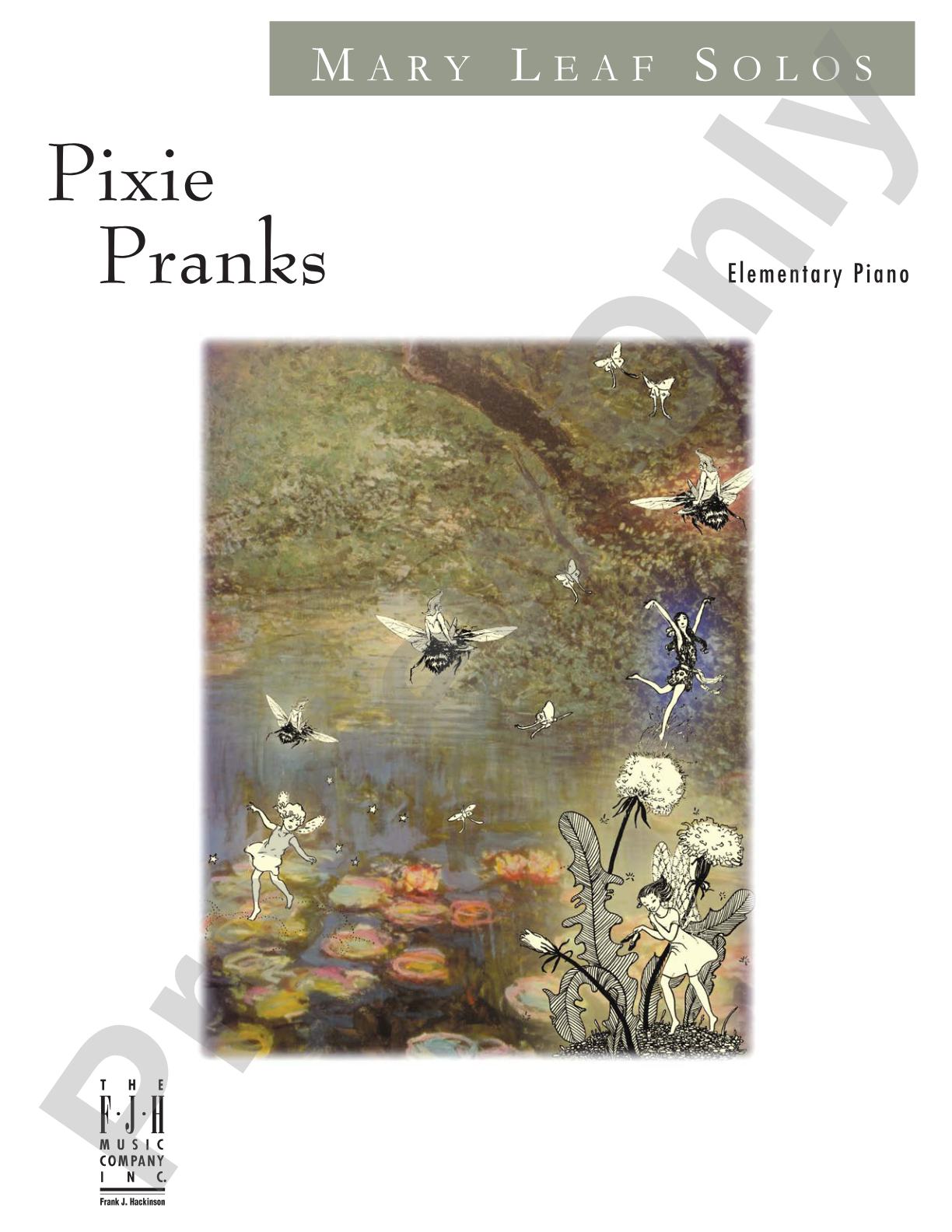
Pixie Pranks is a whimsical, quick tempo piece characterized by staccatos throughout. This elementary solo contains a teacher duet part for extra support and is a great piece to practice playing with a light and nimble staccato touch.
Discover MakeMusic Cloud: thousands of interactive titles your students can play along with today.
Mary Leaf is a composer and educator who creates accessible piano repertoire for young musicians. Her work emphasizes technical clarity and musical engagement, making her pieces valuable resources for elementary piano instruction.
Why we love this
The teacher duet transforms what could be a solo practice exercise into a genuine musical conversation. Leaf's insistence on precise staccato articulation throughout the piece means students develop a refined touch rather than simply playing the right notes.
What to expect
Playful energy fills every measure of this whimsical solo. The persistent staccatos create a dancing, almost impish quality, as if the pixies themselves are darting across the keyboard with mischievous intent.
Who it's for
This piece works well for elementary pianists who have solid hand position and basic note-reading skills but are still developing articulation control. The included teacher duet makes it accessible for young students who benefit from harmonic and rhythmic support.
How to get the most out of it
Establish a consistent tempo first without staccatos. Once the melody feels secure, layer in the articulation so it stays crisp rather than rushed.
Think of the staccatos as creating air between notes rather than just shortening them. This produces a lighter sound and prevents the piece from feeling stilted.
When the teacher duet joins, listen for how the accompaniment supports your line. Use its harmonic foundation to keep your tempo steady through the quicker passages.
Practice separate hands to solidify the staccato pattern in each. Many students unconsciously swing their rhythm when focusing on articulation alone.
How to use it
Program this in a spring or end-of-year recital where lighter character pieces balance more lyrical selections. It also works as an outstanding solo for a student performing in a community event or informal studio gathering where personality and engagement matter as much as technical precision.
Skills your students will build
Crisp, consistent staccato articulation in both hands
Playing at quicker tempos while maintaining rhythmic accuracy
Ensemble awareness and listening when performing with a duet partner
Light touch and finger independence
Musical interpretation of character and style
You May Also Like
Scan to Complete Your Purchase
Use your phone's camera to scan the code below
You'll log in on your phone and the order will be added to your account