
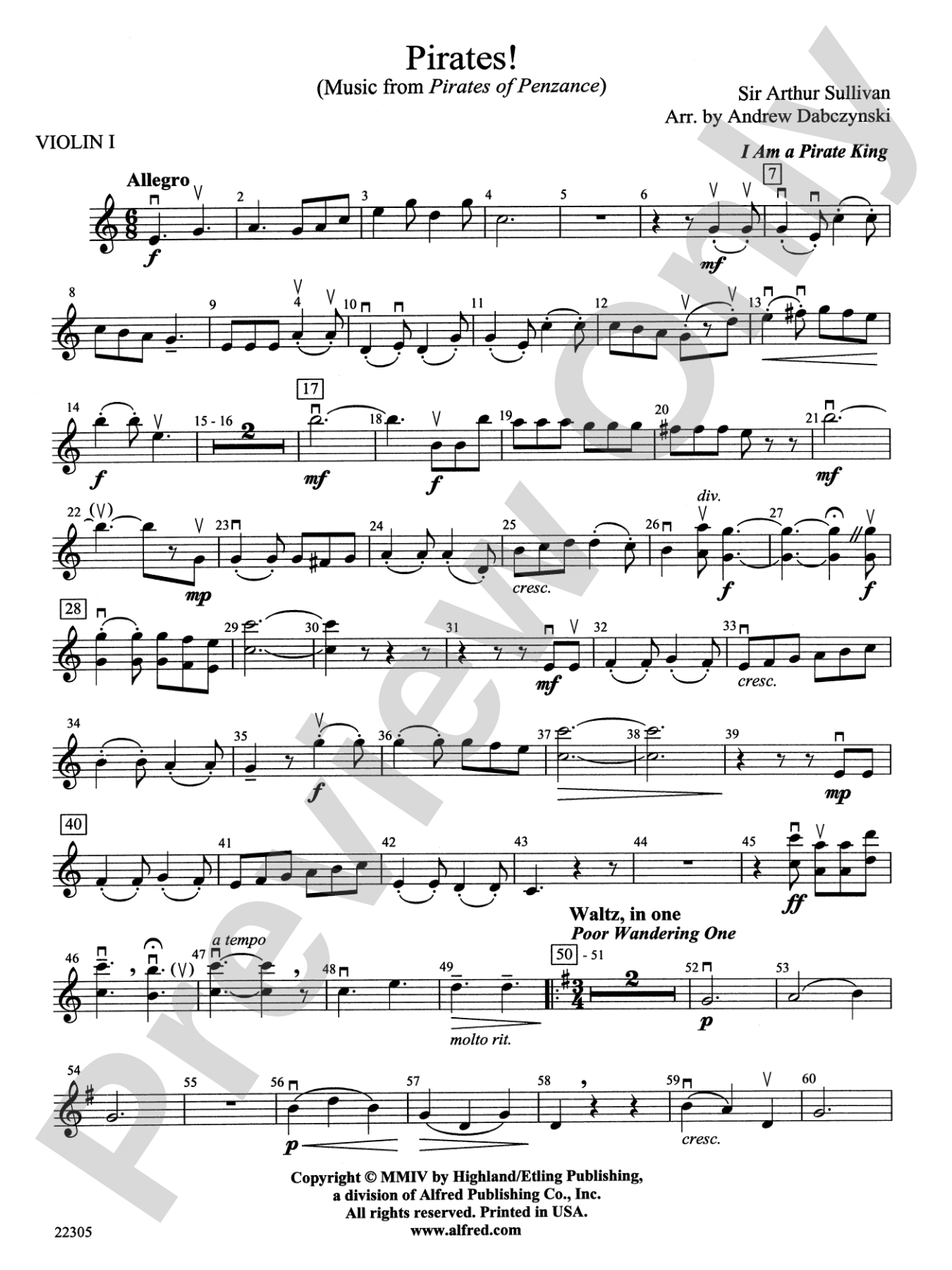

Pirates!: 1st Violin
(Music from Pirates of Penzance)
By Arthur Sullivan / arr. Andrew H. Dabczynski
Grade: 2.5
Item: 00-PC-0000554_VN1
$5.99
Pickup currently not available
Description
Among the most popular operettas of the 19th century, Gilbert and Sullivan's Pirates of Penzance is filled with delightful tunes and memorable musical moments. This arrangement features three of its famous numbers, "I am a Pirate King," "Poor Wandering One," and the ever-popular "Major General," this arrangement allows each section of the orchestra to have a turn playing the melody. All of this contributes to a mood of light-hearted excitement. Students will be motivated by a final tongue-in-cheek challenge to play it again, "only this time, really fast!"


Don't just read it, hear it, play along with it, and watch your students grow with it. In MakeMusic Cloud, Pirates!: 1st Violin comes alive with professional accompaniment, adjustable tempo, and built-in practice tools that turn solo practice into real progress.
Open in the Player
Jump straight in and assign it today.
Start Your Free Trial
Open this title and explore the full library in minutes.
Sample Audio
1
Audio File
--:--
0:00
0:00
Sample Video
No sample videos found.
Additional Details
Series:
Highland/Etling String Explorer
Publisher:
Alfred Music
SKU:
00-PC-0000554_VN1
More about this title
About the Composer: Arthur Sullivan
Arthur Sullivan (1842-1900) stands as one of the most gifted melodists in music history. His partnership with librettist W.S. Gilbert produced fourteen operettas that defined the genre and remain cornerstones of English musical theater. Sullivan's gift for memorable, singable melody combined with sophisticated orchestration made his works instantly beloved and enduringly performed.
Why we love this
This arrangement captures what makes Pirates of Penzance irresistible: three instantly recognizable melodies that students will actually want to play, arranged so every section gets a moment in the spotlight. The tongue-in-cheek nod to playing it faster at the end gives conductors a natural way to build energy and let students feel the joy of their own musicianship. It's the kind of piece that reminds students why they chose orchestra in the first place.
What to expect
Witty and buoyant, with the unmistakable charm of Victorian musical theater. The three melodies each carry distinct personality: the first is bold and theatrical, the second tender and expressive, and the third energetic and almost comedic in its rapid-fire precision. Throughout, there's a sense of playfulness and delight that invites the ensemble to enjoy itself.
Who it's for
String orchestras at the intermediate level looking for a piece that combines literary sophistication with genuine student appeal. This works equally well for concert programming and for players who need exposure to classical theater music and the satisfaction of performing recognizable masterwork melodies.
How to get the most out of it
- Bring out the character of each melody: 'I am a Pirate King' requires swagger and confidence, 'Poor Wandering One' needs warmth and legit phrasing, and 'Major General' thrives on rhythmic precision and clarity. The shift in personality between sections keeps the ensemble engaged.
- Balance section melody entries carefully. When violas or cellos carry the tune, adjust inner voices so the melody reads clearly without drowning out the harmonic support underneath.
- Save your tempo lift for the final repeat. Resist the temptation to rush early; let the conductor signal a deliberate acceleration on the second time through so the 'really fast' challenge feels earned and controlled.
- Pay attention to articulation patterns between sections. Consistent bowings or tonguing between similar melodic passages create musical continuity even as the melody moves around the orchestra.
How to use it
Program this as a standalone showstopper in a pops or family concert where audiences recognize the titles immediately. It also works as a strategic programming piece earlier in the season when you're building ensemble confidence and cohesion, since students' familiarity with the melodies lets them focus on section balance and rhythmic precision rather than note-reading.
Skills your students will build
- Balancing melody and accompaniment across multiple sections
- Transferring familiar melodies between instruments while maintaining musical character
- Controlling tempo adjustments and executing deliberate accelerations
- Ensemble clarity and rhythmic precision in rapid figures
- Artistic interpretation of contrasting musical moods within a single arrangement