
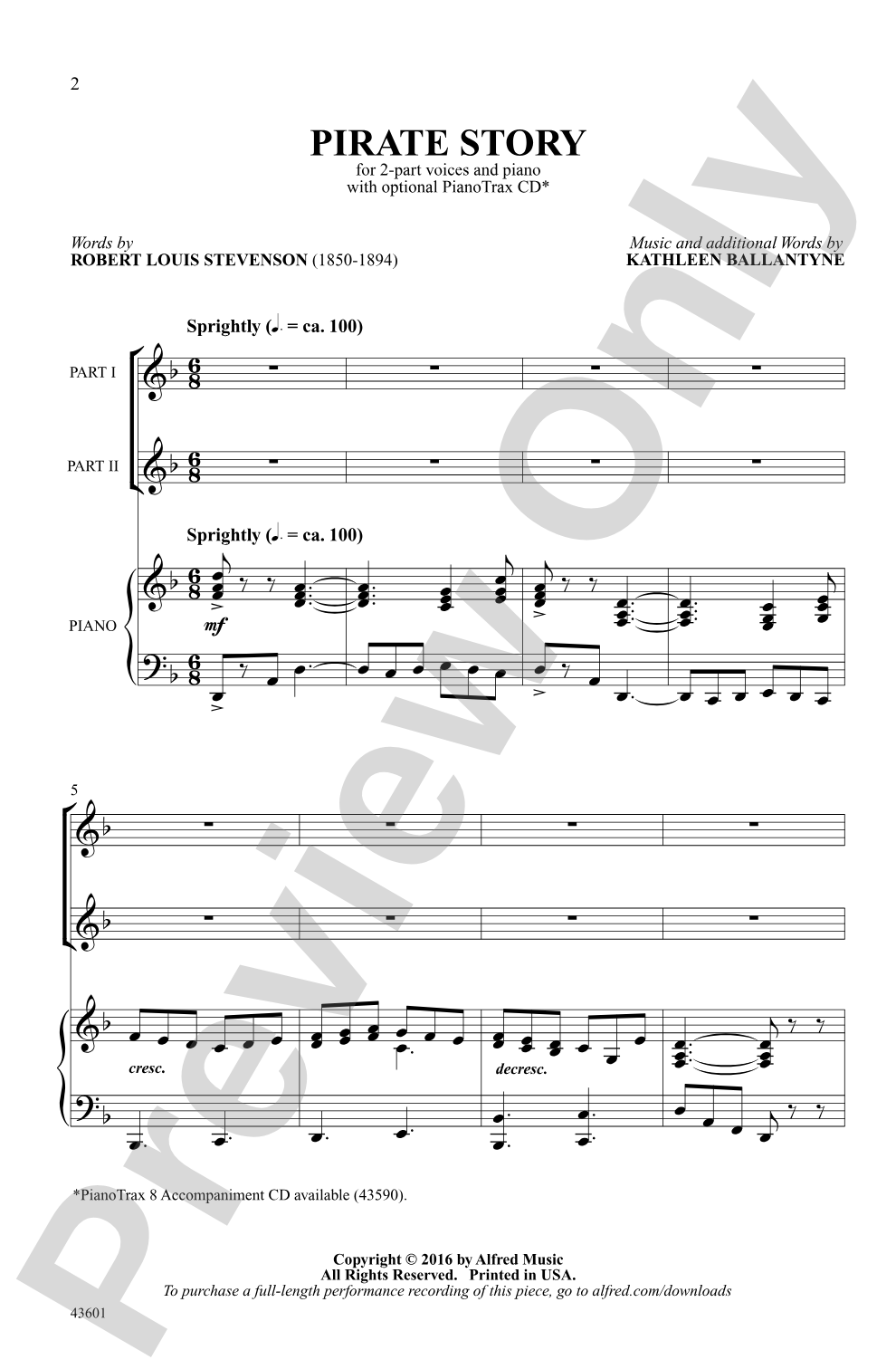

Pirate Story: 2-Part Choral Octavo
Words by Robert Louis Stevenson, music and additional words by Kathleen Ballantyne
Item: 00-PO-0003576
$2.05
Minimum order quantity: 20 copies
Pickup currently not available
Description
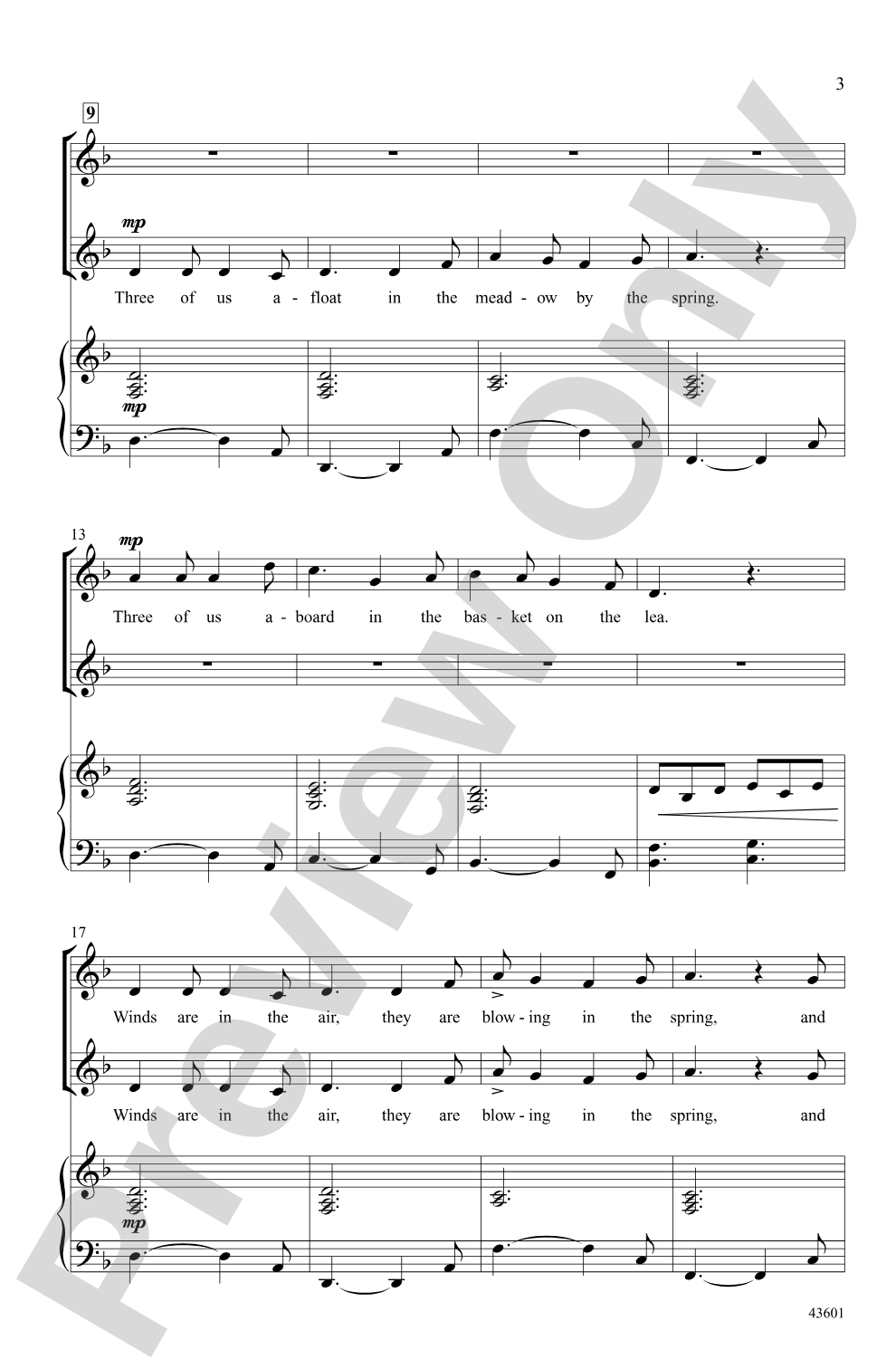
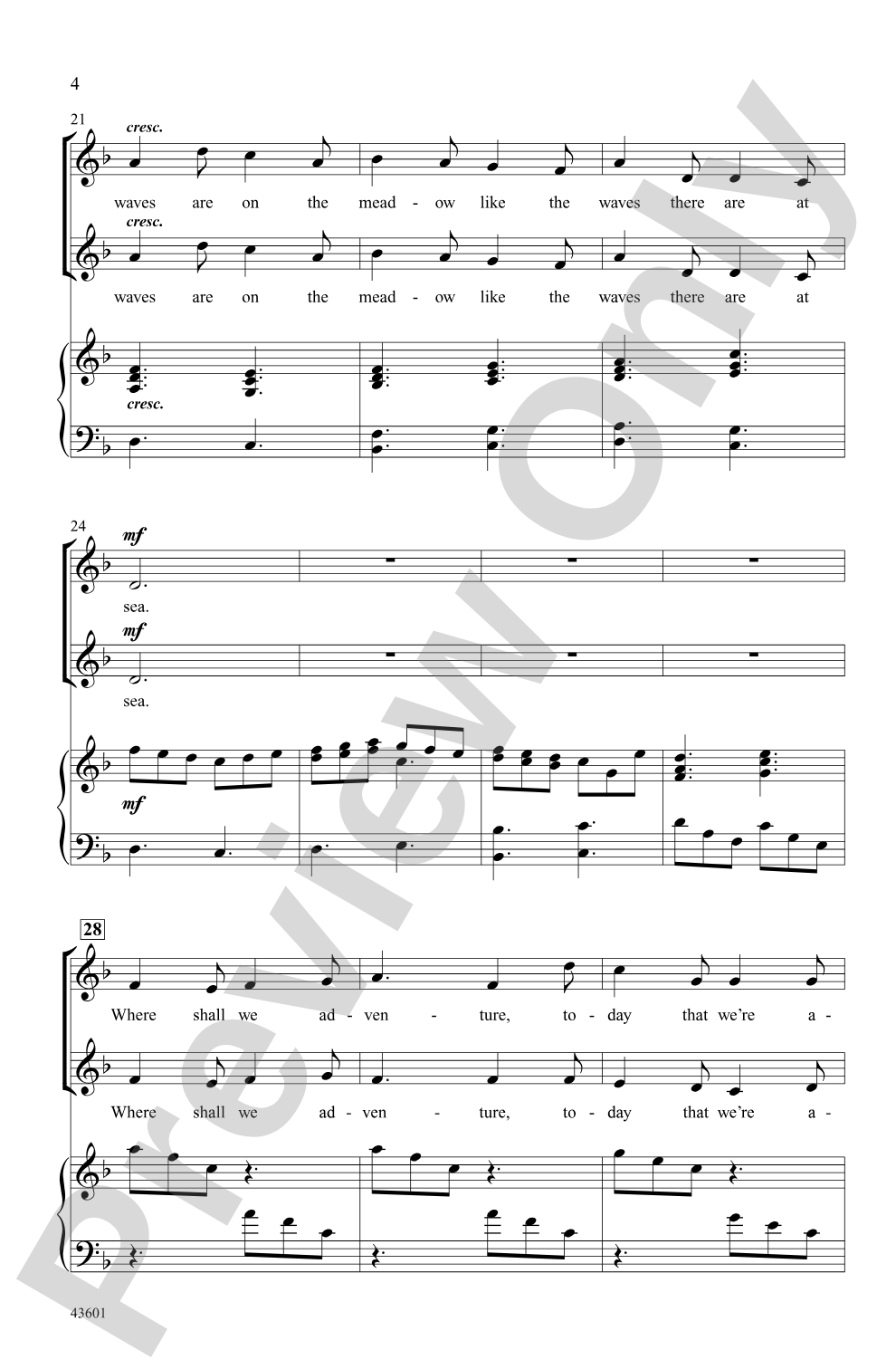
A basket on a grassy meadow sets the stage for our journey through a child's imagination. The delightful Stevenson text is set in a rollicking sea chantey style, with both voice parts given the opportunity to sing melodic and harmonic ideas. A small group adds another layer over the final vibrant chorus. This title is available in MakeMusic Cloud.


Pirate Story: 2-Part Choral Octavo isn't in MakeMusic Cloud just yet...but it could be. Let us know you'd like to see it, and you'll help shape what comes next. In the meantime, start a free trial and dive into thousands of interactive titles your students can play along with today.
Request This Title
Tell us you want it.
Start Your Free Trial
Explore everything that's ready to play right now.
Sample Audio
1
Audio File
--:--
0:00
0:00
Sample Video
Additional Details
Series:
Alfred Choral Designs
Publisher:
Alfred Music
Page Count:
12
SKU:
00-PO-0003576
More about this title
Why we love this
Ballantyne captures the playfulness of Stevenson's text without oversimplifying the musical ideas. Both voice parts get genuine melodic material, so singers in the second part never feel like they're just filling in harmony, and the addition of a small group in the final chorus creates a genuine moment of celebration that justifies the build.
What to expect
You're watching a child sit in a grassy meadow, and the song becomes the adventure unfolding in their mind. The music sways with the rhythm of a ship on the water, playful and spirited, with enough harmonic color to keep it interesting for singers while remaining approachable for young voices.
Who it's for
This octavo suits middle school choirs and upper elementary programs looking for repertoire that honors both imagination and musical substance. The 2-part voicing keeps it accessible while the sea chantey style and literary text appeal to singers old enough to appreciate storytelling.
How to get the most out of it
- Lean into the sea chantey character by letting the rhythm breathe naturally. Avoid a metronomic pulse; instead, feel the story unfolding as the singers experience it.
- Balance the two parts so that when they trade melodic ideas, the shift in focus is clear and intentional. This requires careful listening during rehearsals.
- Use the small group entrance in the final chorus as a moment of textural contrast. Even if only a few singers step forward, their addition should feel like an event, not just a thickening of the existing lines.
How to use it
This works beautifully as a concert opener or as part of a program exploring children's literature and imagination. Its theatrical quality and manageable length make it ideal for festival settings, where the story and musical charm will resonate with judges and audiences alike.
Skills your students will build
- Singing in two independent parts while maintaining rhythmic cohesion
- Interpreting text through musical character and style
- Balance and blend when combining multiple voice parts and a small solo group
- Understanding how melodic and harmonic roles can shift between voice parts