
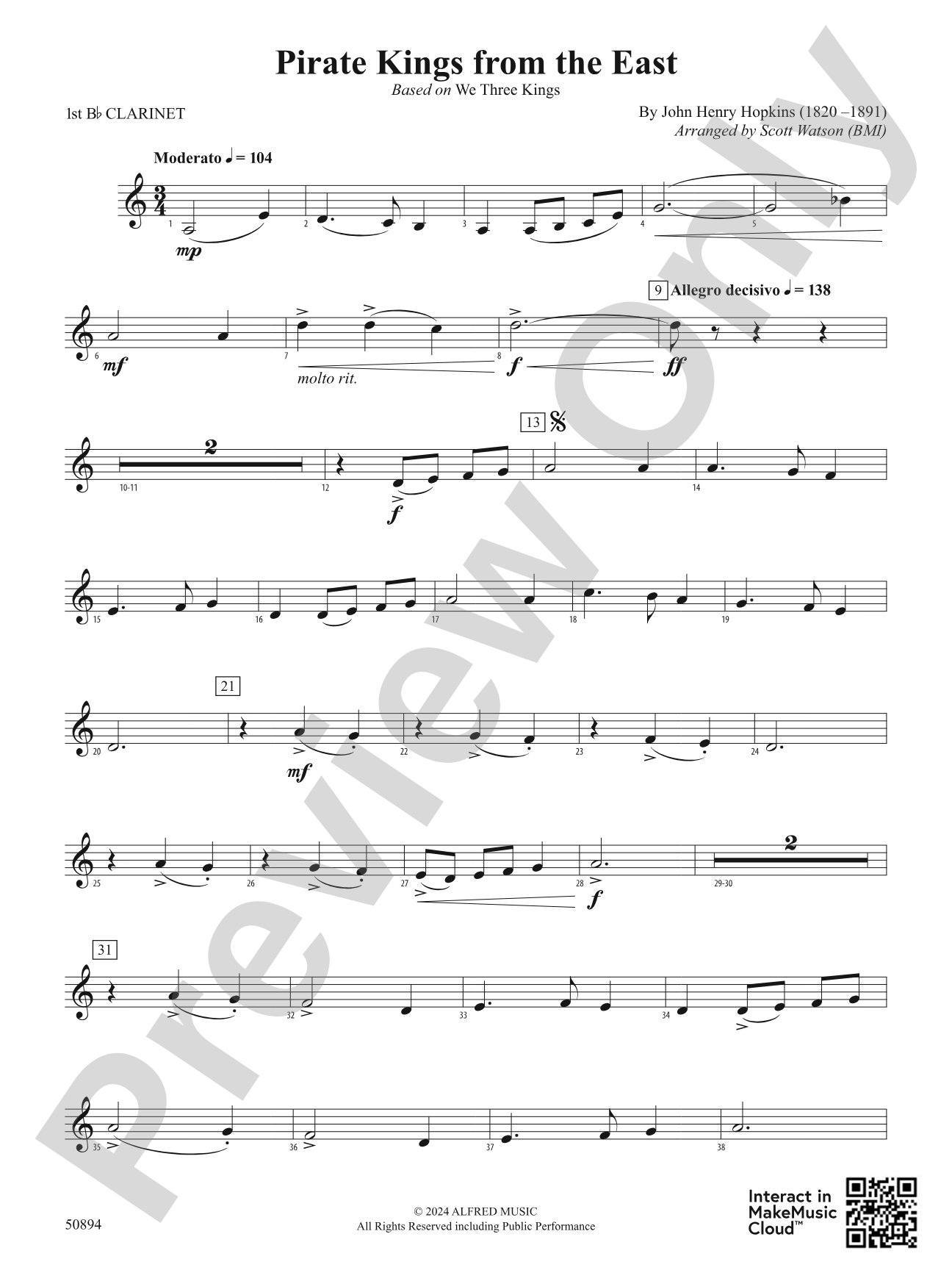

Pirate Kings from the East: 1st B-flat Clarinet
Based on "We Three Kings"
By John Henry Hopkins / arr. Scott Watson
Grade: 1.5
Item: 00-PC-0019337_C1
$3.00
Pickup currently not available
Description
In Pirate Kings from the East, composer Scott Watson re-imagines the legendary journey of the Three Kings, musically transporting the action from the desert to the high seas, swapping the traditional caravan of camels with a fearsome tall ship and pirate crew! Bold themes, triple-meter sea-shanty rhythms, and exciting percussion contribute to the high-spirited adventure. At the stirring conclusion of this buccaneer drama, one can almost hear the maritime Magi heartily proclaiming, "We Three Kings of Orient... ARRRGH!" (2:45)
The PerformancePlus+ series is an innovative addition to the ever-expanding MakeMusic Cloud interactive library. These engaging selections are presented with educational resources designed to enrich the rehearsal process and create outstanding performances. Including:


The PerformancePlus+ series is an innovative addition to the ever-expanding MakeMusic Cloud interactive library. These engaging selections are presented with educational resources designed to enrich the rehearsal process and create outstanding performances. Including:
- Assignment, recording, and assessment tools within MakeMusic Cloud
- Piece-specific exercises focused on skills and techniques
- Educational tips and suggestions to support learning
Available in print and digital formats.
Don't just read it, hear it, play along with it, and watch your students grow with it. In MakeMusic Cloud, Pirate Kings from the East: 1st B-flat Clarinet comes alive with professional accompaniment, adjustable tempo, and built-in practice tools that turn solo practice into real progress.
Open in the Player
Jump straight in and assign it today.
Start Your Free Trial
Open this title and explore the full library in minutes.
Sample Audio
1
Audio File
--:--
0:00
0:00
Sample Video
Additional Details
Series:
Alfred Concert Band - PerformancePlus+
Publisher:
Alfred Music
SKU:
00-PC-0019337_C1
More about this title
About the Composer: John Henry Hopkins
John Henry Hopkins (1820-1891) wrote one of the most enduring carols in the English-speaking world. His 1857 poem "We Three Kings of Orient Are" became instantly recognizable when paired with his original melody, and it has remained a holiday standard for over 165 years. Hopkins was an American clergyman and prolific hymn writer whose gift for memorable, singable melodies made his work accessible to congregations of all musical abilities.
Beyond "We Three Kings," Hopkins contributed significantly to American hymn literature and remained active in church music until his death. His work demonstrates how a single well-crafted melody can transcend its original context and inspire arrangements across genres and centuries. For music educators, his melodies offer a bridge between familiar carol traditions and fresh, creative reinterpretations.
Why we love this
Scott Watson's arrangement takes the melody every band director knows and reimagines it with genuine entertainment value. The pirate-themed transformation gives students a reason to care about a familiar carol while the arrangement itself demands real musicianship: rhythmic precision in the triple-meter sea-shanty figures, balanced articulation in the brass, and ensemble listening across the parts. It's the kind of piece that lands perfectly in a winter concert without feeling obligatory.
What to expect
A swashbuckling adventure on the high seas, complete with the unmistakable melody everyone recognizes but transformed into something bold and irreverent. The triple-meter rhythms push and sway like a ship listing and righting itself, while the percussion and brass create the atmosphere of a bustling port and a fearless crew. By the final proclamation, the energy is infectious and joyful.
Who it's for
Beginning and intermediate band programs looking for a concert piece with personality and charm. Directors who want students to engage with a familiar melody while developing rhythmic clarity and sectional balance will find strong pedagogical value here. This works equally well for holiday concerts or winter programs seeking something unexpected.
How to get the most out of it
- Lock in the triple-meter rhythm early in rehearsal. The sea-shanty figures need a consistent, almost swagger-like pulse to capture the pirate spirit; mark those steady eighth-note patterns in the parts if students are rushing or dragging.
- Balance the percussion thoughtfully. The various effects should enhance the maritime adventure without overwhelming the melodic material. Have percussionists listen to the whole score, not just their own line.
- Emphasize the "ARRRGH" moment at the end. This needs commitment from the ensemble and should feel like a genuine outburst, not a whispered joke. Rehearse it with energy and show the students why the humor lands.
- Use dynamics to shape the story arc. The bold themes need to feel genuinely bold, and the quieter moments should create space for the narrative to breathe. Point out where the tension builds and where it releases.
How to use it
Program this as a showstopper in a winter concert or holiday concert finale. The familiar melody draws in the audience immediately, while the pirate arrangement delights both listeners and performers. It also works beautifully as the closing piece of a lighter half-concert program, leaving the audience smiling and energized.
Skills your students will build
- Reading and executing consistent triple-meter rhythms (3/4 time)
- Articulation control in sea-shanty figures with eighth-note patterns
- Dynamic contrast and phrasing to support narrative storytelling
- Sectional balance when familiar melodies are shared across multiple voices
- Rhythmic precision while maintaining musical character and forward motion