Pink (from <i>Barbie</i>) Sheet Music Preview

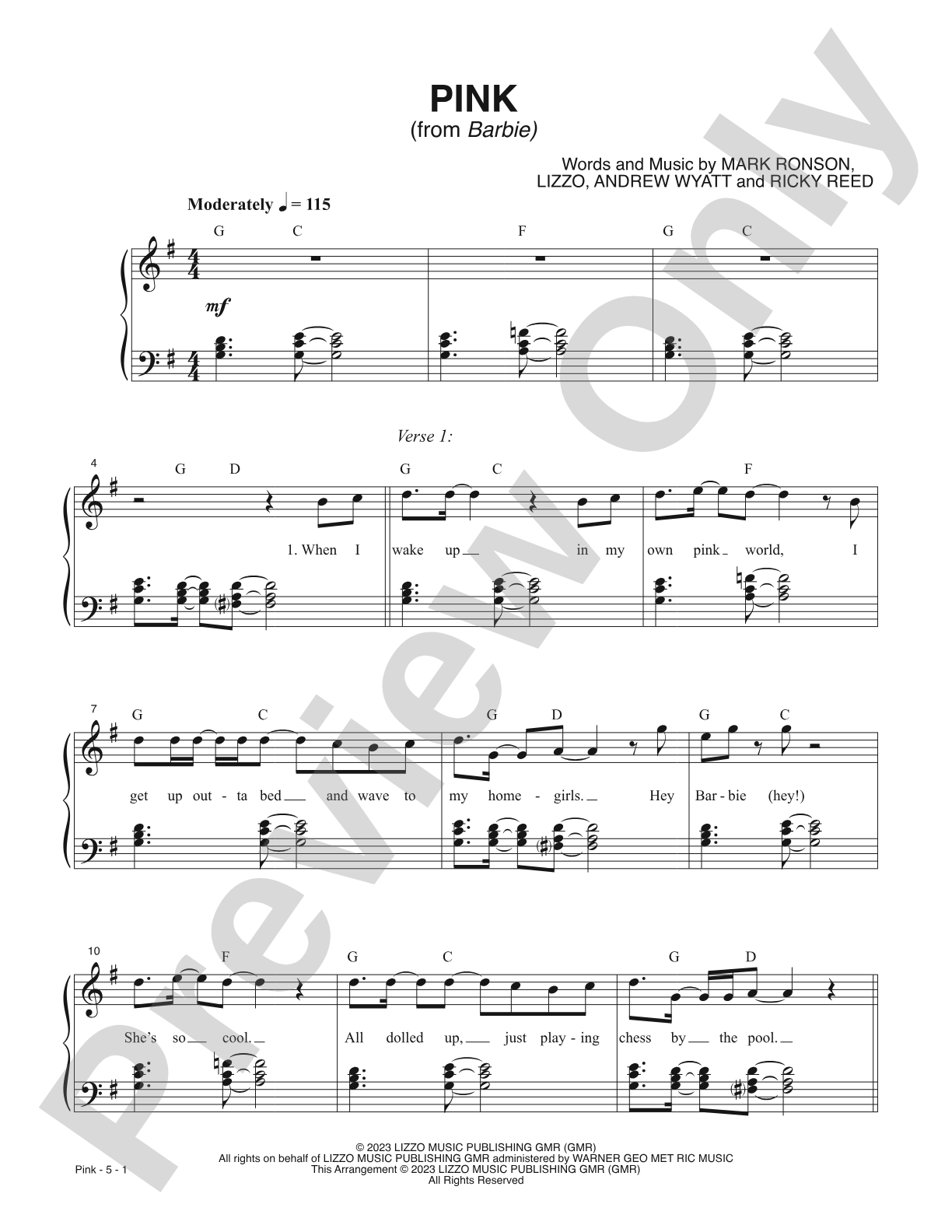
Pink (from Barbie): Piano/Vocal

(from Barbie)

Words and Music by Mark Ronson, Lizzo, Andrew Wyatt, and Ricky Reed

Item: 00-PS-0016749

Digital Download
$5.99

One moment…

Description
As performed by Lizzo from the motion picture Barbie.

Pink (from Barbie): Piano/Vocal isn't in MakeMusic Cloud just yet...but it could be. Let us know you'd like to see it, and you'll help shape what comes next. In the meantime, start a free trial and dive into thousands of interactive titles your students can play along with today.

Sample Audio
No sample audio found.
Sample Video
Additional Details
Series: Digital Sheet Music Piano
SKU: 00-PS-0016749

More about this title

About the Composer: Mark Ronson

Mark Ronson is a Grammy Award-winning producer and composer known for his work across film, television, and popular music. His approach to songwriting emphasizes collaborative creation, often developing pieces through creative partnerships with vocalists and instrumentalists who bring their own artistry to the material.

Why we love this

This arrangement captures the infectious energy and contemporary pop production that made the song a cultural moment, while remaining playable at a piano. The piece gives students access to current, recognizable material that connects their classical training to the music they actually listen to.

What to expect

Upbeat and celebratory, with a modern pop sensibility that blends accessible melodies with syncopated rhythmic layers. The piece radiates confidence and joy, grounded in the character and vocal flair that defined the original recording.

Who it's for

This arrangement works for intermediate to advanced pianists who want to perform contemporary pop music with sophistication. It's ideal for students comfortable reading contemporary notation and rhythmic figures, and for recital programs that include a mix of classical and popular repertoire.

How to get the most out of it

  • Nail the rhythmic precision in the syncopated left hand patterns; they drive the groove and must lock in with confidence rather than feeling tentative.
  • Balance the vocal melody so it sits comfortably over the accompaniment without overwhelming it; this is ensemble playing, even if you're the only performer.
  • Pay attention to the dynamic arc across phrases; the song builds momentum, so let your dynamics reflect that intentional climb rather than playing it flat throughout.

How to use it

Include this in a spring recital or contemporary music showcase to bridge classical and popular styles, or use it as a stand-alone encore that audiences will recognize and enjoy. It works especially well when programmed alongside other film-inspired pieces or modern pop arrangements.

Skills your students will build

  • Reading contemporary rhythmic notation and syncopation
  • Balancing melody and accompaniment in popular music contexts
  • Executing clean, precise left-hand patterns that maintain groove
  • Shaping dynamic contours across longer phrases

You May Also Like