
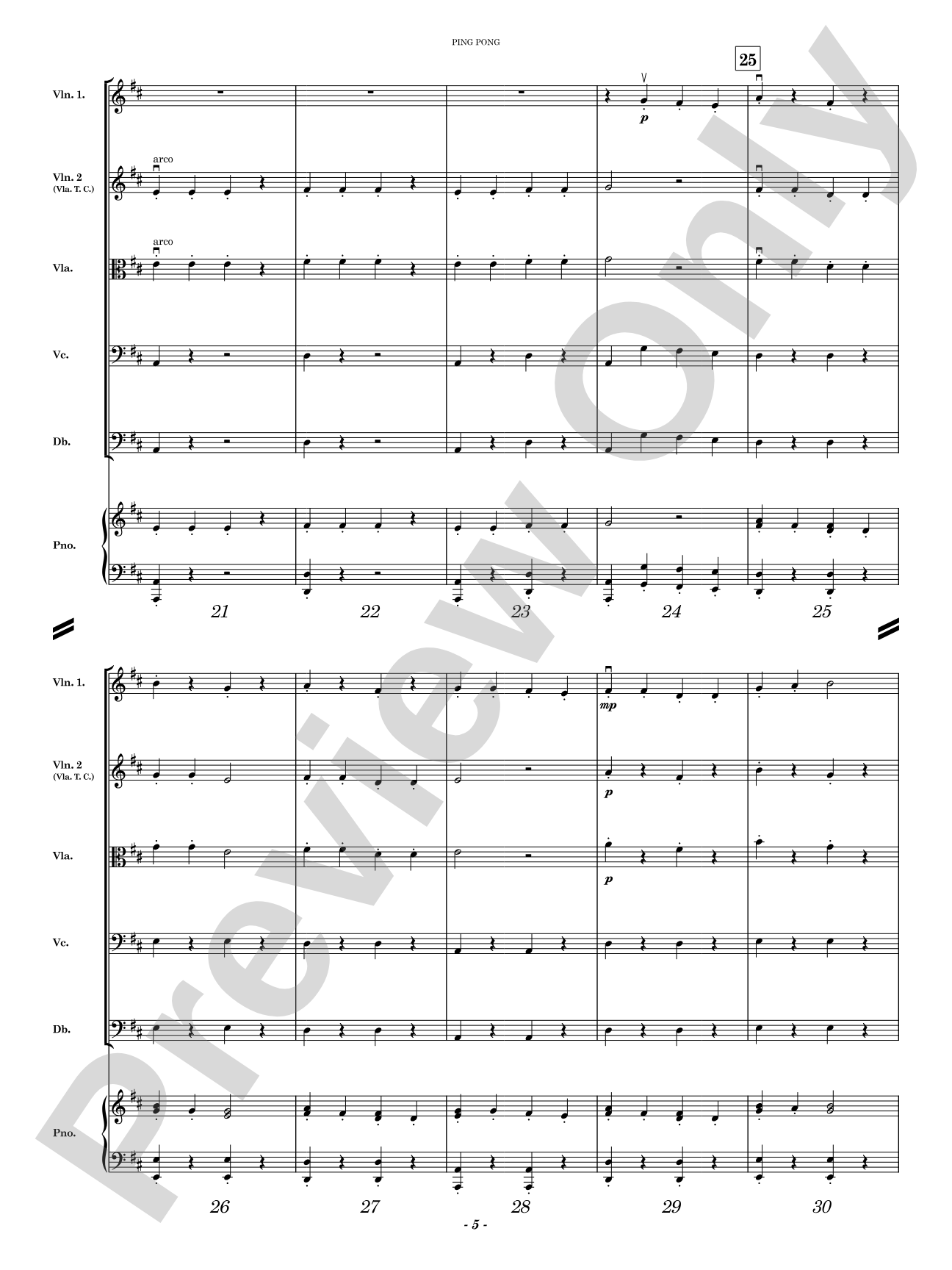
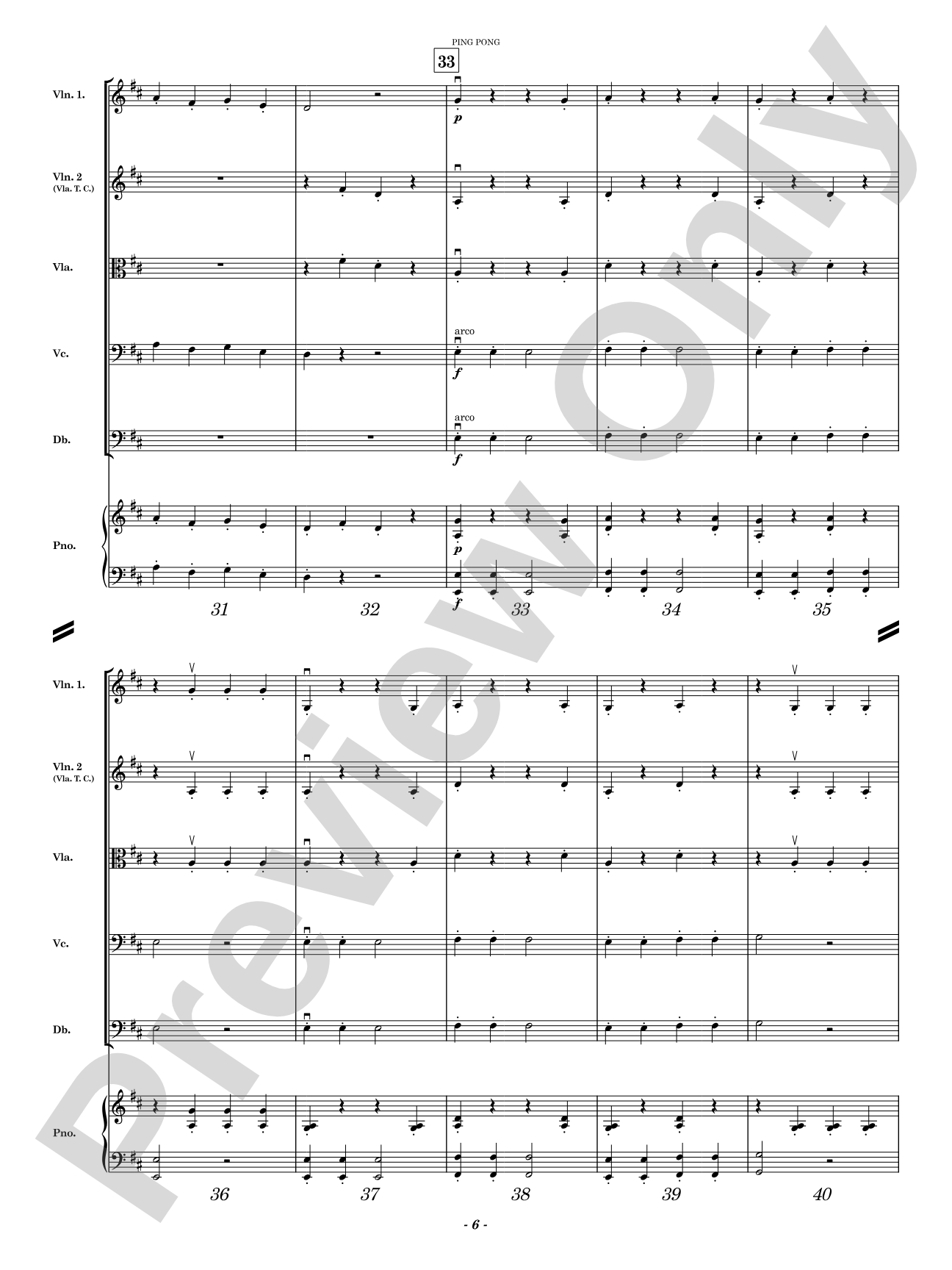
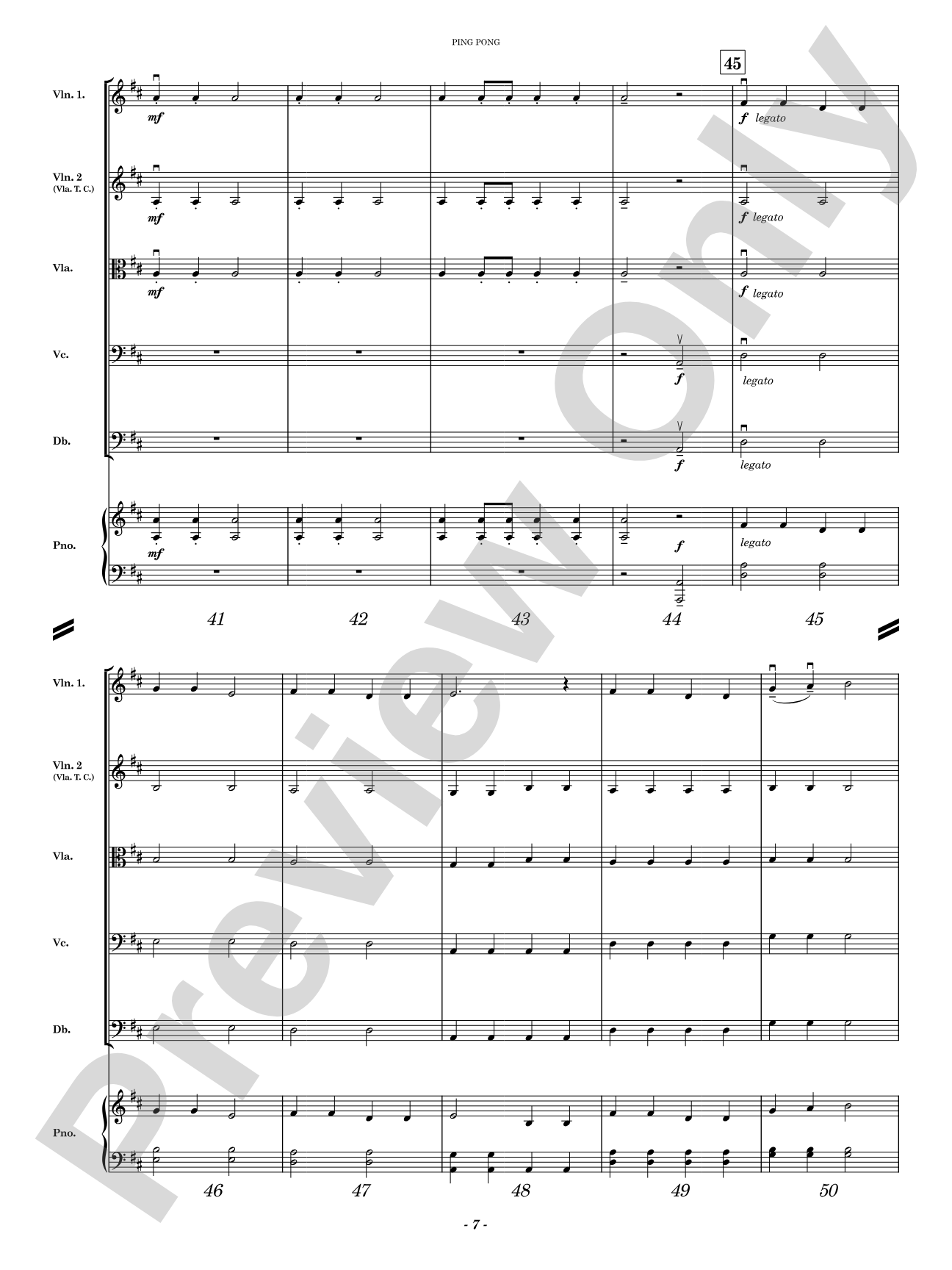
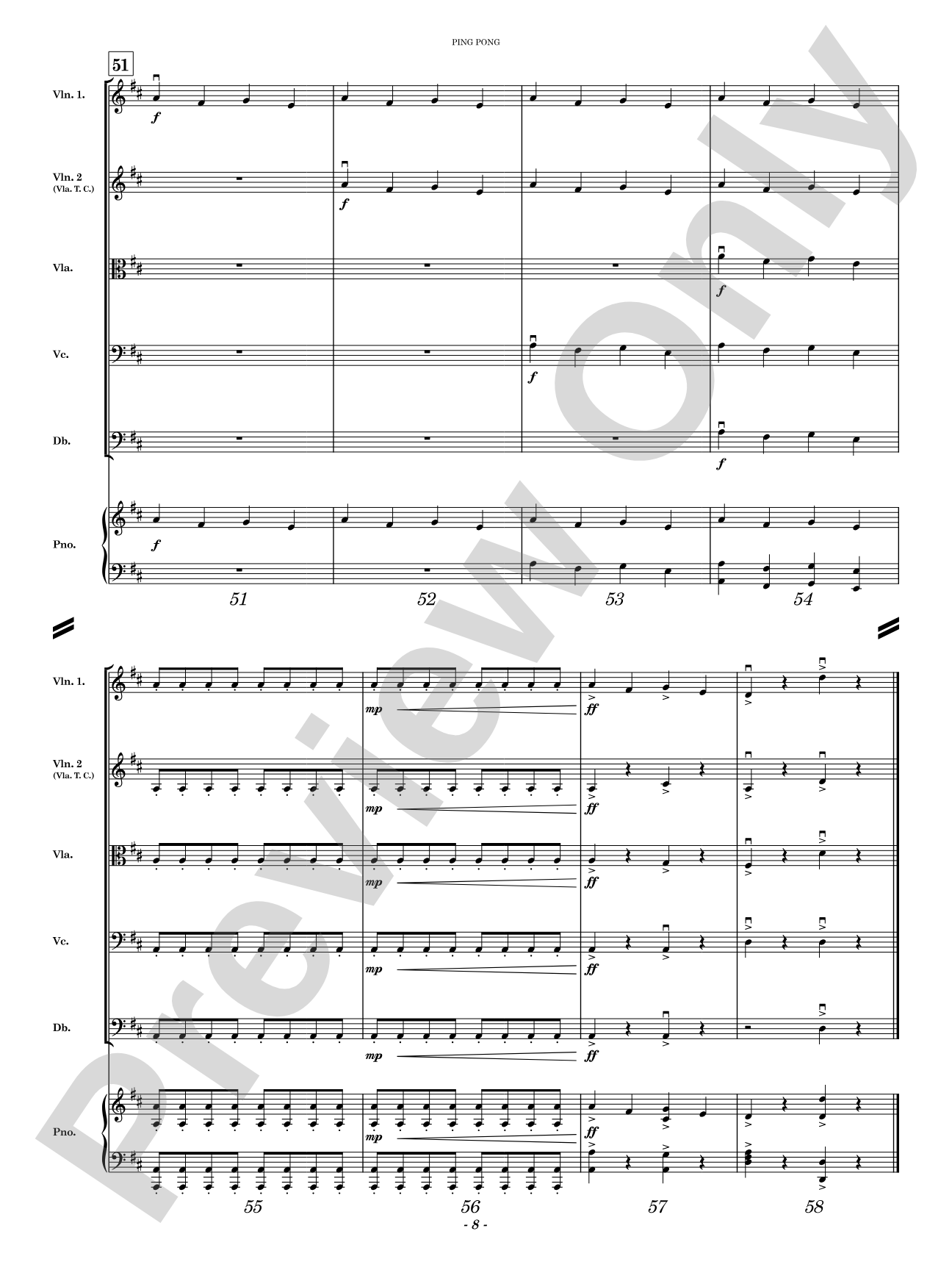

Ping Pong: String Orchestra Conductor Score & Parts
By Xiaokang Deng
Grade: 1
Item: 98-PK-0000049
$55.00
Pickup currently not available
Buy Extra Parts (Digital PDF Download)
| Product | Price | Quantity |
|---|---|---|
| Ping Pong: Score | $8.00 | |
| Ping Pong: 1st Violin | $3.00 | |
| Ping Pong: 2nd Violin | $3.00 | |
| Ping Pong: Viola | $3.00 | |
| Ping Pong: Cello | $3.00 | |
| Ping Pong: String Bass | $3.00 | |
| Ping Pong: Piano Accompaniment | $3.00 |
Parts Added to Cart!
Description
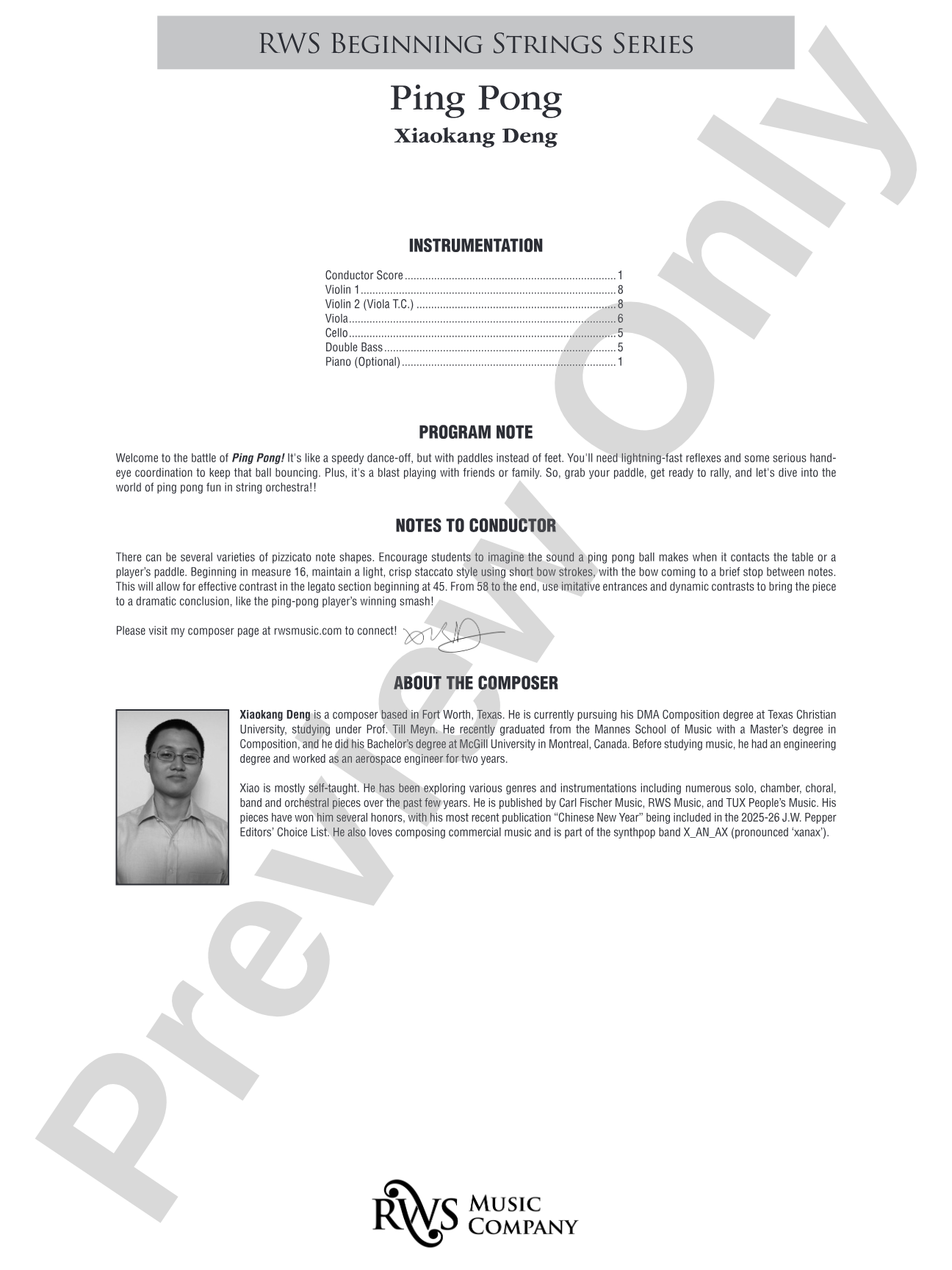
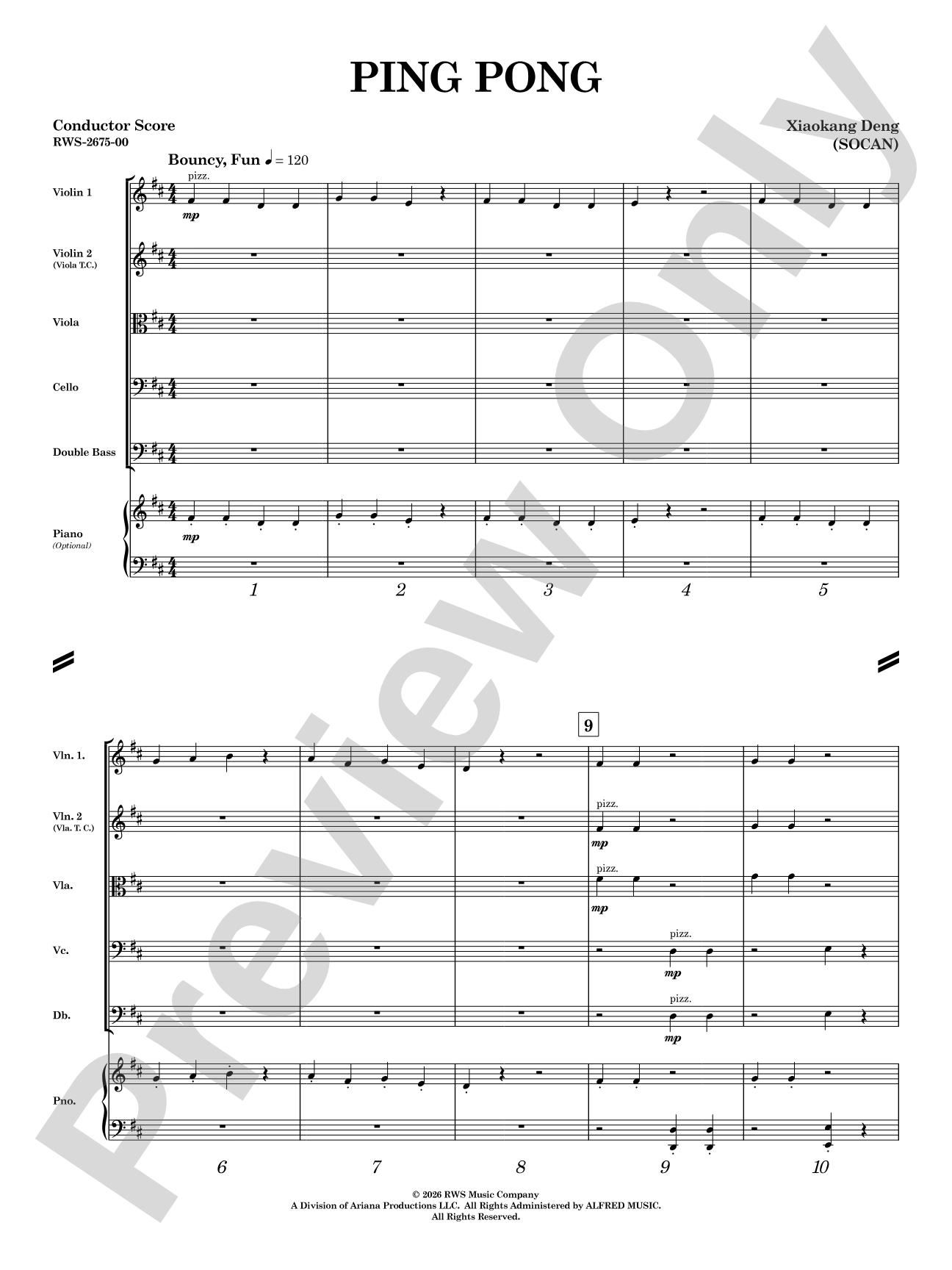
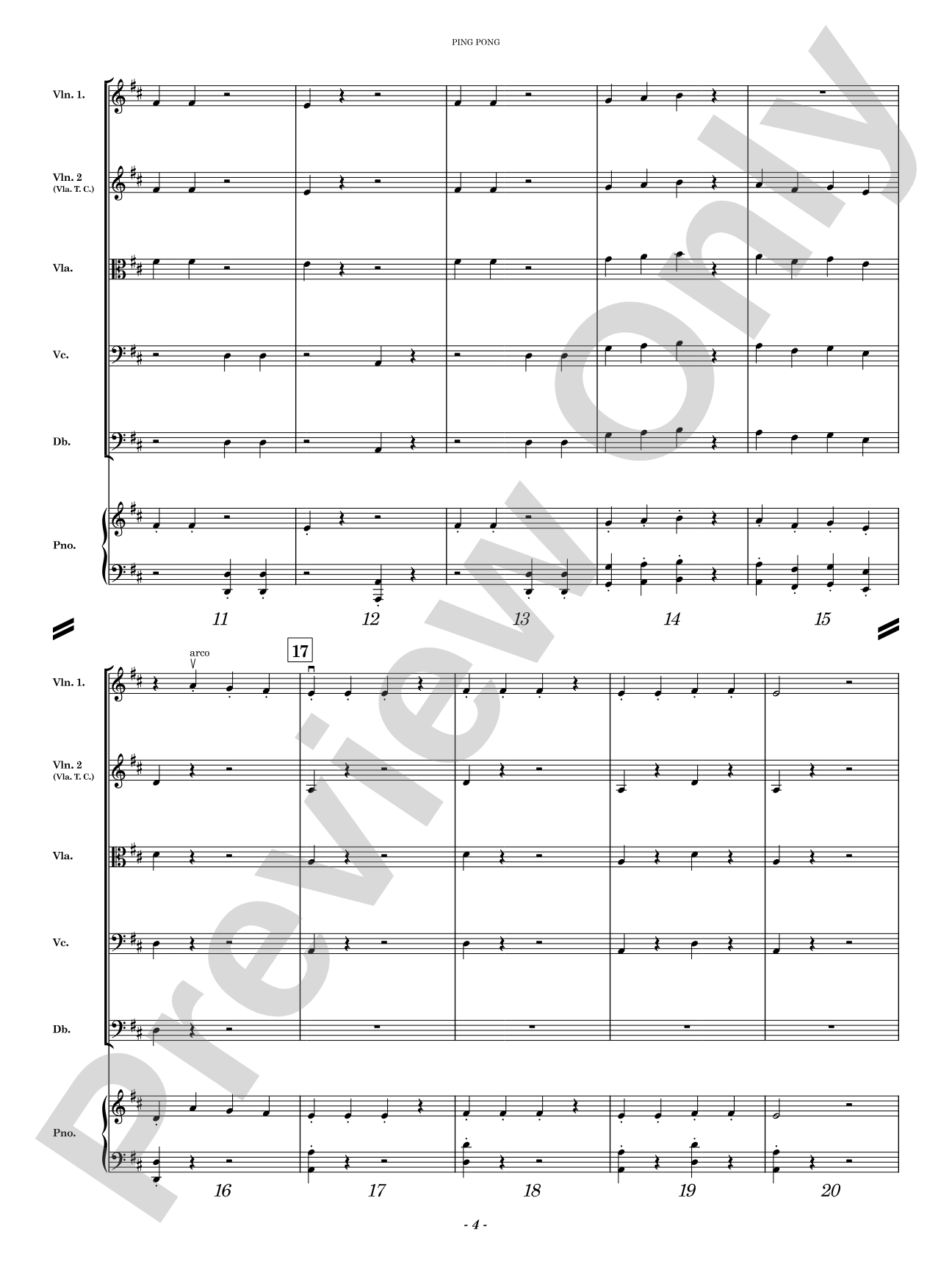
Ping Pong is a lively and lighthearted Grade 1 string orchestra piece that brings the excitement of the game to the concert stage! Playful rhythmic exchanges between sections mimic the back-and-forth motion of a real Ping Pong match, giving young players an engaging way to develop ensemble precision and listening skills. Easy to teach and instantly fun to play, this piece is perfect for concerts, recruitment events, or any program needing an energetic, crowd-pleasing opener. Directors will love its accessible ranges, clear rhythms, and the smiles it brings to both students and audiences alike!


Ping Pong: String Orchestra Conductor Score & Parts isn't in MakeMusic Cloud just yet...but it could be. Let us know you'd like to see it, and you'll help shape what comes next. In the meantime, start a free trial and dive into thousands of interactive titles your students can play along with today.
Request This Title
Tell us you want it.
Start Your Free Trial
Explore everything that's ready to play right now.
Sample Audio
1
Audio File
--:--
0:00
0:00
Sample Video
Additional Details
Series:
RWS - Beginning Strings
Publisher:
RWS Music Company
SKU:
98-PK-0000049
More about this title
Why we love this
Xiaokang Deng captures the physical comedy of a ping pong match in pure music, creating something that moves fast enough to hold attention but remains entirely playable at Grade 1. The sectional call-and-response writing gives every player a moment to listen and respond, which is exactly the ensemble skill young orchestras need most.
What to expect
Energetic and playful, with a sense of competition and camaraderie happening simultaneously. The back-and-forth phrasing keeps the momentum rolling while the lighthearted character reminds listeners that making music together can be pure fun.
Who it's for
First-year string orchestras and mixed beginner ensembles looking for repertoire that builds listening and sectional communication without overwhelming players with technical demands. This works equally well for recruitment demonstrations, as audiences respond immediately to the concept and energy.
How to get the most out of it
- Keep the rhythmic exchanges snappy without rushing; the back-and-forth motion only lands if each section articulates crisply and trades the 'ball' with precision.
- Encourage players to watch each other during the trading sections. Eye contact between violin and cello, or between first and second violins, makes the volley feel intentional rather than mechanical.
- Let the dynamics follow the game itself: points that land can have a small accent or swell, while near-misses can pull back slightly to build suspense before the next rally.
How to use it
Open a concert with this to set an upbeat tone and signal to the audience that young musicians are ready to engage them. It also pairs well alongside other Grade 1 character pieces, or anchor it as the finale of a recruitment concert where you want families leaving with smiles and interest piqued.
Skills your students will build
- Listening and responding to sectional cues in real time
- Rhythmic precision in call-and-response exchanges
- Ensemble coordination without relying on a steady pulse from one section
- Articulation control to create clarity in rapid passages
- Dynamic shaping within accessible ranges