
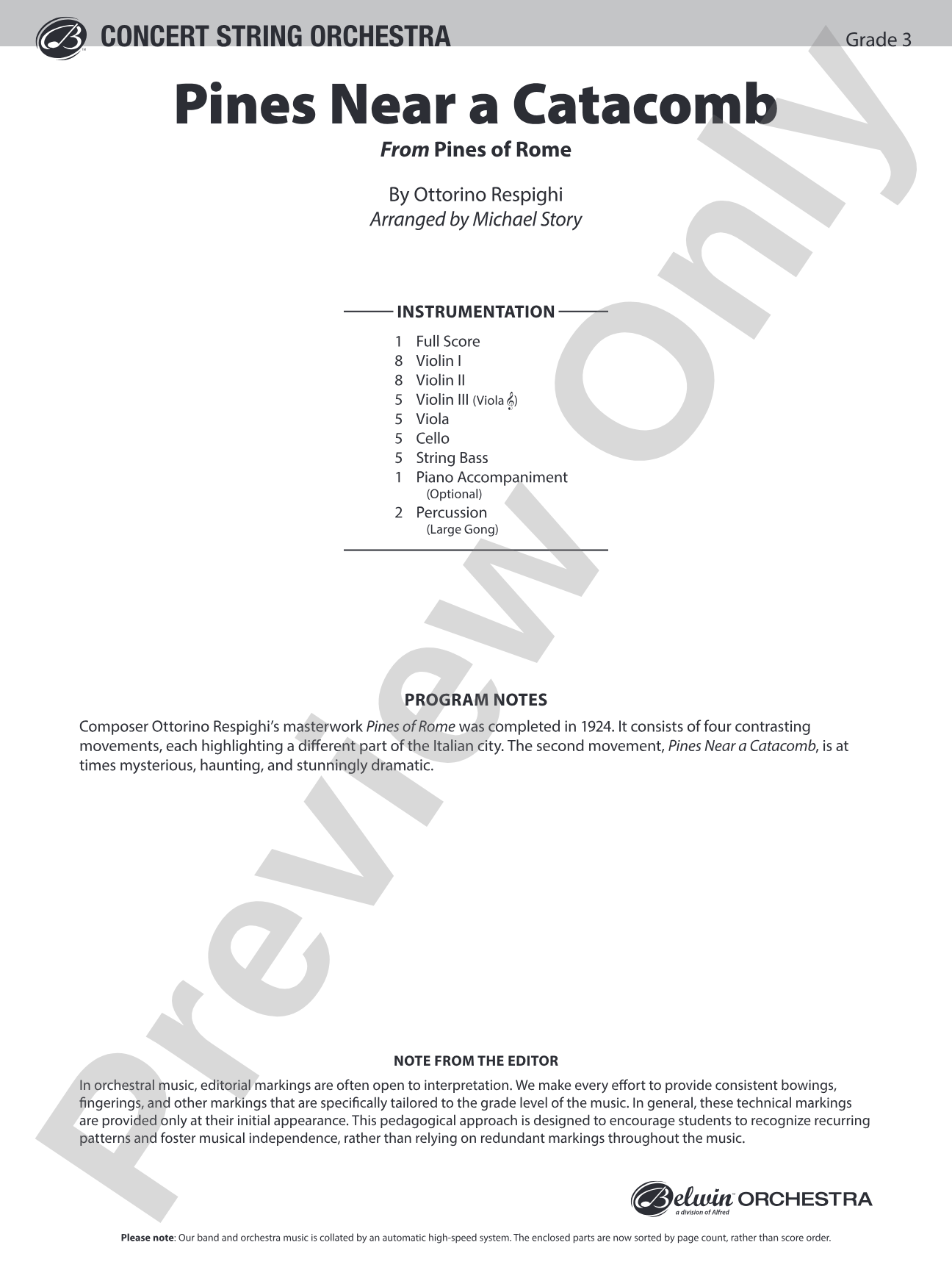

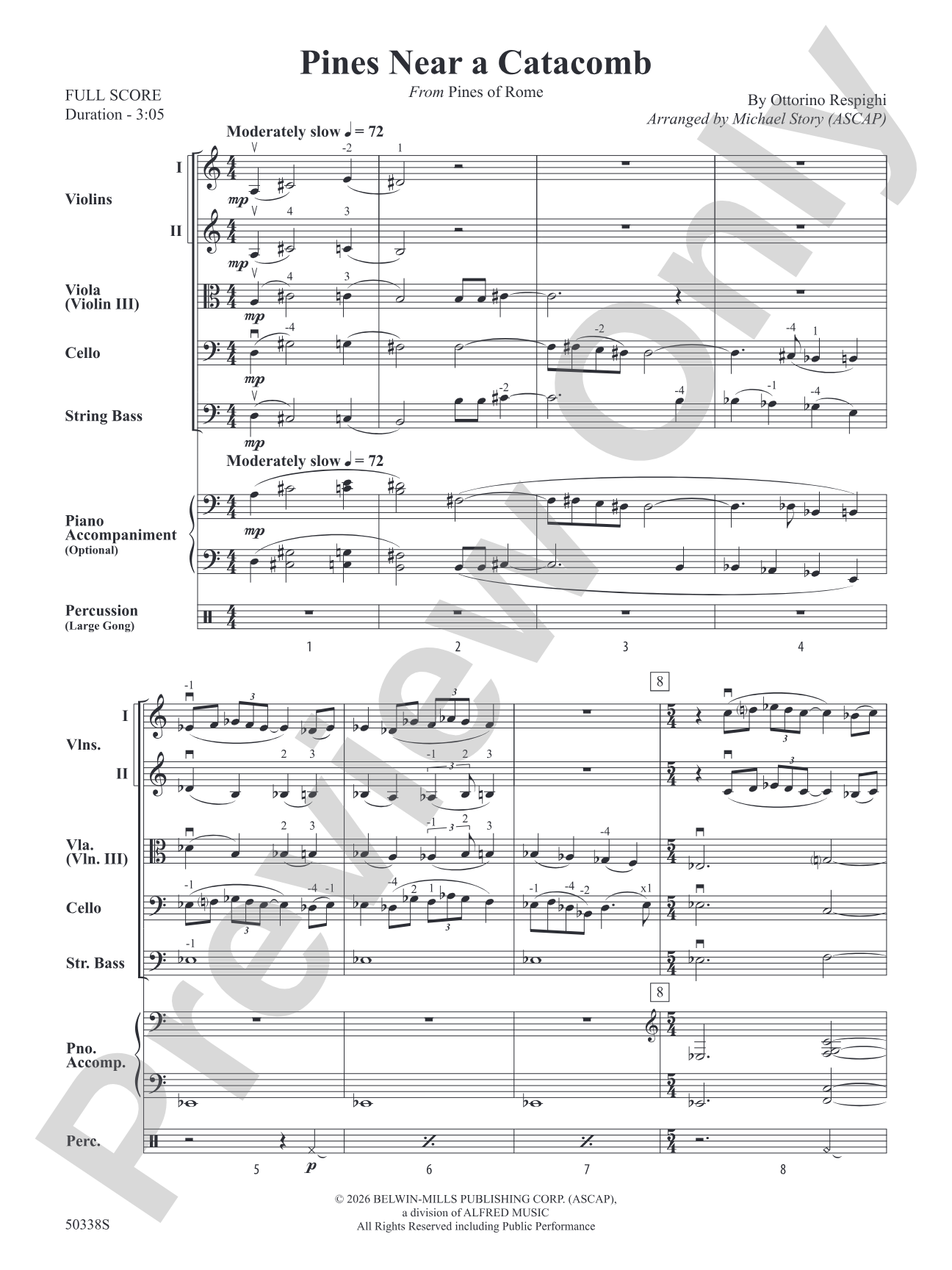
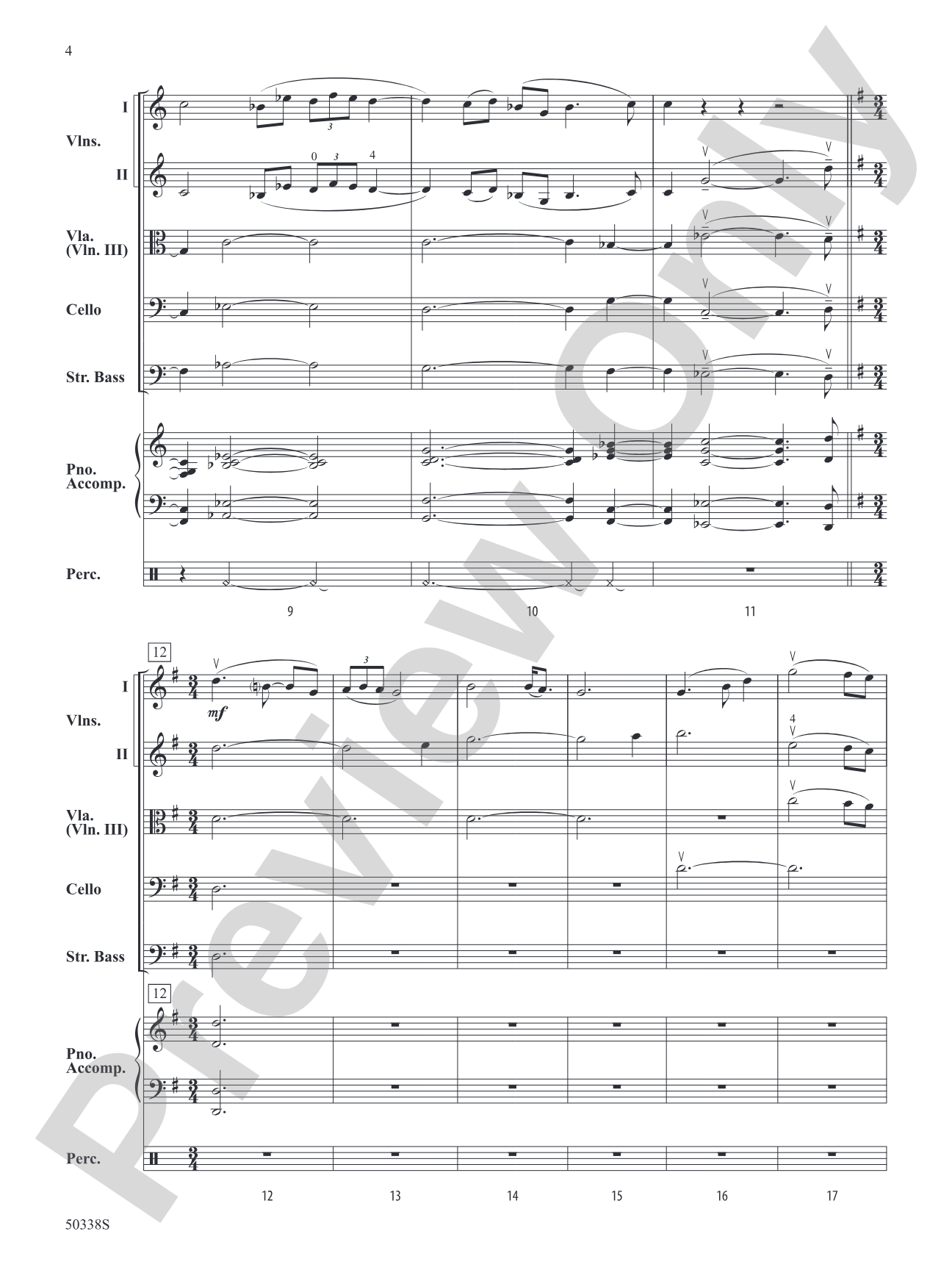
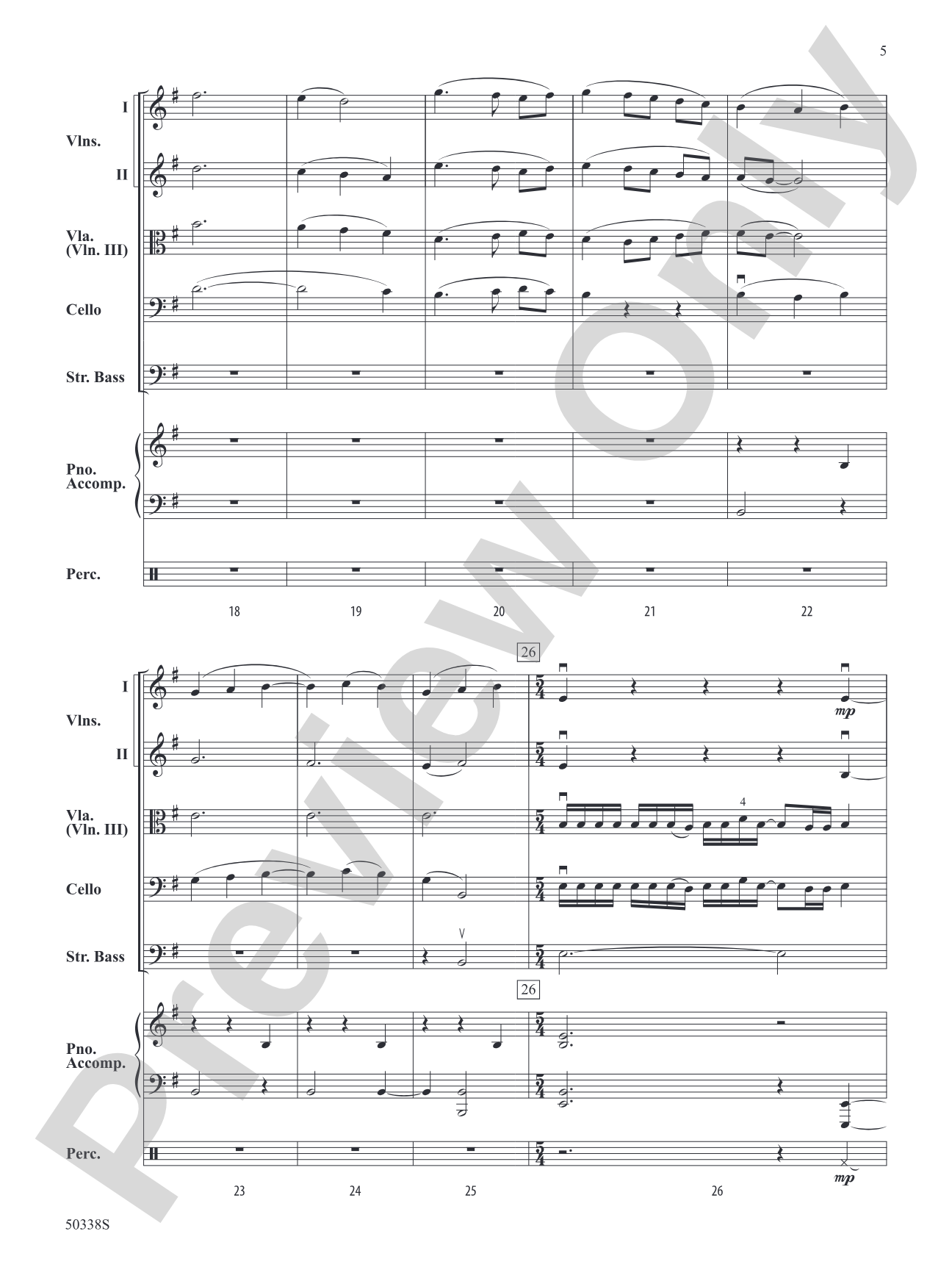
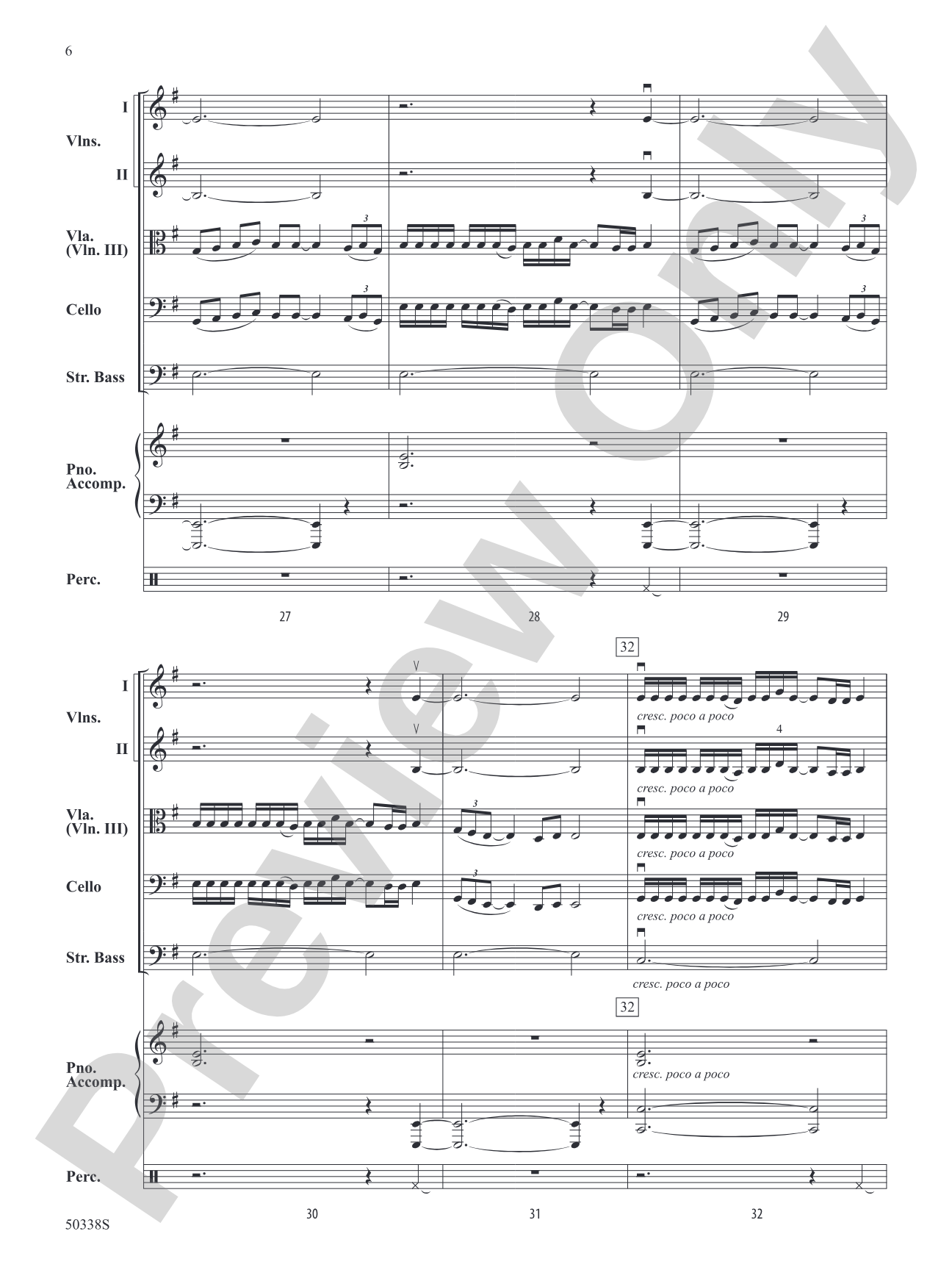
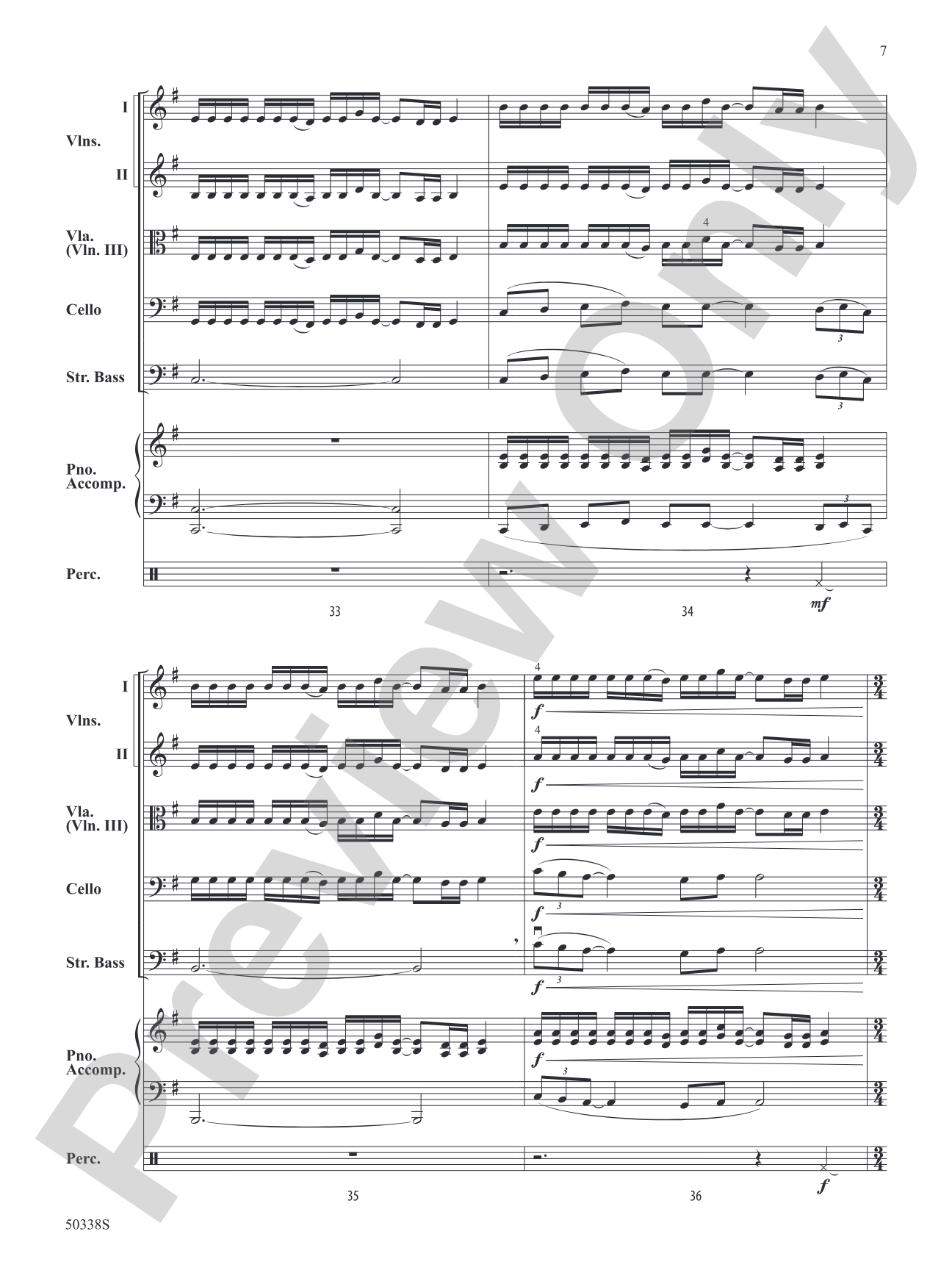
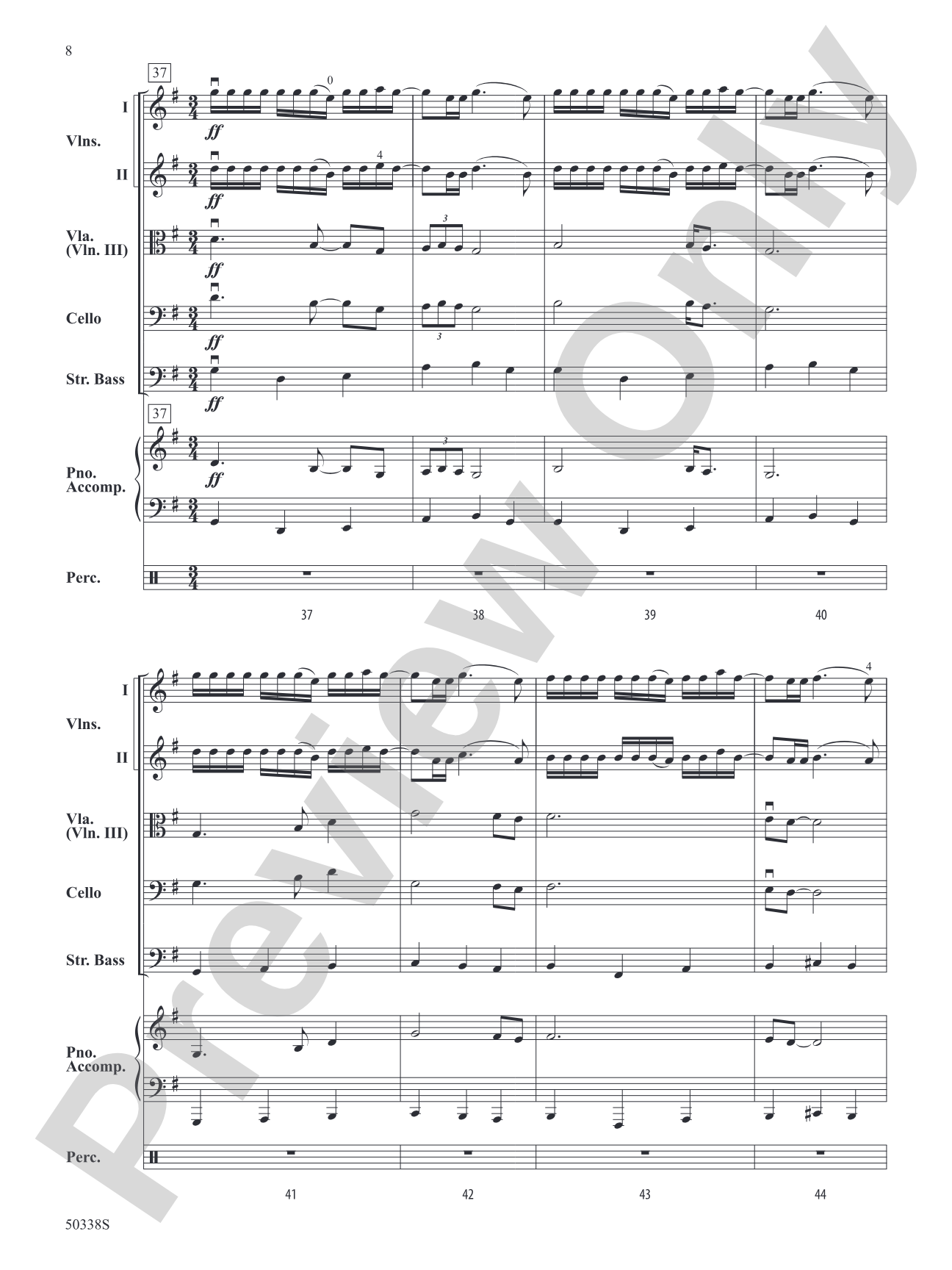
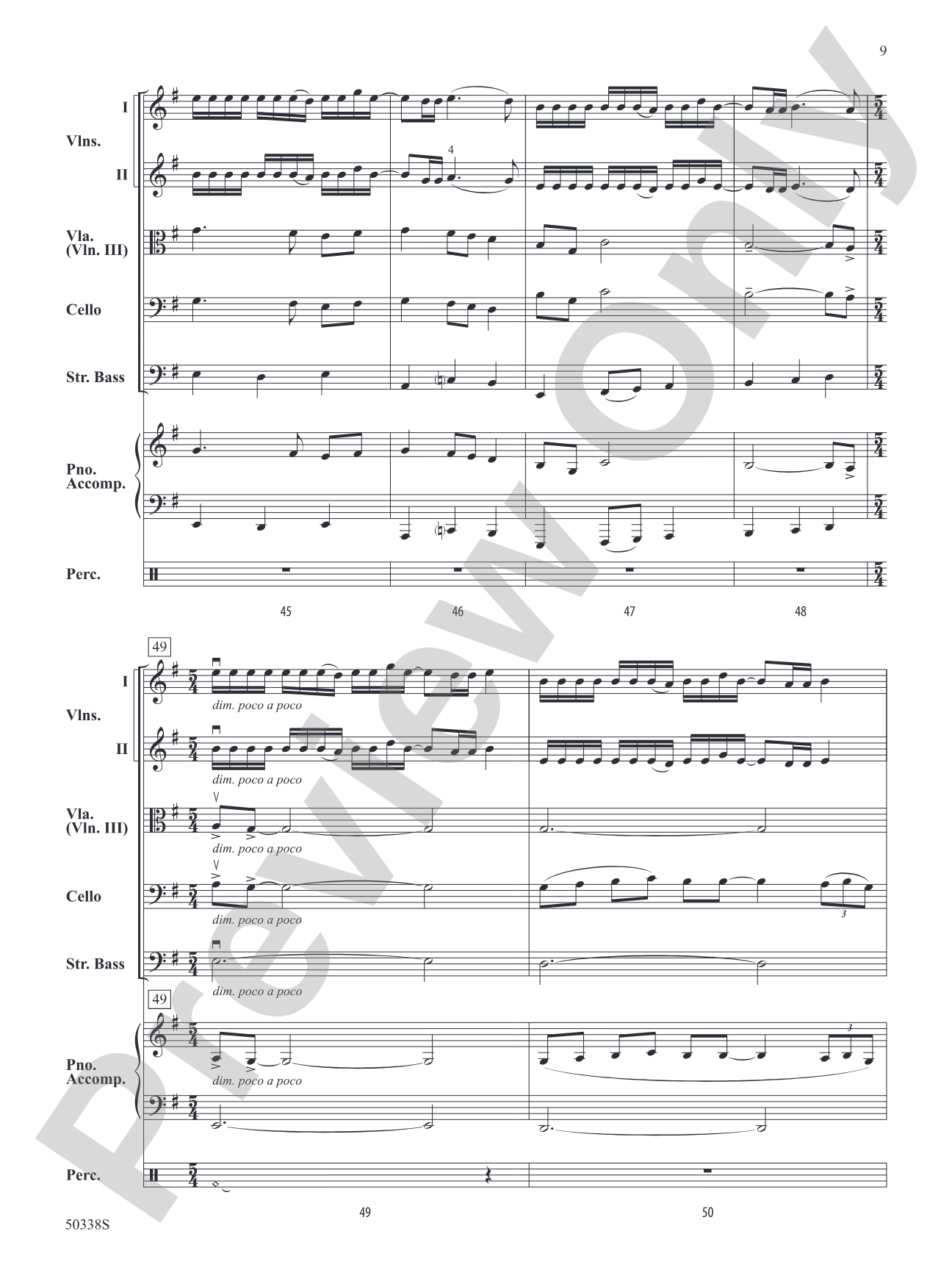
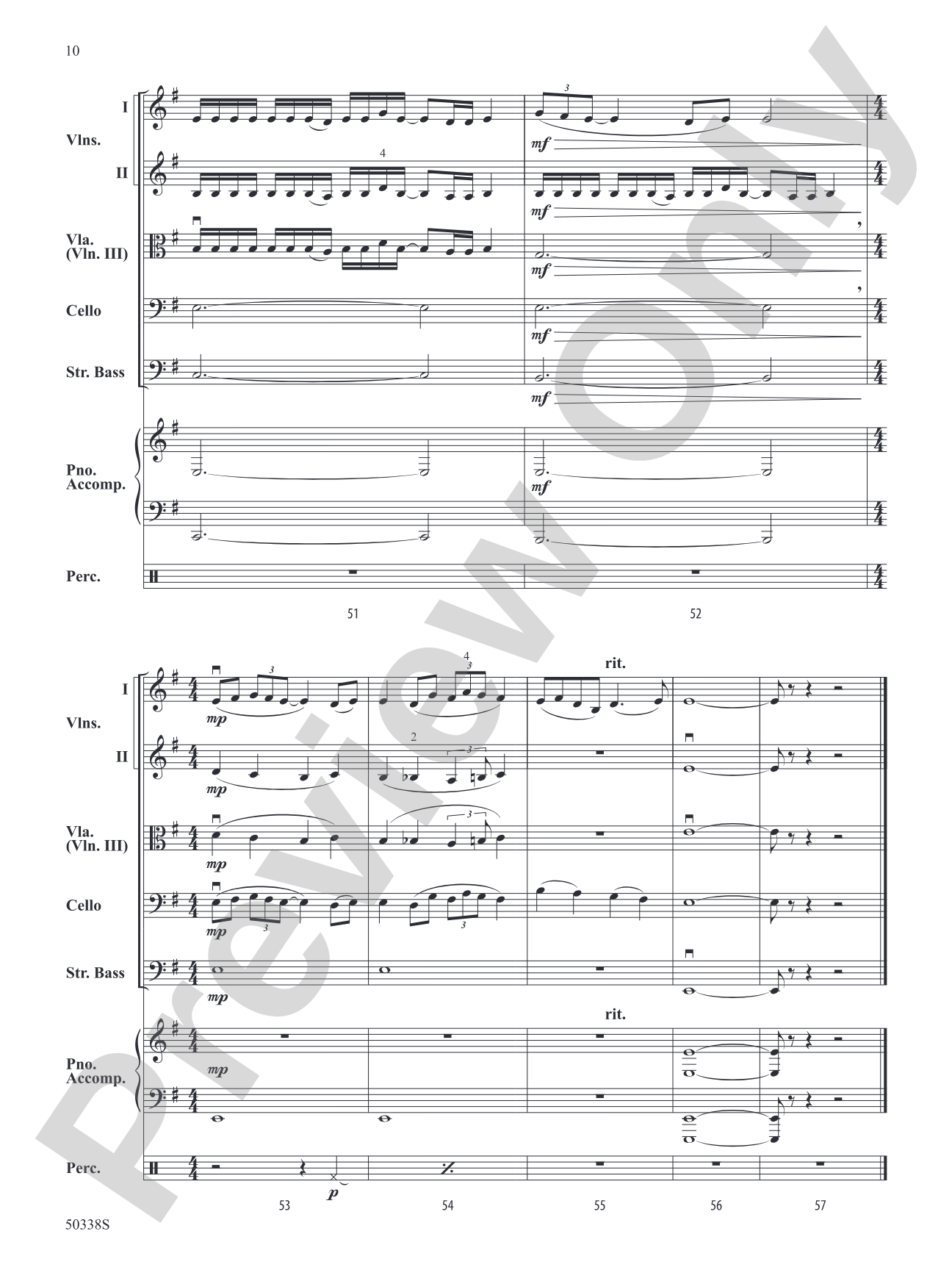

Pines Near a Catacomb: String Orchestra Conductor Score & Parts
By Ottorino Respighi / arr. Michael Story
Grade: 3
Item: 00-PK-0009371
$70.00
Pickup currently not available
Buy Extra Parts (Digital PDF Download)
| Product | Price | Quantity |
|---|---|---|
| Pines Near a Catacomb: Score | $12.00 | |
| Pines Near a Catacomb: 1st Violin | $3.00 | |
| Pines Near a Catacomb: 2nd Violin | $3.00 | |
| Pines Near a Catacomb: 3rd Violin (Viola [TC]) | $3.00 | |
| Pines Near a Catacomb: Viola | $3.00 | |
| Pines Near a Catacomb: Cello | $3.00 | |
| Pines Near a Catacomb: String Bass | $3.00 | |
| Pines Near a Catacomb: Piano Accompaniment | $3.00 | |
| Pines Near a Catacomb: 1st Percussion | $3.00 |
Parts Added to Cart!
Description
Pines of Rome is one of the most important orchestral works of the 20th century. Arranger Michael Story crafts a colorful arrangement, based on the second movement, which is both haunting and dramatic. This very descriptive and educationally sound piece would be a welcome addition to any string orchestra library.


Pines Near a Catacomb: String Orchestra Conductor Score & Parts isn't in MakeMusic Cloud just yet...but it could be. Let us know you'd like to see it, and you'll help shape what comes next. In the meantime, start a free trial and dive into thousands of interactive titles your students can play along with today.
Request This Title
Tell us you want it.
Start Your Free Trial
Explore everything that's ready to play right now.
Sample Audio
1
Audio File
--:--
0:00
0:00
Sample Video
Additional Details
Series:
Belwin Concert String Orchestra
Publisher:
Alfred Music
SKU:
00-PK-0009371
More about this title
About the Composer: Ottorino Respighi
Ottorino Respighi (1879, 1936) stands as one of Italy's most consequential orchestral voices, a composer who transformed nationalist impulses into vivid, large-scale musical paintings. His gift for orchestration, learned partly through study with Rimsky-Korsakov, allowed him to coax extraordinary color from the ensemble, making him a natural choice for generations of conductors seeking works that grip audiences while remaining playable at regional levels.
Respighi's four symphonic poems collectively titled Pines of Rome rank among the most performed orchestral suites in the repertoire. Written in 1924, the work captures Italian landscapes with cinematic precision: each movement conjures a specific Roman location through melody, harmony, and orchestral texture. This approach to program music influenced how 20th-century composers thought about writing for young ensembles.
Why we love this
Michael Story's arrangement captures the eerie, processional character of this movement without overcomplicating the string writing, making it genuinely playable for Grade 3 ensembles while preserving the cinematic quality that makes Pines of Rome so distinctive. The arrangement balances educational transparency with musical substance, so students engage with real music rather than a simplified approximation. For contest season, this offers a piece with serious artistic credentials and immediate dramatic impact.
What to expect
Mysterious and processional, like moving through ancient stone passages by candlelight. The harmonic language is rich without being dissonant, and the orchestration creates a sense of space and echo that feels cinematic even with modest forces.
Who it's for
String orchestra directors seeking a grade-appropriate work with genuine artistic weight and contest appeal. This is ideal for orchestras ready to tackle descriptive music with historical and harmonic sophistication without needing advanced virtuosity.
How to get the most out of it
- Establish a consistent, unhurried pulse in the opening section. The "catacomb" mood depends on restraint rather than tempo, so younger players often need reminders that slow does not mean unstable.
- Layer the dynamic contrasts carefully through rehearsals. Mark the score with breath points and section entrances so players understand where their voice rises and falls within the texture.
- Balance the divisi passages by ear rather than by forcing equal volumes across all desks. Some parts are meant to shimmer beneath others, not compete.
- Attend to intonation in sustained passages and harmonies. Stone acoustics and reverb are built into Respighi's concept here, but they only work if the chords are centered and still.
How to use it
Program this as a concert centerpiece for a thematic evening exploring ancient Rome, or place it before a livelier Respighi movement to contrast energy and mood. Its dramatic arc and moderate length make it strong for festival competition or as a turning point in a mixed string repertoire concert.
Skills your students will build
- sustaining legit tone across long phrases in a slow tempo
- reading and executing divisi passages with musical awareness
- balancing individual lines within an ensemble texture
- interpreting programmatic music through phrasing and dynamics
- intonation in chromatic harmony and sustained chords