
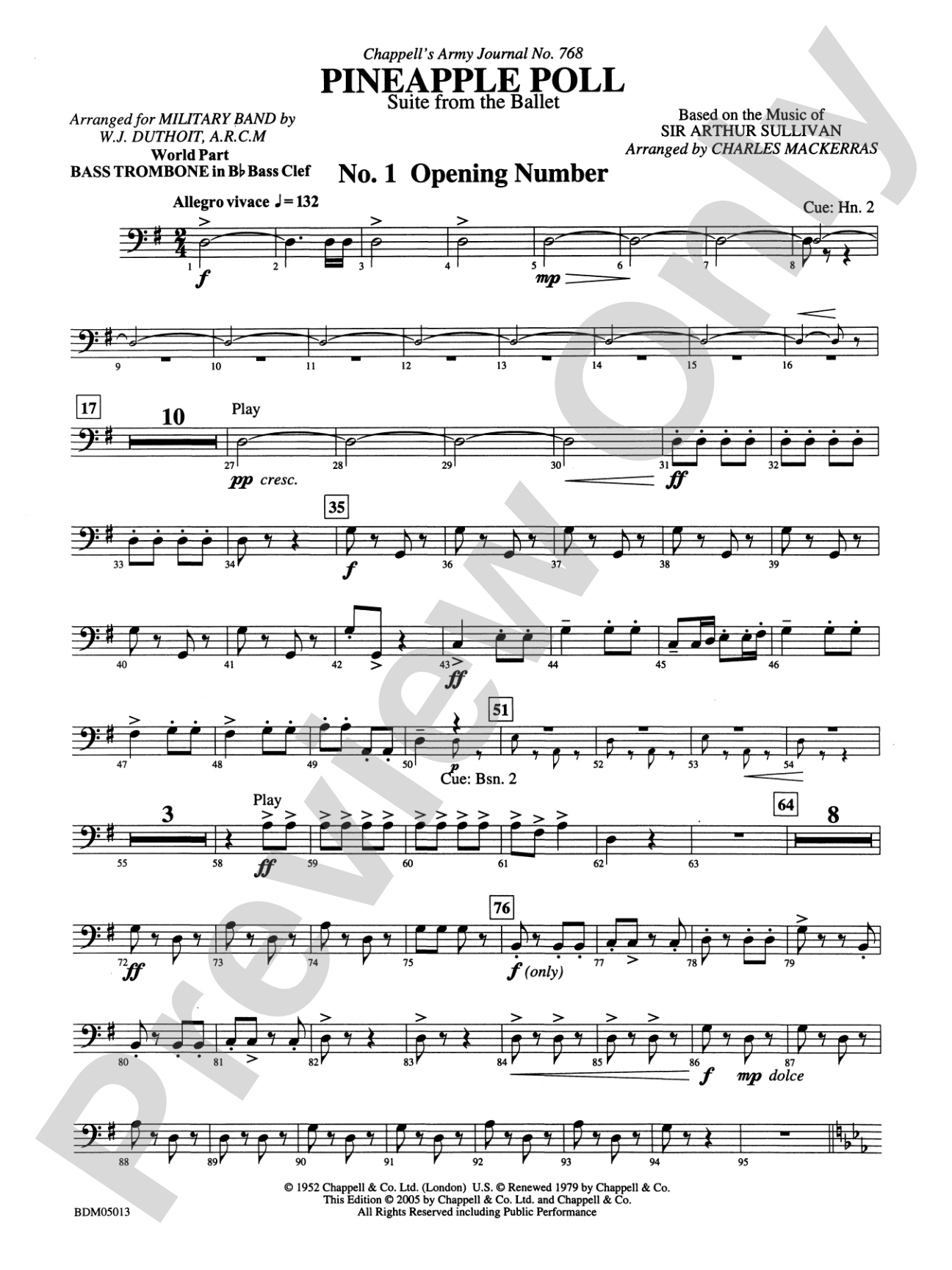
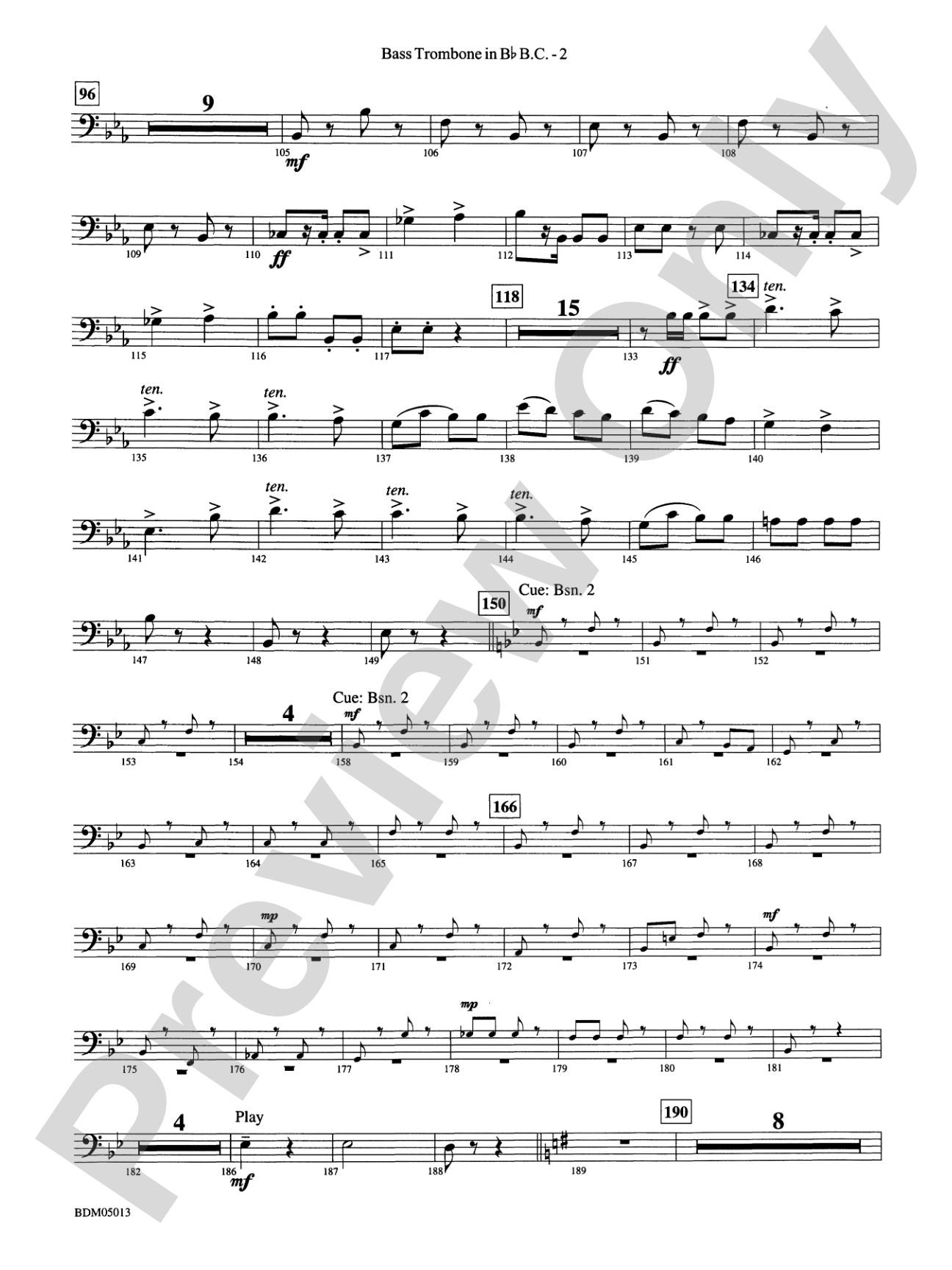
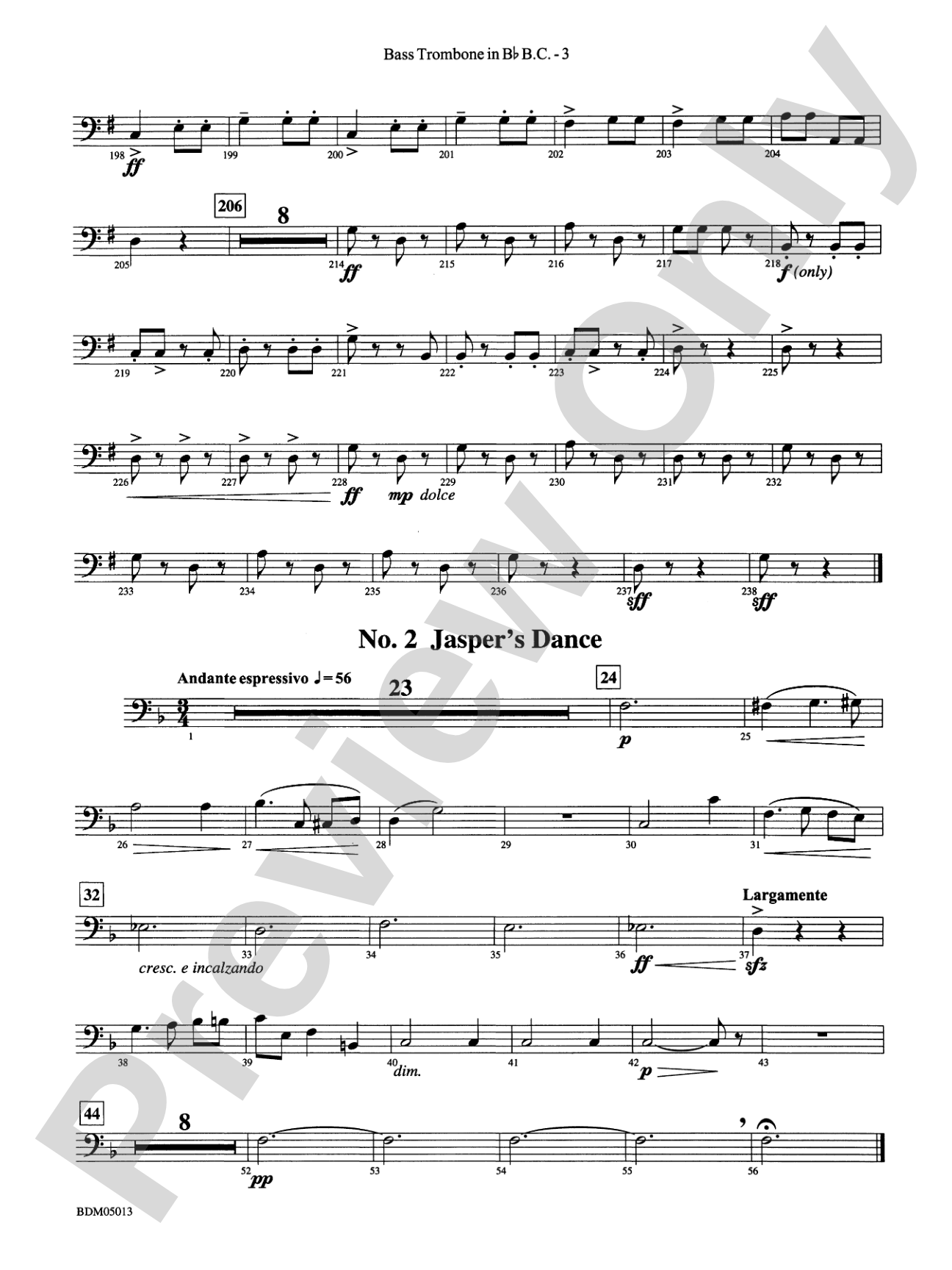
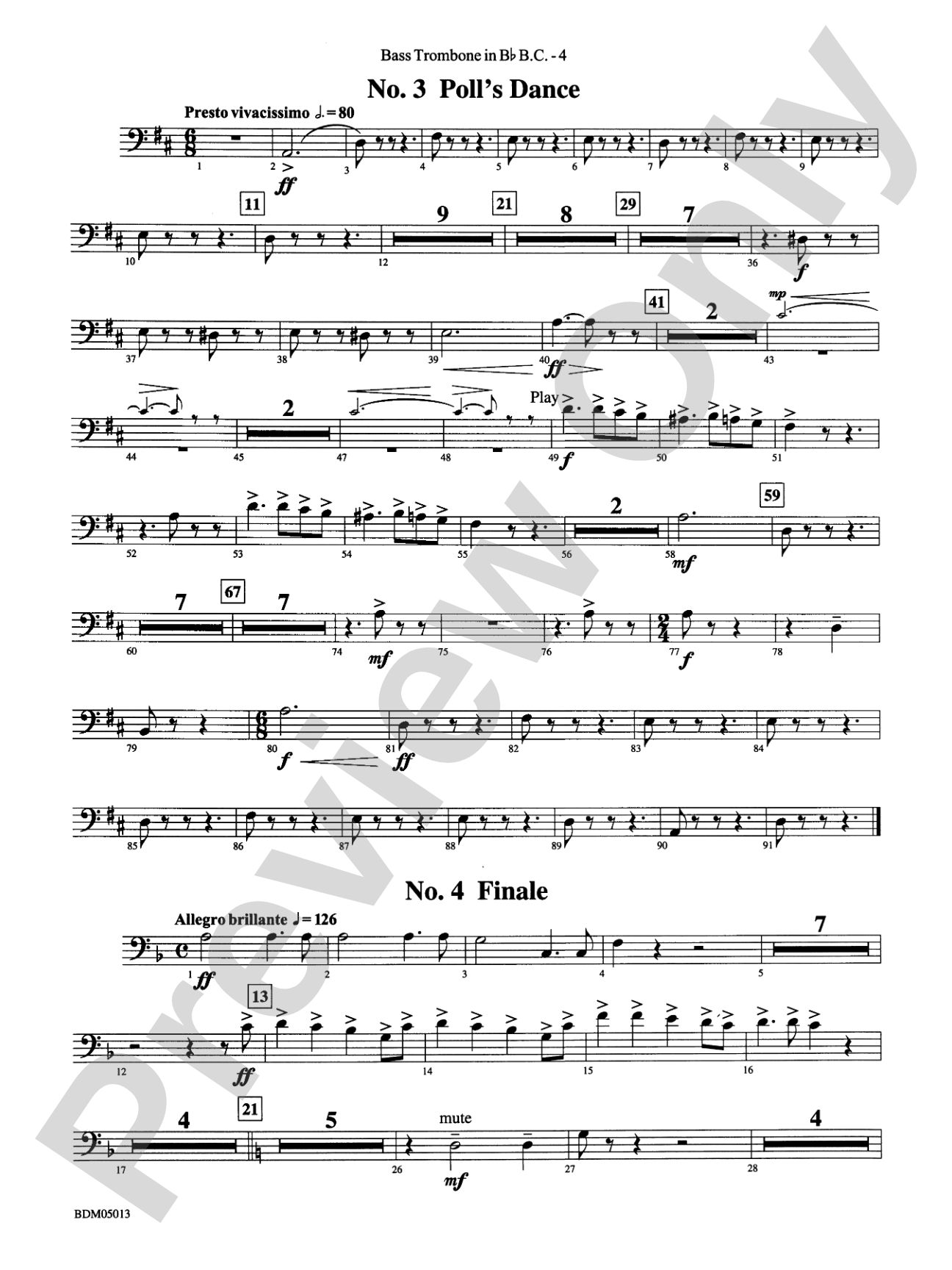
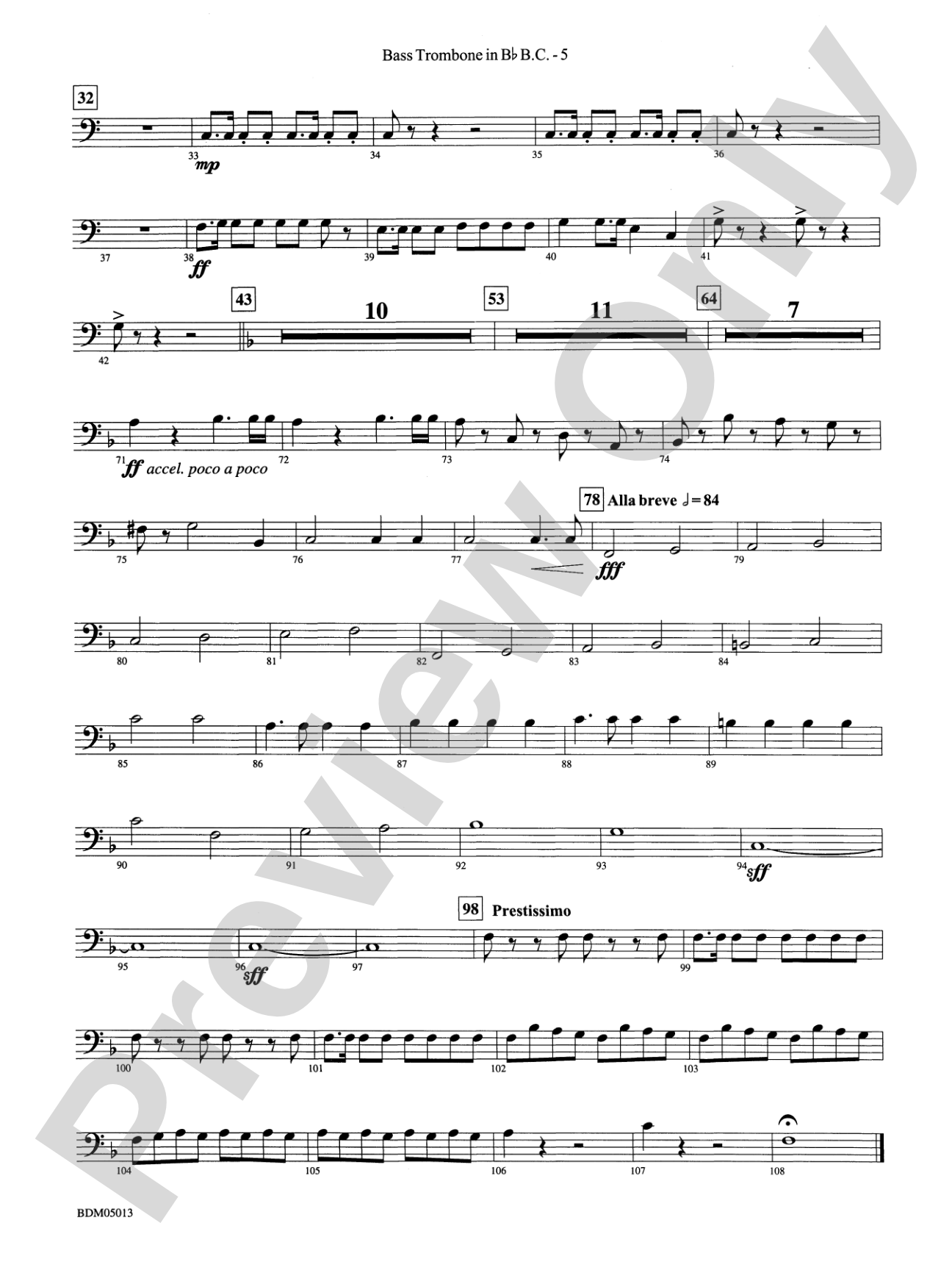




Pineapple Poll (Suite from the Ballet): (wp) 3rd B-flat Trombone B.C.
Based on the music of Sir Arthur Sullivan, arranged for military band by W. J. Duthoit (ARCM) / arr. Charles Mackerras
Grade: 4.5 (Medium to Medium Advanced)
Item: 00-PC-0015201_wpTN3BC
$3.00
Pickup currently not available
Description
In four charming movements, this cherished work is back in print with all new engraving and a full score for the first time. The movements are entitled "Opening Number," "Jasper's Dance," "Poll's Dance," and "Finale." A real work-out for your top-notch ensemble from the Chappell Army Journal, this one's well worth the energy. Pineapple Poll is an exciting addition to the Belwin Classic Band series! (11:43) This title is available in MakeMusic Cloud.


Don't just read it, hear it, play along with it, and watch your students grow with it. In MakeMusic Cloud, Pineapple Poll (Suite from the Ballet): (wp) 3rd B-flat Trombone B.C. comes alive with professional accompaniment, adjustable tempo, and built-in practice tools that turn solo practice into real progress.
Open in the Player
Jump straight in and assign it today.
Start Your Free Trial
Open this title and explore the full library in minutes.
Sample Audio
1
Audio File
--:--
0:00
0:00
Sample Video
No sample videos found.
Additional Details
Series:
Belwin Classic Band
Publisher:
Alfred Music
Page Count:
560
SKU:
00-PC-0015201_wpTN3BC
More about this title
About the Composer: Arthur Sullivan
Arthur Sullivan (1842-1900) stands as one of the most prolific and beloved composers of the Victorian era. While he is celebrated internationally for his comic operas written with librettist W.S. Gilbert, Sullivan's compositional reach extended far beyond the stage. He wrote symphonies, concertos, sacred music, and instrumental works that reveal his gift for melody, orchestration, and theatrical storytelling. Pineapple Poll, drawn from one of Gilbert and Sullivan's most enduring operettas, showcases Sullivan's genius for creating tunes that are both instantly memorable and musically substantial.
Sullivan's influence on music education remains profound. His works appear regularly in concert band and orchestra repertoires because they combine genuine artistic merit with genuine accessibility. Directors turn to Sullivan when they need music that engages audiences immediately, challenges young musicians meaningfully, and demonstrates that classical craftsmanship and entertainment are not opposing forces.
Why we love this
Pineapple Poll delivers sophisticated ensemble writing with immediate appeal, striking the balance that every director seeks. The four-movement structure gives your concert program architectural weight while the melodic clarity and orchestral color keep audiences genuinely engaged from opening number through finale.
What to expect
Pineapple Poll sparkles with Victorian charm and theatrical wit. The opening announces itself with unmistakable elegance, the dances bubble with character and rhythmic vitality, and the whole work carries an infectious sense of pageantry that makes both performers and listeners smile without sacrificing musical substance.
Who it's for
This arrangement suits experienced concert bands with solid fundamentals and players ready to handle the demands of Sullivan's orchestrational detail. It works equally well for groups preparing festival or contest programs and ensembles building a balanced concert repertoire that audiences actually want to hear.
How to get the most out of it
- Balance the melodic lines across your reed and brass sections in the opening; Sullivan's vocal orchestration translates beautifully to band when each section sings its part with intent rather than simply playing notes.
- The dance movements require crisp articulation and rhythmic precision. Establish a clear pulse early in rehearsal and guard against the temptation to broaden or soften the more energetic passages.
- Give your principal woodwinds room to shape the lyrical moments in Poll's Dance. These solos reward expressive playing and a slightly flexible approach to the printed tempo.
- The Finale builds through accumulated orchestration. Resist the urge to enter at full dynamic; let each instrumental family layer in gradually so the climax has genuine impact.
How to use it
Program this as a centerpiece work that anchors a concert with genuine substance and popular appeal. It pairs naturally with lighter fare in pops contexts while holding its own alongside serious contemporary or classical works, and its moderate length (11:43) makes it ideal for building a balanced concert flow.
Skills your students will build
- Articulation clarity and consistency across multiple voices
- Balance and blend within mixed ensemble textures
- Reading and executing musical character markings (scherzando, lyrical, con moto)
- Shaping melodic lines across section transitions
- Managing dynamic layering in multi-section climaxes