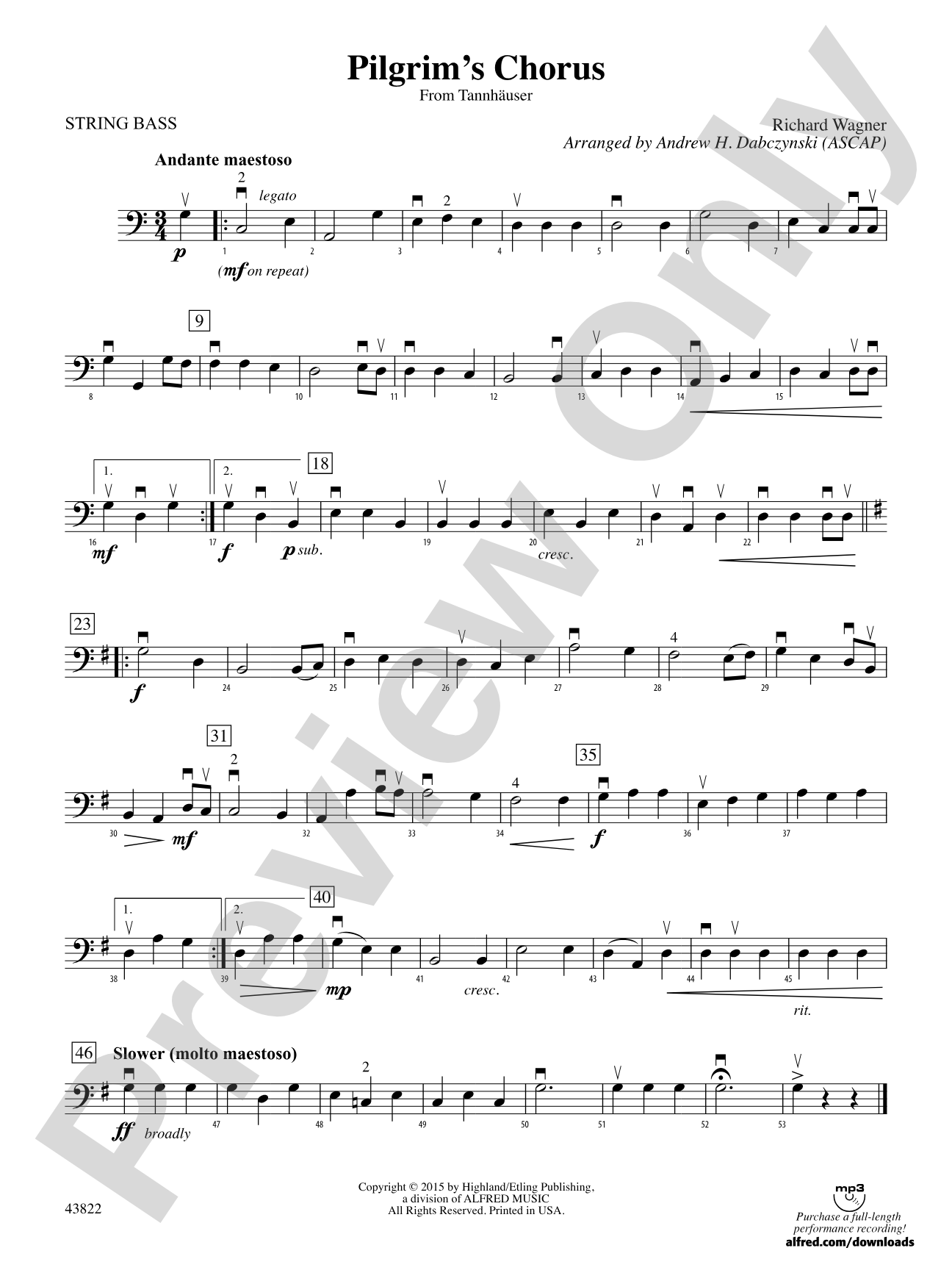
Pilgrim's Chorus (from Tannhäuser): String Bass Sheet Music Preview

Pilgrim's Chorus (from Tannhäuser): String Bass

By Richard Wagner / arr. Andrew H. Dabczynski

Grade: 2

Item: 00-PC-0016918_SB

Digital Download
$5.99
Description
One of Wagner's most memorable themes is now especially accessible for beginning string players. Each section enjoys gorgeous melodies, yet rhythms, bowings, and fingerings are playable---even by students in their first year of study. This dramatic selection will bring depth to any concert program. (3:00)

Don't just read it, hear it, play along with it, and watch your students grow with it. In MakeMusic Cloud, Pilgrim's Chorus (from Tannhäuser): String Bass comes alive with professional accompaniment, adjustable tempo, and built-in practice tools that turn solo practice into real progress.

Sample Audio
0:00
0:00
Sample Video
Additional Details
Series: Highland/Etling String Explorer
Publisher: Alfred Music
Page Count: 72
SKU: 00-PC-0016918_SB

More about this title

About the Composer: Richard Wagner

Richard Wagner (1813-1883) was a German composer whose operas revolutionized music theater in the nineteenth century. His harmonic innovations and psychological depth influenced generations of composers, and his melodies remain instantly recognizable even to audiences unfamiliar with opera.

For string students, Wagner offers something rare: sweeping, lyrical themes that demonstrate how orchestral writing can be both dramatically powerful and emotionally direct. The Pilgrim's Chorus exemplifies why his work endures in concert halls and educational settings alike.

Why we love this

This arrangement captures one of opera's most iconic processions without requiring advanced technique or years of experience. String sections at every level get to play music that sounds and feels significant, which builds genuine musicianship far more effectively than exercises that sound like exercises.

What to expect

Stately and reverent, like a procession of pilgrims moving through a vast cathedral. The melody unfolds with quiet dignity, supported by rich harmonies that create depth without complexity. There is dignity and warmth throughout, making it feel like an occasion rather than a mere performance.

Who it's for

Beginning string orchestras and school ensembles with players in their first year or two of study. Directors seeking concert repertoire that sounds mature without demanding advanced technique will find this a reliable standard.

How to get the most out of it

  • Shape the main melody with gentle dynamic contour rather than playing it flat. Even at this accessible level, phrase direction matters and lifts the line above supporting harmonies.
  • Balance the sections carefully during rehearsal. Viola and cello parts carry essential harmonic movement, so resist the urge to let violins dominate the texture.
  • Allow a breath or slight ritardando before major structural moments. Wagner's architecture benefits from clarity, and small expressive choices help audiences follow the piece's emotional arc.
  • Communicate string crossings and position shifts during sectional rehearsals. Clear fingerings and bowings in the parts make the learning process smoother and free students to focus on ensemble blend.

How to use it

Program this as a centerpiece for a classical or Romantic-era concert, or use it to anchor a program that includes lighter contemporary works. The three-minute duration allows flexible programming, and the piece's theatrical heritage adds welcome variety to concert programming at any time of year.

Skills your students will build

  • Playing with sustained legato across multiple measures
  • Reading parts within a four-part harmonic texture
  • Balance and blend between independent section lines
  • Interpretation of dynamic and expressive markings in Romantic-era style
  • Ensemble listening and response to conductor shape

You May Also Like