
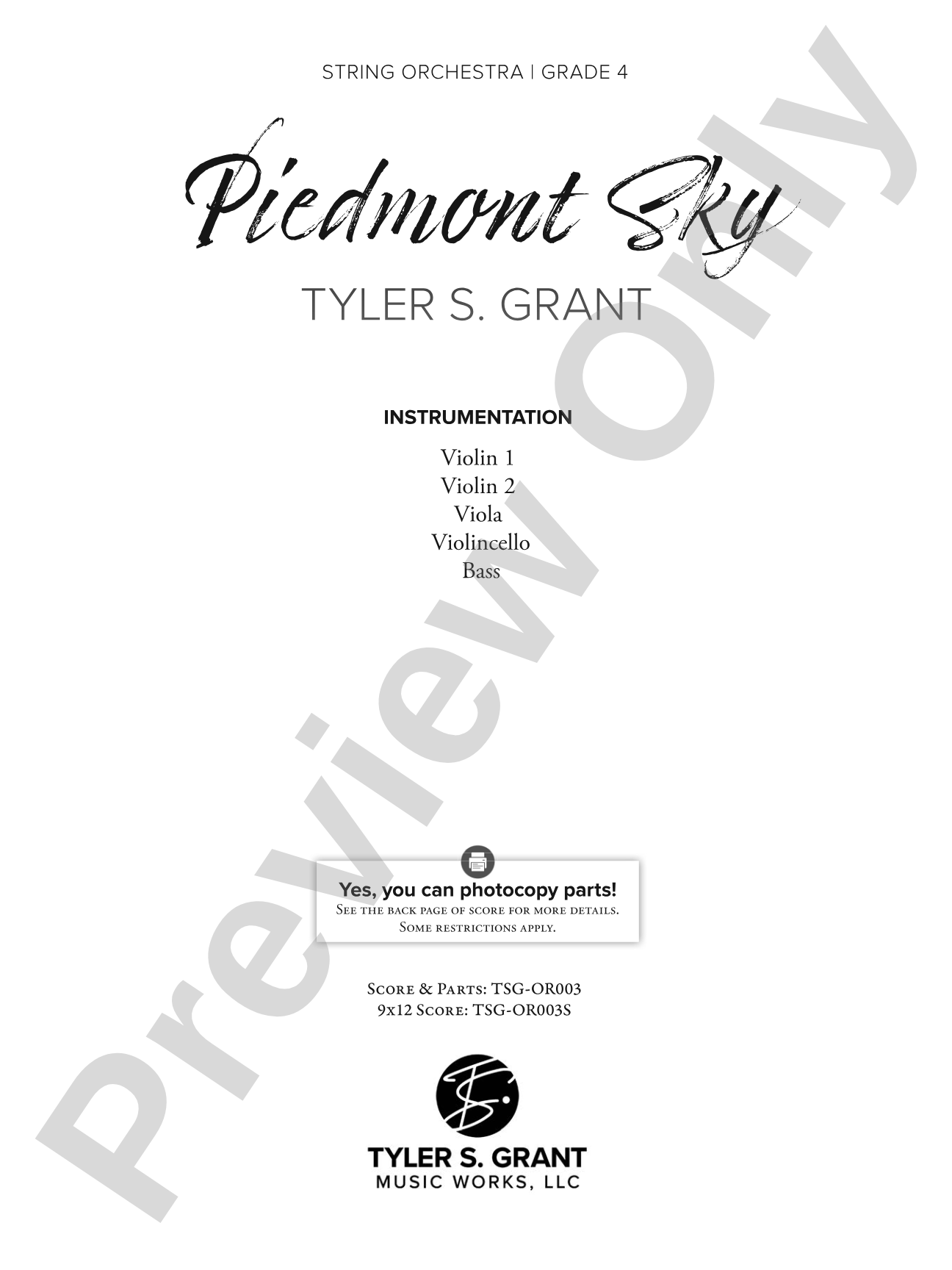


Piedmont Sky: String Orchestra Conductor Score & Parts
String Orchestra Version
By Tyler S. Grant
Grade: 4
Item: 98-DTSGOR003
$65.00
Pickup currently not available
Buy Extra Parts (Digital PDF Download)
| Product | Price | Quantity |
|---|---|---|
| Piedmont Sky: Score | $15.00 | |
| Piedmont Sky: 1st Violin | $12.50 | |
| Piedmont Sky: Viola | $12.50 | |
| Piedmont Sky: 2nd Violin | $12.50 | |
| Piedmont Sky: Violoncello | $12.50 | |
| Piedmont Sky: String Bass | $12.50 |
Parts Added to Cart!
Description
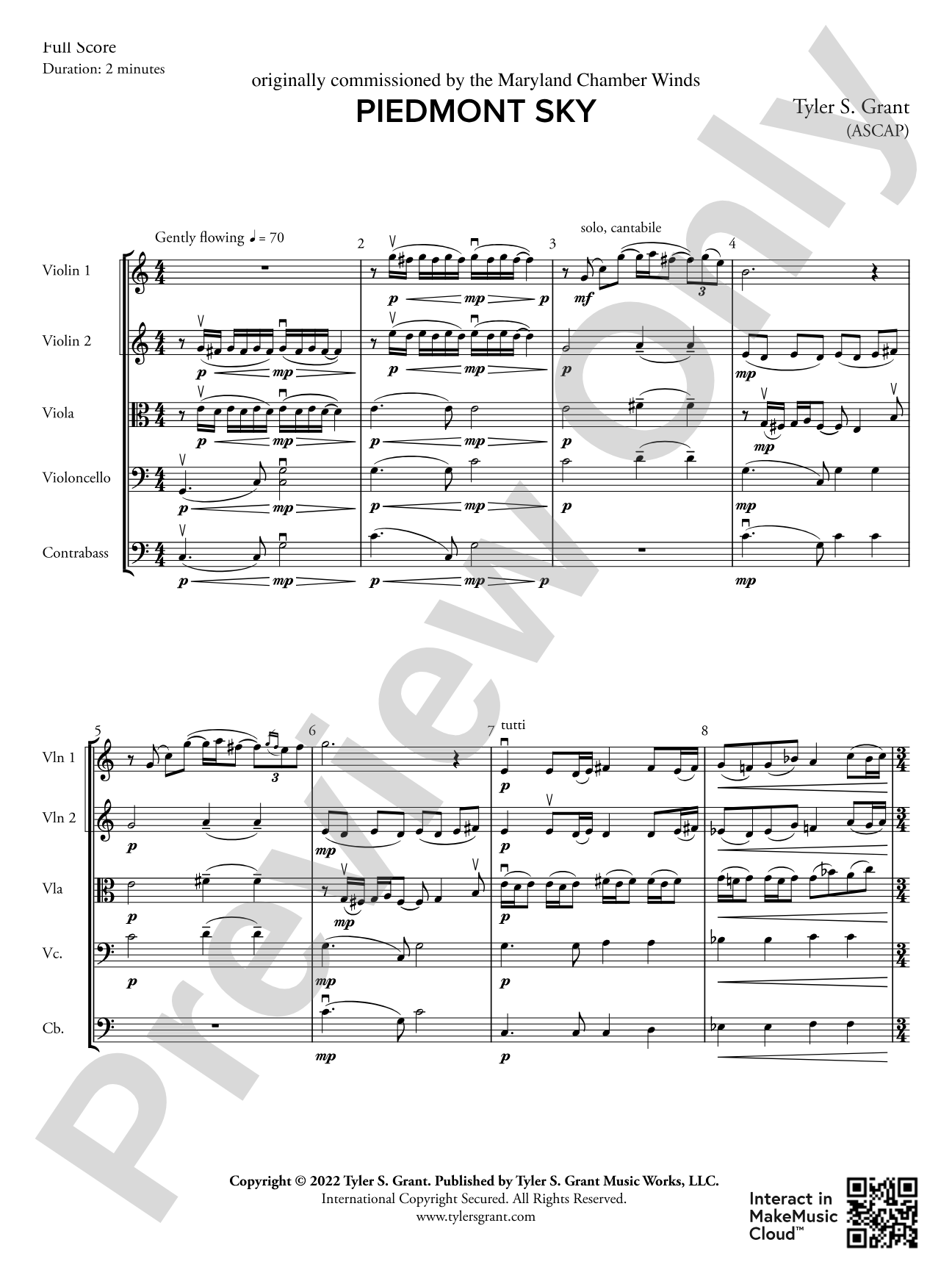
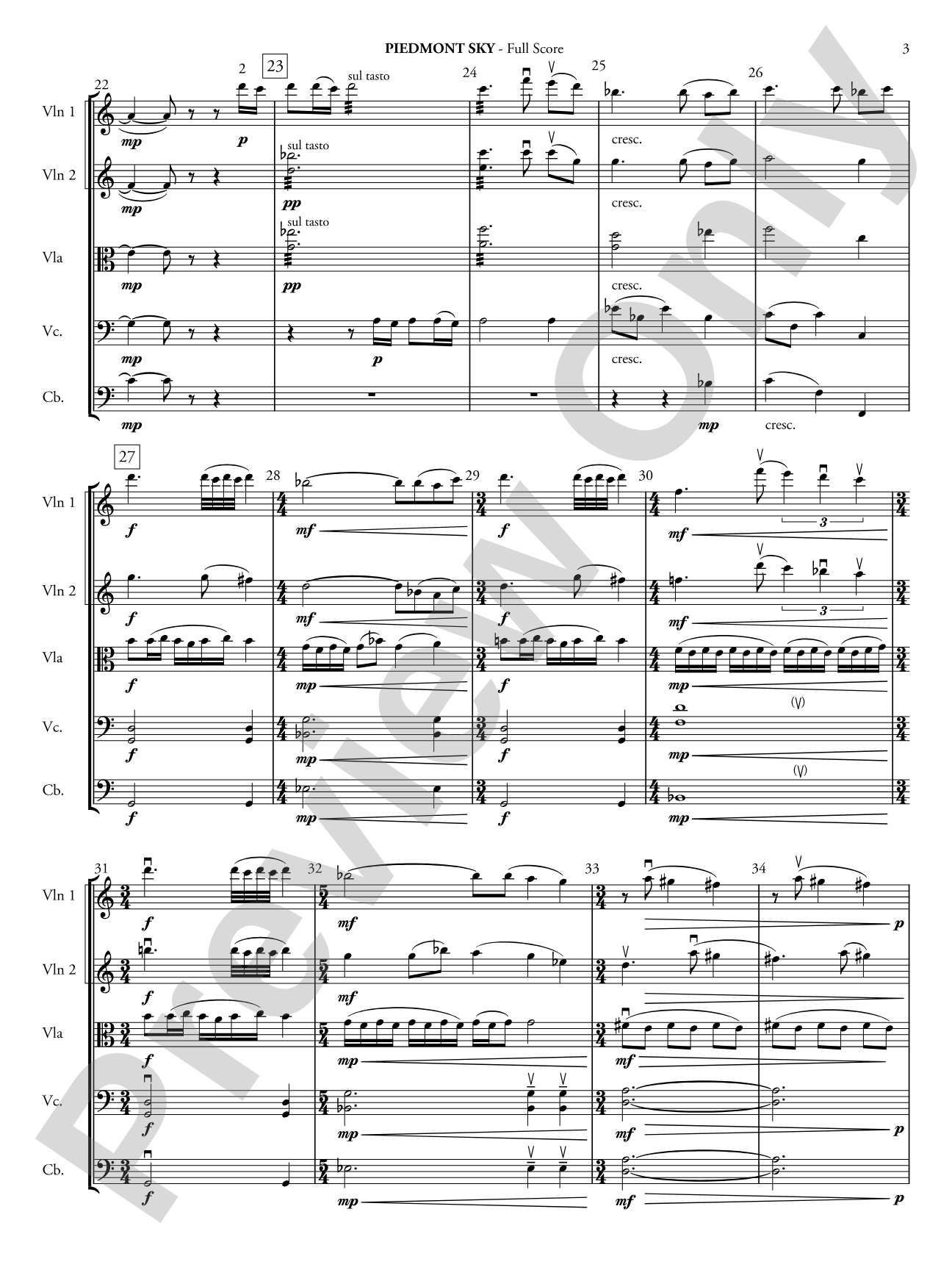
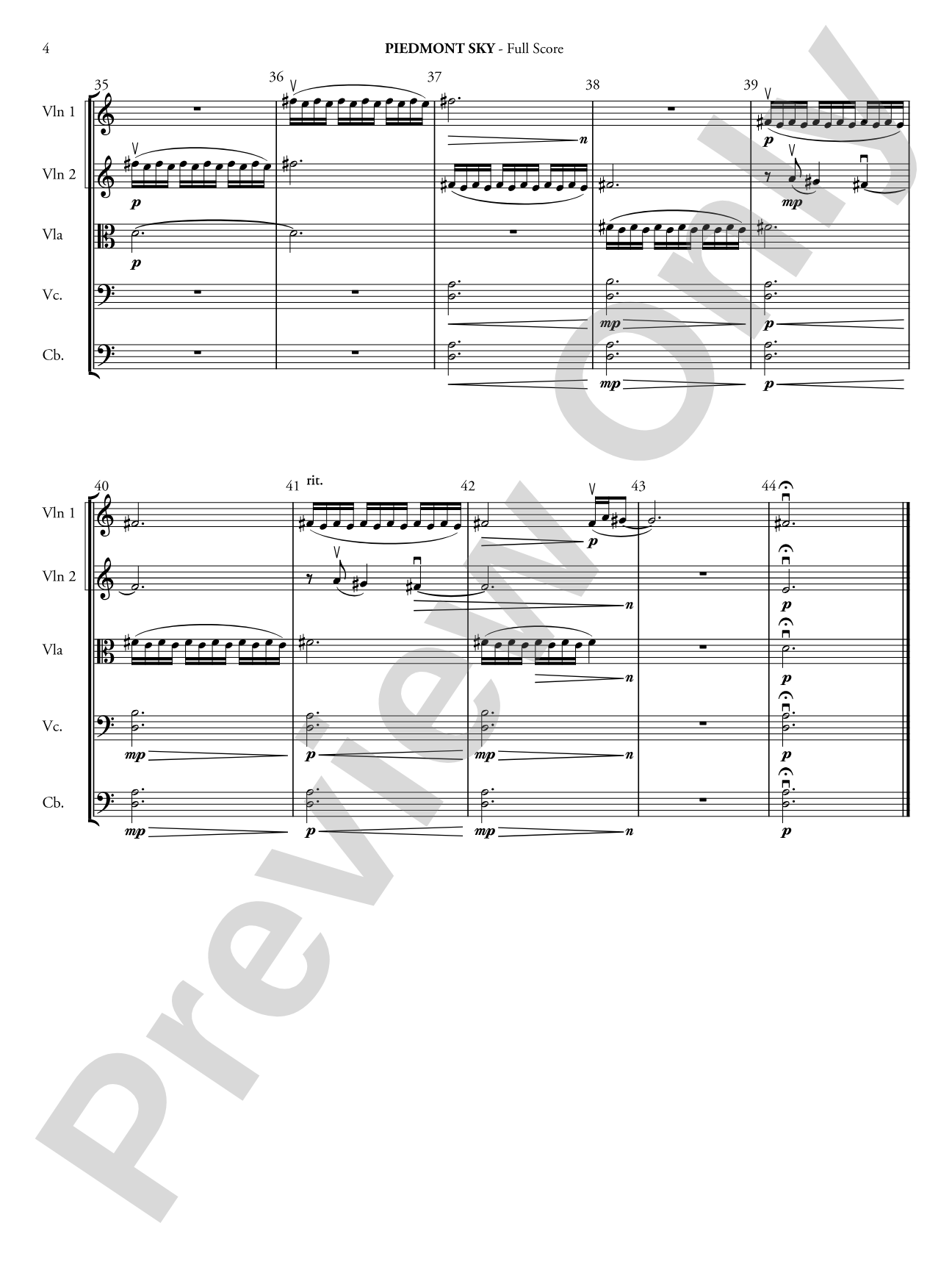
Piedmont Sky by Tyler S. Grant was commissioned by Dr. Tyler Austin and the Maryland Chamber Winds for the 2020 MCW Digital Premiere Project. Scored for string orchestra, this piece depicts the famous Piedmont Park in the middle of downtown Atlanta. (3:00)


Piedmont Sky: String Orchestra Conductor Score & Parts isn't in MakeMusic Cloud just yet...but it could be. Let us know you'd like to see it, and you'll help shape what comes next. In the meantime, start a free trial and dive into thousands of interactive titles your students can play along with today.
Request This Title
Tell us you want it.
Start Your Free Trial
Explore everything that's ready to play right now.
Sample Audio
No sample audio found.
Sample Video
No sample videos found.
Additional Details
Series:
Tyler S. Grant Music Works
Publisher:
Tyler S. Grant Music Works, LLC.
SKU:
98-DTSGOR003
More about this title
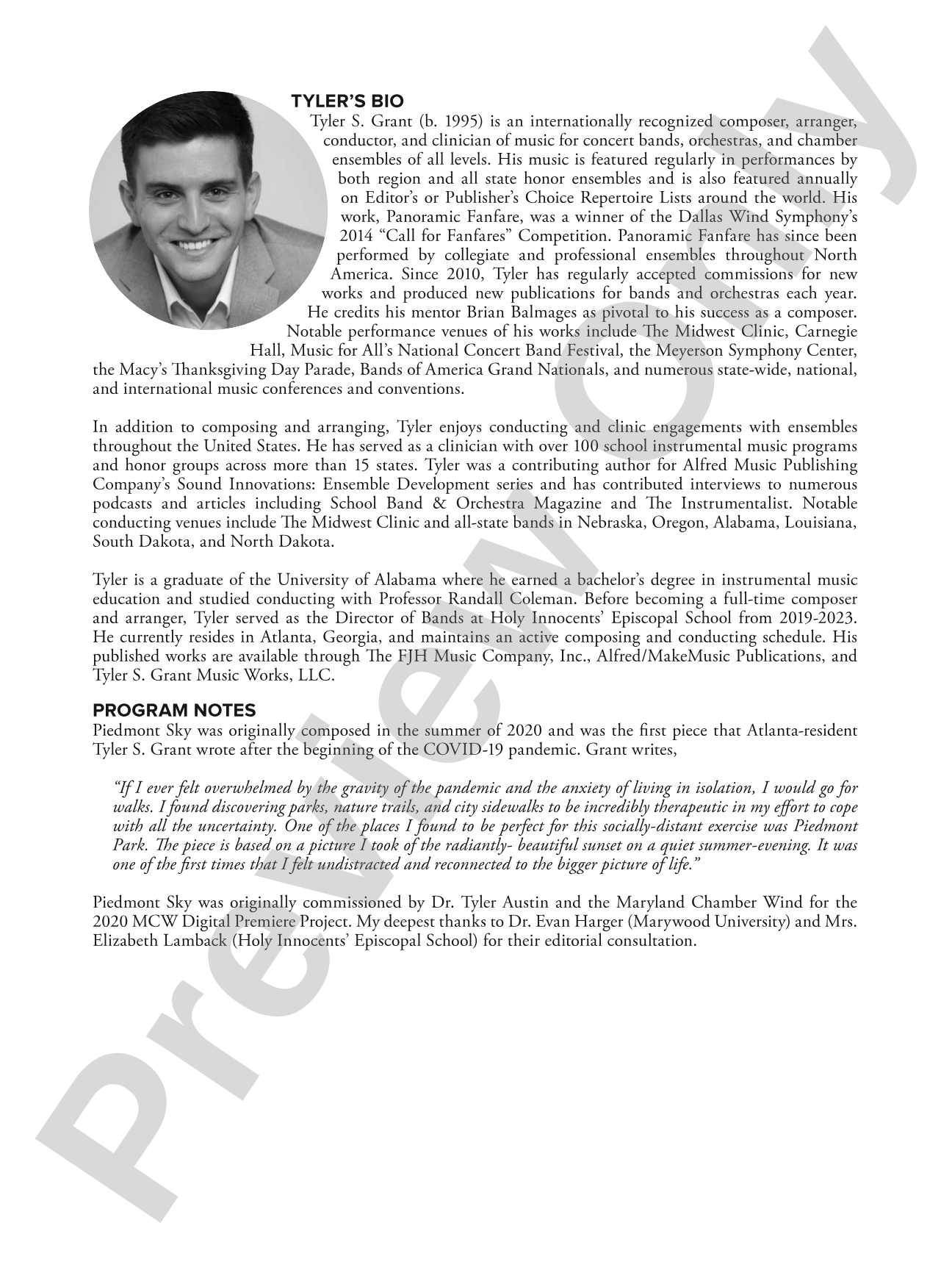
About the Composer: Tyler S. Grant

Tyler S. Grant composes and arranges for concert bands, orchestras, and chamber ensembles across all levels, and his works appear regularly on state and all-state honor ensemble programs nationwide. His compositions have earned recognition including a 2014 Dallas Wind Symphony fanfare competition award, and his music has been performed at The Midwest Clinic, Carnegie Hall, the Meyerson Symphony Center, and the Macy's Thanksgiving Day Parade. He holds a bachelor's degree in instrumental music education from the University of Alabama and studied conducting with Professor Randall Coleman.
Since 2010, Grant has maintained an active commission practice while serving as a clinician with over 100 school music programs across more than 15 states. He contributed to Alfred Music's Sound Innovations: Ensemble Development series and has written for publications including School Band & Orchestra Magazine and The Instrumentalist. His mentorship under composer Brian Balmages significantly shaped his compositional voice.
Why we love this
Grant writes with a strong sense of place and narrative arc. Piedmont Sky captures the visual and emotional landscape of a beloved Atlanta park with orchestration that engages every section of the string ensemble, making it equally rewarding for players and audiences. The Grade 4 level is pitched just right: challenging enough to hold strong ensemble musicians while remaining accessible for programs building toward more complex repertoire.
What to expect
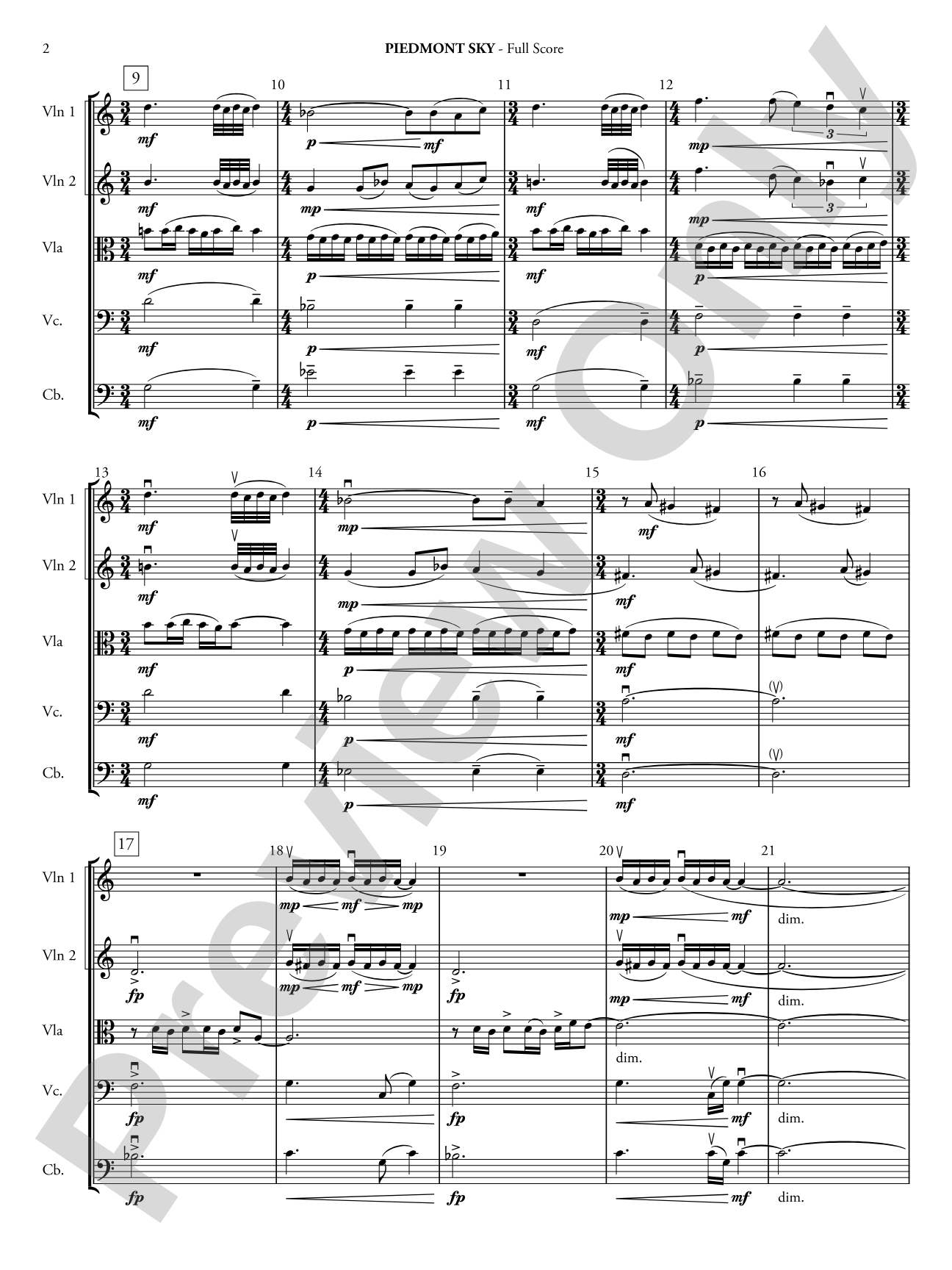
Piedmont Sky captures the serene beauty and quiet grandeur of a well-known urban park, unfolding with clear melodic purpose and warm string sonorities. The piece breathes with reflective moments and gentle motion, inviting players to discover the landscape within the music rather than perform surface effects.
Who it's for
String orchestras at the Grade 4 level, particularly ensembles preparing for regional and state festivals or seeking contest repertoire with genuine artistic substance. This work suits programs looking to program pieces that connect performers and audiences through evocative imagery and accessible but engaging orchestration.
How to get the most out of it
- Shape the melodic lines with clear phrase direction; the descriptive title invites players to paint the park's landscape through their sound quality and dynamic nuance.
- Balance the string parts carefully during sectional dialogue so that thematic material stands out without requiring excessive dynamic contrast.
- Use the three-minute duration to build a single emotional journey from opening through close; resist the urge to rush transitions between contrasting sections.
- Attend to intonation in sustained passages, which expose tuning and reward the ensemble's listening skills.
How to use it
Program this as a concert centerpiece that demonstrates your string orchestra's musical maturity without overwhelming younger or less experienced players. It works particularly well in spring festivals or competitions, where its descriptive content and three-minute length balance a concert program effectively alongside classical repertoire or contemporary works of contrasting character.
Skills your students will build
- Sustaining tone quality through longer melodic phrases
- Ensemble balance and inner voice awareness in four-part string writing
- Musical interpretation informed by descriptive titles and imagery
- Intonation accuracy in sustained and arpeggiated passages
- Dynamic control across a range from quiet, reflective sections to fuller ensemble sound