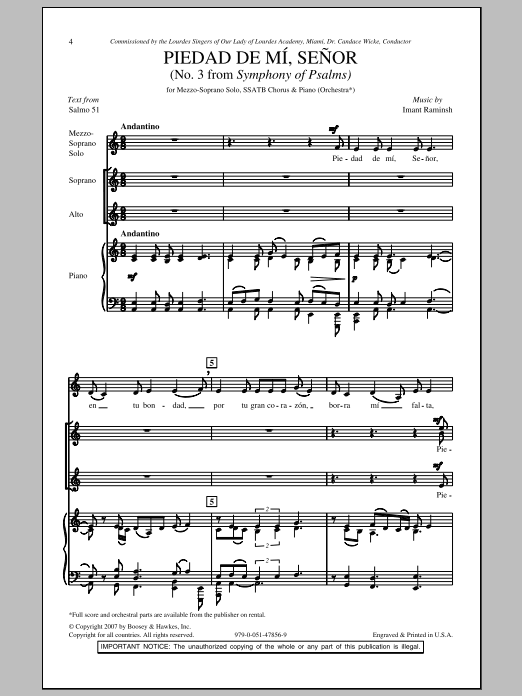
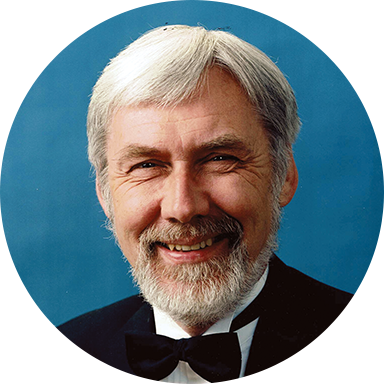
Imant Raminsh's compositional voice emerged from a childhood journey that took him from Ventspils, Latvia to Canada in 1948. His training spanned the Royal Conservatory in Toronto, the University of Toronto, Salzburg's Akademie Mozarteum, and the University of British Columbia, giving him a rigorous foundation across multiple musical traditions. Over decades of prolific work, he has composed across every major genre from solo voice to opera, with performances reaching prestigious halls including Carnegie Hall, Tchaikovsky Hall in Moscow, and the Glinka Capella in St. Petersburg.
Raminsh's career reflects deep institutional commitment: he founded the Prince George Symphony, the Youth Symphony of the Okanagan, NOVA Children's Choir, and AURA Chamber Choir. His accomplishments have earned recognition from the Association of Canadian Choral Communities, his alma mater University of Toronto, and the Republic of Latvia, which named him an Officer in the Order of the Three Stars in 2007. Beyond music, his work as a seasonal naturalist in British Columbia parks reveals itself throughout his compositions, where the natural world becomes a recurring source of artistic inspiration.
Why we love this
Raminsh crafts sacred works with direct emotional clarity, avoiding unnecessary complexity without sacrificing musical substance. This octavo sits comfortably in the standard SATB range while offering the kind of textural sophistication that keeps skilled singers engaged and gives developing ensembles room to grow in expressivity.
What to expect
The piece carries the quiet intensity of genuine devotion without theatrical gesture. Raminsh's writing allows each voice part to breathe independently while the harmonic language grounds the text in moments of stillness and introspection.
Who it's for
This work suits intermediate to advanced sacred choirs preparing festival or concert repertoire. It rewards ensembles with solid voice leading skills and a commitment to clear Latin pronunciation.
How to get the most out of it
Balance the voices so that the text remains audible throughout; sacred Latin works demand clarity of diction even when parts overlap
Shape phrases by listening to natural breathing points rather than enforcing uniform phrasing across all four parts
Allow the recorded accompaniment to support your ensemble's tempo rather than fighting against it during rehearsal
How to use it
Include this as part of a sacred choral concert program where it can anchor a set of liturgical or devotional works. Its 15 pages allow for substantial rehearsal investment while remaining brief enough to program alongside other octavos in a varied concert.
Skills your students will build
Latin diction and vowel consistency in sacred music
Four-part independence while maintaining ensemble cohesion
Phrase shaping in longer-lined vocal writing
Dynamic control in soft, reverent passages
You May Also Like
Scan to Complete Your Purchase
Use your phone's camera to scan the code below
You'll log in on your phone and the order will be added to your account