
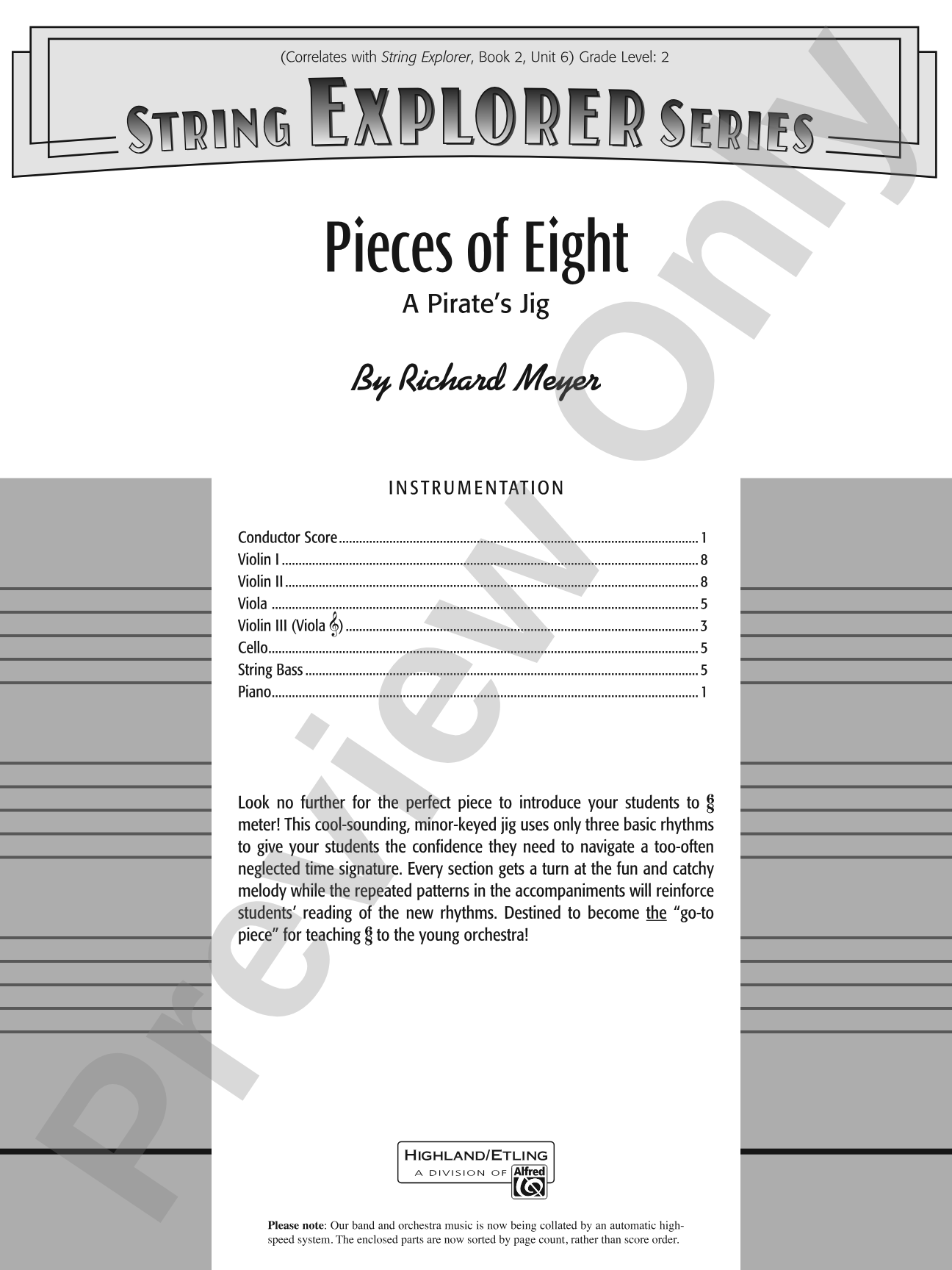
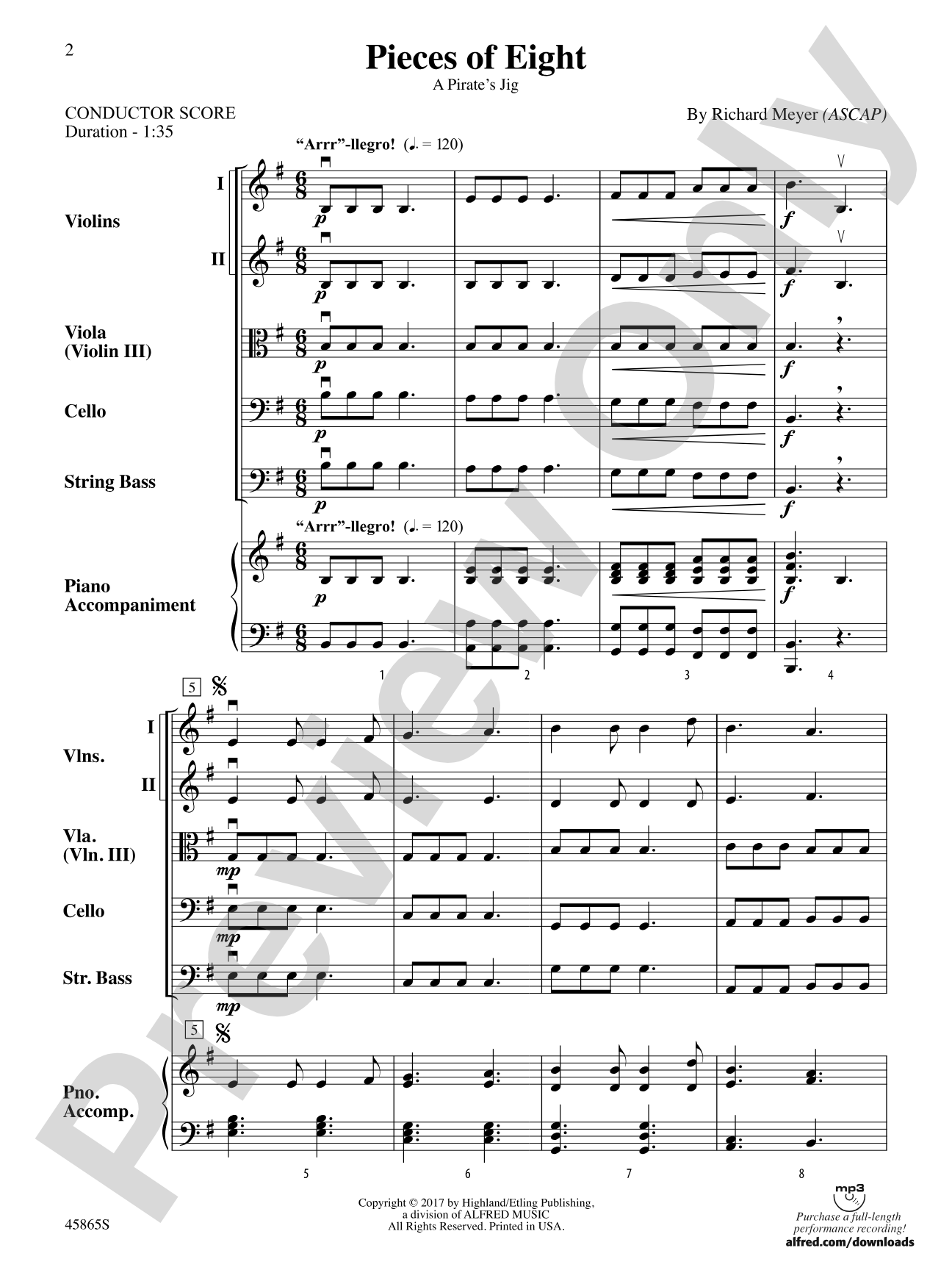
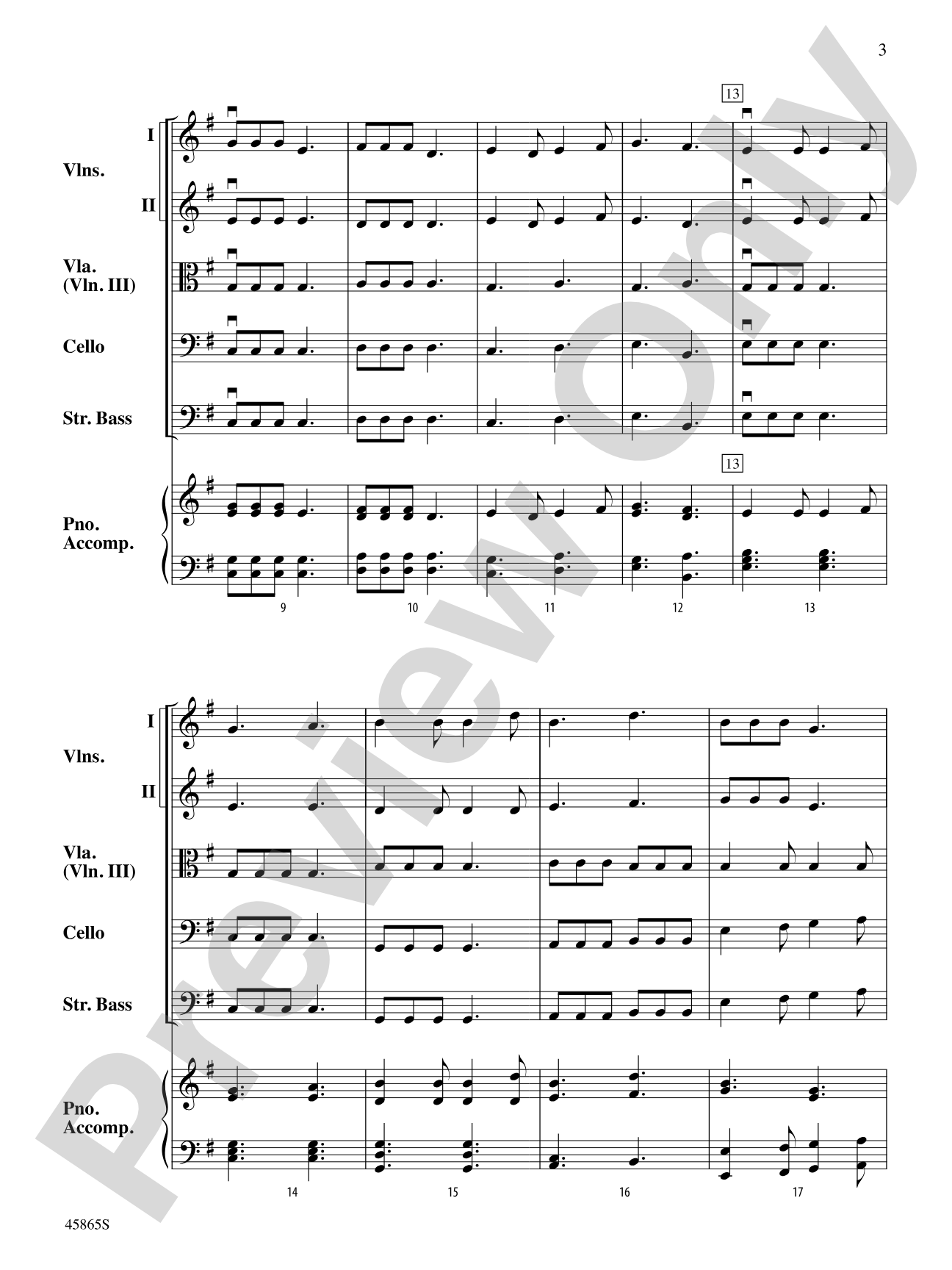
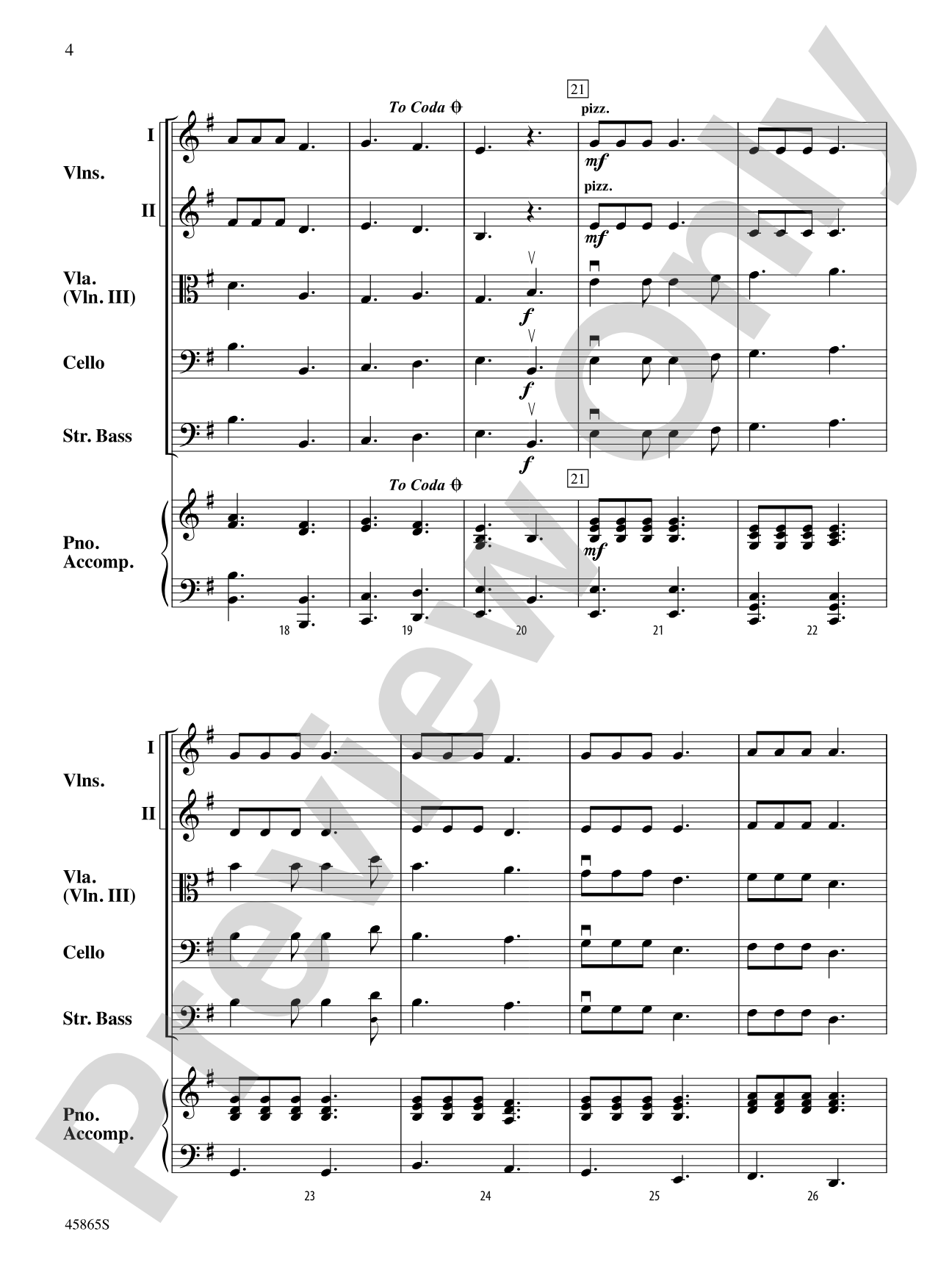
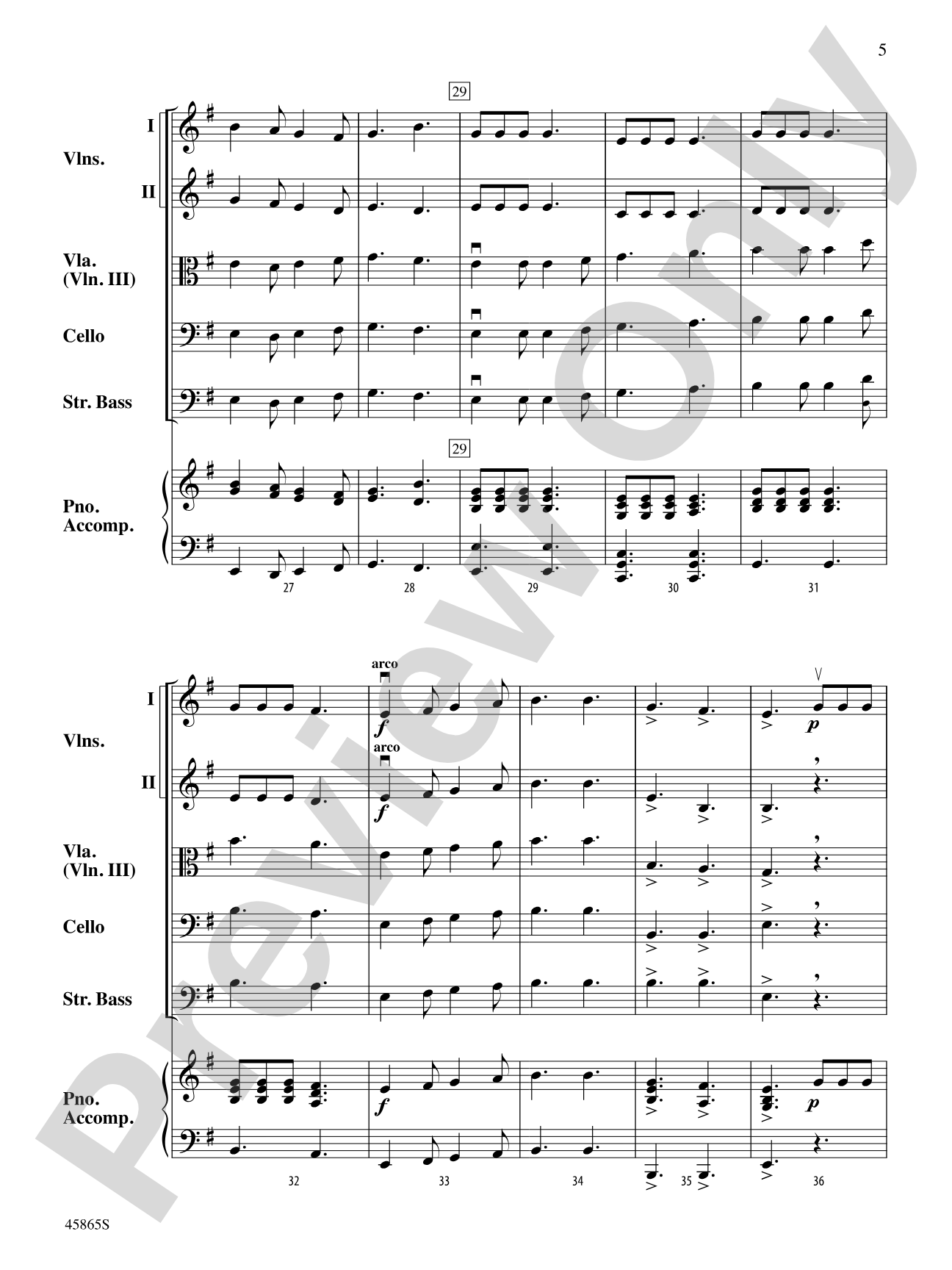
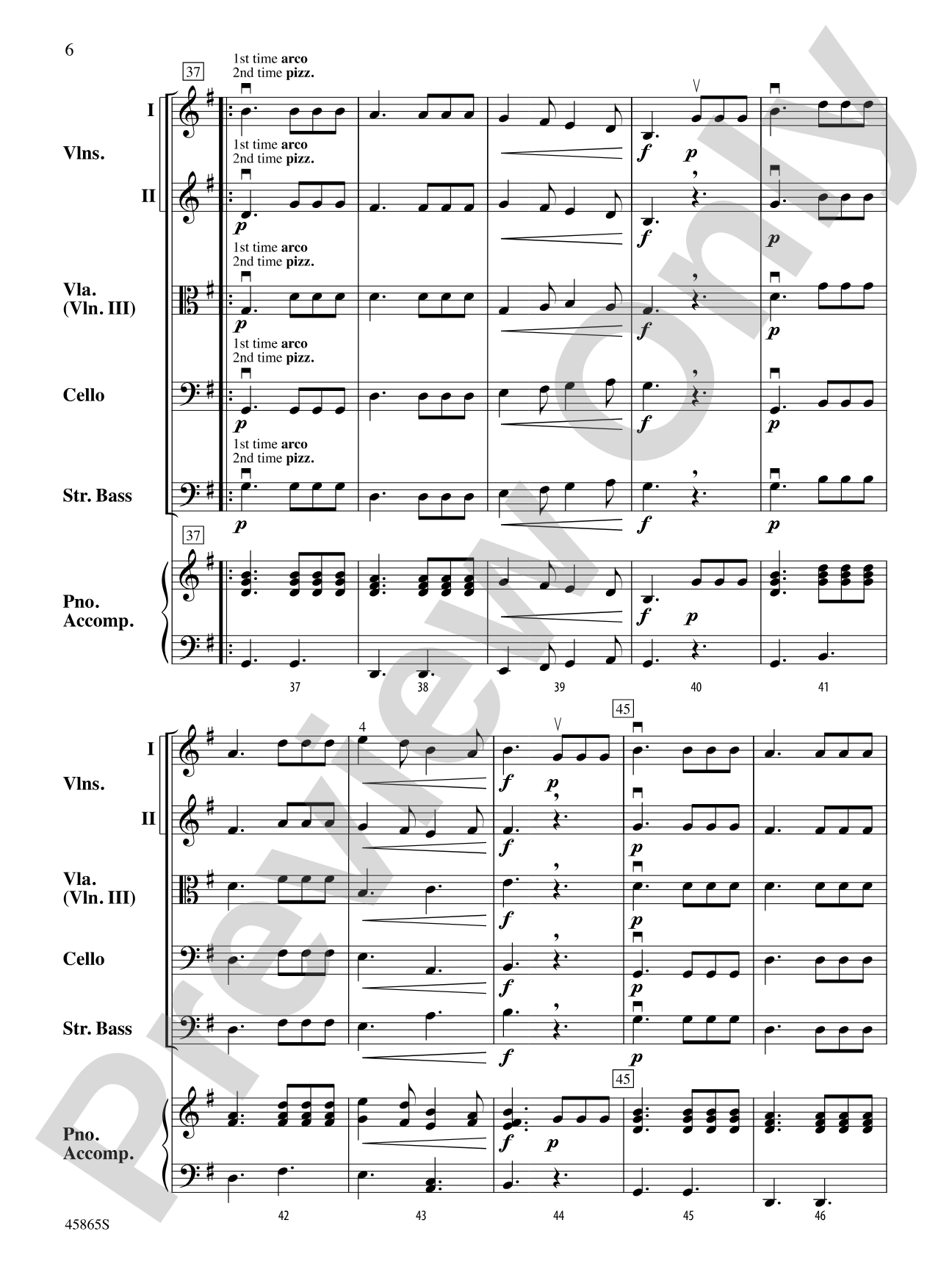
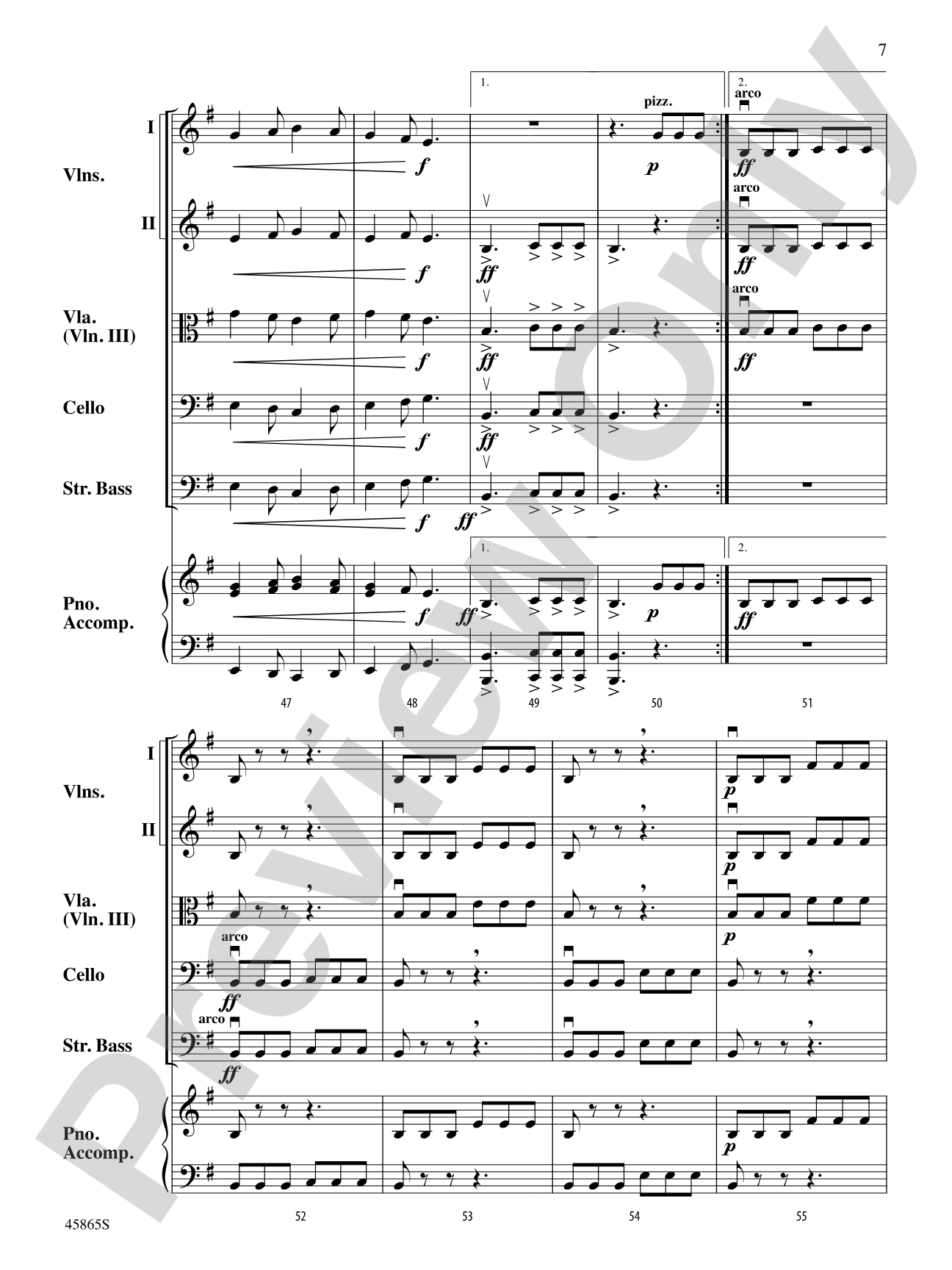
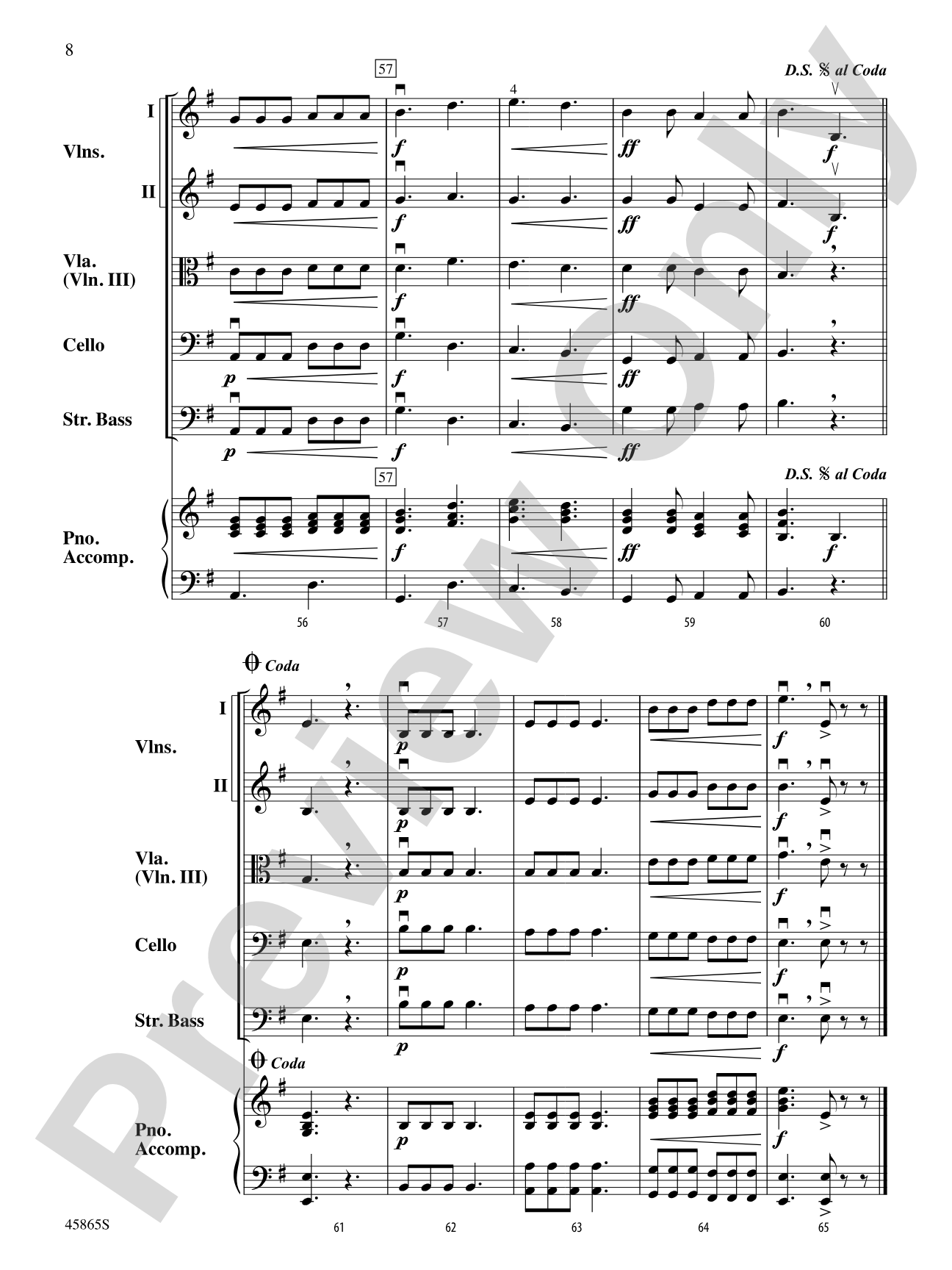

Pieces of Eight: String Orchestra Conductor Score & Parts
A Pirate's Jig
By Richard Meyer
Grade: 2
Item: 00-PK-0007371

$55.00
Pickup currently not available
Buy Extra Parts (Digital PDF Download)
| Product | Price | Quantity |
|---|---|---|
| Pieces of Eight: Score | $8.00 | |
| Pieces of Eight: 1st Violin | $5.99 | |
| Pieces of Eight: 2nd Violin | $5.99 | |
| Pieces of Eight: 3rd Violin (Viola [TC]) | $5.99 | |
| Pieces of Eight: Viola | $5.99 | |
| Pieces of Eight: Cello | $5.99 | |
| Pieces of Eight: String Bass | $5.99 | |
| Pieces of Eight: Piano Accompaniment | $5.99 |
Parts Added to Cart!
Description
Look no further for the perfect piece to introduce your students to 6/8 meter! This cool-sounding, minor-keyed jig uses only three basic 6/8 rhythms to give your students the confidence they need to navigate a too-often neglected time signature. Pieces of Eight by Richard Meyer gives every section a turn at the fun and catchy melody while the repeated patterns in the accompaniments will reinforce students' reading of the new rhythms. Destined to become the go-to piece for teaching 6/8 to the young orchestra! (1:35) This title is available in MakeMusic Cloud.


Don't just read it, hear it, play along with it, and watch your students grow with it. In MakeMusic Cloud, Pieces of Eight: String Orchestra Conductor Score & Parts comes alive with professional accompaniment, adjustable tempo, and built-in practice tools that turn solo practice into real progress.
Open in the Player
Jump straight in and assign it today.
Start Your Free Trial
Open this title and explore the full library in minutes.
Sample Audio
1
Audio File
--:--
0:00
0:00
Sample Video
Additional Details
Series:
Highland/Etling String Explorer
Publisher:
Alfred Music
Page Count:
72
SKU:
00-PK-0007371
More about this title
About the Composer: Richard Meyer

Richard Meyer brings three decades of string teaching experience into every piece he writes. After 35 years directing orchestras from elementary through high school in Southern California, including 22 years at Oak Avenue Intermediate School where he grew the program from 29 to 200 students, Meyer understands exactly what young players need to progress with confidence. He also led the Pasadena Youth Symphony Orchestra for 16 years and has guest-conducted All-State ensembles across multiple states.
Beyond the podium, Meyer founded the "Giving Bach" program in 2009, an innovative initiative using interactive concerts to reach special needs and underserved students throughout Southern California. As a composer, he has published over 190 works and served 16 years as string editor for Alfred Publishing Company. Meyer co-authored the String Explorer Series and other widely-used string resources, cementing his role as a voice trusted by educators nationwide.
Why we love this
Meyer nails the pedagogical sweet spot here. Rather than overwhelming students with complex rhythmic subdivisions, he distills 6/8 into three fundamental patterns and repeats them relentlessly enough that confidence builds naturally. The melody rotates among all sections, keeping every stand engaged and preventing the typical "first violins carry the tune" fatigue that can derail young players' focus on rhythm.
What to expect
A spirited minor-key jig with just enough rhythmic character to feel mature while remaining deeply approachable. The repeated patterns lock into place quickly, creating a hypnotic, driving groove that keeps young players motivated and alert. Once students find their footing, the piece has genuine energy and personality, not the generic feel of a pure exercise.
Who it's for
Young orchestras in their first or second year of playing together, especially groups ready to tackle a new time signature without feeling overwhelmed. This works equally well for students encountering 6/8 for the first time and for ensembles reviewing it after a break. The Grade 2 designation means even smaller or less experienced programs can access quality 6/8 repertoire.
How to get the most out of it
- Isolate the three core 6/8 rhythms in sectional rehearsals before running the full score. Have each section clap and count them on their own, then add pulse on the downbeat once accuracy is solid.
- Conduct the piece in two (one beat per measure of 6/8) rather than six to help students internalize the larger harmonic motion and avoid metrical confusion.
- Let the jig's minor-key character shine through clean articulation in the accompaniment figures. The repeated patterns should feel rhythmically precise, not sluggish, to match the "cool-sounding" character Meyer intended.
- Rotate solo passages through your sections intentionally. Use it as a confidence-building tool by giving weaker readers the melody when the rhythm is simplest, then challenge stronger players with harder textures.
How to use it
Use this as your primary teaching tool when introducing 6/8 to the full orchestra, then move it into a festival or winter concert slot once the ensemble has mastered it. Its compact length (1:35) makes it ideal as a standalone opener or a palate-cleansing follow-up between heavier works. If you're programming a theme-based concert around dance forms or world music, the jig idiom fits naturally.
Skills your students will build
- Reading and performing in 6/8 meter using three fundamental rhythmic patterns
- Understanding compound meter subdivision and how six eighth-notes group into two beats
- Playing repeated rhythmic figures with consistency across different string sections
- Following melody rotation among all four voice parts (first violins, second violins, violas, cellos/basses)
- Maintaining rhythmic independence in accompanimental figures while hearing the melody elsewhere