
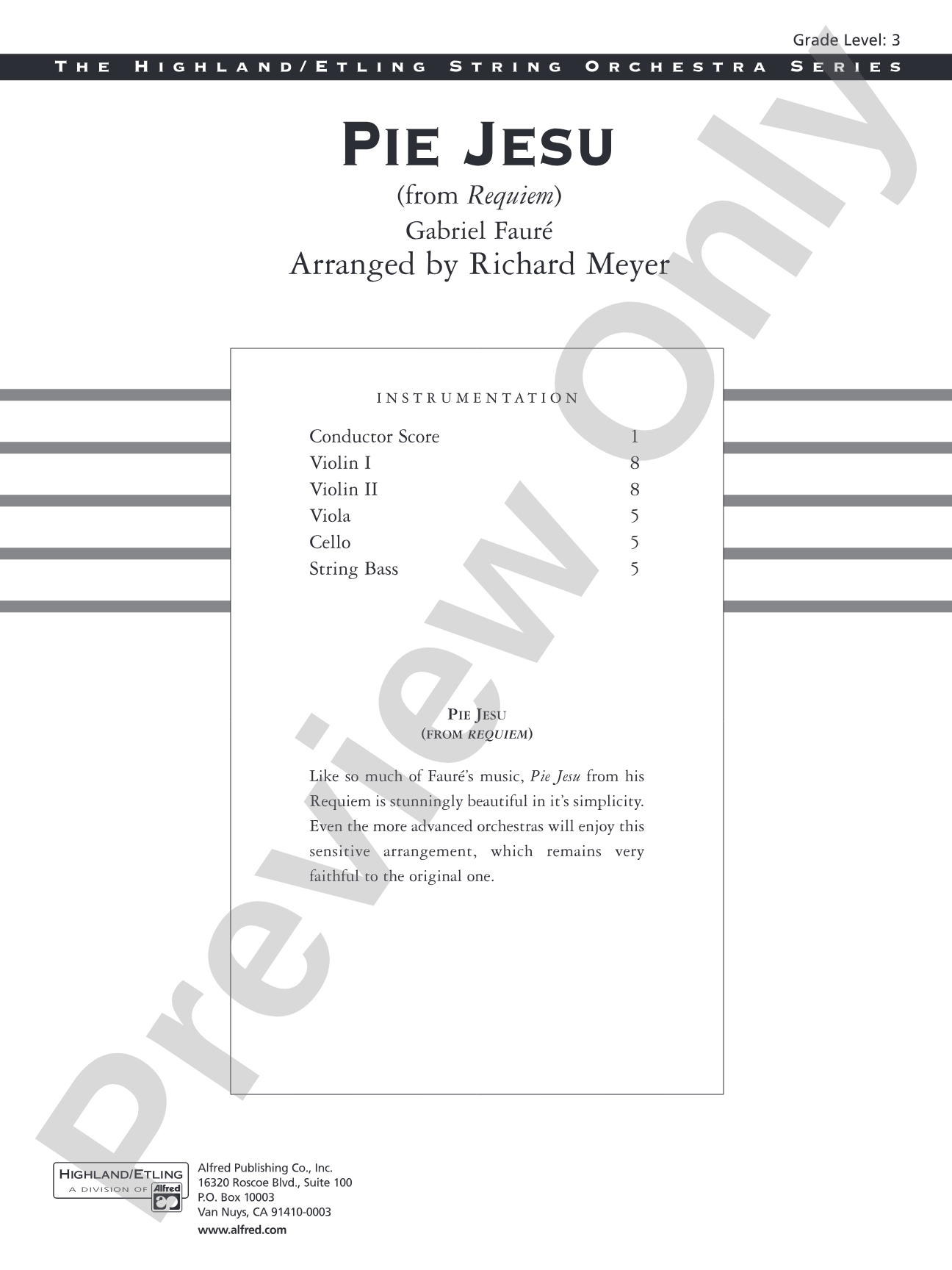

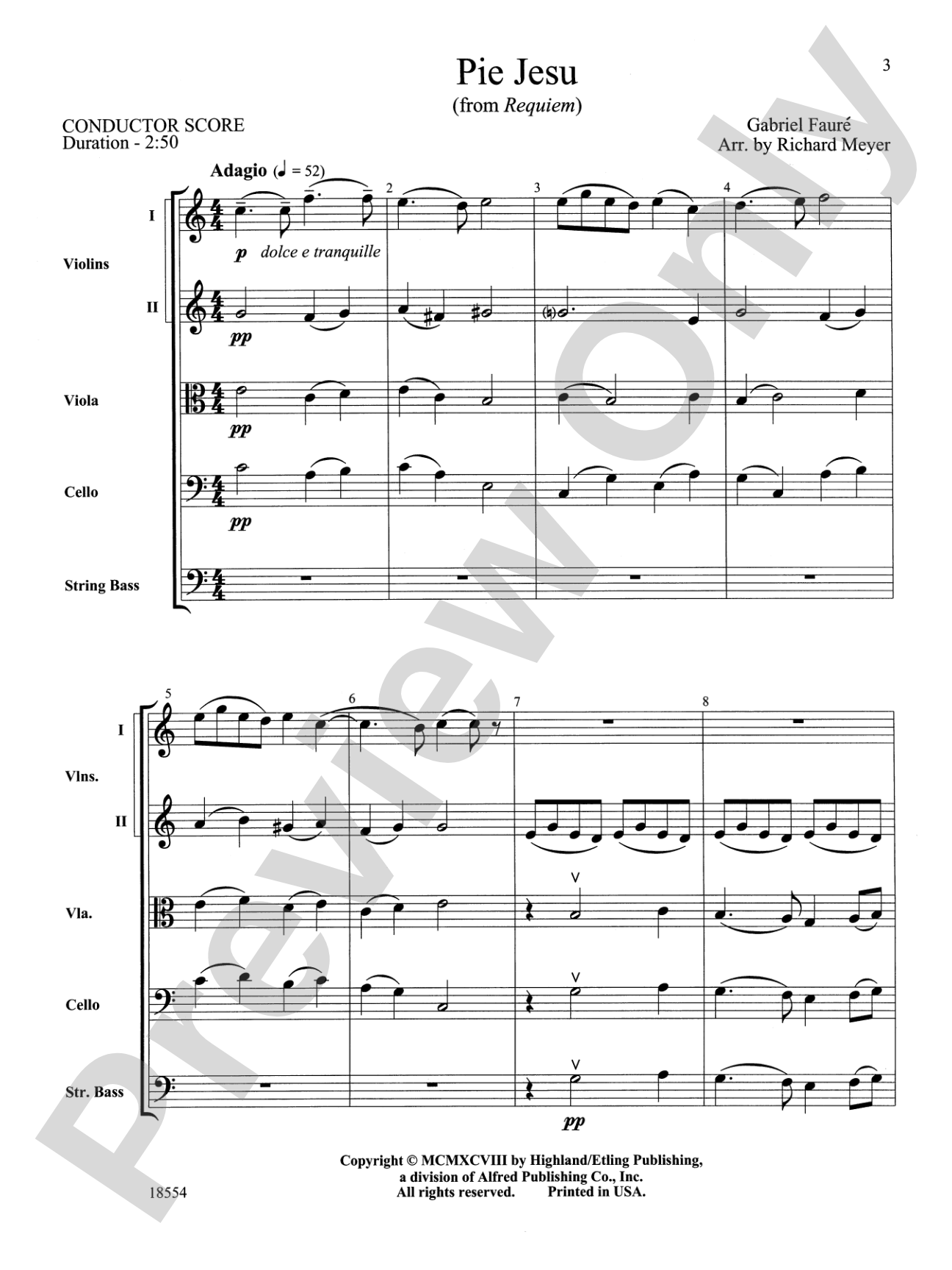
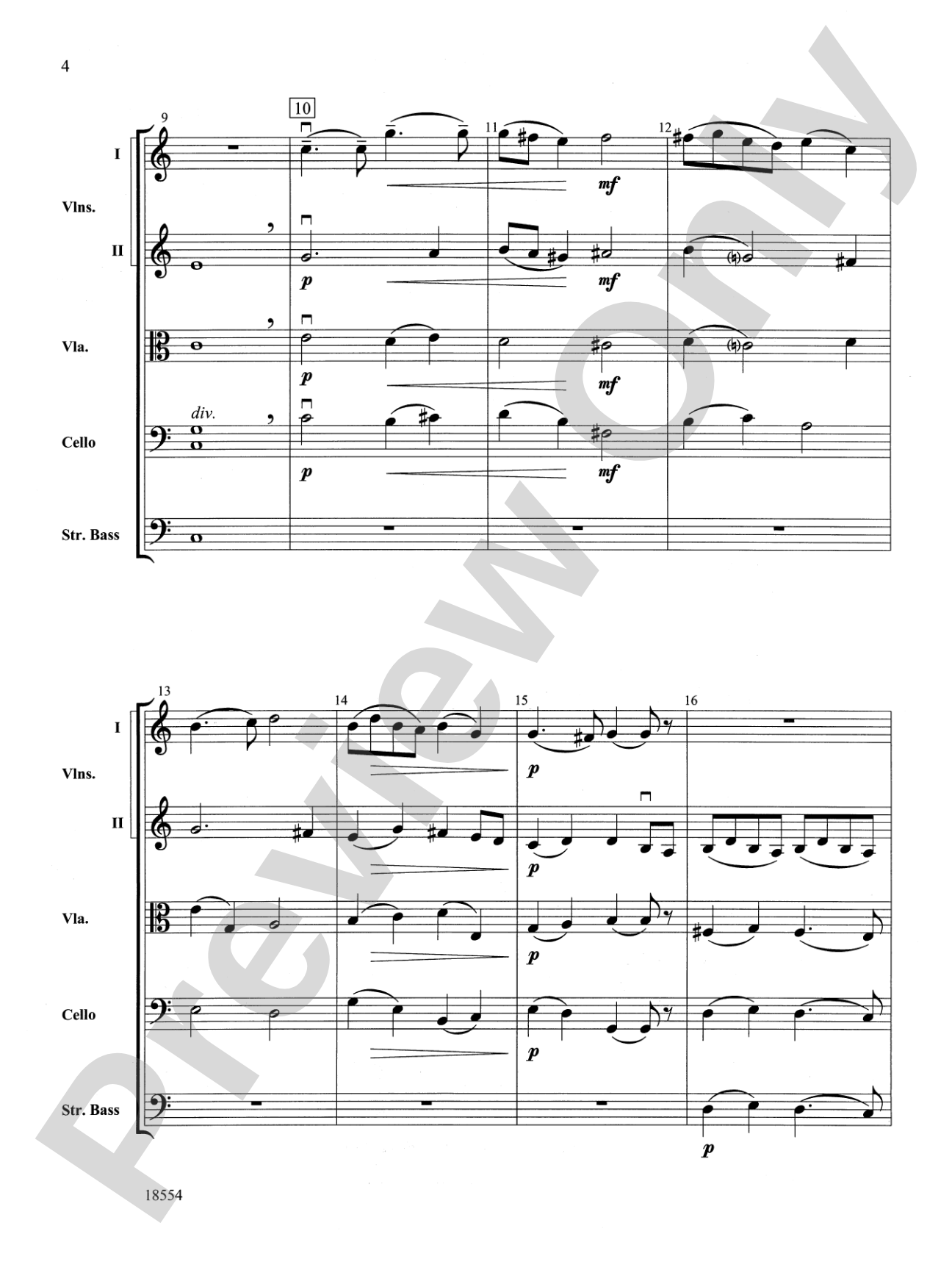
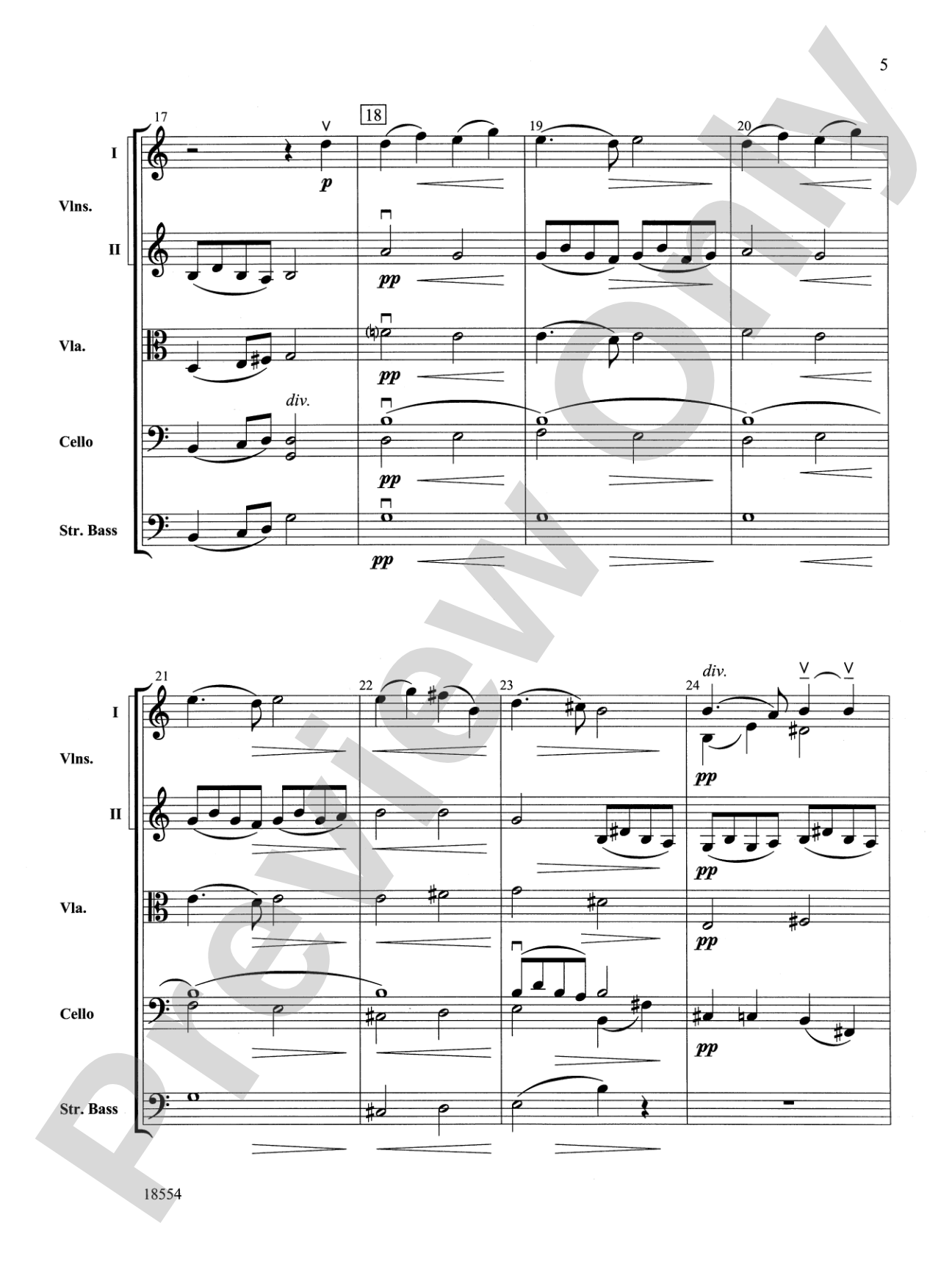
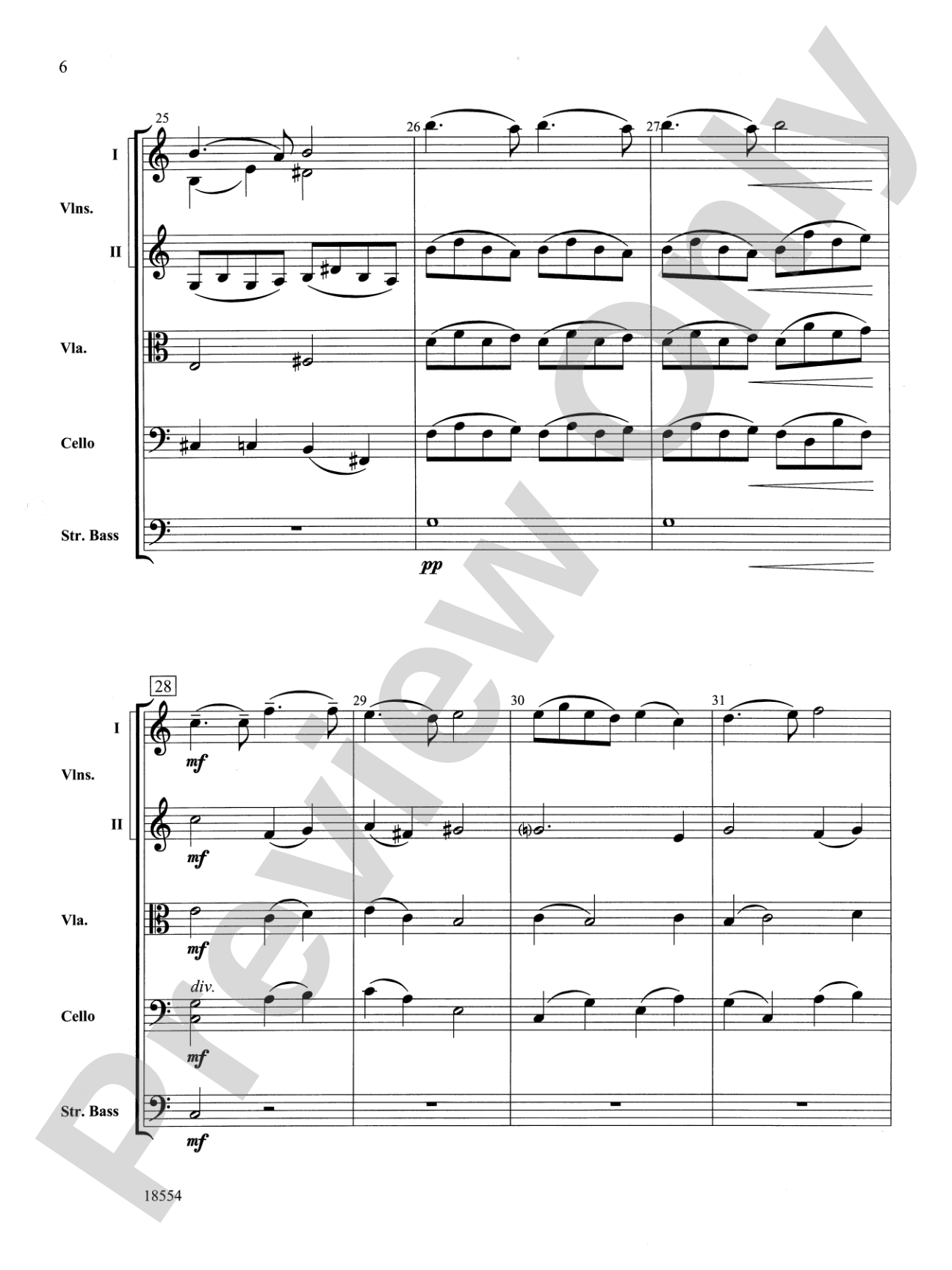
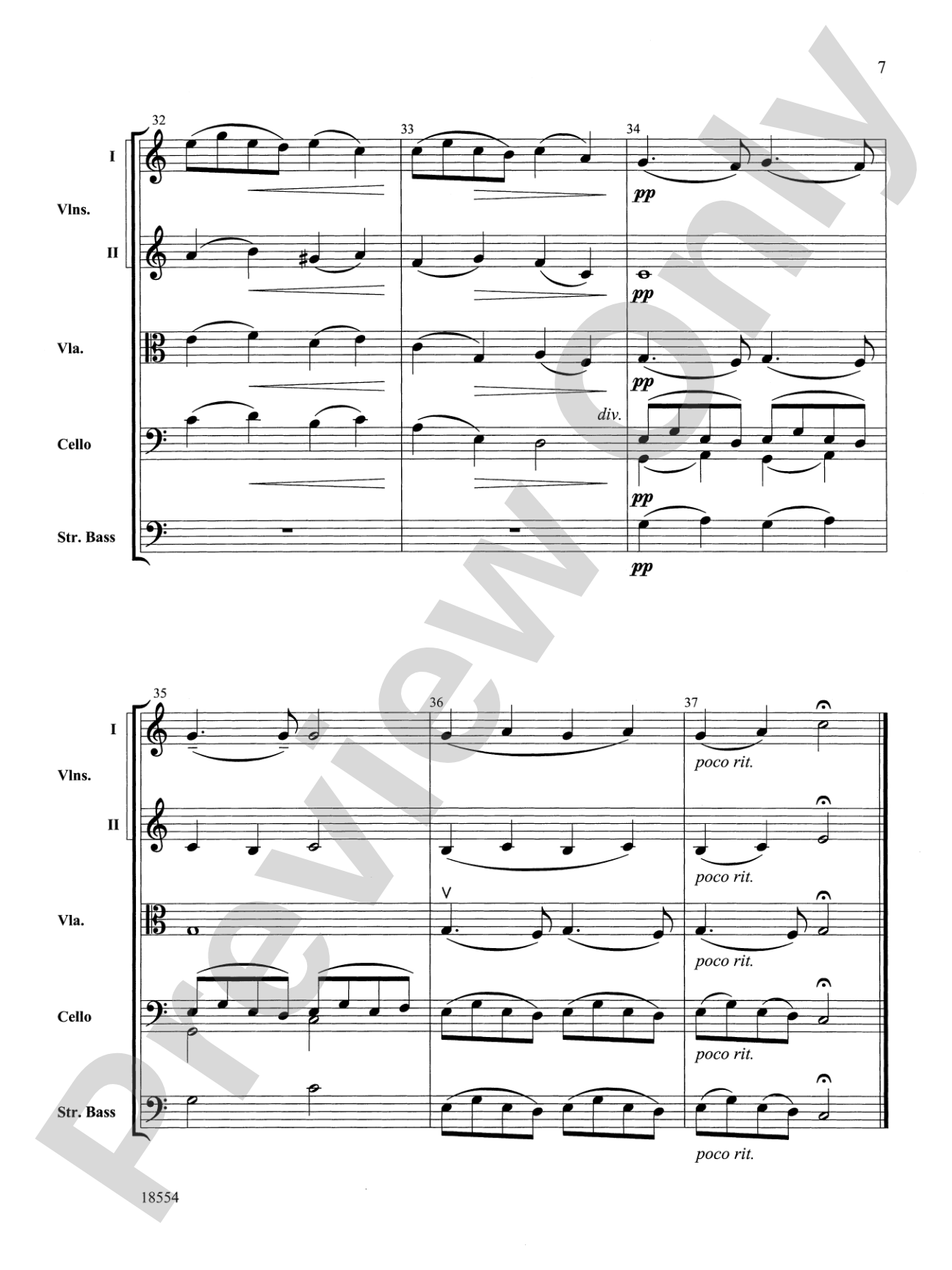


Pie Jesu from "Requiem": Score
(from Requiem)
By Gabriel Fauré / arr. Richard Meyer
Grade: 3
Item: 00-PR-0000270
$9.00
Pickup currently not available
Description
This gorgeous selection from the Fauré Requiem is very playable, allowing students to focus on expression and beauty of tone. A must for developing orchestras.


Don't just read it, hear it, play along with it, and watch your students grow with it. In MakeMusic Cloud, Pie Jesu from "Requiem": Score comes alive with professional accompaniment, adjustable tempo, and built-in practice tools that turn solo practice into real progress.
Open in the Player
Jump straight in and assign it today.
Start Your Free Trial
Open this title and explore the full library in minutes.
Sample Audio
1
Audio File
--:--
0:00
0:00
Sample Video
No sample videos found.
Additional Details
Series:
Highland/Etling String Orchestra
Publisher:
Alfred Music
Page Count:
62
SKU:
00-PR-0000270
More about this title
About the Composer: Gabriel Fauré
Gabriel Fauré (1845-1924) was a French composer whose refined harmonic language and lyrical gift shaped late 19th-century music. He spent much of his career as organist at La Madeleine in Paris and later became director of the Conservatoire, making him a central figure in French musical pedagogy and composition.
Fauré's Requiem stands apart from the grand, dramatic settings of his predecessors. Rather than emphasizing fear and judgment, his vision is intimate and consoling, built on gentle melodies and transparent textures. This sensibility makes his work particularly valuable for young musicians learning that sacred music need not be loud or complex to be profound.
Why we love this
Richard Meyer's orchestration preserves the tenderness and melodic clarity that define Fauré's original while staying within the technical reach of developing string players. Conductors consistently choose this arrangement because it allows young musicians to experience a masterwork without the distraction of technical scrambling, leaving mental and emotional energy for ensemble listening and expressive shaping.
What to expect
Fauré's 'Pie Jesu' unfolds like a prayer in a quiet chapel, with singing lines that drift across the string section in a gentle, luminous haze. The music breathes softly and moves without urgency, creating moments of floating harmony that feel both classical in proportion and impressionistic in color.
Who it's for
This arrangement suits string orchestras at the high school and early undergraduate level, as well as serious community ensembles looking for repertoire that honors a major work without requiring soloists or complex technical demands. Players need solid fundamentals in intonation, sustained tone, and basic ensemble balance, but not virtuosic facility.
How to get the most out of it
- Shape the opening phrase with gentle breath marks between sections; the bowed instruments need clear places to breathe together, just as singers would.
- Balance the first violin line against the inner voices so the melody sings forward without drowning out the harmonic foundation.
- Approach dynamic changes gradually rather than as sudden shifts; Fauré's aesthetic favors subtle transitions that reveal color rather than contrast.
- Establish a warm, sustained tone as your orchestral priority; beauty of line matters more than technical precision here.
How to use it
Program this as a centerpiece on a concert devoted to sacred or Romantic repertoire, or as a reflective anchor between more dramatic works. It works equally well as a festival selection where judges value maturity of interpretation and tonal control over technical display.
Skills your students will build
- Sustaining a warm, unified tone across the section
- Balancing melody against accompaniment in four-part texture
- Responding to conductor gesture for subtle dynamic and tempo shaping
- Maintaining rhythmic cohesion across longer phrases with minimal percussion or strong pulse
- Understanding how harmonic color shapes emotional content