

Pie Jesu (from Requiem, Op. 48): 3-Part Mixed Choral Octavo
From Requiem, Op. 48
Music by Gabriel Fauré / ed. and arr. Russell Robinson
Item: 00-PO-0003291
$1.90
Minimum order quantity: 20 copies
Pickup currently not available
Related Items
Pie Jesu: PianoTrax Digital Download |
$9.99
|
View | |
Pie Jesu (from Requiem, Op. 48): SATB Choral Octavo |
$1.90
|
View | |
Pie Jesu (from Requiem, Op. 48): SSA Choral Octavo |
$1.90
|
View | |
Pie Jesu: SATB Choral Octavo |
$1.90
|
View | |
Pie Jesu: 3-Part Mixed Choral Octavo |
$1.90
|
View | |
Pie Jesu: SSA Choral Octavo |
$1.90
|
View |
Description
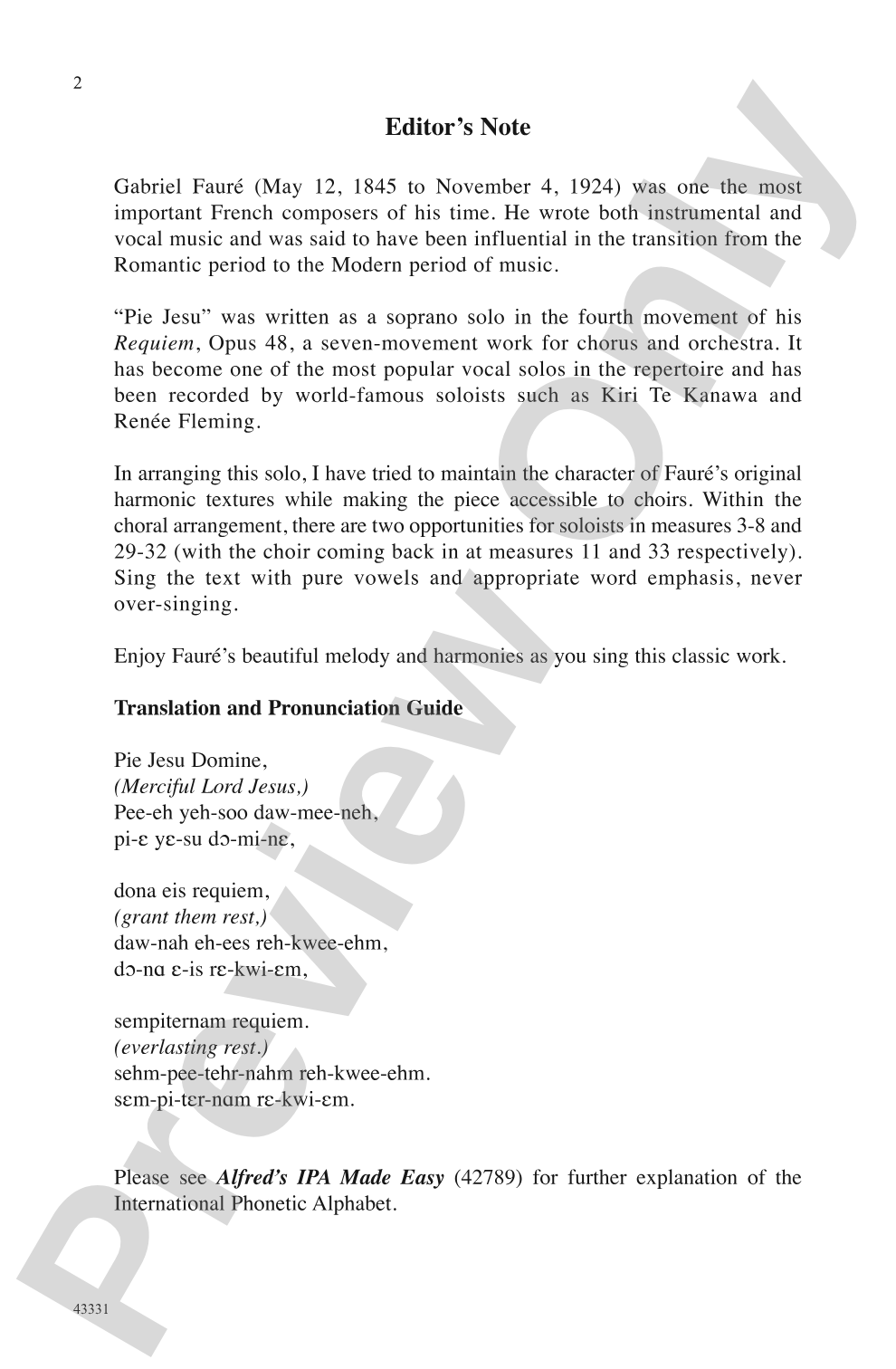
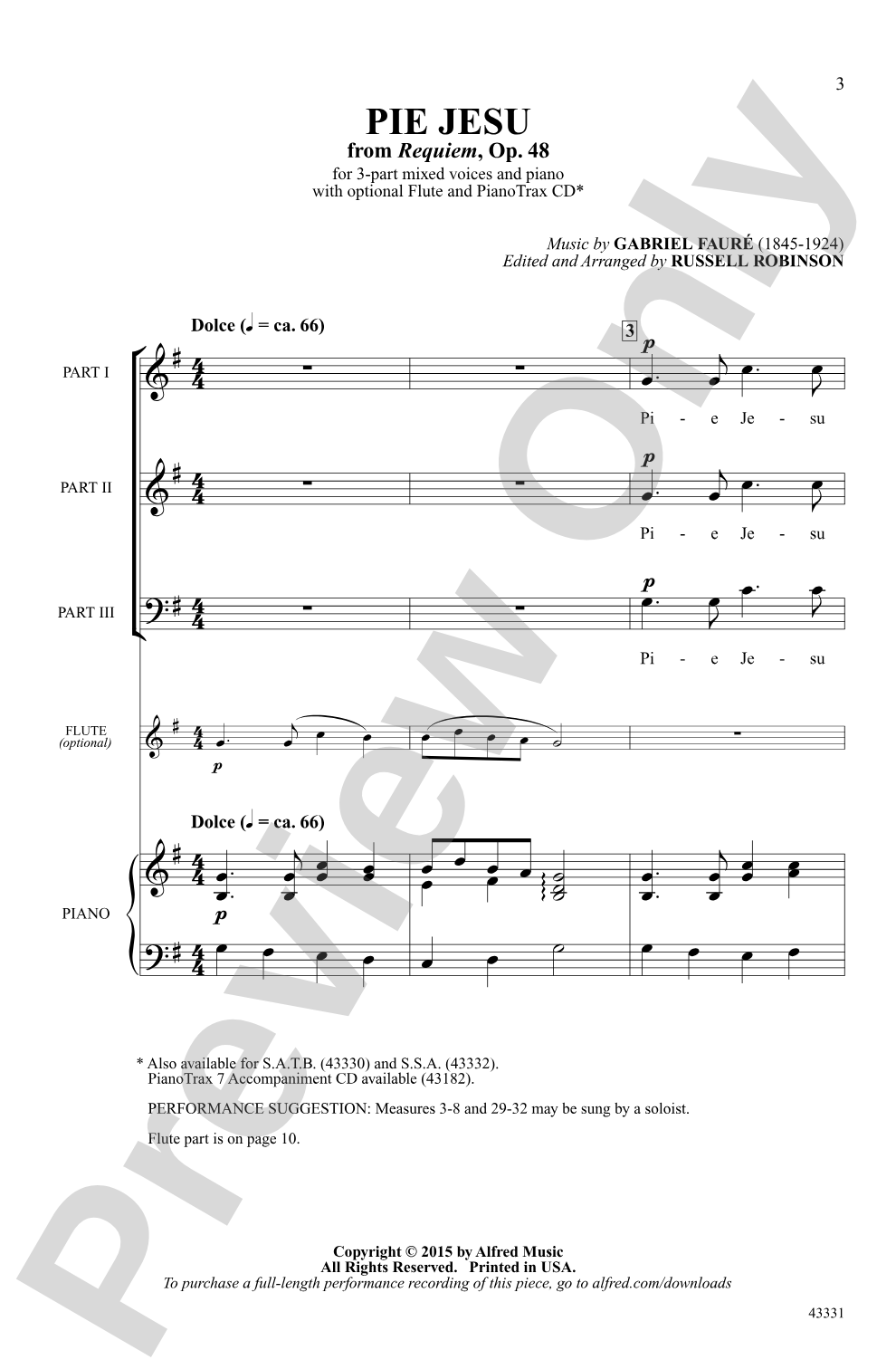
This esteemed classic has been recorded by world-famous soloists such has Kiri Te Kanawa and Renée Fleming. Now, choral groups can perform Fauré's beautiful music with Dr. Robinson's well-crafted, smartly-edited arrangement. Features a piano and flute accompaniment, well within the reach of student players.


Pie Jesu (from Requiem, Op. 48): 3-Part Mixed Choral Octavo isn't in MakeMusic Cloud just yet...but it could be. Let us know you'd like to see it, and you'll help shape what comes next. In the meantime, start a free trial and dive into thousands of interactive titles your students can play along with today.
Request This Title
Tell us you want it.
Start Your Free Trial
Explore everything that's ready to play right now.
Sample Audio
1
Audio File
--:--
0:00
0:00
Sample Video
No sample videos found.
Additional Details
Series:
Alfred Choral Designs
Publisher:
Alfred Music
Page Count:
12
SKU:
00-PO-0003291
Instrumentation:
Piano & Flute
More about this title
About the Composer: Gabriel Fauré
Gabriel Fauré (1845-1924) stands apart among French Romantic composers for his lyrical gift and harmonic sophistication. His songs, chamber works, and sacred music shaped the development of modern choral writing, and his Requiem remains one of the most performed large-scale choral works in the concert repertoire.
Fauré's approach to sacred music differed markedly from his contemporaries. Rather than seeking grandeur or drama, he composed with restraint and intimacy, letting melody and harmonic color carry the spiritual weight. This sensibility made his work especially influential on 20th-century choral composers and continues to appeal to performers seeking music of genuine depth and accessibility.
Why we love this
Russell Robinson's arrangement captures the ethereal beauty of Fauré's original while making it genuinely performable by developing choirs. The SAB voicing sits naturally for mixed ensembles, and the flute and piano accompaniment is sophisticated without demanding virtuosity from your student musicians. This is Requiem repertoire that doesn't require a cathedral or a full orchestra, yet it retains the spiritual presence that makes Fauré's music so compelling.
What to expect
Fauré's 'Pie Jesu' radiates a quiet dignity and tenderness. The melody unfolds gently, never demanding but always present, supported by warm harmonic movement that feels contemplative rather than sorrowful. There is grace in the restraint, and singers often report that performing this work feels meditative, almost centering.
Who it's for
This arrangement serves choirs with mixed voices (soprano, alto, and bass or tenor) who want to perform meaningful sacred music without extensive orchestral resources. It works equally well for high school and community choirs seeking concert repertoire with both cultural weight and technical accessibility. Directors programming a sacred concert or festival will find this piece invaluable.
How to get the most out of it
- Balance the soaring melody line carefully across your three parts. The top voice carries the primary tune, but inner voices need definition to prevent the texture from flattening. Let the accompaniment breathe between phrases rather than asking singers to cover instrumental rests.
- Work the flute player into rehearsal early. This part deserves independence and should not shadow the vocal line. A student flutist playing with musical intention will elevate the entire performance.
- Attend to vowel consistency, particularly on the word 'Jesu.' This octavo will be memorable only if the choir sings with unified sound and sustained tone. Fauré's harmonies reward singers who commit to full, resonant vowels throughout.
How to use it
Position this as an anchor piece in a sacred or thematic concert. Its refined character complements both Renaissance motets and contemporary choral works, making it an excellent bridge between eras. Consider pairing it with other shorter sacred pieces to build a concert that celebrates lyrical writing and emotional subtlety rather than theatrical drama.
Skills your students will build
- Singing sustained, resonant melodic lines with harmonic independence
- Balancing three vocal parts in close harmonic spacing
- Ensemble listening and blend in Romantic harmonic language
- Musical communication with a student instrumental accompaniment
- Performing contrasting dynamics without losing legit tone