

Pie Jesu: SATB Choral Octavo
Music by Marcie Pyrtle / arr. Jay Althouse
Item: 00-PO-0004138
$2.25
Minimum order quantity: 20 copies
Pickup currently not available
Description
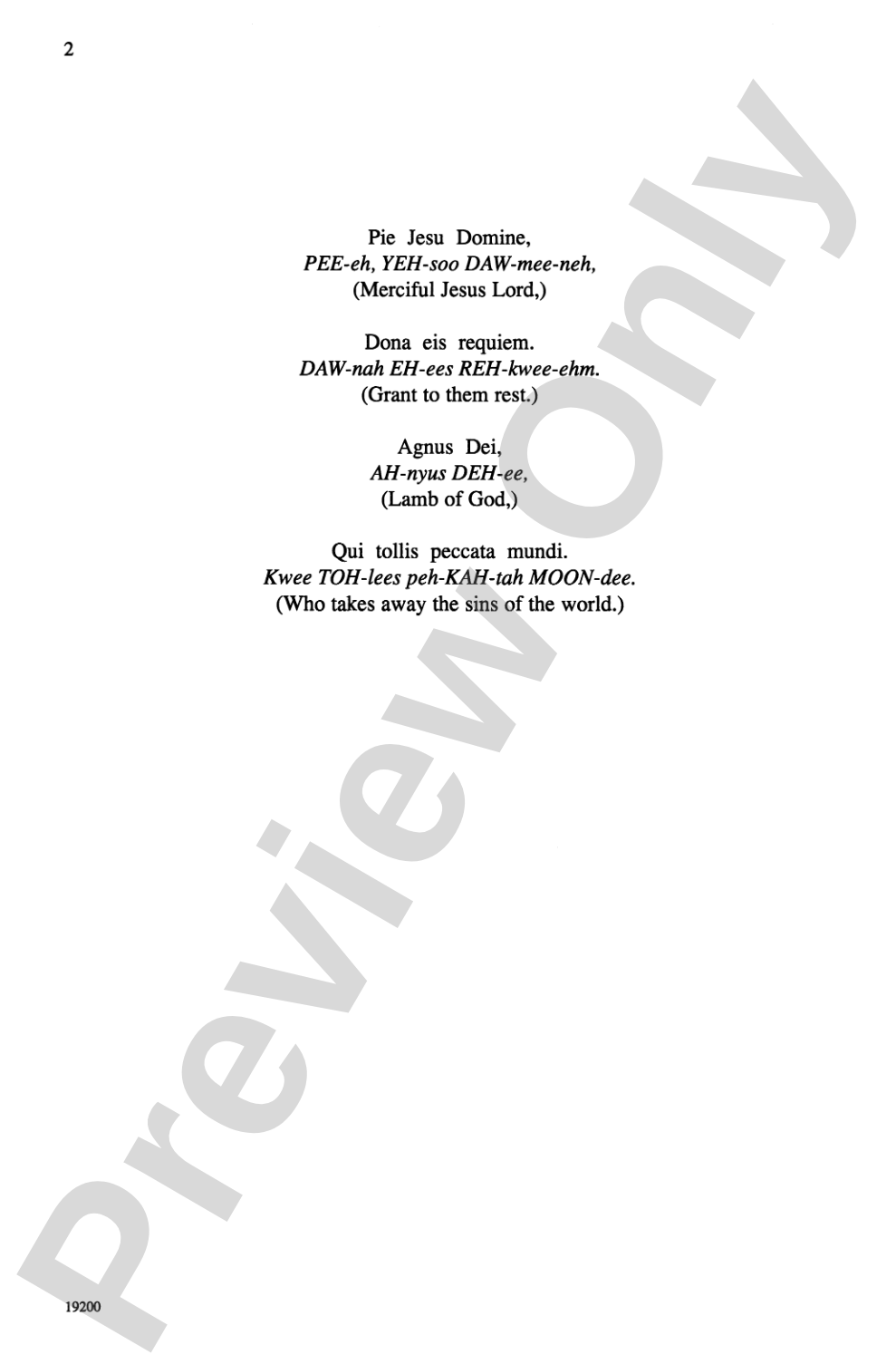
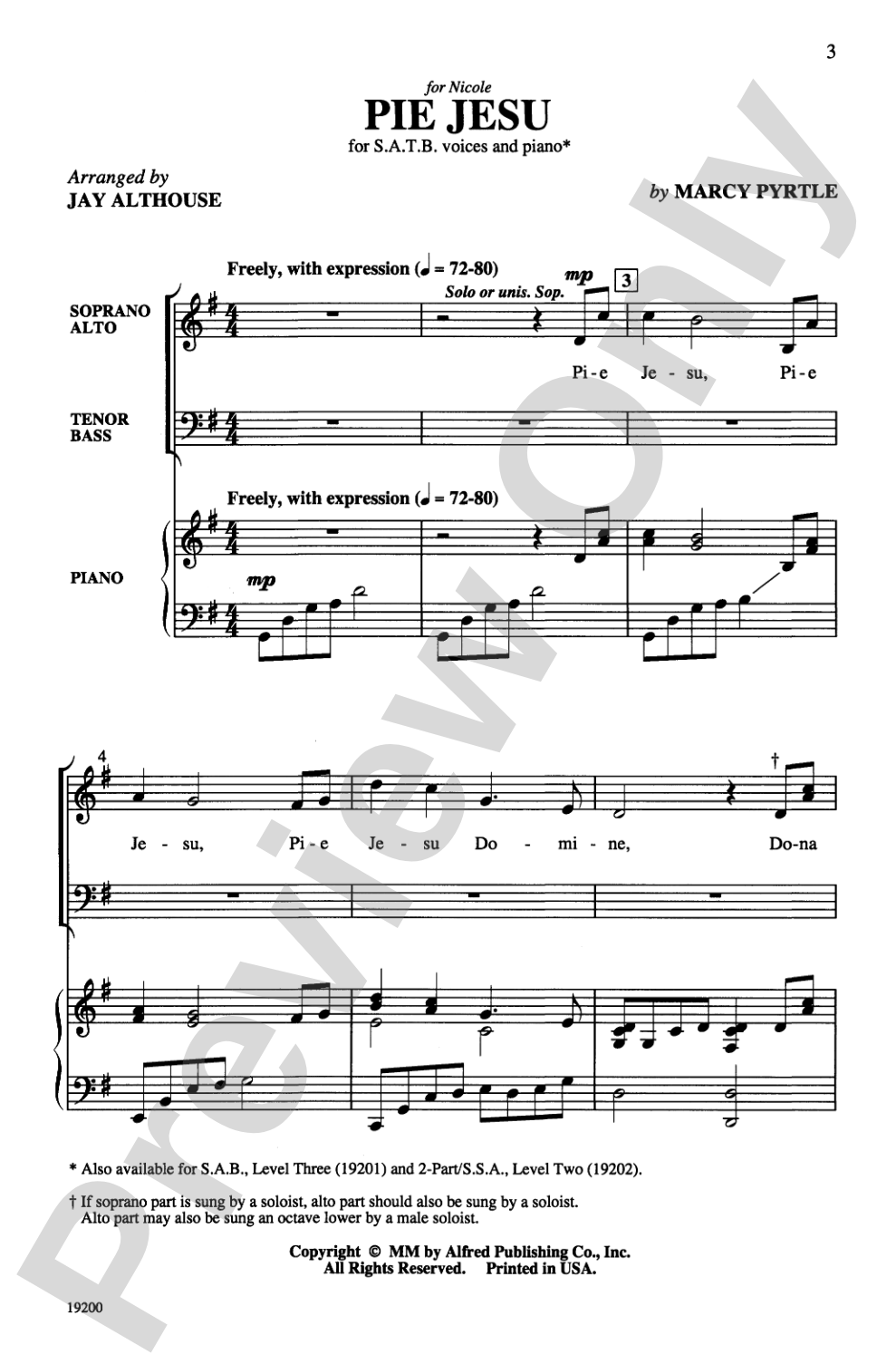
What a stunningly beautiful melody! Opening with an optional solo, then duet, Pie Jesu develops with lush harmonies and counter-lines, then moves into a contrasting "Agnus Dei" middle section. A pronunciation guide for the traditional Latin text is included in the publication. Easy piano accompaniment and singable vocal lines with basic voice leading. Available in editions for choirs of all ages; the 2-part/SSA edition is a gem.


Pie Jesu: SATB Choral Octavo isn't in MakeMusic Cloud just yet...but it could be. Let us know you'd like to see it, and you'll help shape what comes next. In the meantime, start a free trial and dive into thousands of interactive titles your students can play along with today.
Request This Title
Tell us you want it.
Start Your Free Trial
Explore everything that's ready to play right now.
Sample Audio
1
Audio File
--:--
0:00
0:00
Sample Video
No sample videos found.
Additional Details
Series:
Alfred Archive Edition: Alfred Choral Designs
Publisher:
Alfred Music
Page Count:
8
SKU:
00-PO-0004138
More about this title
About the Composer: Marcie Pyrtle
Marcie Pyrtle is a composer known for writing accessible, emotionally resonant sacred music that connects with singers across all experience levels. Her gift for melody and her understanding of choral pedagogy have made her work a staple in church music programs and school choirs for decades.
Why we love this
Jay Althouse's arrangement captures the essence of this gorgeous melody while keeping the vocal writing genuinely singable. The optional solo and duet openings give choirs flexibility in how they introduce the piece, and the shift to the contrasting Agnus Dei section creates natural dynamic shape without requiring advanced musicianship.
What to expect
Pie Jesu unfolds with serene dignity, opening into an intimate moment before blossoming into rich four-part harmony. The lush counterpoint and shift to the Agnus Dei section create a meditative quality that feels both reverent and deeply human.
Who it's for
This piece works beautifully for church choirs of mixed ages and ability levels, as well as high school and middle school choral programs seeking quality sacred repertoire. The optional solo passages make it accessible to groups with developing soloists, while the full SATB texture rewards more experienced singers.
How to get the most out of it
- Shape the opening solo or duet with gentle, sustained phrasing to let the melody breathe before the full choir enters with harmonies.
- Balance the counter-lines in the middle sections so they enhance rather than obscure the main melodic line.
- Use the pronunciation guide to ensure clear Latin text, which will improve both diction and the piece's spiritual impact.
- Keep the piano accompaniment transparent; its simplicity supports rather than overwhelms the voices.
How to use it
Program this as a centerpiece in a sacred music concert or liturgical service, where its emotional resonance will anchor an entire portion of your program. It also pairs well with other Latin sacred works or could serve as a thoughtful closing piece for a mixed choral concert.
Skills your students will build
- Reading and singing in Latin with proper pronunciation and diction
- Balancing solo and ensemble singing within a single piece
- Singing sustained melodic lines with control over phrasing and dynamics
- Listening to and blending with counter-lines and harmonic movement
- Interpreting sacred text through musical expression