
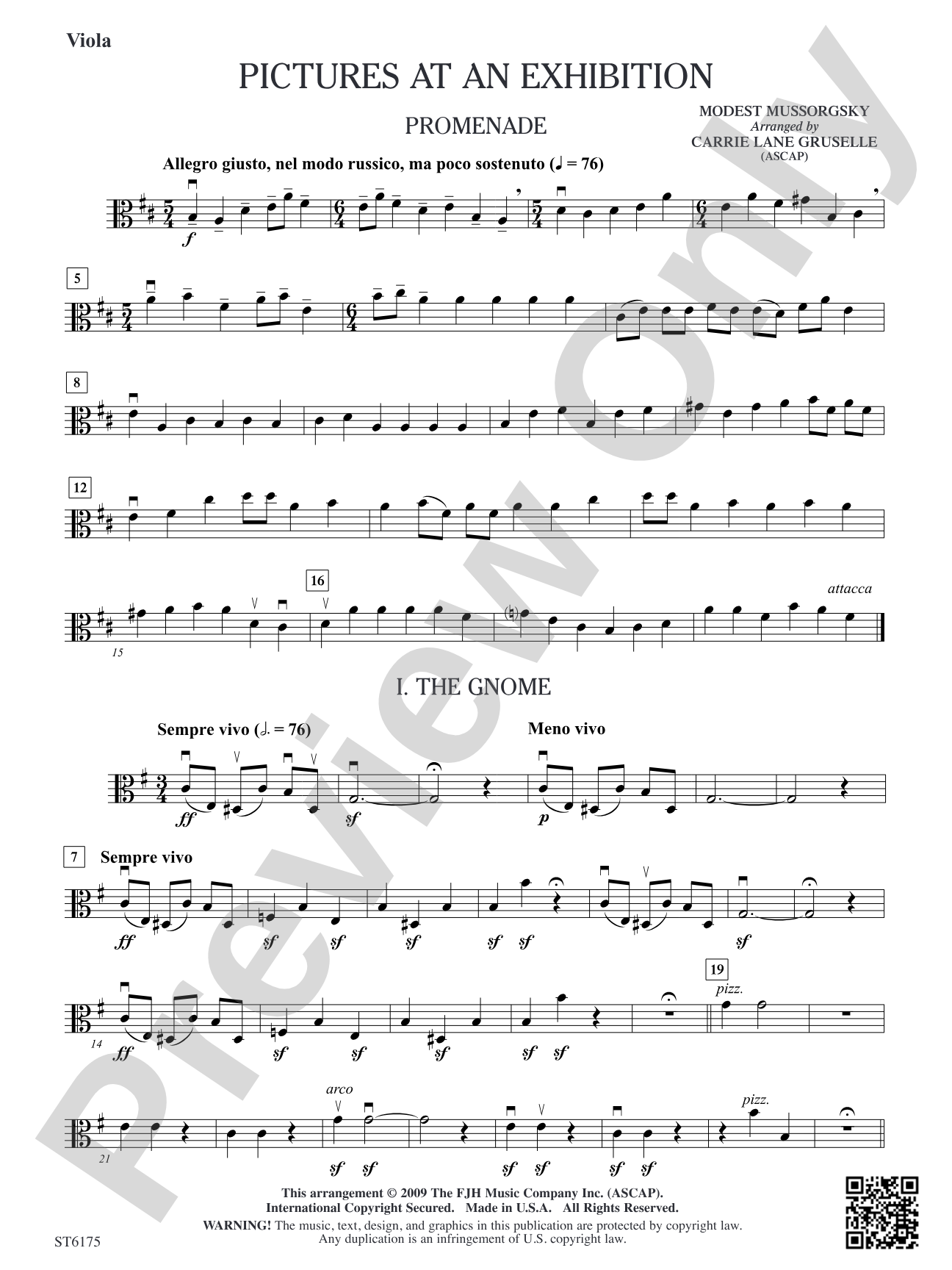

Pictures at an Exhibition: Viola
By Modest Mussorgsky / arr. Carrie Lane Gruselle
Grade: 4
Item: 98-PC-DST6175_VA1
$7.00
Pickup currently not available
Description
Incredible! The symphonic setting of this 19th century masterpiece has been masterfully adapted for string orchestra. The work includes the opening Promenade, The Gnome, The Old Castle, The Tuileries Gardens - Children Quarrelling at Play, The Ballet of the Unhatched Chicks, The Hut of Baba-Yaga, and The Great Gate of Kiev. The perfect centerpiece for any concert and a stunning way to introduce students to Mussorgsky's masterwork.


Pictures at an Exhibition: Viola isn't in MakeMusic Cloud just yet...but it could be. Let us know you'd like to see it, and you'll help shape what comes next. In the meantime, start a free trial and dive into thousands of interactive titles your students can play along with today.
Request This Title
Tell us you want it.
Start Your Free Trial
Explore everything that's ready to play right now.
Sample Audio
1
Audio File
--:--
0:00
0:00
Sample Video
No sample videos found.
Additional Details
Series:
FJH String Orchestra
Publisher:
The FJH Music Company, Inc.
SKU:
98-PC-DST6175_VA1
More about this title
About the Composer: Modest Mussorgsky
Modest Mussorgsky (1839-1881) was a Russian composer who rejected the conservatory tradition of his time and forged a radically original musical language rooted in Russian folk melody and speech patterns. Largely self-taught and committed to nationalist ideals, he composed music that felt raw and direct, refusing to smooth over rough harmonic edges or follow European formulas. His most enduring work, Pictures at an Exhibition, showcases his gift for vivid orchestral color and narrative storytelling through sound.
Mussorgsky's legacy in music education extends beyond the notes on the page. His willingness to trust the listener's ear and his integration of folk material into concert music demonstrate that sophisticated artistry does not require academic convention. For student musicians, his work offers an entry point into modernist thinking and the expressive possibilities of orchestral writing.
Why we love this
This arrangement captures the full sweep and color of Pictures at an Exhibition without demanding the technical virtuosity required for a full orchestra version. Carrie Lane Gruselle has preserved Mussorgsky's harmonic language and structural clarity while giving string players the chance to shape a genuinely substantial repertoire work that will hold an audience's attention and challenge student musicians in musically meaningful ways.
What to expect
An invitation to walk through an imaginary gallery, pausing before each painting and absorbing its mood. Mussorgsky's music moves from whimsical and grotesque to grandiose and monumental, painting vivid scenes with sharp harmonic colors and bold melodic gestures. The journey alternates between intimate character moments and sweeping orchestral statements, creating a sense of discovery and wonder.
Who it's for
String orchestras at the intermediate to advanced level seeking a standard work that combines genuine artistic substance with manageable technical demands. This is ideal for ensemble directors who want their students to engage with 19th-century orchestral thinking and the relationship between narrative and musical form.
How to get the most out of it
- Shape the Promenade with clear phrase breathing and dynamic direction. This is your audience's entry into the world of the exhibition; let the orchestration breathe rather than rushing through the tempo.
- Balance the character pieces so each movement stands distinct. The Gnome requires nervous energy and articulation; The Old Castle calls for sustained singing tone and patience with harmonic movement.
- Prepare the ensemble for sudden shifts in texture and key area. Mussorgsky's orchestration asks for quick adjustments in bow weight and vibrato intensity between sections.
- Give the concluding Great Gate of Kiev time to build. The architecture of this finale depends on your willingness to allow the climax room to grow, with clear control of the final cadential gestures.
How to use it
Reserve this as a centerpiece for a concert devoted to 19th-century orchestral masterworks or as the anchor of a themed program exploring Russian music and culture. Its substantial length and emotional range make it an excellent choice for closing a program or serving as the core repertoire item on a concert that includes shorter pedagogical pieces.
Skills your students will build
- Reading rapid rhythmic figures and syncopated passages across multiple string parts simultaneously
- Sustaining tone through long legato phrases while maintaining harmonic balance in shifting textures
- Executing quick bow direction changes and articulation contrasts without sacrificing ensemble unity
- Responding to sudden key and meter changes with secure intonation and rhythmic alignment
- Shaping extended dynamic trajectories and following large-scale musical architecture over multiple movements