Pico Rivera: (wp) B-flat Tuba T.C. Sheet Music Preview

Pico Rivera: (wp) B-flat Tuba T.C.

By John O'Reilly

Grade: 1 (Very Easy)

Item: 00-PC-0015092_wpTBBTC

Digital Download
$3.00
Description
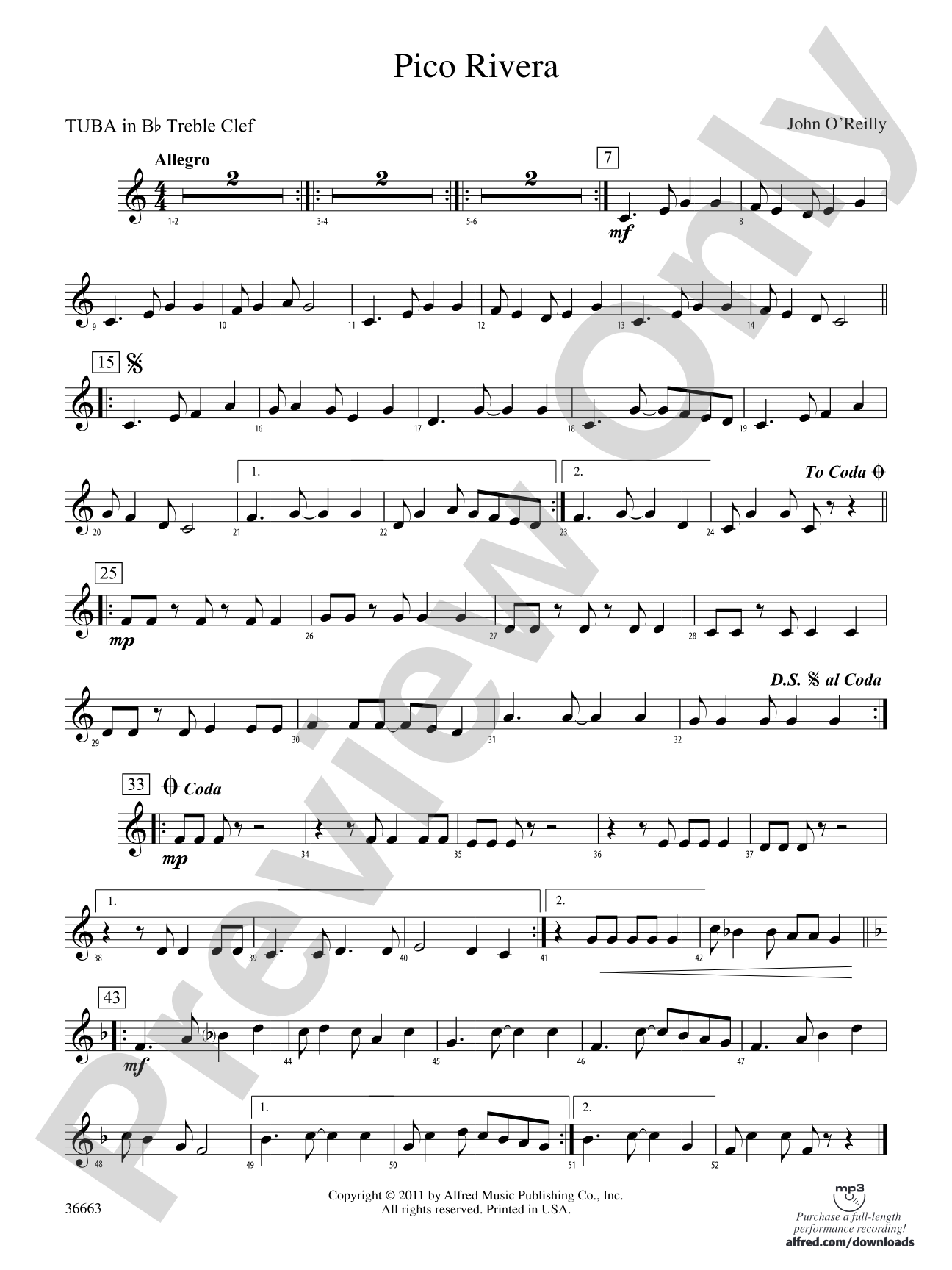
Solo claves usher in the authentic Latin percussion section that sets the style for "Pico Rivera." A simple but effective bass line joins the percussion section in establishing an interesting accompaniment for the syncopated melody that follows. Rich harmonies that utilize a variety of seventh chords dominate the second theme and the "stop time" percussion fills that open the coda. A brief modulation brings us to a restatement of the opening melody with a new countermelody in the trumpets and horns. Pico Rivera is a city in Southern California that has a long tradition of producing excellent bands.

Don't just read it, hear it, play along with it, and watch your students grow with it. In MakeMusic Cloud, Pico Rivera: (wp) B-flat Tuba T.C. comes alive with professional accompaniment, adjustable tempo, and built-in practice tools that turn solo practice into real progress.

Sample Audio
0:00
0:00
Sample Video
Additional Details
Series: Accent on Achievement
Publisher: Alfred Music
Page Count: 118
SKU: 00-PC-0015092_wpTBBTC

More about this title

About the Composer: John O'Reilly

John O'Reilly is a prolific composer and arranger who has shaped the landscape of music education through his work with the Accent on Achievement series. His arrangements and original compositions prioritize accessibility without sacrificing musicality, making him a trusted voice for directors building strong foundational repertoire in beginning and intermediate bands.

Why we love this

This piece delivers authentic Latin style at Grade 1 without overwhelming young players. The syncopated melody is catchy enough to engage audiences, the percussion writing is genuine and rewarding, and the harmonic movement in the second theme gives your ensemble genuine musical substance to work with.

What to expect

Pico Rivera opens with an inviting, warm Latin groove that feels immediately accessible and fun to play. The syncopated melody dances over a solid foundation of clave and bass, with rich seventh chords adding sophistication; the brief modulation and contrasting countermelody near the end remind you that this simple piece contains real harmonic and textural interest.

Who it's for

Beginning concert bands ready to explore styles beyond standard march and hymn-based repertoire. This piece fits well once students can read basic syncopation and balance independent parts, making it ideal for late first-year groups or early second-year ensembles.

How to get the most out of it

  • Establish the clave pattern as your foundational heartbeat during early rehearsals. Have the claves player lock in solidly before layering in the rest of the percussion section.
  • Balance the syncopated melody against the supporting harmony parts. Young trumpets and clarinets tend to push forward rhythmically, so model the pulse clearly and have them shadow the bass line players.
  • Shape the seventh chords in the second theme with subtle dynamic shaping rather than sudden changes. These harmonies deserve clarity and space to resonate.
  • Keep the stop time fills crisp and together. Use a clear cut-off gesture and reset quickly so the band stays confident during these rhythmic breaks.

How to use it

Program this as a bridge between your opening concert piece and something more complex. Its Latin style offers variety in a concert focused on American repertoire, and at Grade 1 difficulty, it gives every student in your section a chance to shine without strain. It works particularly well as a mid-concert energy shifter.

Skills your students will build

  • Reading and executing syncopated rhythms in simple meters
  • Balance and blend in multi-part textures with independent melodic lines
  • Responding to percussion-driven accompaniment patterns
  • Maintaining steady pulse during stop-time figures
  • Recognizing and performing seventh chord sonorities
  • Tracking melodic material through key modulation and restatement

You May Also Like