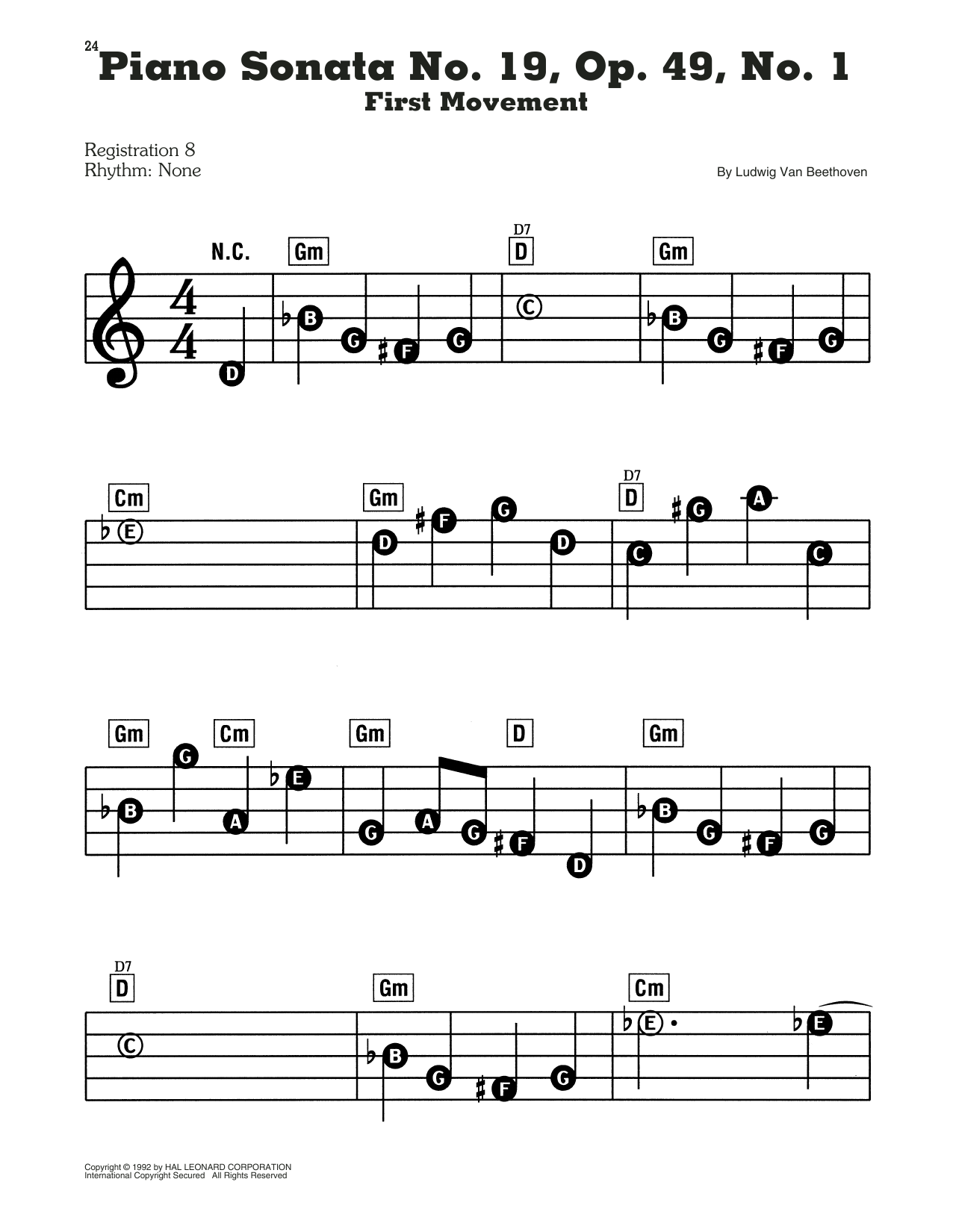
Piano Sonata No. 19, First Movement Sheet Music Preview

Piano Sonata No. 19, First Movement: E-Z Play Today

By Ludwig Van Beethoven

Item: 35-DS00603403

Digital Download
$4.99
Description

Piano Sonata No. 19, First Movement: E-Z Play Today isn't in MakeMusic Cloud just yet...but it could be. Let us know you'd like to see it, and you'll help shape what comes next. In the meantime, start a free trial and dive into thousands of interactive titles your students can play along with today.

Sample Audio
No sample audio found.
Sample Video
Additional Details
Publisher: Hal Leonard
Page Count: 3
SKU: 35-DS00603403

More about this title

About the Composer: Ludwig Van Beethoven

Beethoven fundamentally reshaped the classical sonata form during his lifetime, pushing the genre toward the expressive and structural possibilities that would define Romantic music. His early sonatas, including the nineteen published works for solo piano, document his evolution from a composer working within Mozartian conventions to an innovator expanding harmonic language and dramatic scope.

For students, Beethoven's sonatas represent a crucial bridge in piano pedagogy. They demand technical facility while introducing the architectural thinking required for longer forms. His early works remain accessible enough for developing pianists while containing the seeds of the revolutionary techniques and harmonic boldness he would pursue in later compositions.

Why we love this

This simplified edition opens one of classical music's most important sonata cycles to pianists who aren't yet ready for the full score. Beethoven's first movement writing combines lyrical themes with clear structural sections, making it ideal for students learning to shape longer forms with intentionality. The E-Z Play arrangement preserves the essential melodic and harmonic content while removing technical barriers, so students focus on musical thinking rather than finger work.

What to expect

The first movement unfolds with purposeful elegance, presenting clear themes that Beethoven develops with gentle logic. Lyrical and introspective rather than virtuosic, it invites the player into intimate musical conversation without overwhelming technical demands.

Who it's for

Early-intermediate pianists building literacy in classical forms and repertoire. Students preparing for theory courses who benefit from seeing sonata structure at the keyboard. Teachers seeking accessible entries into Beethoven's compositional voice.

How to get the most out of it

  • Shape the opening theme with gentle dynamic shaping through its first statement; let the second appearance feel like a natural echo rather than a repetition.
  • Identify the contrasting theme in the exposition and give it distinct character through tempo nuance and touch quality.
  • Work out the harmonic progression in the development section before learning the notes; understanding where Beethoven modulates helps your phrasing choices.

How to use it

Pair this with other early classical sonata movements to teach students the conventions of the genre across multiple composers. Its three-page length makes it realistic for a single rehearsal cycle. Students studying Classical period music history connect more deeply when they can perform what they're analyzing.

Skills your students will build

  • recognizing and performing sonata form (exposition, development, recapitulation)
  • shaping theme and contrast through dynamic and tempo choices
  • voice leading across multiple musical lines
  • harmonic function and modulation patterns in classical music

You May Also Like