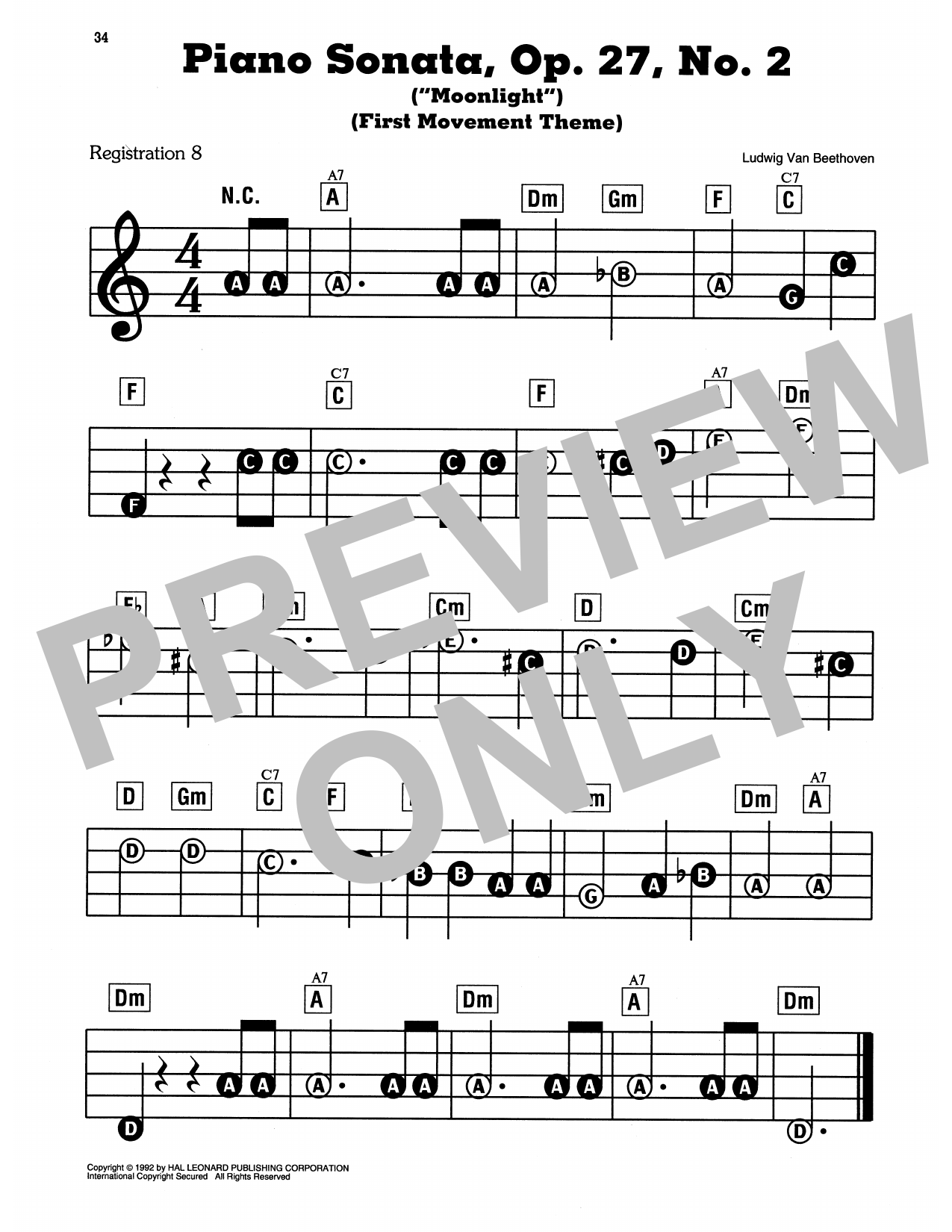
Piano Sonata No. 14, Op. 27, No. 2 ("Moonlight") Sheet Music Preview

Piano Sonata No. 14, Op. 27, No. 2 ("Moonlight"): E-Z Play Today

By Ludwig Van Beethoven

Item: 35-DS01874726

Digital Download
$4.99
Description

Piano Sonata No. 14, Op. 27, No. 2 ("Moonlight"): E-Z Play Today isn't in MakeMusic Cloud just yet...but it could be. Let us know you'd like to see it, and you'll help shape what comes next. In the meantime, start a free trial and dive into thousands of interactive titles your students can play along with today.

Sample Audio
No sample audio found.
Sample Video
Additional Details
Publisher: Hal Leonard
Page Count: 1
SKU: 35-DS01874726

More about this title

About the Composer: Ludwig Van Beethoven

Ludwig van Beethoven (1770-1827) stands as the pivotal figure between Classical and Romantic music. His nine symphonies, thirty-two piano sonatas, and string quartets redefined what instrumental music could express, moving from formal architecture toward emotional autobiography. Beethoven's deafness, beginning in his late twenties, forced him inward; paradoxically, his later works grew more profound and innovative, proving that composers write from the mind as much as the ear.

Why we love this

The Moonlight Sonata remains the gateway piece that converts casual listeners into piano students. This E-Z Play arrangement makes the opening's hypnotic arpeggios accessible to early intermediate players while preserving the harmonic language and emotional arc that give the piece its enduring power. Programming it as a solo or recital opener signals sophistication without alienating audiences.

What to expect

Moonlit and introspective, the opening evokes quiet contemplation through gentle arpeggios that rock like waves. The piece draws you inward, creating intimacy even in a large hall, while its harmonic shifts hint at deeper emotion beneath the surface calm.

Who it's for

Pianists in the early intermediate stage who know basic chord shapes and can manage rubato will find this accessible yet musically substantive. Teachers seeking repertoire that bridges popular recognition with genuine artistic content will value its dual appeal to students and audiences alike.

How to get the most out of it

  • Let the arpeggios breathe. Resist rushing the accompanimental figures; their uniformity and gentle rocking motion create the foundation for everything above.
  • Shape the melody line with intention. The single notes that emerge above the accompaniment need vocal contour, not mechanical precision.
  • Balance registration carefully. The melody should sing without overwhelming the harmonic support beneath it.
  • Take time with pedal changes. The sustain pedal anchors the sonority here, and careless changes muddy the harmonic progression.

How to use it

Open a student recital with this to set a reflective tone, or pair it with contrasting Romantic works to show how pianists approached intimate expression. Its one-page length makes it ideal for informal performances, competitions, or as the centerpiece of a program exploring Beethoven's keyboard writing.

Skills your students will build

  • Control of accompaniment patterns without rushing
  • Melody shaping and phrasing in a single-staff line
  • Harmonic listening and voice leading awareness
  • Pedal technique and sustain management
  • Rubato and expressive timing

You May Also Like