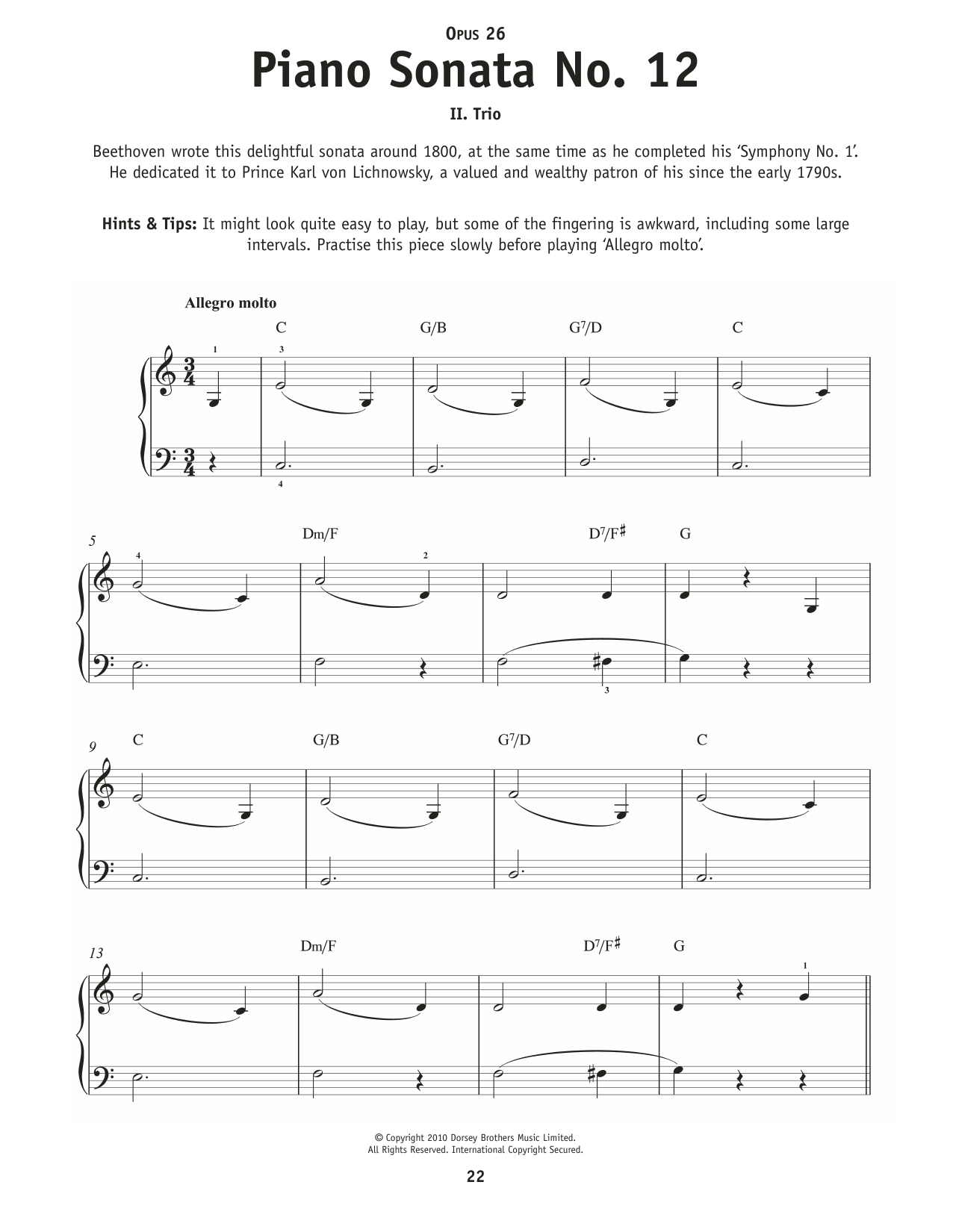
Beethoven composed his thirty-two piano sonatas across five decades, using the genre as a laboratory for expanding harmonic language and formal structures. His work transformed the sonata from entertainment music into a vehicle for profound artistic expression, influencing every composer who followed.
Why we love this
The second movement of this sonata sits in that sweet spot where Beethoven's lyricism feels most unguarded. It's substantial enough to reward serious practice but compact enough to fit naturally into a student recital without overwhelming the program.
What to expect
Introspective and gently unfolding, with moments of surprising emotional depth beneath a deceptively simple surface. The writing invites quiet intensity rather than dramatic display.
Who it's for
Advanced intermediate to early advanced students seeking Beethoven repertoire that demands musicality without requiring virtuosic finger work. Teachers looking for accessible entry points into the later sonatas will find this movement particularly rewarding.
How to get the most out of it
Shape the opening melody with clear phrasing rather than letting it flatten into mere note-reading. Think of singing the line; rubato here serves the music rather than distracts from it.
Balance the left hand carefully so accompanying figures support rather than overshadow the right hand writing.
Lean into the harmonic shifts Beethoven introduces midway through. These moments feel destabilizing by design, so let them breathe without rushing.
How to use it
Pair this with earlier classical sonata movements for a program exploring how the form evolved, or position it as a contrasting slow movement between more elaborate works. It also works beautifully as a recital closer when you want to leave the audience in a contemplative space.
Skills your students will build
Interpreting Beethoven's voice leading across registers
Balancing melody and accompaniment textures
Sustaining long-line phrasing within a slow tempo
Managing harmonic tension and resolution
Executing control and sensitivity in dynamics
You May Also Like
Scan to Complete Your Purchase
Use your phone's camera to scan the code below
You'll log in on your phone and the order will be added to your account