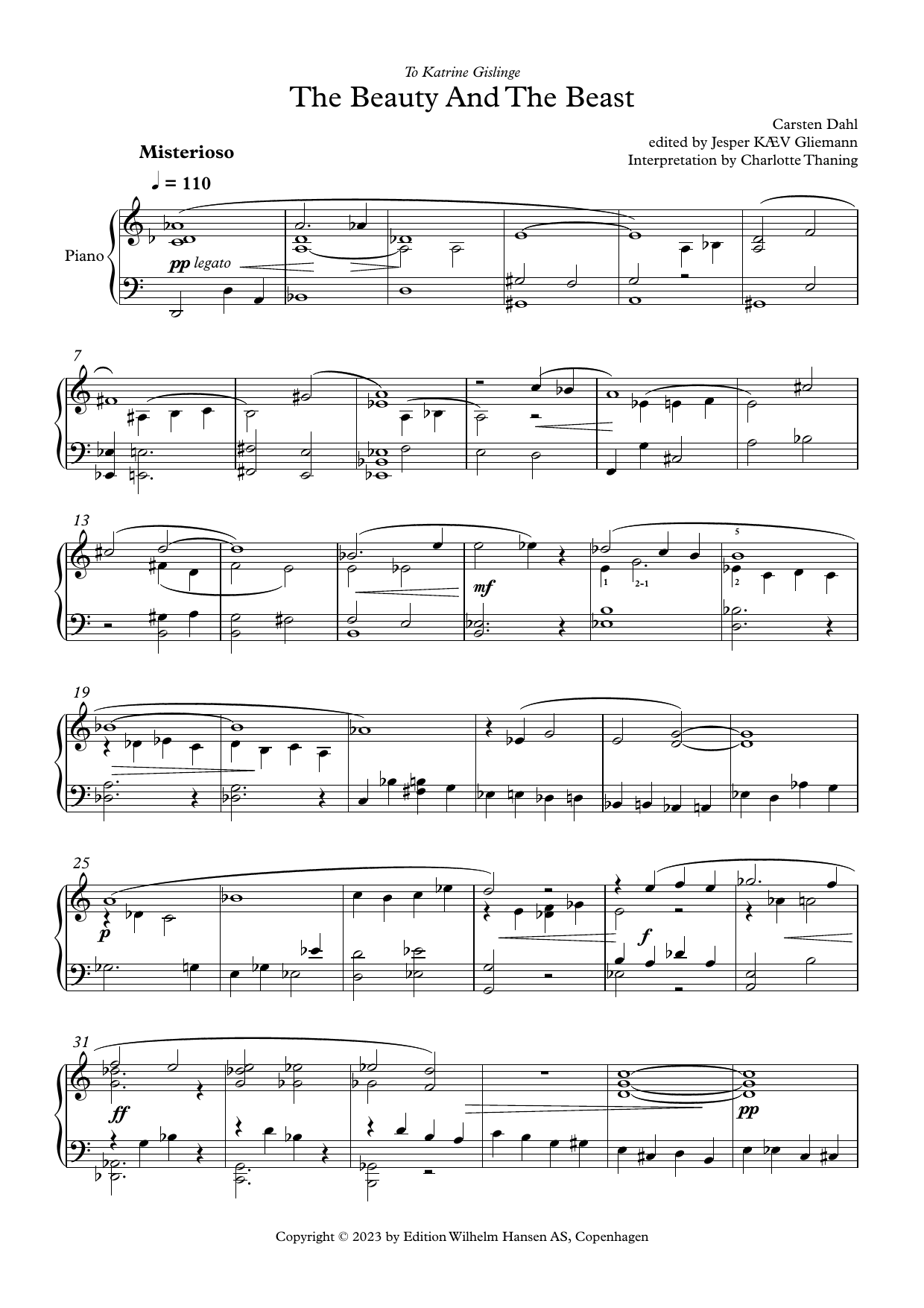
Carsten Dahl is a Danish composer and pianist whose work bridges contemporary classical music with accessible melodic writing. His compositions often draw inspiration from narrative and emotional storytelling, translating literary and thematic concepts into instrumental works that engage both performer and listener.
Why we love this
This sonata demonstrates how a single thematic idea can sustain an entire large-scale work without sacrificing coherence or interest. The Beauty and the Beast gives pianists a substantial piece that feels like a real recital work, complete with formal architecture and expressive depth, rather than a study or salon piece masquerading as something bigger.
What to expect
This work unfolds with the introspection and gradual revelation of a story being told. The music moves between moments of delicate beauty and searching intensity, as if probing the nature of transformation and acceptance.
Who it's for
Intermediate to advanced pianists seeking a contemporary sonata with substantial length and narrative richness. Teachers looking for recital repertoire that challenges students to think about thematic development and emotional arc alongside technical demands will find this a rewarding choice.
How to get the most out of it
Map the emotional arc across all 38 pages before diving into technical details. Identify the moments of greatest transformation and vulnerability so your interpretation reflects the narrative progression.
Pay attention to how the main theme evolves through different registers and harmonic contexts. Each return should feel subtly altered rather than simply repeated, building a sense of the character's growth.
Balance structural clarity with lyrical phrasing. The formal demands of sonata writing can overshadow the storytelling if you prioritize architecture over singing lines.
How to use it
Pair this with Romantic or early modern sonatas to show how contemporary composers continue the sonata tradition with fresh sensibility. At 38 pages, it stands confidently as a standalone recital centerpiece or as the anchor work on a program exploring narrative-driven instrumental music.
Skills your students will build
Large-scale formal coherence across multi-movement or extended single-movement structure
Thematic transformation and development techniques
Sustaining emotional narrative over extended duration
Dynamic control across wide dynamic range
Pedal independence and tonal shaping in contemporary harmonic language
You May Also Like
Scan to Complete Your Purchase
Use your phone's camera to scan the code below
You'll log in on your phone and the order will be added to your account