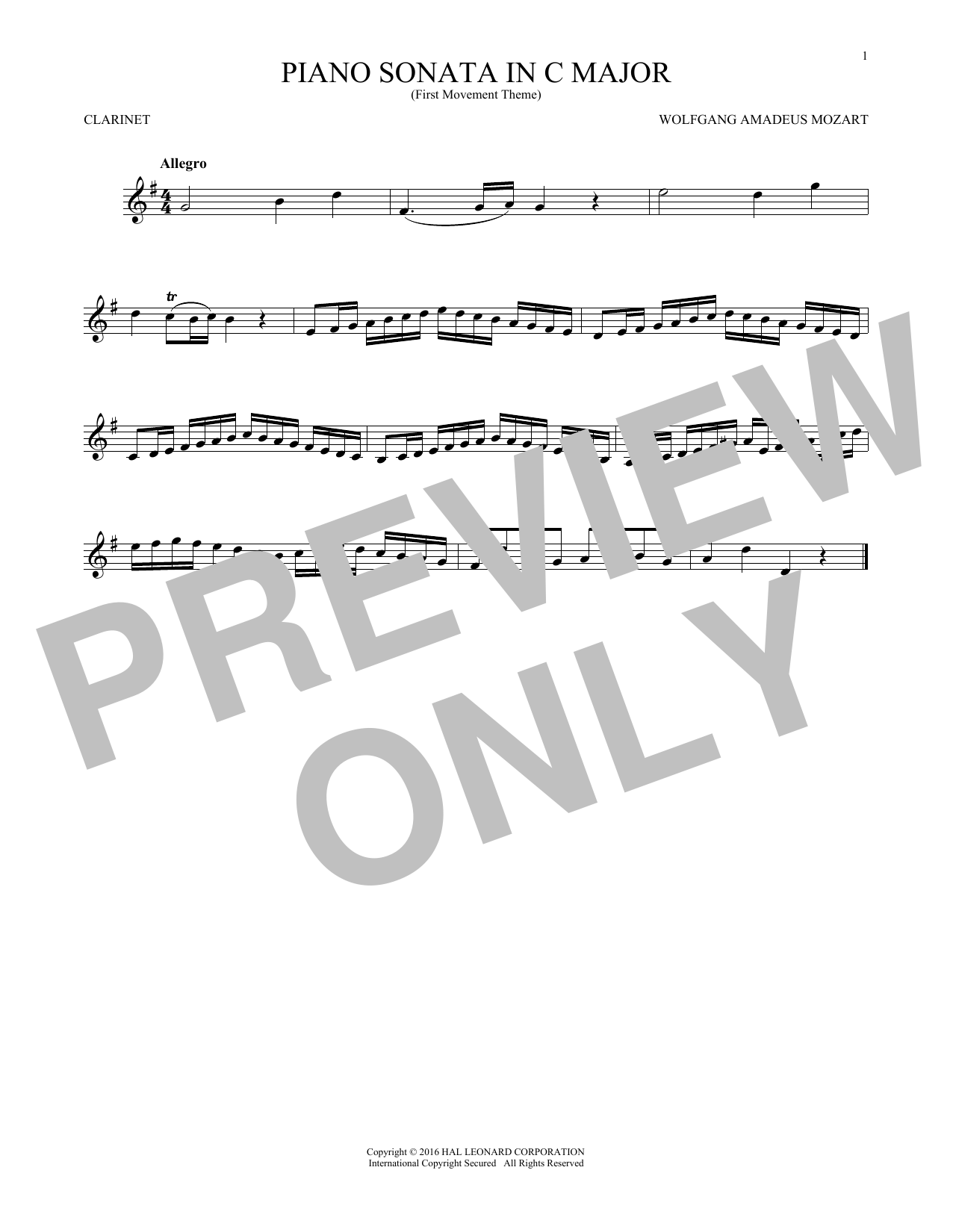
Mozart wrote for the clarinet with unmatched elegance, crafting lines that sit naturally in the instrument's sweet middle register while pushing players to shape phrases with vocal fluidity. His clarinet works remain central to the repertoire because he understood the instrument's capacity for both lyrical expression and technical brilliance, setting a standard that shaped clarinet writing for generations.
Why we love this
This sonata movement gives advanced clarinet students an authentic Classical work without the virtuosic demands of a full concerto. The writing is genuinely grateful to play; the harmonic language is transparent enough to hear your own voice clearly, yet sophisticated enough to keep you engaged musically.
What to expect
The music unfolds with graceful restraint and crystalline clarity. You'll find moments of genuine lyrical warmth alongside passages of elegant scalar motion, all held together by Mozart's gift for making simple ideas feel profound through pure harmonic and melodic craft.
Who it's for
Intermediate to advanced clarinet soloists preparing recital repertoire, students exploring the Classical canon beyond standard concerto fare, and players looking for sophisticated yet manageable solo material. It suits musicians who want to deepen their understanding of Mozart's compositional voice and clarinet idiom.
How to get the most out of it
Shape the main theme as you would sing it; Mozart's melody writing rewards a vocal approach with natural phrasing and breath points that feel inevitable rather than imposed.
Balance the accompaniment texture carefully. The piano part contains important harmonic color that supports but should never overshadow the clarinet line.
Articulate the passagework cleanly without rushing. Classical style prizes clarity and evenness; let the note patterns speak for themselves rather than adding extra emphasis.
Find the harmonic rhythm underneath the surface. Understanding how Mozart moves through keys will help you shape larger phrases beyond individual gestures.
How to use it
Feature this as a solo recital encore or as part of a Classical-era concert pairing it with works by Mozart's contemporaries. It also works beautifully in a chamber music context if programmed with compatible piano repertoire from the same period.
Skills your students will build
Sustaining long-lined Classical phrases with proper phrasing and breathing
Balancing melody against accompaniment in a duo setting
Articulation clarity in scalar and arpeggio passages
Harmonic awareness and voice-leading in tonal music
Period-appropriate ornamentation and stylistic interpretation
You May Also Like
Scan to Complete Your Purchase
Use your phone's camera to scan the code below
You'll log in on your phone and the order will be added to your account