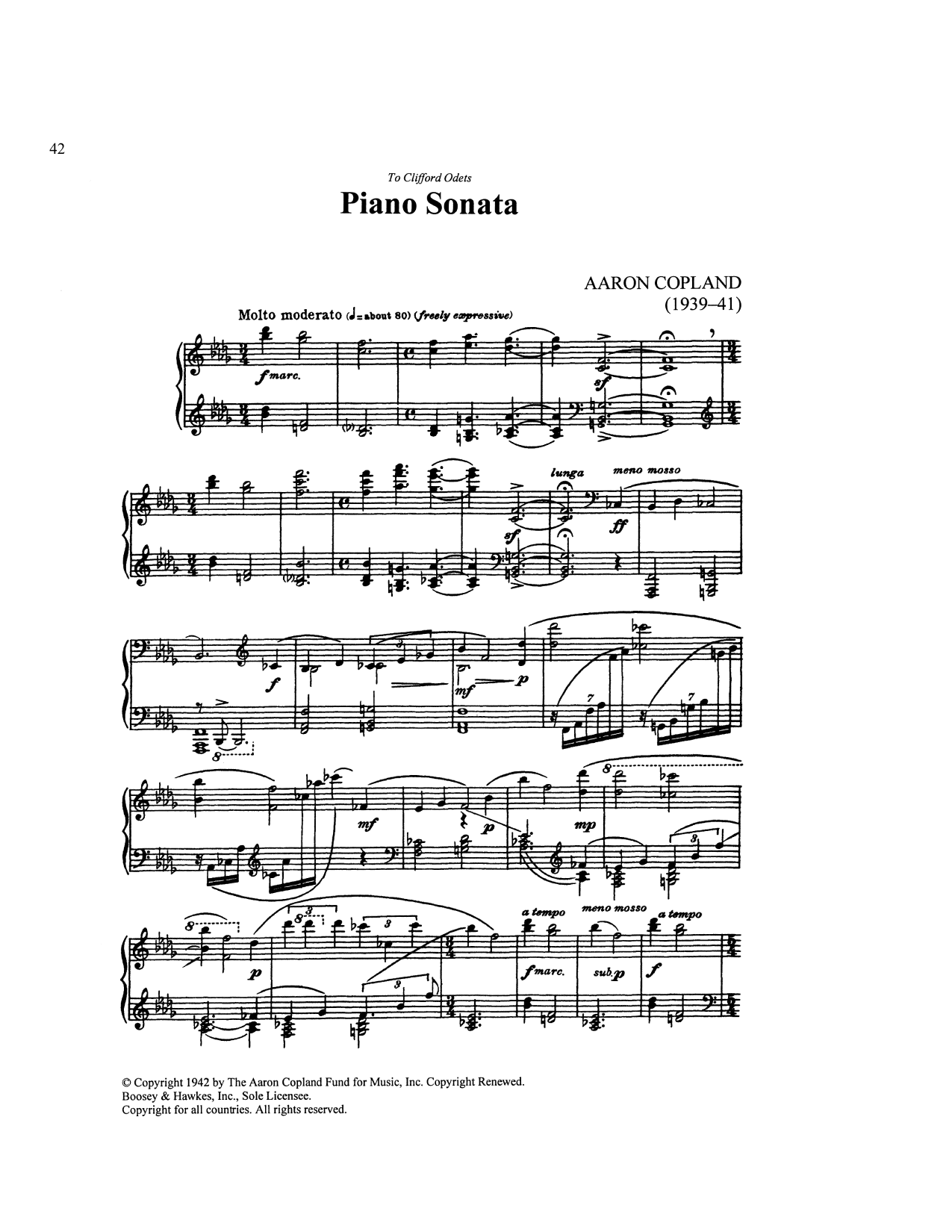
Aaron Copland (1900–1990) shaped American classical music by infusing concert works with folk idioms, hymn melodies, and open harmonies that feel distinctly rooted in the American landscape. His Piano Sonata, composed in 1941, stands apart from his more famous orchestral works; it strips away orchestration to reveal his gift for structural clarity and harmonic innovation at the keyboard.
Why we love this
Copland's Sonata demands serious pianistic engagement without relying on virtuosic display for its impact. The writing is architecturally rigorous, with rhythmic vitality and harmonic language that feels modern yet deeply rooted in American musical tradition, making it a compelling choice for recitals that need substance and authenticity.
What to expect
The sonata unfolds with a kind of windswept openness, combining introspective lyricism with passages of rhythmic propulsion. Copland's harmonic language here is more adventurous than his populist works, yet it retains that unmistakable sense of spaciousness and optimism that defines his voice.
Who it's for
Advanced undergraduate pianists and graduate students ready to engage with 20th-century American concert music. This work suits performers preparing recital programs that prioritize compositional substance and stylistic diversity.
How to get the most out of it
Attend closely to the sectional architecture; Copland's transitions between thematic areas often arrive subtly. Mark these structural points in your score so you can shape the phrase trajectory across larger spans.
Explore the rhythmic precision the score demands. His syncopations and metric shifts require clarity without rigidity; let the pulse breathe but stay anchored.
Balance the lyrical moments against the driving sections by adjusting touch and pedal management. Clarity of line matters as much as resonance, especially in the middle register where much of the thematic material sits.
Listen to recorded performances to understand how different pianists approach tempo relationships between movements. Copland's notation is specific, but interpretation of character varies meaningfully.
How to use it
Place this work on a recital exploring American piano literature from the early 20th century, or pair it with European modernist works to highlight Copland's distinctive approach to form and harmony. Its 27 pages demand focus but reward concentrated listening in a formal concert setting.
Skills your students will build
Reading and executing syncopated rhythmic figures across changing meters
Interpreting harmonic language rooted in American folk tradition and modernist practice
Managing structural coherence across three movements with varying tempos and characters
Balancing rhythmic precision with lyrical phrasing at the keyboard
Understanding sectional architecture and thematic development in mid-20th-century concert music
You May Also Like
Scan to Complete Your Purchase
Use your phone's camera to scan the code below
You'll log in on your phone and the order will be added to your account