
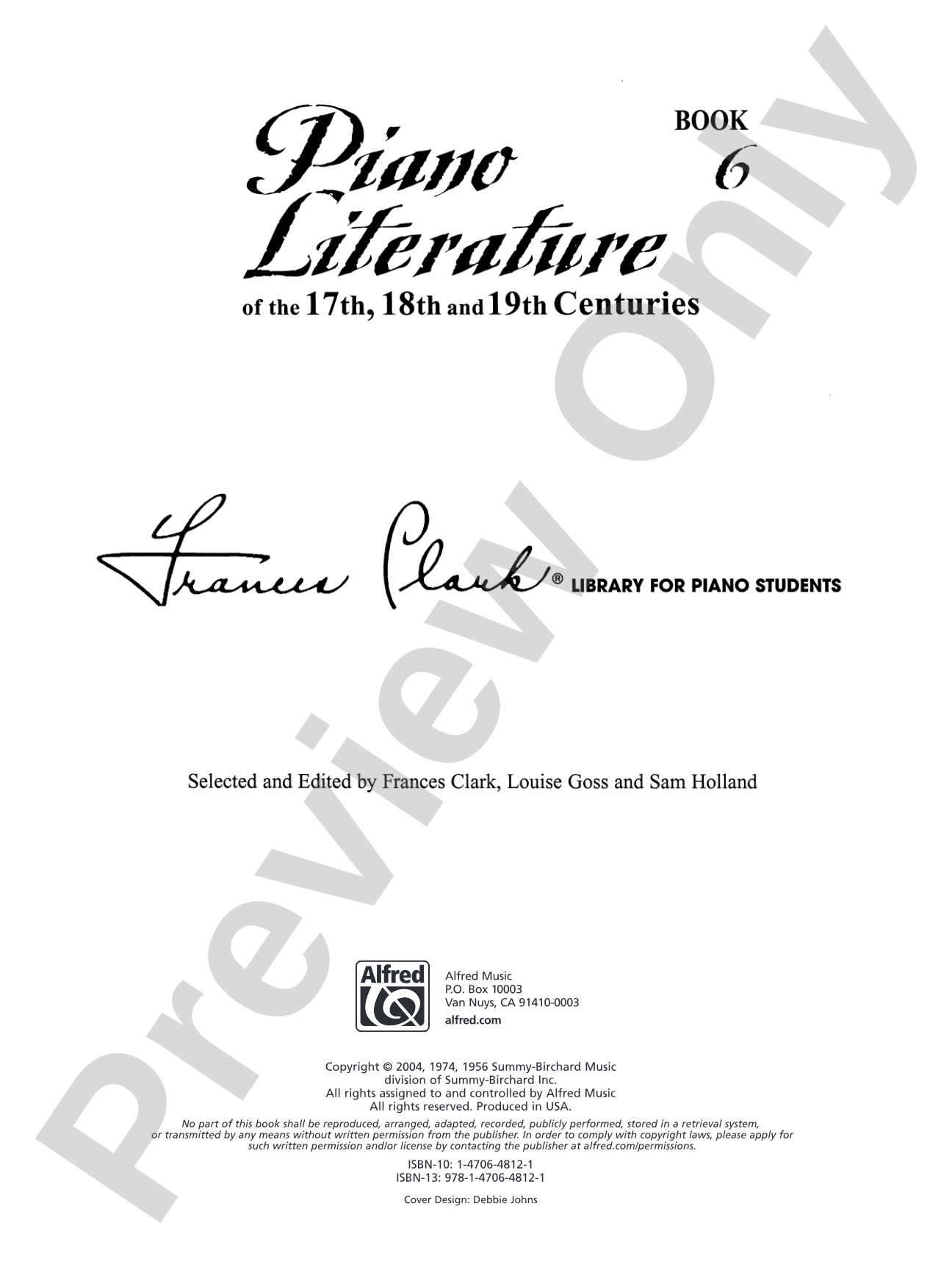

Piano Literature of the 17th, 18th, and 19th Centuries, Book 6: Piano
Item: 00-PB-0002247
$10.99
Pickup currently not available
Related Items
Piano Literature of the 17th, 18th, and 19th Centuries, Book 6: Piano Book |
$10.99
|
View |
Description
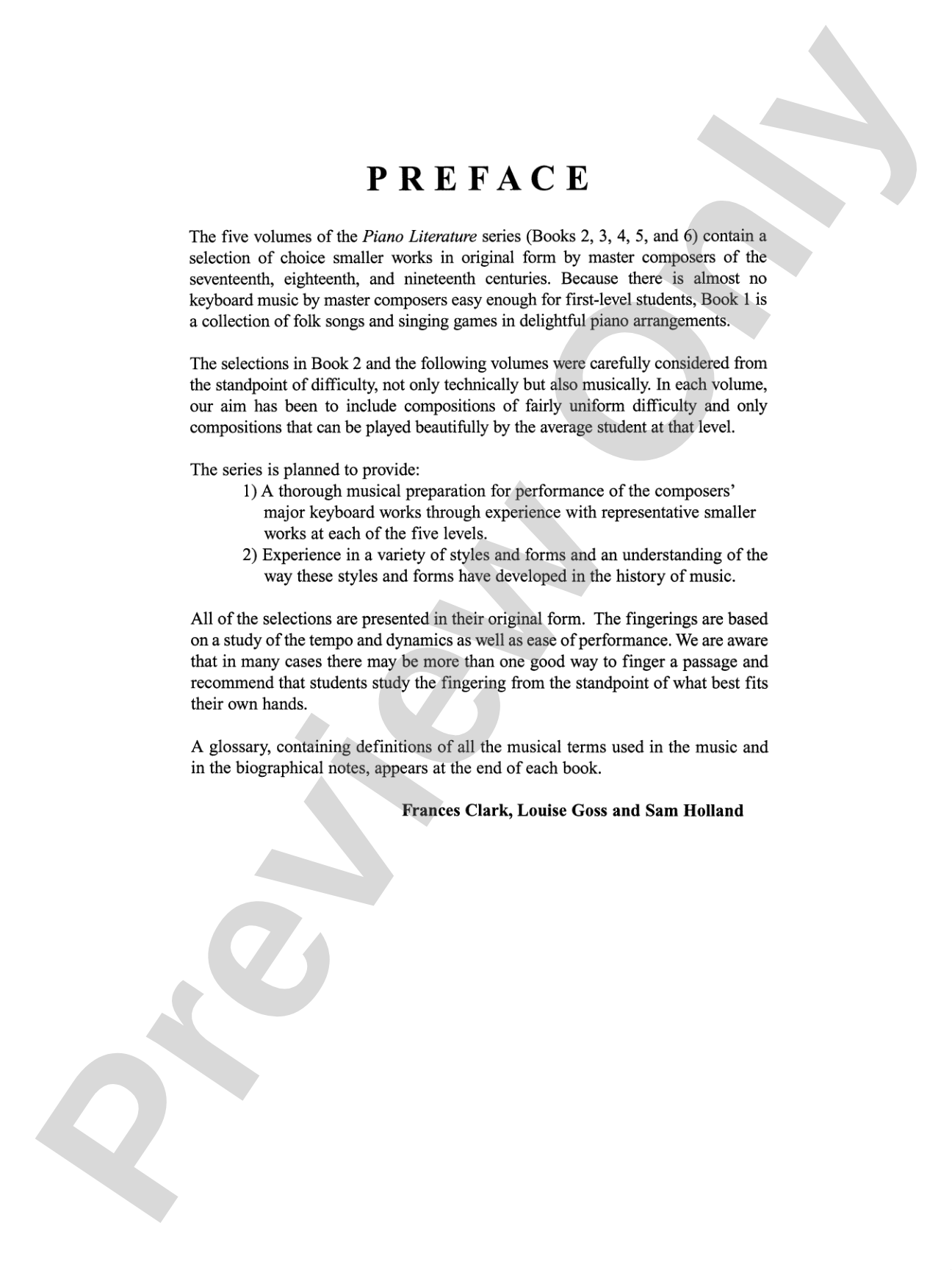
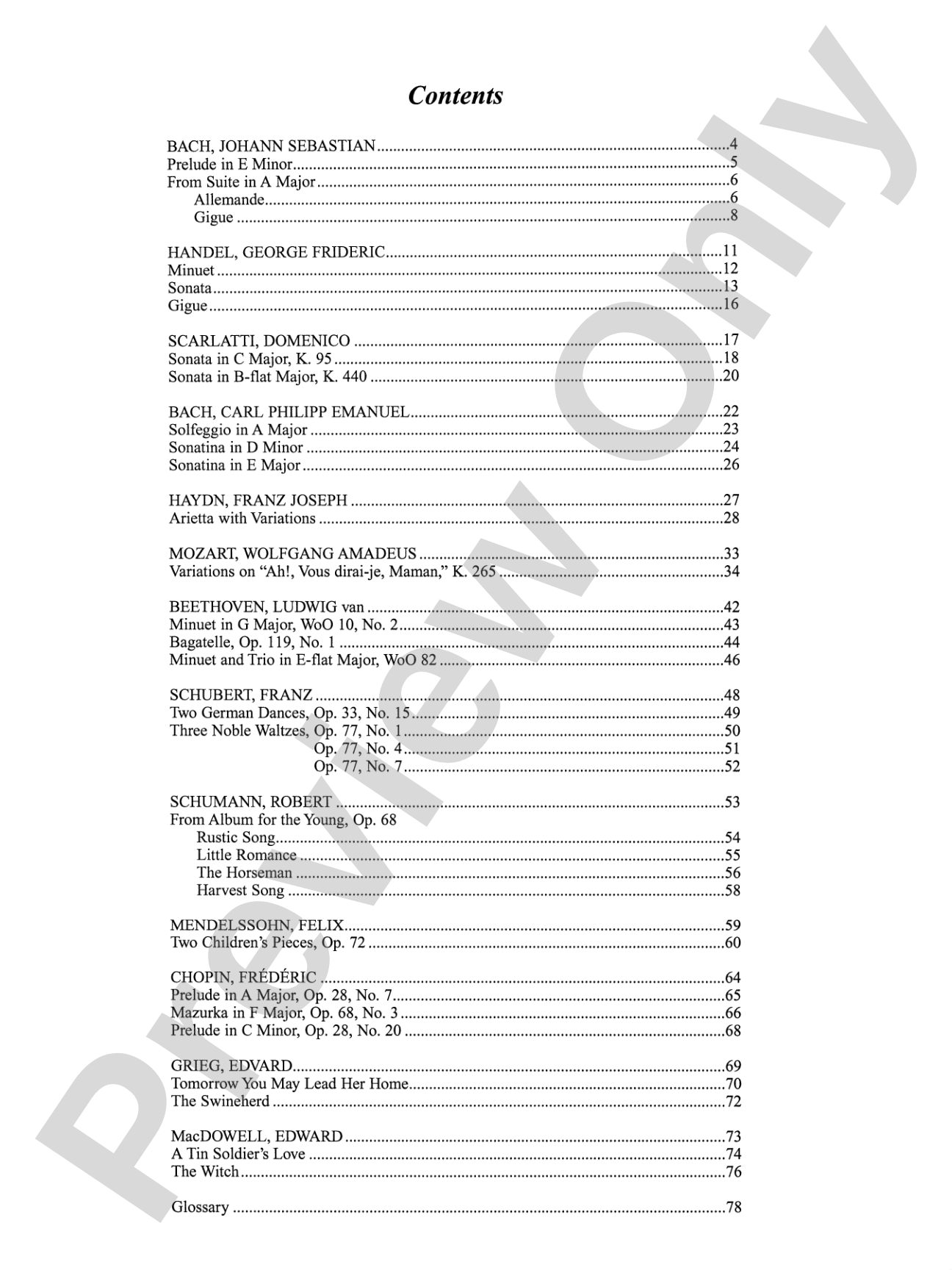
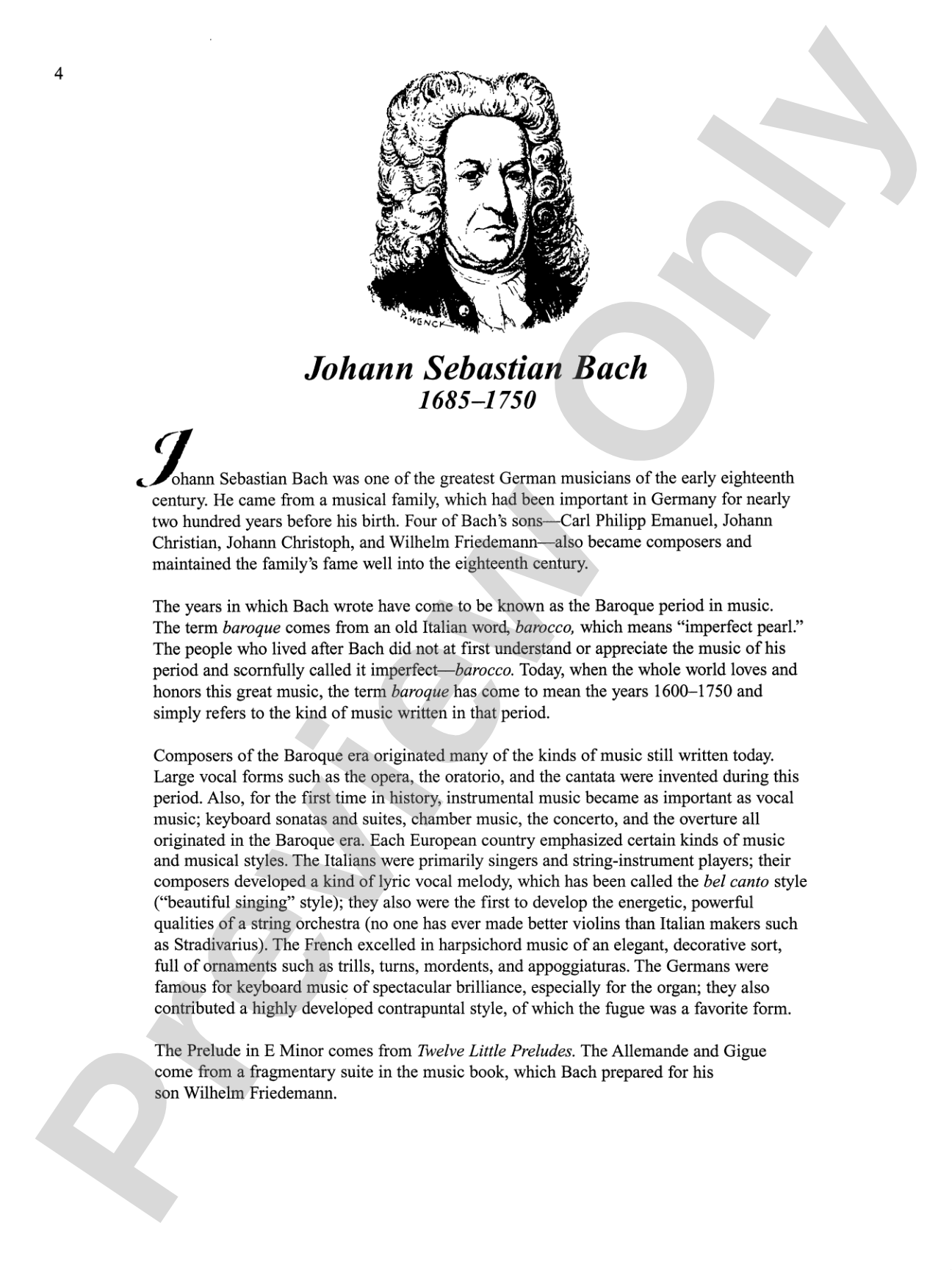
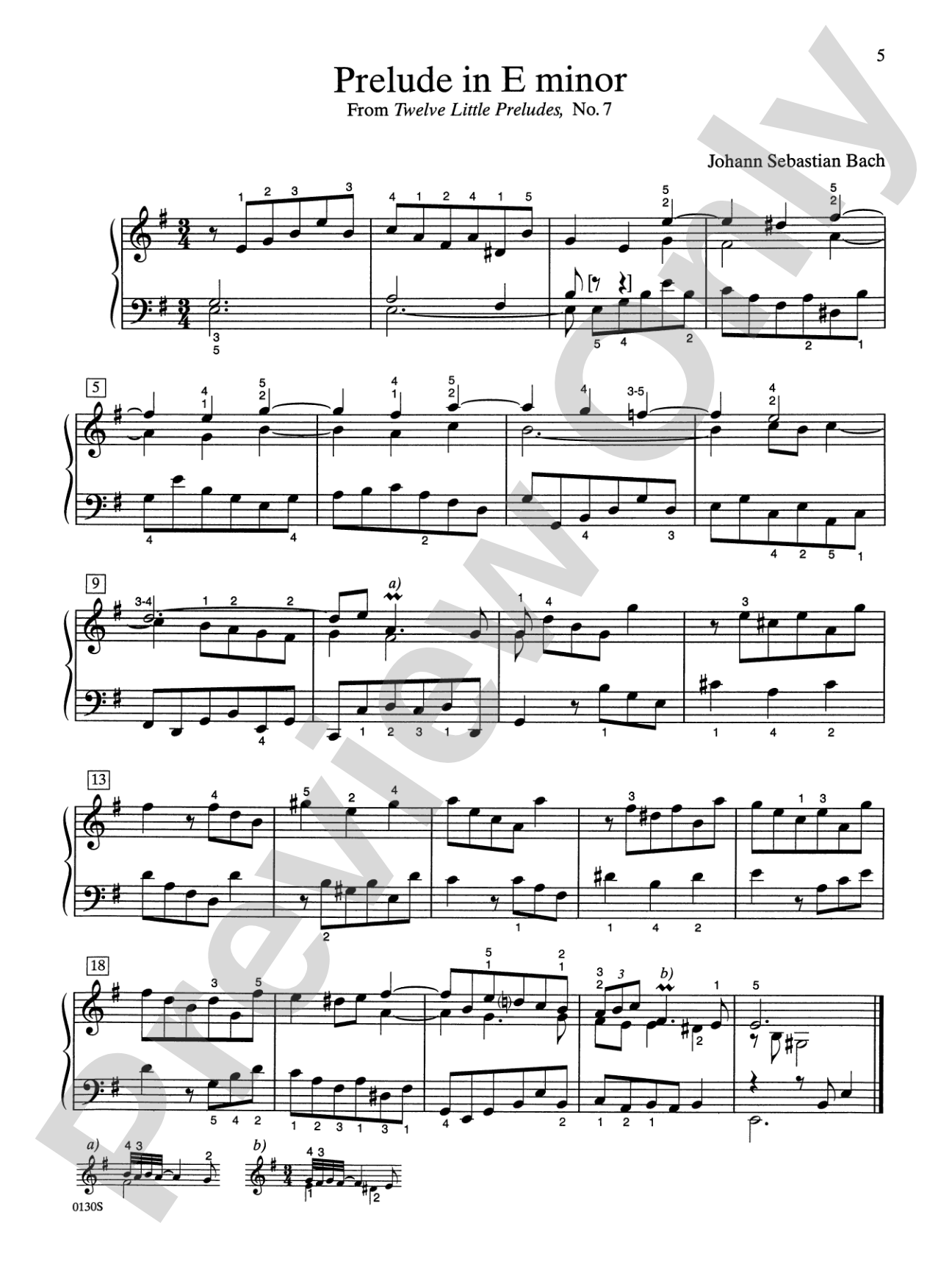
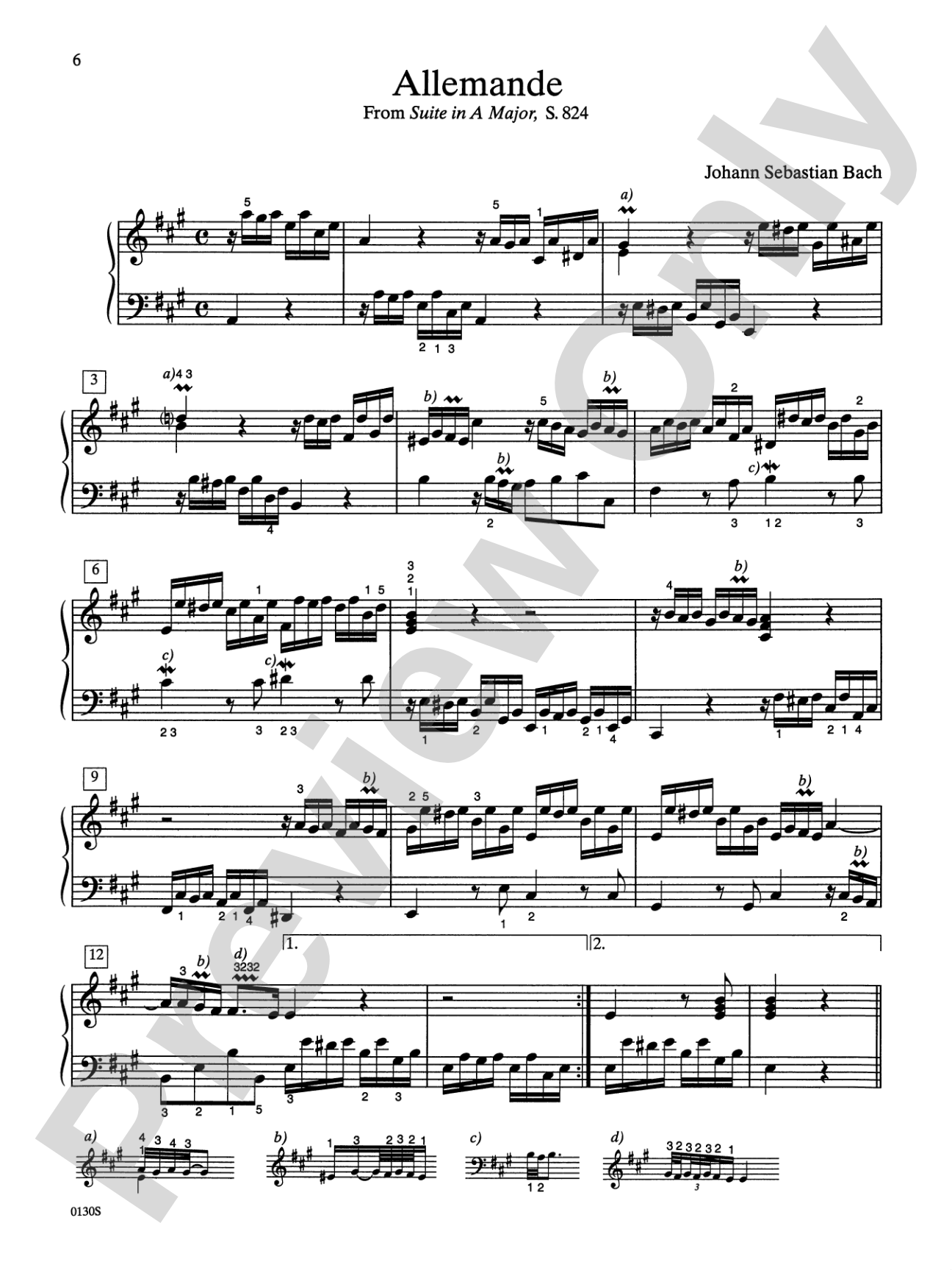
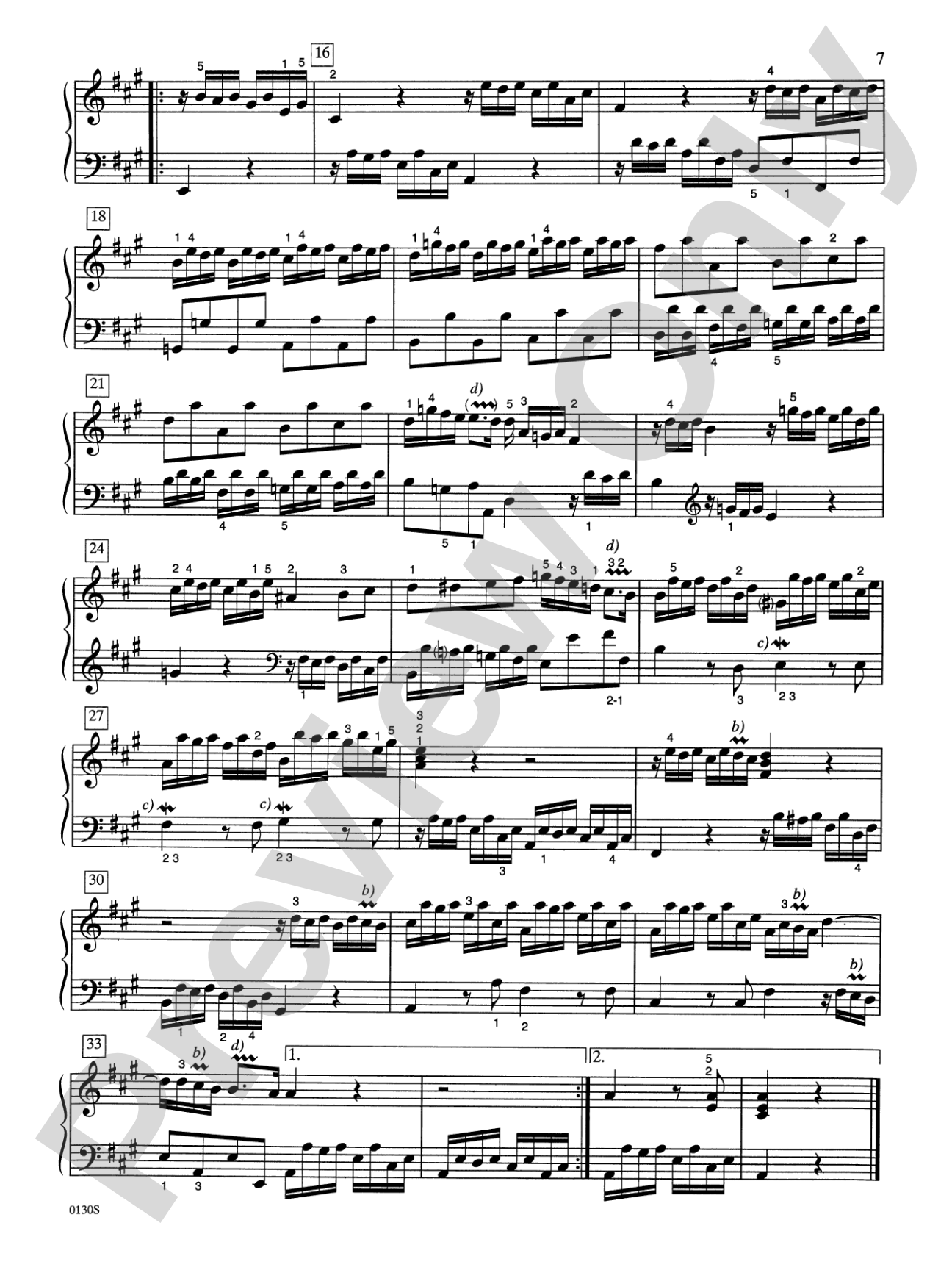
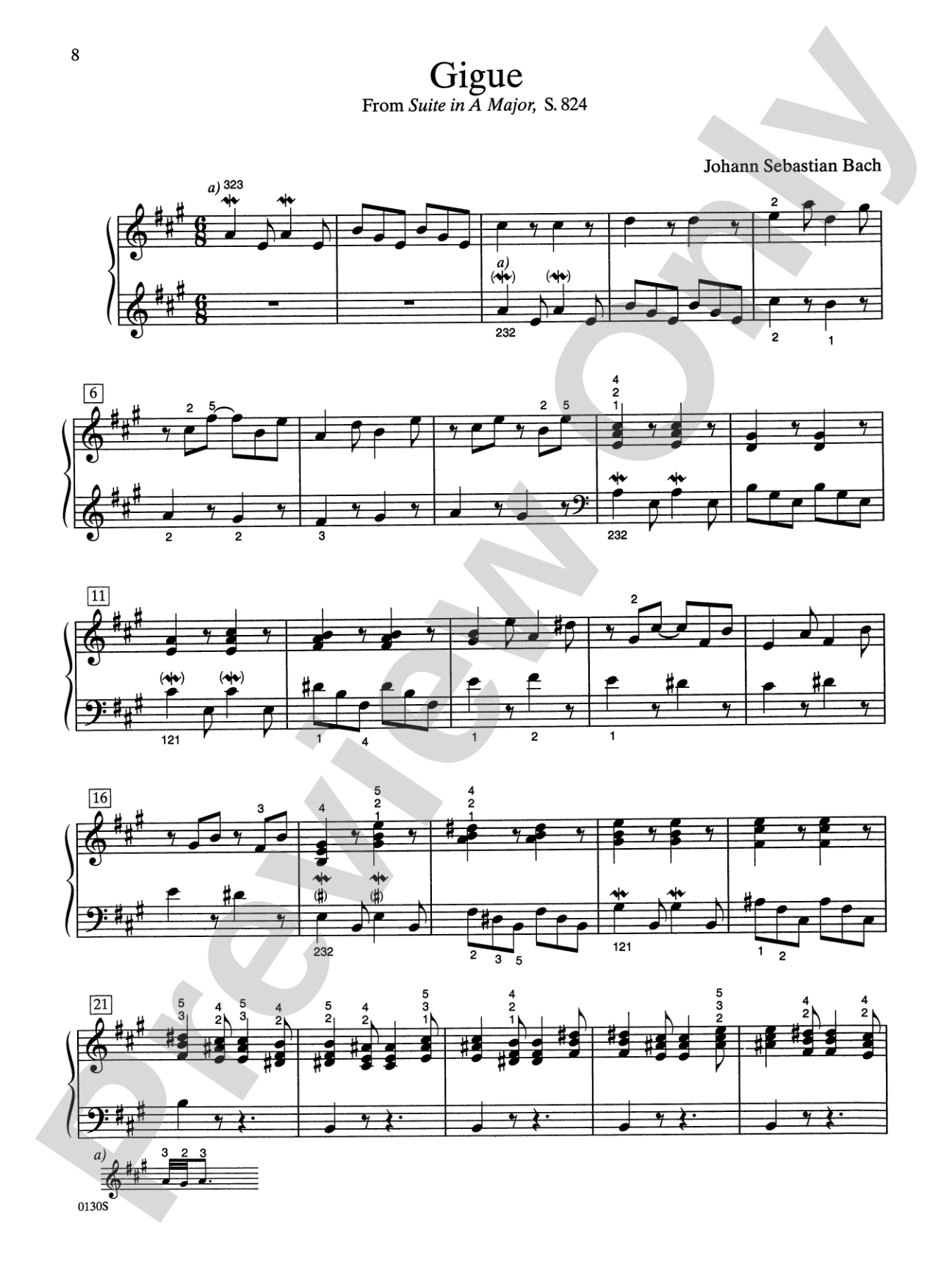
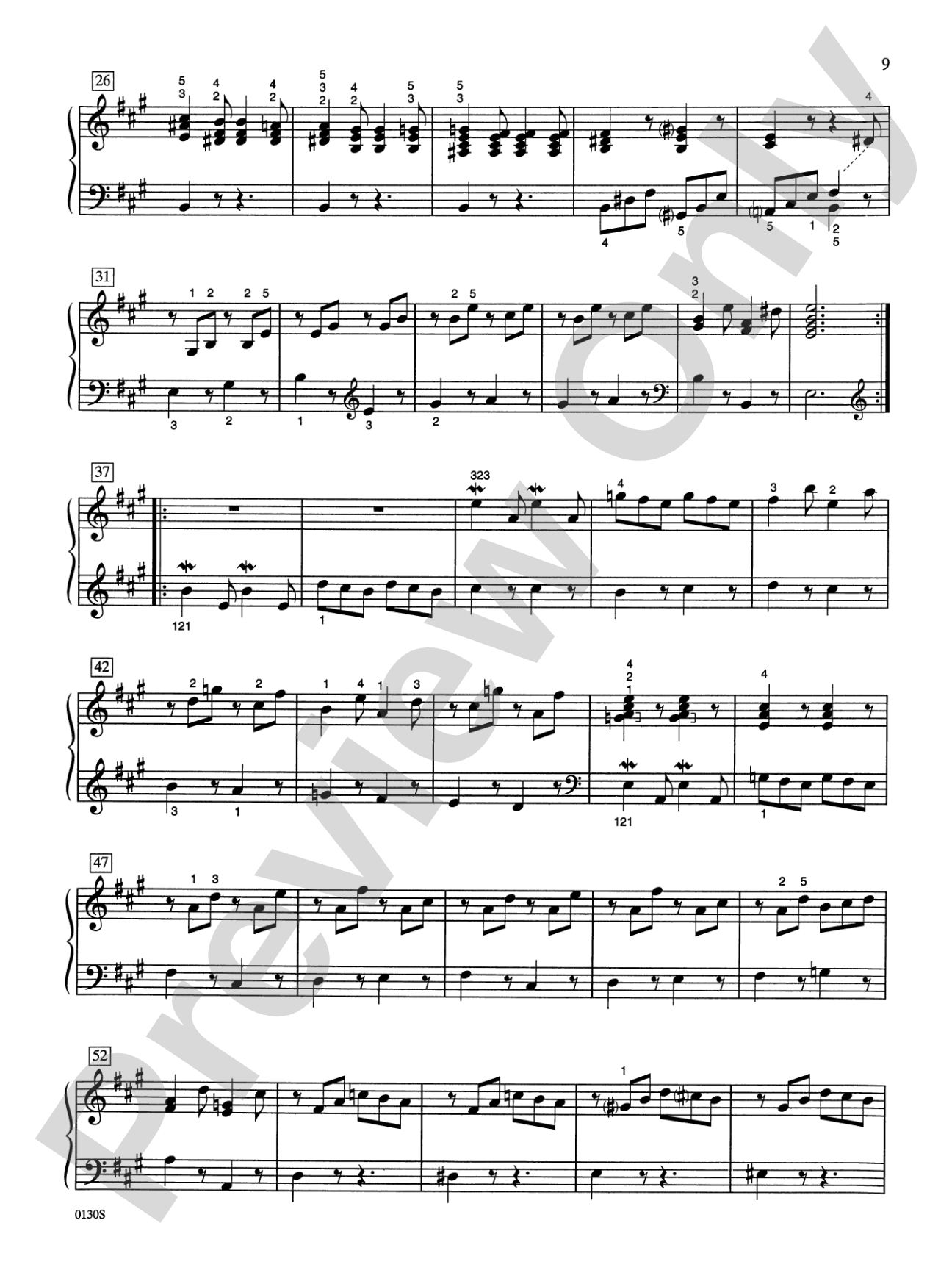
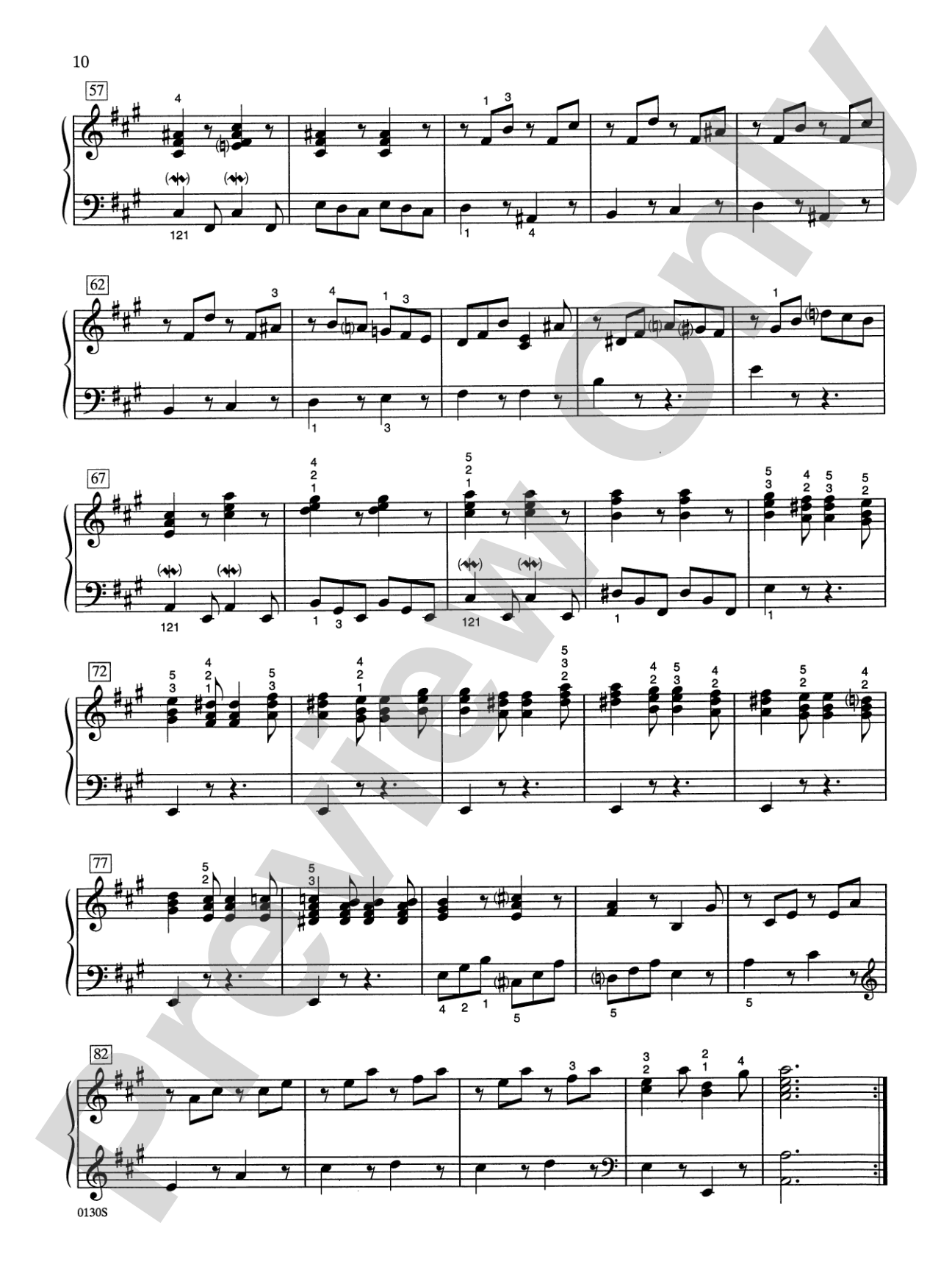
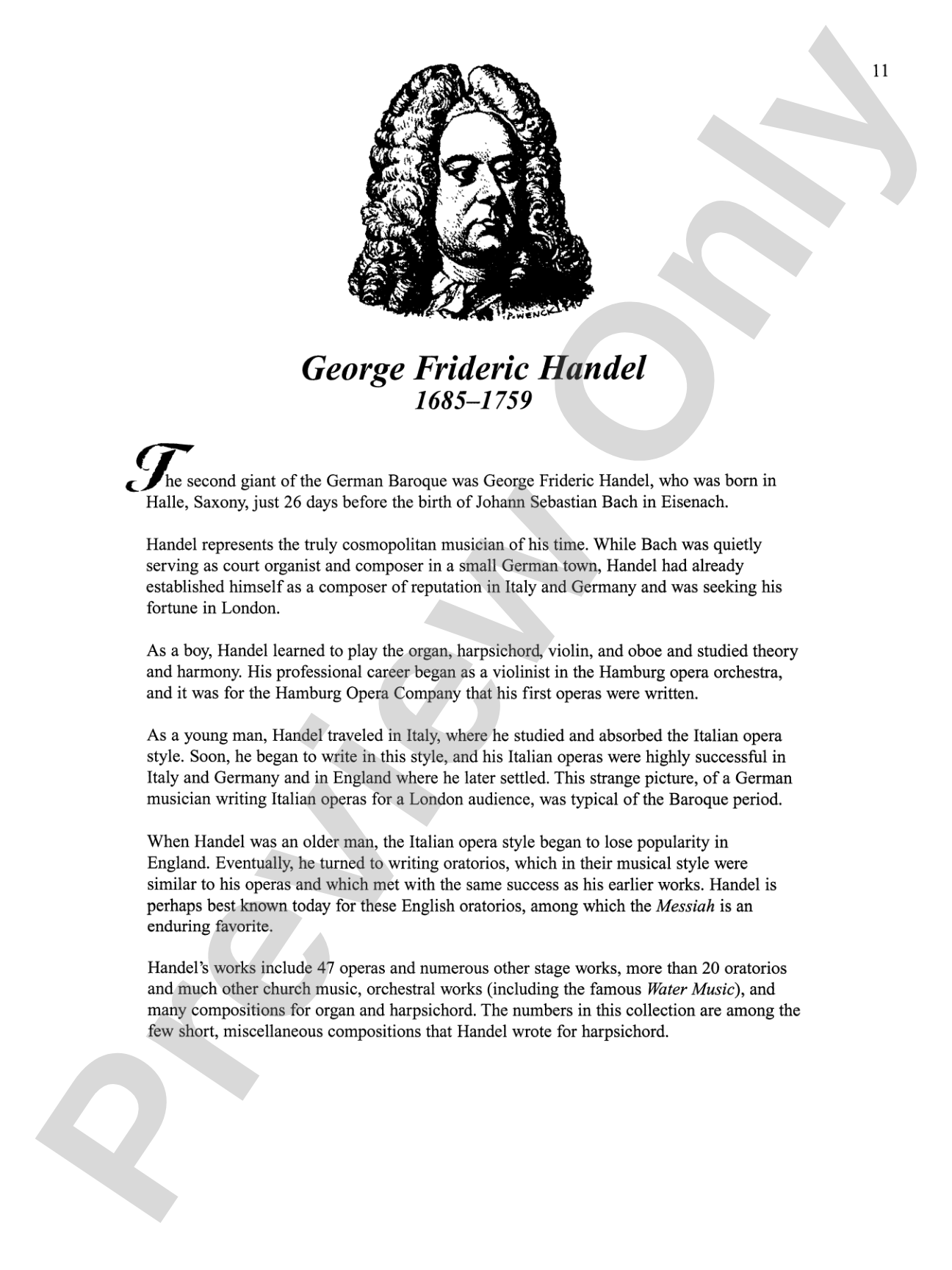
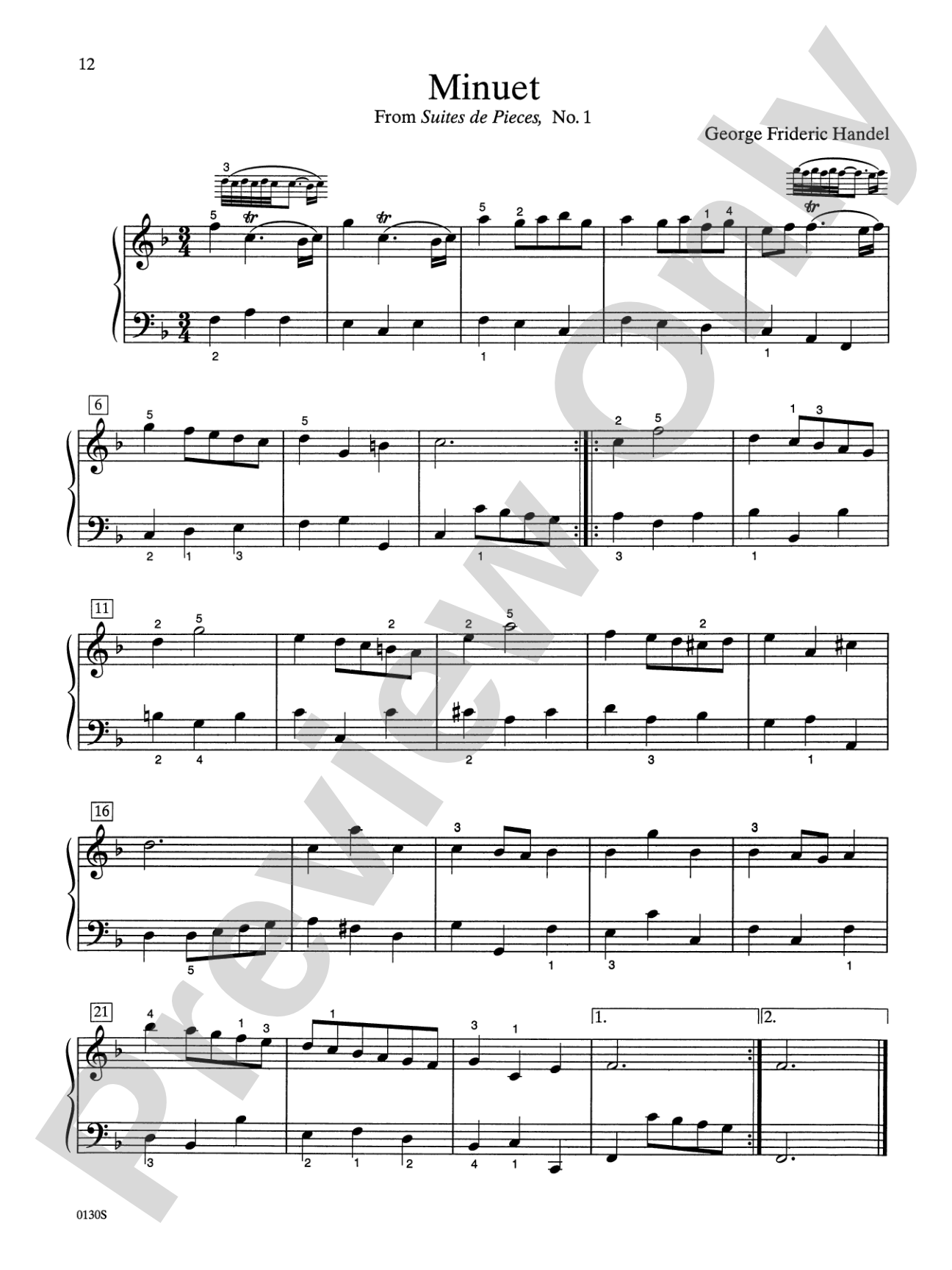
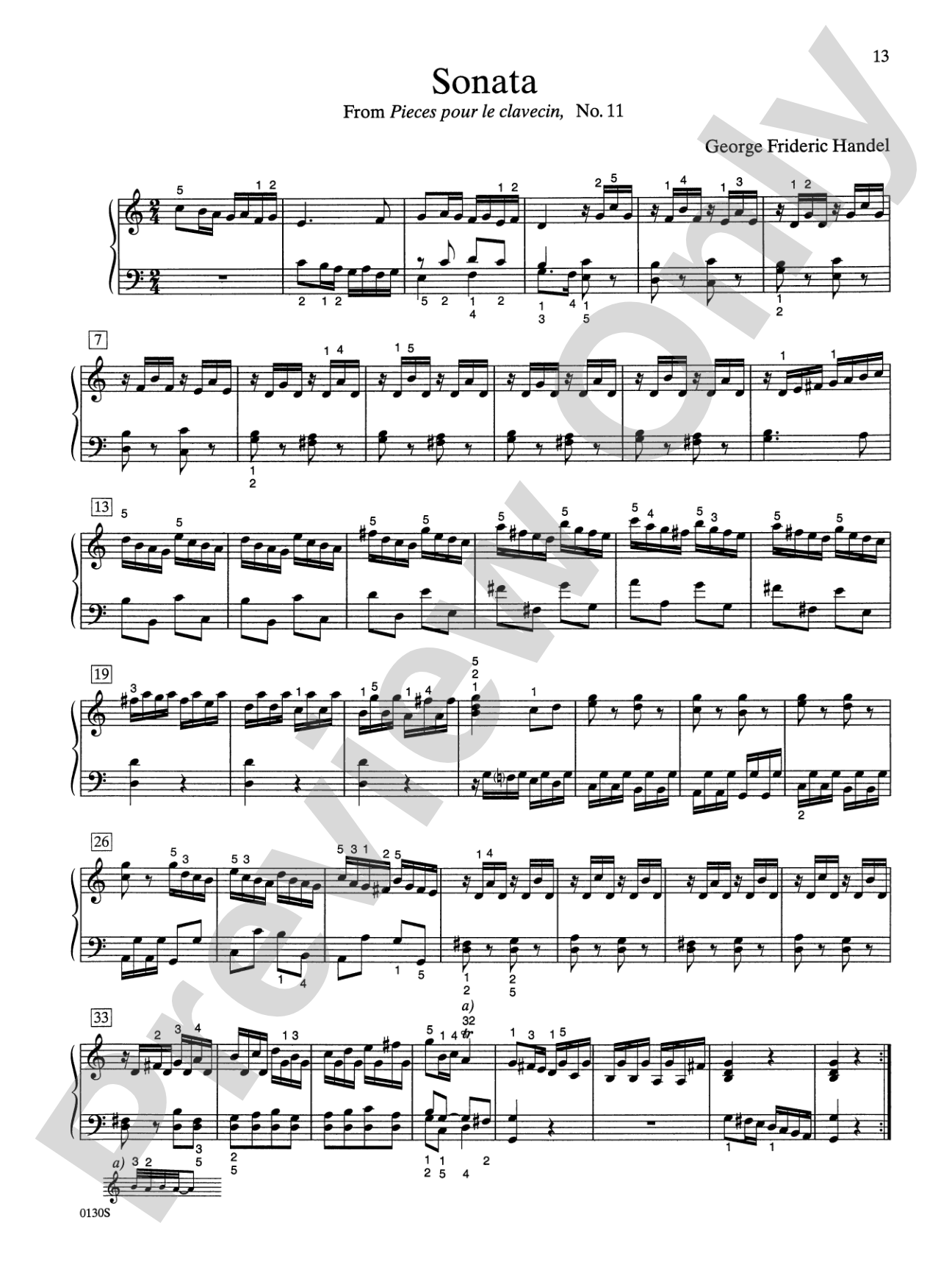
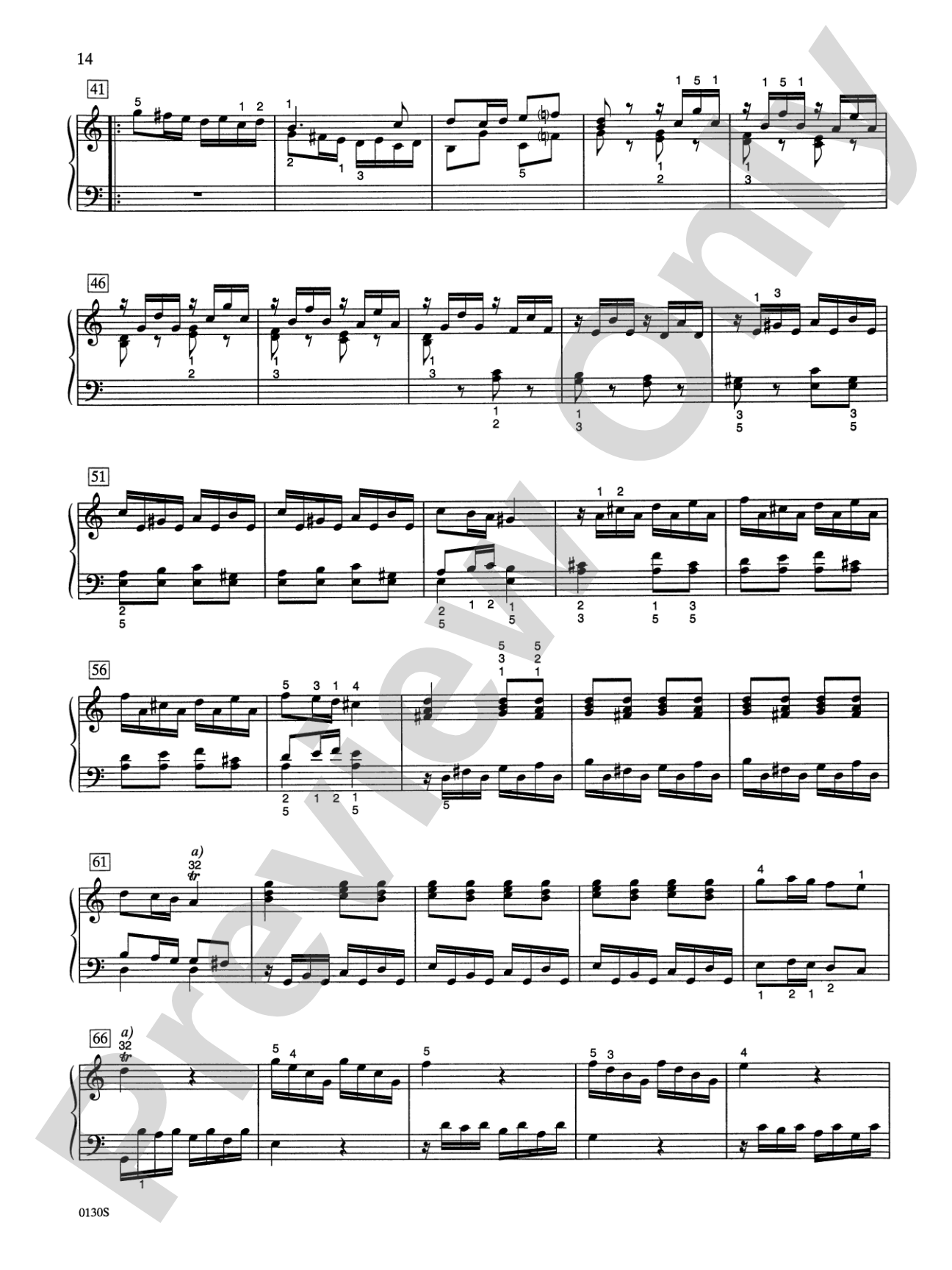
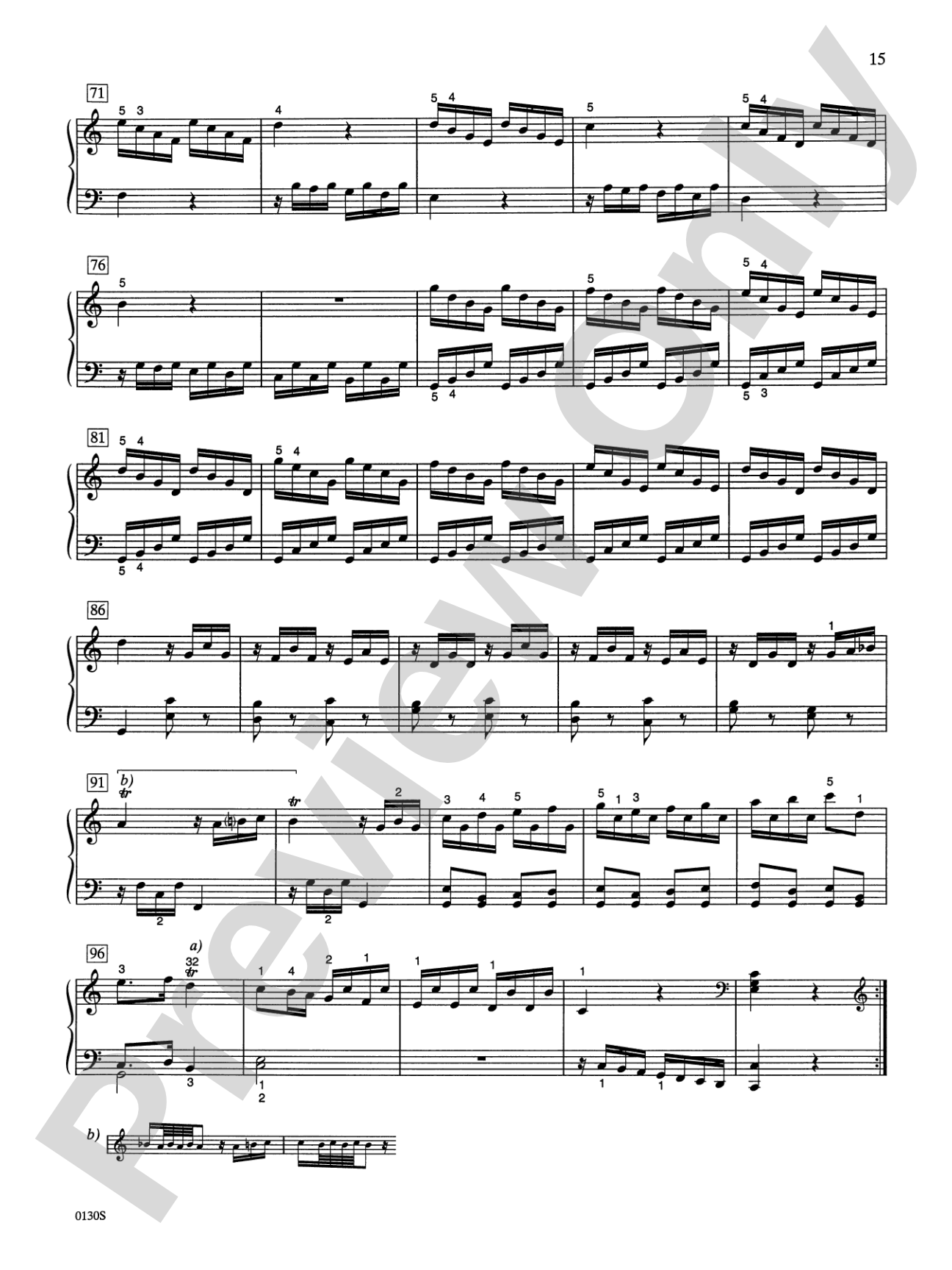
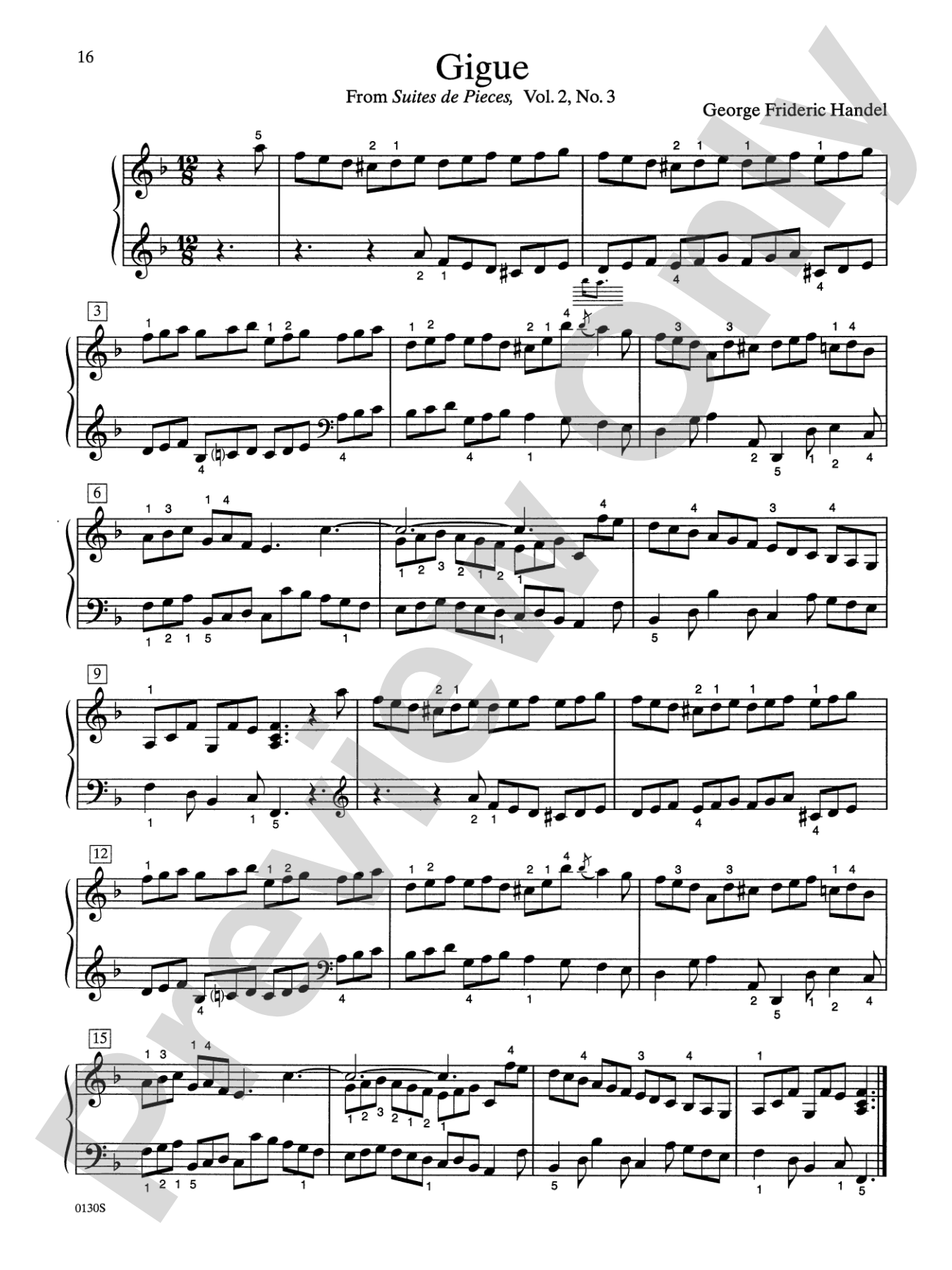
This series surveys three centuries of keyboard music, including representative shorter works by: Bach * Handel * Scarlatti * C.P.E. Bach * Haydn * Clementi * Mozart * Beethoven * Schubert * Mendelssohn * Chopin * Schumann * Tchaikovsky * Grieg * MacDowell. The student is helped to achieve stylistically correct performance through editing based on original sources, clear interpretation of ornaments, a glossary of musical terms and symbols for each book, and biographical material on composers, relating them to their period in music history.


Discover MakeMusic Cloud: thousands of interactive titles your students can play along with today.
Sample Audio
No sample audio found.
Sample Video
No sample videos found.
Additional Details
Series:
Frances Clark Library for Piano Students
Publisher:
Alfred Music
Page Count:
80
SKU:
00-PB-0002247
More about this title
About the Creator: Frances Clark
Frances Clark built her legacy on a deceptively simple principle: students learn style best when they encounter it directly through authentic sources. Rather than relying on arrangements or simplified versions, she championed editions that preserved the composers' original intentions while making those intentions transparent to young players. Her editorial work spans decades of meticulous scholarship, always grounded in the conviction that even intermediate students deserve trustworthy texts.
Clark's influence on American piano pedagogy runs deep. She understood that understanding ornaments, period conventions, and compositional context transforms students from note-readers into musicians who grasp why a Bach prelude unfolds the way it does, or how Schubert's sensibility differs from Mozart's. Her library remains a gold standard because it refuses to treat music history as separate from music making.
Why we love this
This book delivers genuine variety across three centuries without sacrificing coherence. Each composer appears through carefully selected works that reveal their voice and period idiom, so students don't just collect pieces but build an understanding of stylistic evolution. The editorial apparatus (ornament guides, glossaries, biographical context) transforms what could be a scattered anthology into a genuinely educational journey.
What to expect
Moving through these pages feels like traveling through three centuries of a living conversation. Early baroque keyboard writing breathes differently than romantic lyricism; harpsichord idioms shift into fortepiano sensitivity and finally modern piano color. The repertoire never feels dusty because each piece contains genuine musical personality, from Bach's mathematical elegance to Grieg's landscape evocations.
Who it's for
Intermediate pianists ready to move beyond simple arrangements and encounter real literature in historically informed editions. Teachers building a progressive repertoire sequence that connects keyboard history to individual student development. This works equally well for private studio use and ensemble programming where pianists need substantial solo material.
How to get the most out of it
- Study the ornament key at the front of each book before tackling any piece; Clark's notation system clarifies whether a trill starts on the note or the upper neighbor, saving rehearsal time and preventing perpetual disputes over baroque conventions.
- Reference the composer biographical notes when preparing a work, since understanding whether you're playing early Mozart or late Beethoven changes everything about tempo relationships, harmonic rhythm, and where the voice leads.
- Treat the editorial fingerings as suggestions rooted in period-appropriate hand position and finger technique, not as mandatory; they often reveal the original composer's likely intent for hand shape and weight distribution.
How to use it
Slot individual pieces throughout your academic year according to composer study units, ensuring students encounter primary sources rather than secondary accounts. Book 6's span makes it ideal for thematic concerts exploring how composers approached similar forms (prelude, minuet, interlude) across different eras. Consider pairing works from the same book in recitals to showcase style contrast and deepen program cohesion.
Skills your students will build
- Interpreting period-appropriate ornaments and articulation marks
- Reading historical keyboard idioms and their translation to modern piano technique
- Understanding stylistic differences between baroque, classical, and romantic compositional approaches
- Recognizing compositional form and harmonic language as markers of historical period
- Applying editorial guidance to make historically informed performance choices