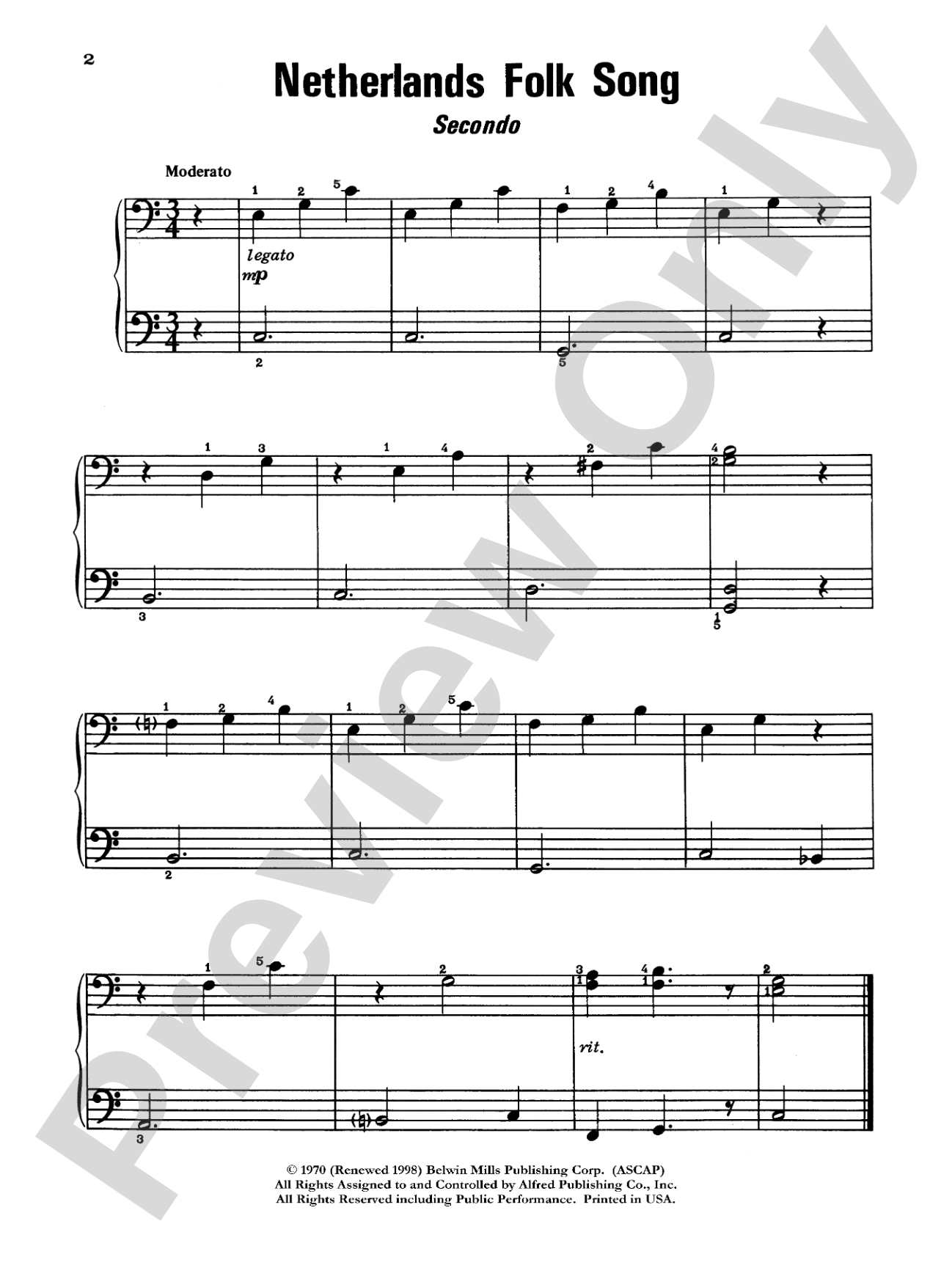
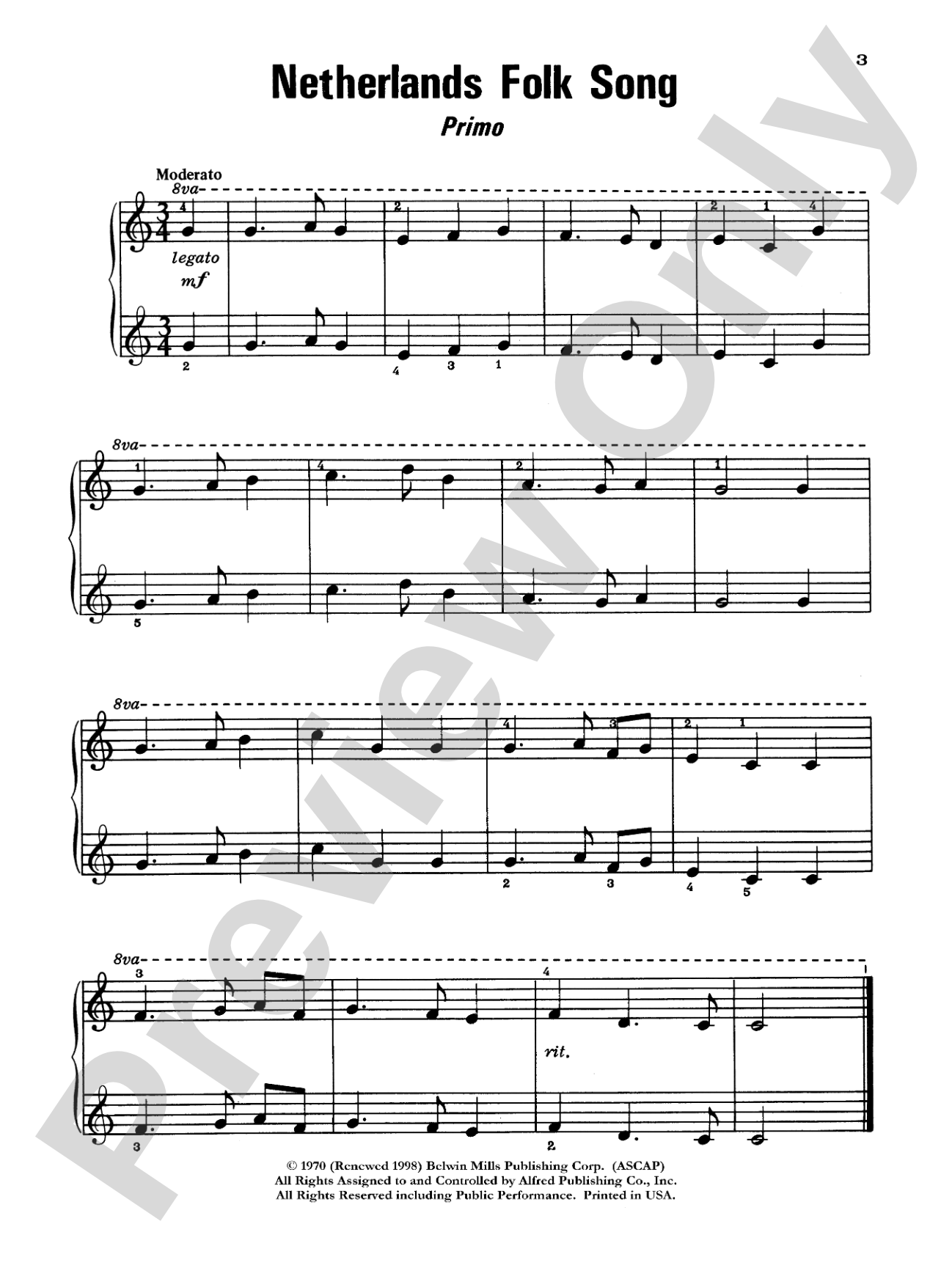
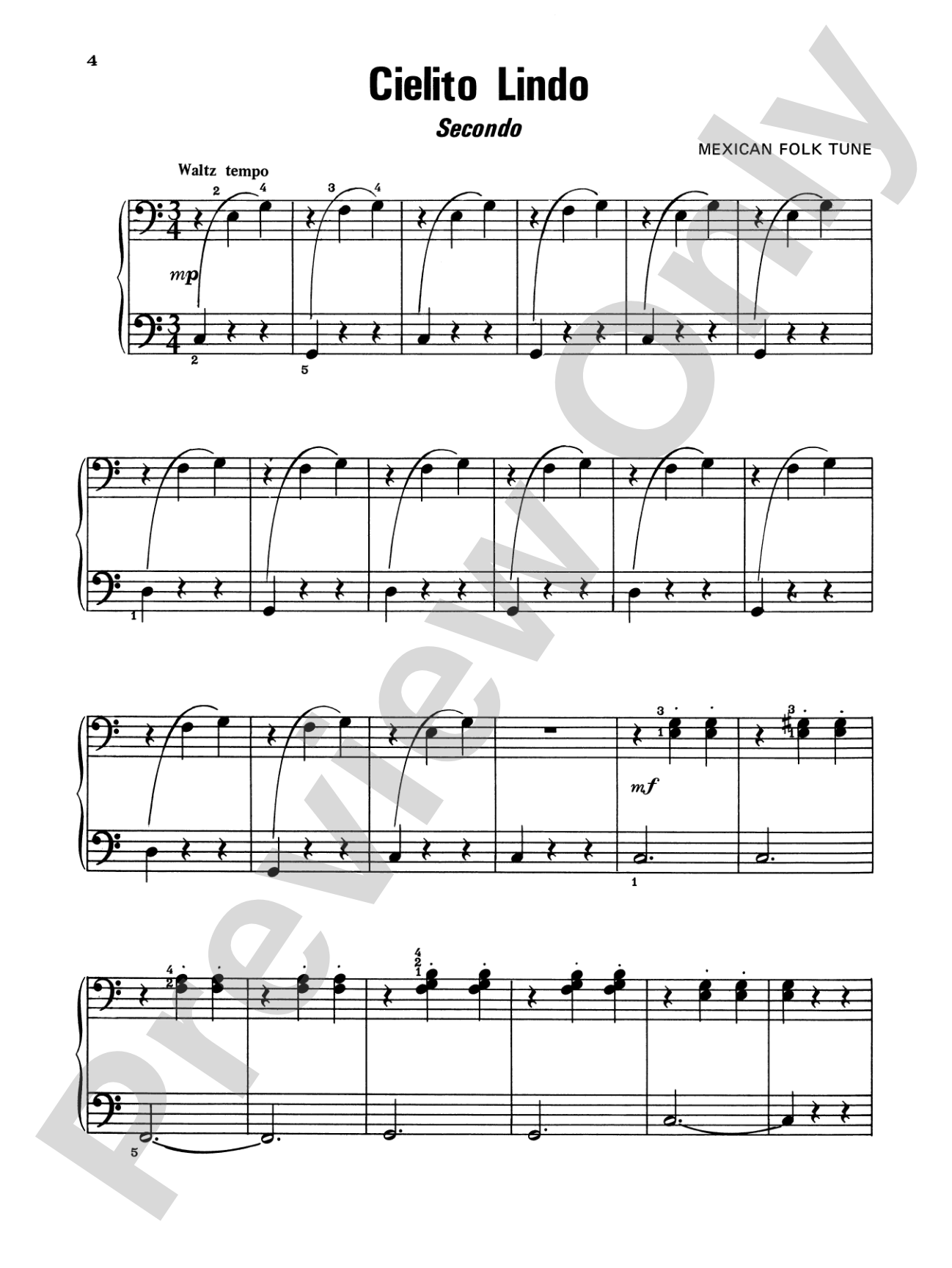
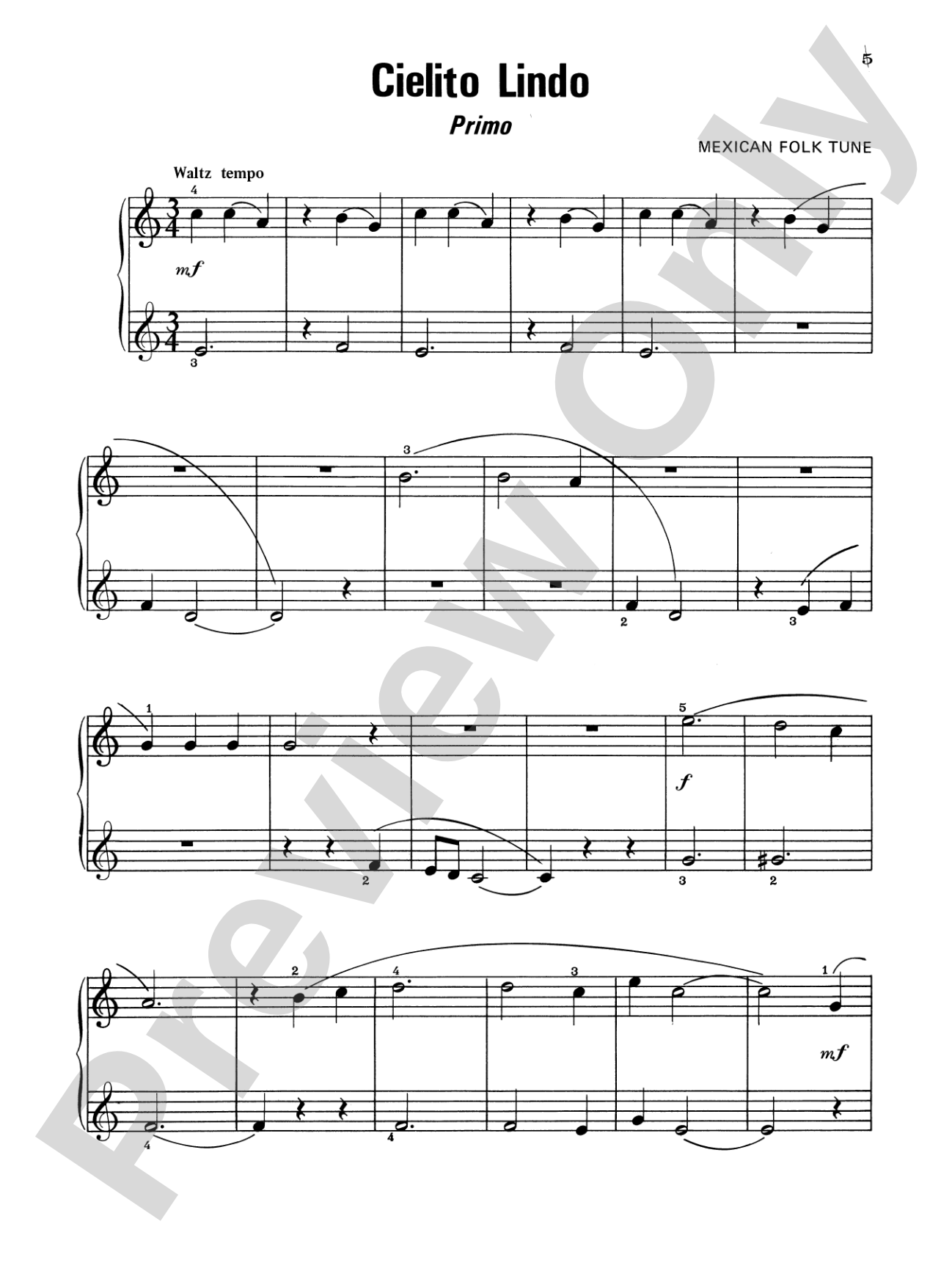
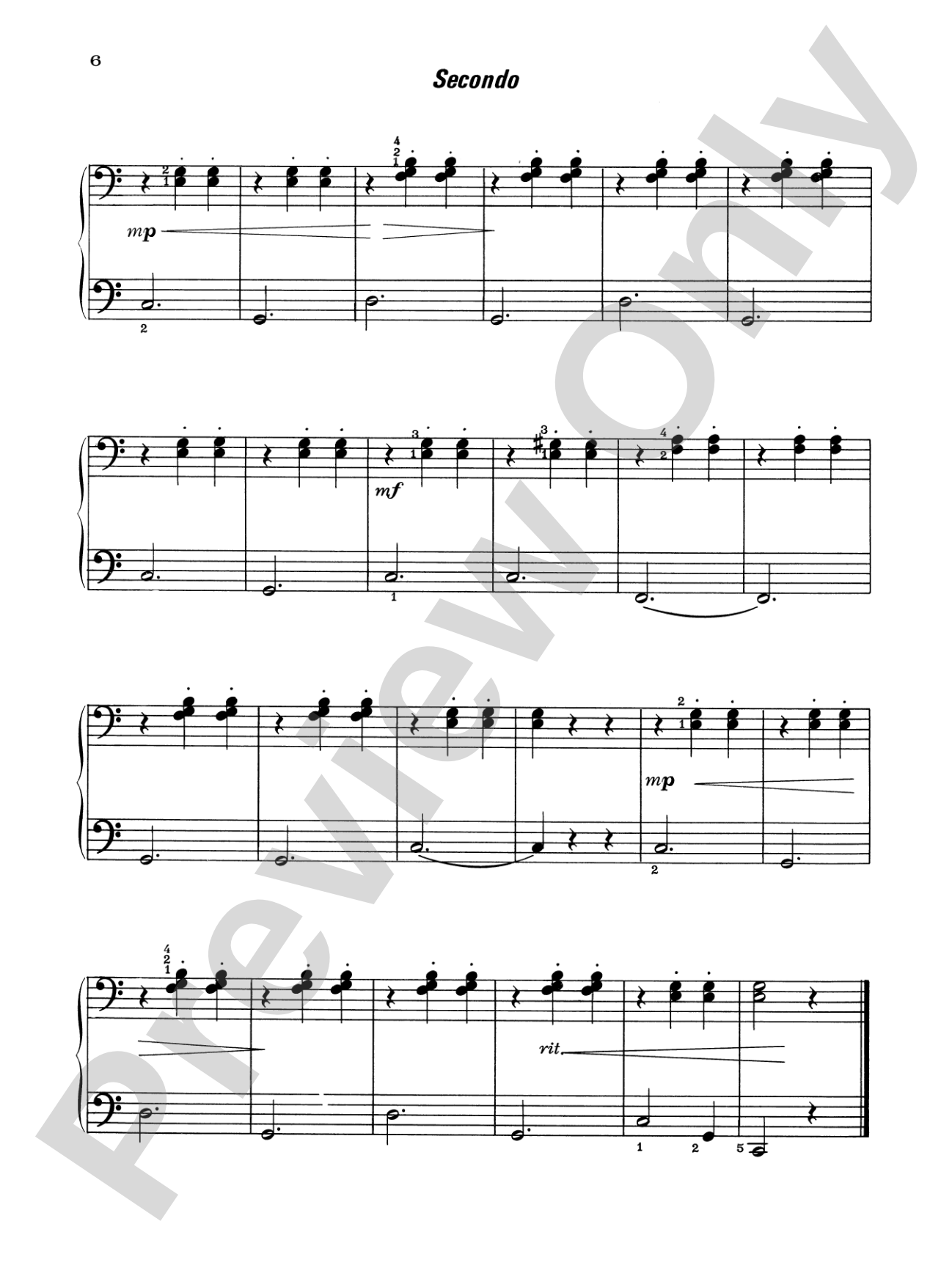
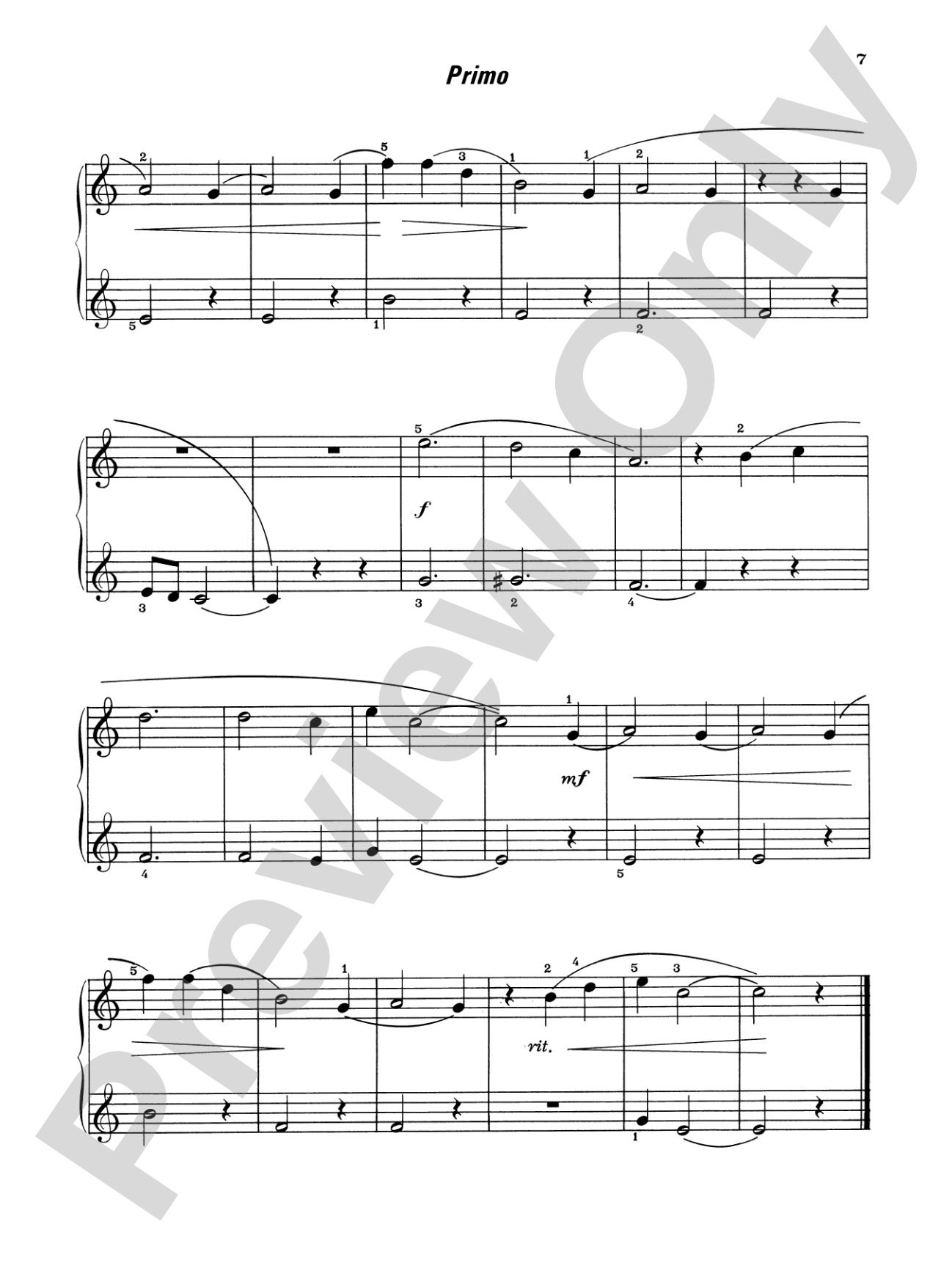
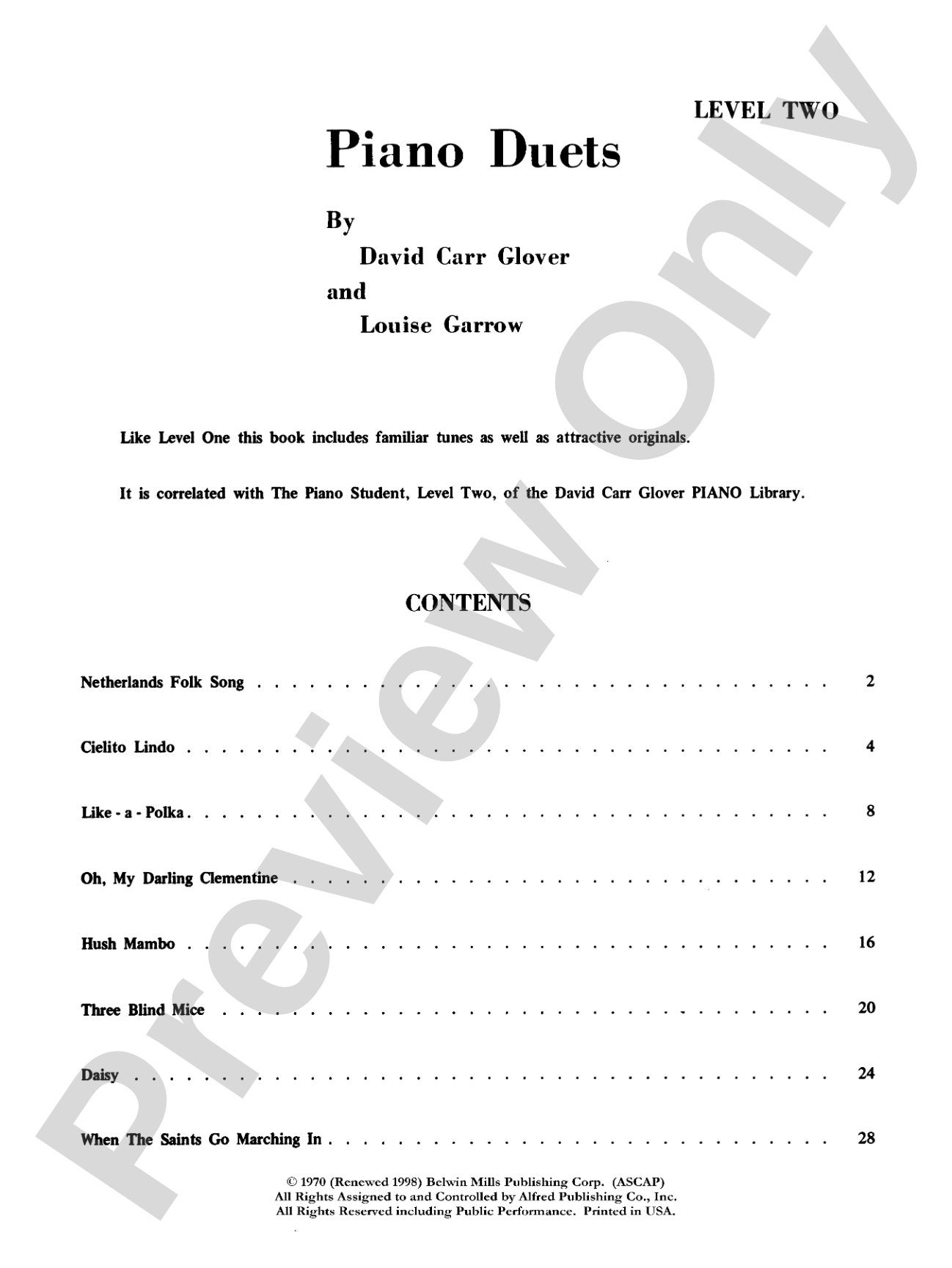
Piano Duets, Level 2 Sheet Music Preview

Piano Duets, Level 2: Piano

By David Carr Glover and Louise Garrow

Item: 00-PB-0001920

Digital Download
$7.95
Description
This book includes familiar tunes as well as attractive originals.

Piano Duets, Level 2: Piano isn't in MakeMusic Cloud just yet...but it could be. Let us know you'd like to see it, and you'll help shape what comes next. In the meantime, start a free trial and dive into thousands of interactive titles your students can play along with today.

Sample Audio
No sample audio found.
Sample Video
Additional Details
Series: David Carr Glover Piano Library
Publisher: Alfred Music
Page Count: 32
SKU: 00-PB-0001920

More about this title

About the Composer: David Carr Glover

David Carr Glover built his reputation on a singular belief: that piano students learn best when repertoire speaks directly to their lives. His teaching method, which became foundational to American piano pedagogy in the mid-20th century, prioritizes musical enjoyment alongside technical progress. Glover understood that young pianists need pieces that sound good immediately, not exercises dressed up as music.

His duet collections emerged from classroom experience. Glover knew that ensemble playing motivates students and deepens their musical awareness in ways solo practice alone cannot achieve. By pairing familiar melodies with original compositions, he created books that keep students engaged while building genuine collaborative skills.

Why we love this

Duet repertoire at Level 2 sits in a tricky spot: students need pieces that sound rewarding without overwhelming their technical capacity. This collection bridges that gap thoughtfully. The mix of recognizable tunes alongside fresh original writing gives students both the satisfaction of playing something they know and the creative stimulus of discovering new material.

What to expect

These pieces carry a lightness and directness that makes playing them a pleasure rather than a chore. The original compositions sit comfortably in the hand and reward clean voicing without demanding virtuosity. Expect music that swings along, feels satisfying to execute, and leaves students wanting to play the pieces again.

Who it's for

Young pianists at the early intermediate stage who need repertoire that doesn't feel fragmentary or overly academic. This works equally well for studio teachers building student confidence and for classroom settings where ensemble experience matters. The familiar tunes appeal across ages; older beginners appreciate recognizable material as much as younger students do.

How to get the most out of it

  • Balance your parts by listening to the overall sound texture rather than trying to play equally loud. The secondo often carries harmonic weight that doesn't need to match the melody's projection.
  • Practice hands separately only if a specific passage demands it. These duets benefit from early ensemble work; play through together even when reading, so both students internalize the piece as a unified whole.
  • Mark breath points and phrase endings together before playing. Duet partners who breathe as a unit stay locked in rhythmically.
  • Record yourselves and listen back. Young pianists rarely hear themselves as others do; a playback reveals balance and tempo issues neither player notices in the moment.

How to use it

Use this collection as your foundation for student recitals, where duets reliably draw applause and ease performance anxiety. A Level 2 duet also works beautifully on a mixed studio concert, giving students their first ensemble platform without overshadowing soloists. Consider rotating through selections across an entire year, assigning new duets as warm-up material in lessons and working them toward performance.

Skills your students will build

  • Listening to and balancing two independent musical lines
  • Maintaining steady tempo while coordinating with a partner
  • Phrase shaping across longer musical phrases
  • Reading two different melodic lines simultaneously
  • Responding to partner's tempo and dynamic choices in real time
  • Building ensemble discipline and attention to detail

You May Also Like