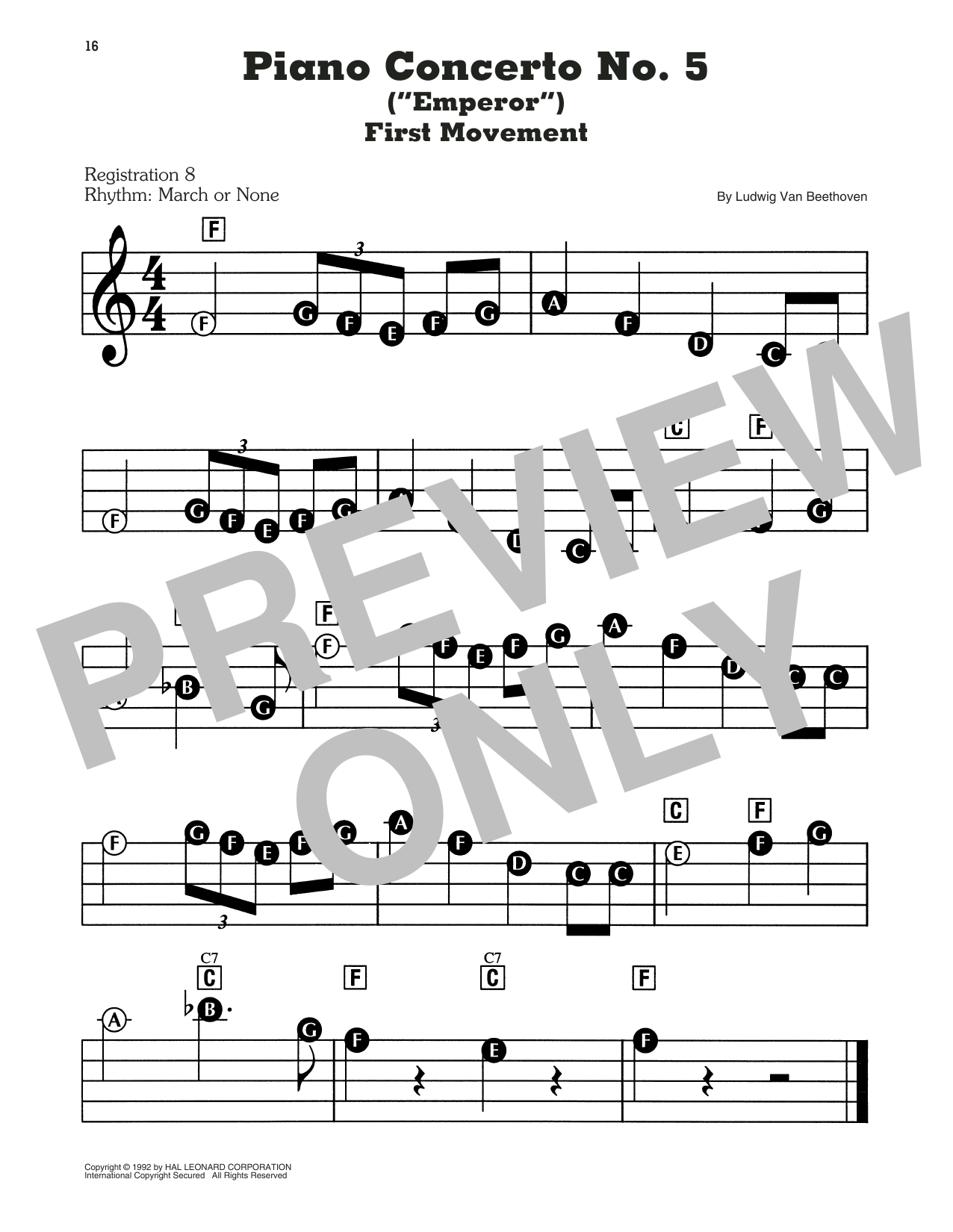
Piano Concerto No. 5 In E-flat Major ("Emperor") Sheet Music Preview

Piano Concerto No. 5 In E-flat Major ("Emperor"): E-Z Play Today

By Ludwig Van Beethoven

Item: 35-DS00603408

Digital Download
$4.99
Description

Piano Concerto No. 5 In E-flat Major ("Emperor"): E-Z Play Today isn't in MakeMusic Cloud just yet...but it could be. Let us know you'd like to see it, and you'll help shape what comes next. In the meantime, start a free trial and dive into thousands of interactive titles your students can play along with today.

Sample Audio
No sample audio found.
Sample Video
Additional Details
Publisher: Hal Leonard
Page Count: 1
SKU: 35-DS00603408

More about this title

About the Composer: Ludwig Van Beethoven

Beethoven stands as the bridge between Classical and Romantic eras, a composer whose deafness paradoxically sharpened his inner ear and deepened his artistic vision. His five piano concertos represent some of the most technically demanding and musically rewarding works in the standard repertoire, each one expanding the dialogue between soloist and orchestra in revolutionary ways.

Why we love this

The Emperor Concerto is one of those rare pieces that students instantly recognize as "important" and want to learn. This E-Z Play arrangement makes the iconic first movement theme accessible to pianists who might otherwise never touch it, preserving Beethoven's grandeur while removing unnecessary technical barriers.

What to expect

Regal and assertive. The opening theme announces itself with unhurried confidence, then unfolds through passages of ornamental brilliance and moments of surprising tenderness. There is weight and purpose in every phrase.

Who it's for

Students who have solid mid-intermediate technique and want exposure to genuine Classical masterworks without the complexity of the full score. This arrangement welcomes pianists into one of music's most celebrated concertos.

How to get the most out of it

  • Shape the opening left-hand accompaniment with dynamic intention; too even a touch flattens the heroic character that defines this work.
  • Let the main theme breathe slightly before the dramatic key shifts; rushing through the transitions loses the architectural weight Beethoven intended.
  • Balance ornamentation carefully in the cadenza-like passages so they enhance rather than obscure the melodic line.

How to use it

Feature this in a recital celebrating "composers who changed everything" or pair it with other Beethoven solo works to show students the arc of his stylistic development. It also works beautifully as a special feature for advanced student soloists during ensemble concerts.

Skills your students will build

  • Shaping long-lined melodies with architectural clarity
  • Executing Classical period ornamentation with rhythmic precision
  • Managing hand independence between lyrical melody and accompaniment patterns
  • Recognizing and performing the formal structure of Classical concerto movements

You May Also Like