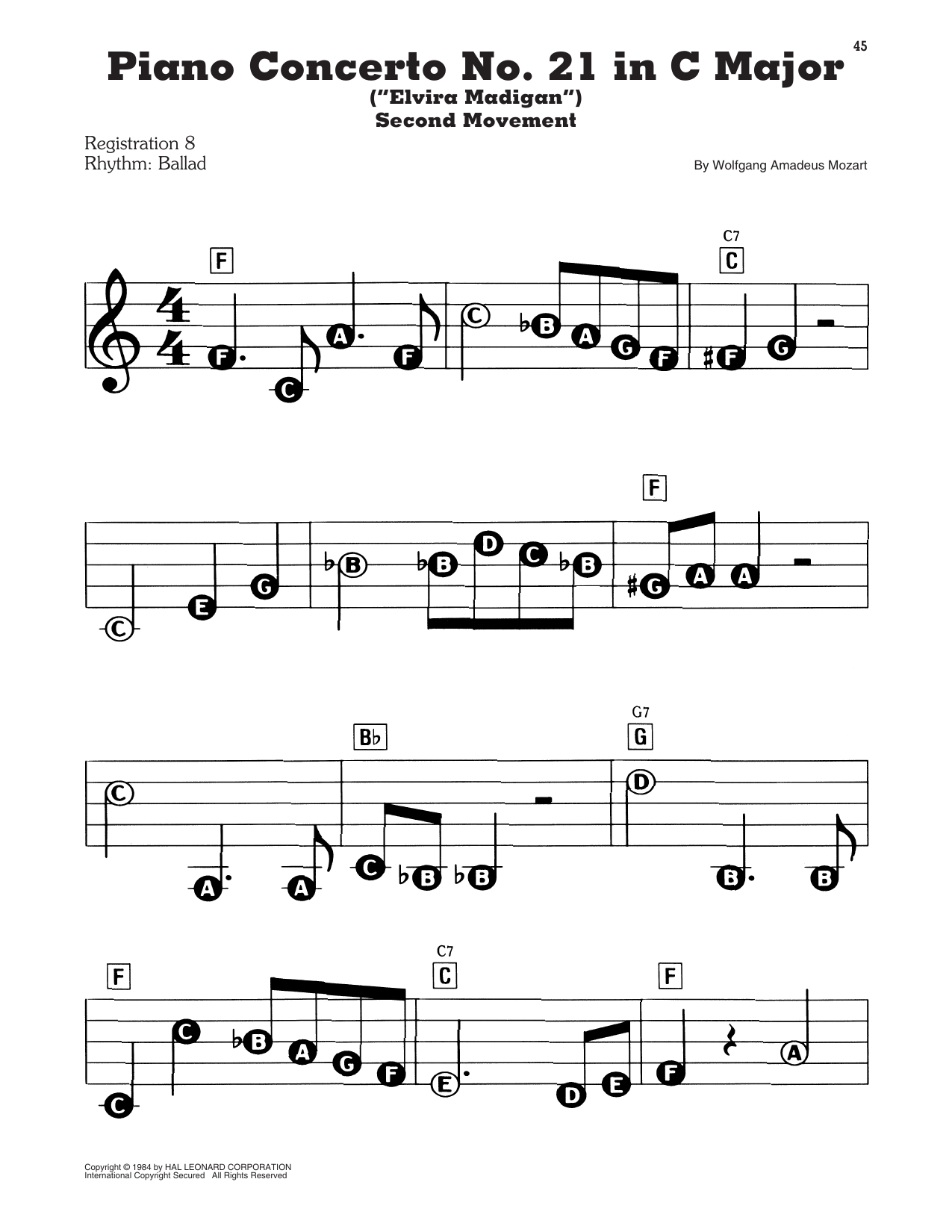
Piano Concerto No. 21 In C Major ("Elvira Madigan"), Second Movement Excerpt Sheet Music Preview

Piano Concerto No. 21 In C Major ("Elvira Madigan"), Second Movement Excerpt: E-Z Play Today

By Wolfgang Amadeus Mozart

Item: 35-DS01879185

Digital Download
$4.99
Description

Piano Concerto No. 21 In C Major ("Elvira Madigan"), Second Movement Excerpt: E-Z Play Today isn't in MakeMusic Cloud just yet...but it could be. Let us know you'd like to see it, and you'll help shape what comes next. In the meantime, start a free trial and dive into thousands of interactive titles your students can play along with today.

Sample Audio
No sample audio found.
Sample Video
Additional Details
Publisher: Hal Leonard
Page Count: 3
SKU: 35-DS01879185

More about this title

About the Composer: Wolfgang Amadeus Mozart

Mozart composed this concerto in 1785 during a remarkably prolific period in Vienna. The second movement became one of his most beloved creations, earning the nickname "Elvira Madigan" after a 1967 Swedish film featured the melody. His ability to write singable, emotionally direct lines shaped the entire Classical tradition that followed.

As an educator, Mozart's output remains invaluable because he never condescended to younger players or amateur musicians. His melodies teach phrasing naturally; his harmonies reveal themselves through careful listening. This excerpt shows why his work endures in studios and concert halls alike.

Why we love this

This excerpt distills one of music's most radiant melodies into an accessible format without sacrificing the harmonic sophistication underneath. Students encounter genuine Mozart here, not a simplified arrangement, which builds confidence and musicianship simultaneously. The three-page scope keeps momentum strong in lessons while offering enough musical substance to stay interesting across multiple practice sessions.

What to expect

Warm, unhurried, and strikingly human. The melody unfolds like someone sharing a cherished memory, with harmonic support that feels inevitable rather than decorative. Quiet contentment fills this movement from start to finish.

Who it's for

Students at the intermediate level seeking an introduction to Mozart's concerto literature, especially those ready to work with Classical phrasing and longer melodic spans. Teachers can use this as a stepping stone toward full concerto study or as a standalone recital piece that genuinely satisfies listeners.

How to get the most out of it

  • Shape the opening phrase with a gentle rise and fall; avoid playing it as a mechanical recitation. Let the lyrical quality emerge from your weight distribution and pedaling choices.
  • Balance accompaniment textures carefully so the melody sings above but the inner voices remain audible. Mozart's orchestration translates directly to the piano part.
  • Observe all dynamic markings as structural guideposts rather than arbitrary instructions. They reveal the harmonic progression and emotional arc.
  • Keep the tempo steady without rushing into sentiment. Classical phrasing depends on rhythmic clarity as much as expressiveness.

How to use it

Feature this as a standalone recital piece that bridges students from shorter etudes into Romantic-era concerti. It also pairs naturally with other Classical excerpts for a themed concert showcasing Mozart's melodic genius across genres. The accessible length makes it suitable for student matinee performances or community engagement events where genuine musical substance matters more than virtuosic display.

Skills your students will build

  • Singing long, sustained phrases over accompanying patterns
  • Reading and executing Classical period style indications
  • Balancing melodic lines with accompaniment textures
  • Pedaling for harmonic resonance without muddying fast passages
  • Maintaining tempo stability while shaping musical ideas

You May Also Like