Pi Tunes: Cello Sheet Music Preview

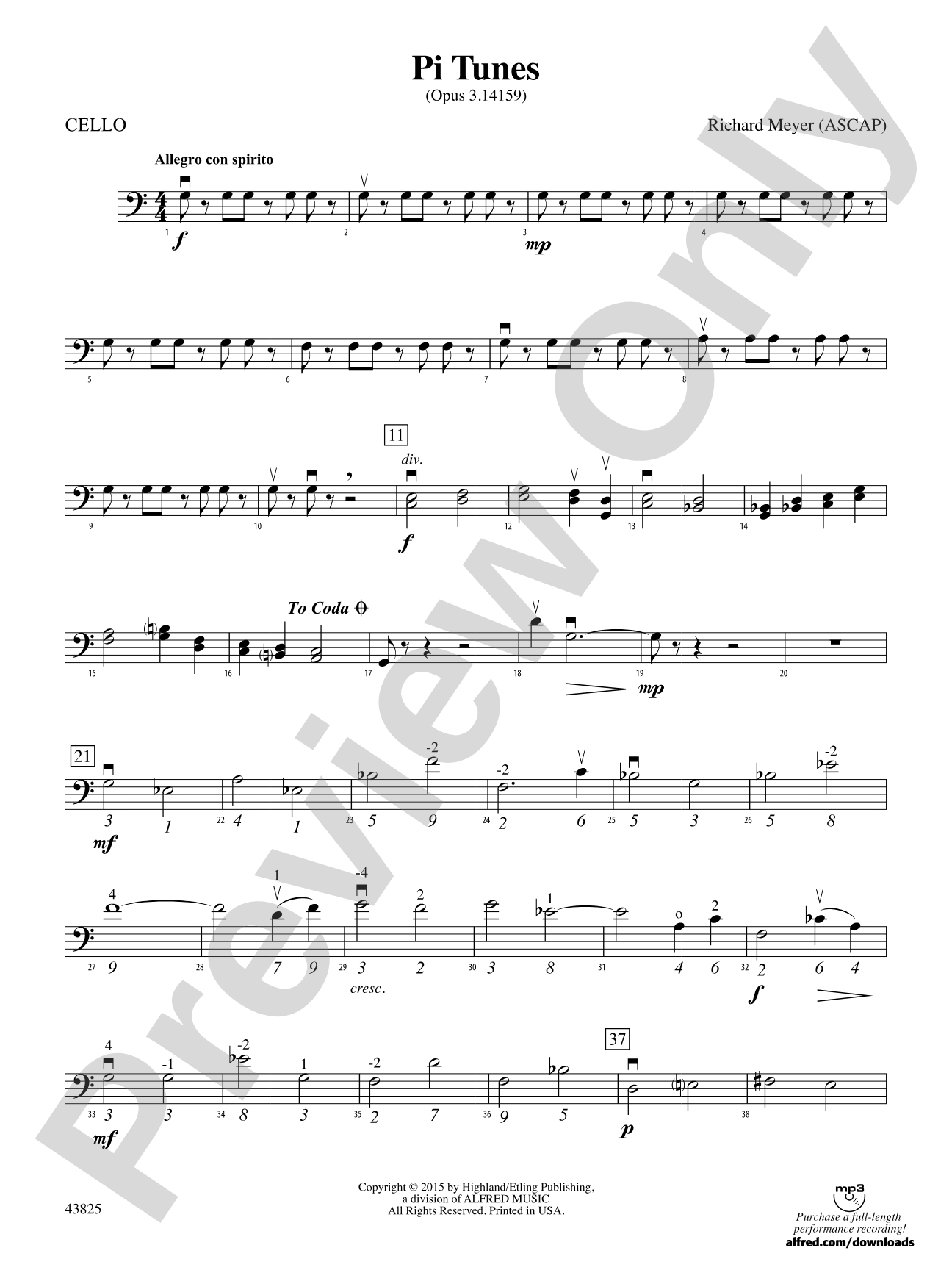
Pi Tunes: Cello

(Opus 3.14159)

By Richard Meyer

Grade: 3

Item: 00-PC-0016921_VC1

Digital Download
$5.99
Description
Try assigning the first 32 digits of Pi to a scale degree to create five melodies that flow together, and you'll have a start to this awesome composition. With a light jazzy feel, driving accompaniments, and features of all sections, here's another creative hit from the master. (4:20)

Don't just read it, hear it, play along with it, and watch your students grow with it. In MakeMusic Cloud, Pi Tunes: Cello comes alive with professional accompaniment, adjustable tempo, and built-in practice tools that turn solo practice into real progress.

Sample Audio
0:00
0:00
Sample Video
Additional Details
Series: Highland/Etling String Orchestra
Publisher: Alfred Music
Page Count: 124
SKU: 00-PC-0016921_VC1

More about this title

About the Composer: Richard Meyer

Richard Meyer

Richard Meyer spent 35 years teaching string students across elementary, middle, and high school levels in California public schools. At Oak Avenue Intermediate School in Temple City, he built the orchestra program from 29 students to 200 over 22 years and directed the city's elementary string initiative. He led the Pasadena Youth Symphony Orchestra for 16 years, taking them to performances in New York, Washington D.C., Vienna, Australia, and Canada.

Beyond the classroom, Meyer has established himself as a nationally recognized composer with over 190 works and arrangements published. In 2009, he created the "Giving Bach" program at his school, an innovative initiative using interactive concerts to reach special needs and underserved student populations throughout Southern California. He has served as a clinician at major conferences including the A.S.T.A. National Conference and guest-conducted All-State orchestras in multiple states. Meyer also spent 16 years as string editor for Alfred Publishing Company and co-authored the String Explorer Series and Sight-read It for Strings.

Why we love this

Meyer's ability to make a mathematical concept into genuinely enjoyable music makes this piece a standout for Grade 3 orchestras seeking something with real personality. The driving accompaniments and light jazz feel keep the writing fresh and engaging while remaining accessible, and the structural novelty of mapping Pi's digits to scale degrees gives students something concrete to connect to beyond typical repertoire.

What to expect

Clever and playful, Pi Tunes brings energy without heaviness. The light jazz sensibility gives it a modern feel, while the five interlocking melodies create a sense of discovery as students realize how a mathematical sequence becomes something musical and flowing.

Who it's for

Grade 3 string orchestras that are ready for something beyond standard folk song arrangements but still need accessible writing. Directors looking for a concert or festival piece with immediate appeal and a clever concept that engages students in the creative thinking behind the music will find this a rewarding choice.

How to get the most out of it

  • Balance the melodic line against the driving accompaniment by ensuring the lead voice sits cleanly above the rhythmic energy without the accompaniment players rushing.
  • Maintain the light jazzy feel by letting the accompaniment sections breathe with a relaxed pulse; avoid making the rhythm section mechanical or overly strict.
  • Give each section featured moments their own character so the transitions between the five melodies feel natural and connected rather than disjointed.

How to use it

This works beautifully as a concert opener or closer for a program focused on contemporary or creative string writing. The 4:20 length and strong finish make it ideal for youth orchestra showcases or festival competitions where you want to leave an impression with something memorable and well-crafted.

Skills your students will build

  • Reading and executing jazzy rhythmic accompaniment patterns
  • Tracking melodic lines through sectional transitions
  • Balancing solo material against ensemble texture
  • Understanding programmatic composition and thematic connections

You May Also Like