Phantom Ship: Tuba Sheet Music Preview

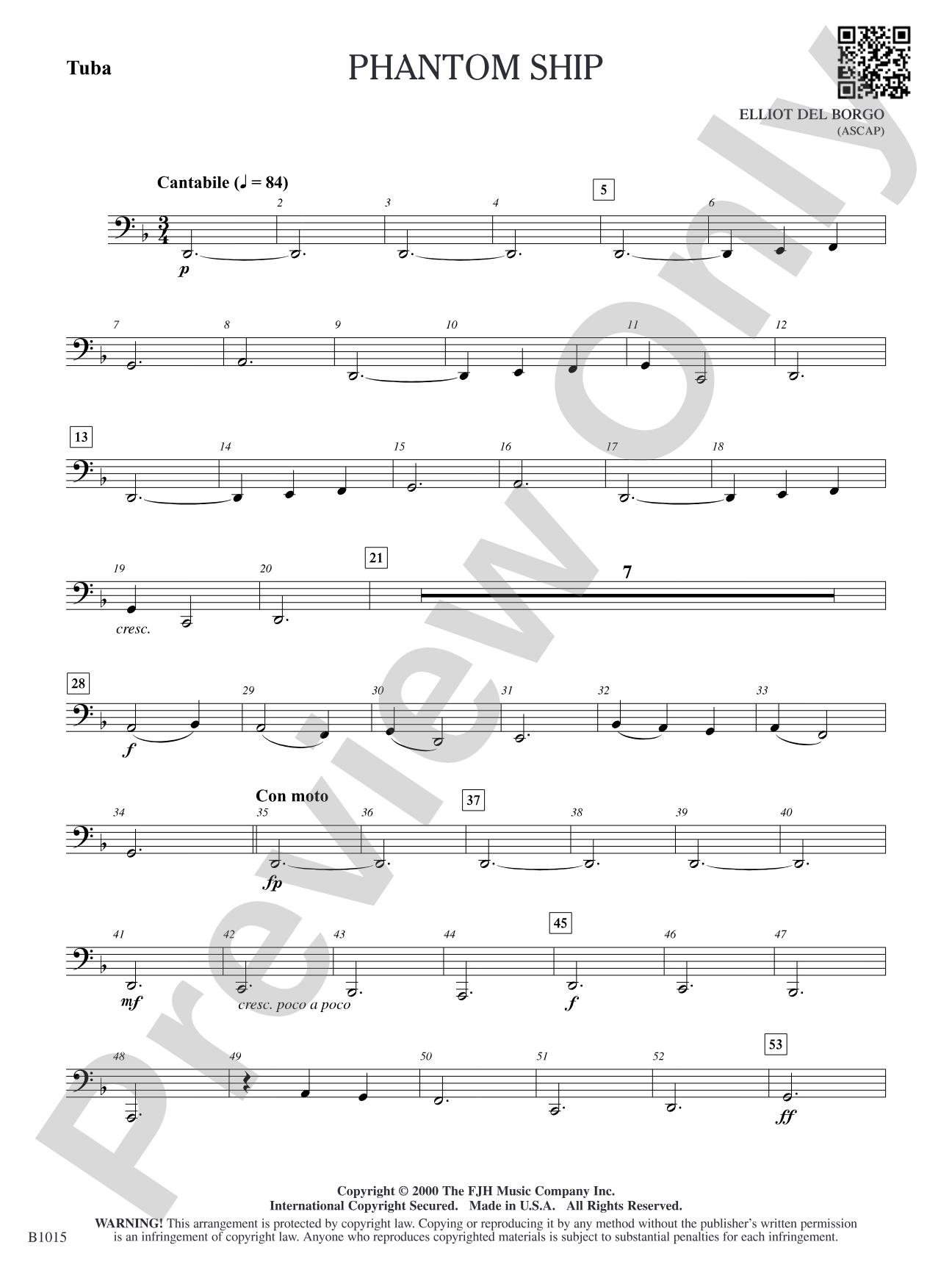
Phantom Ship: Tuba

By Elliot Del Borgo

Grade: 2

Item: 98-PC-DB1015_TB1

Digital Download
$7.00
Description
Written in a D minor/modal tonality, this work quickly moves from a singing style of 84 beats per minute, to a moving 138. The meter is 3/4 throughout with all the instrumental ranges very modest. (3:00)

Don't just read it, hear it, play along with it, and watch your students grow with it. In MakeMusic Cloud, Phantom Ship: Tuba comes alive with professional accompaniment, adjustable tempo, and built-in practice tools that turn solo practice into real progress.

Sample Audio
0:00
0:00
Sample Video
Additional Details
Series: FJH Young Band
Publisher: The FJH Music Company, Inc.
SKU: 98-PC-DB1015_TB1

More about this title

About the Composer: Elliot Del Borgo

Elliot Del Borgo has spent decades writing music that speaks directly to young musicians. His catalog is built on a deep understanding of what works in the rehearsal room: clear textures, grateful ranges, and compositional integrity that never talks down to the ensemble.

Why we love this

Del Borgo nails the Grade 2 sweet spot here by building genuine atmosphere without asking impossible things of your players. The modal writing in D minor creates that eerie character the piece needs, and the tempo shift from 84 to 138 gives you natural dramatic arc without feeling forced or gimmicky.

What to expect

A ship emerging from fog into shadow. The opening floats with a singer's legato pulse, reflective and deliberate. When the tempo doubles, that same melody cuts through with urgency and forward momentum, transforming contemplation into motion.

Who it's for

Grade 2 concert bands looking for a concert or festival piece with personality. This works equally well for Halloween programming or as part of a standard concert sequence.

How to get the most out of it

  • Balance the singing quality at 84 bpm before adding any articulation. Let the melody breathe and keep the accompaniment transparent underneath.
  • Mark the tempo transition clearly in your score and rehearse the gear shift separately. The move to 138 should feel inevitable, not abrupt.
  • Watch the modal tonality closely in your woodwind section. Intonation can drift in D minor harmony if players aren't anchored to a clear tonal center.
  • Use the three-minute duration as your frame for pacing. The piece builds naturally, so resist the urge to push the tempo earlier than marked.

How to use it

Program this as your centerpiece for a Halloween concert, or tuck it into the middle section of a spring festival program where you need something with color and maturity. At three minutes, it fits neatly between larger works and gives your ensemble a chance to show off control at contrasting tempos.

Skills your students will build

  • Playing sustained melodic lines at moderate tempo with consistent tone quality
  • Managing a significant tempo change while maintaining ensemble cohesion
  • Reading and intonating modal harmony in D minor
  • Balancing accompaniment textures beneath a featured melody
  • Executing dynamic contrast across two distinct sections

You May Also Like