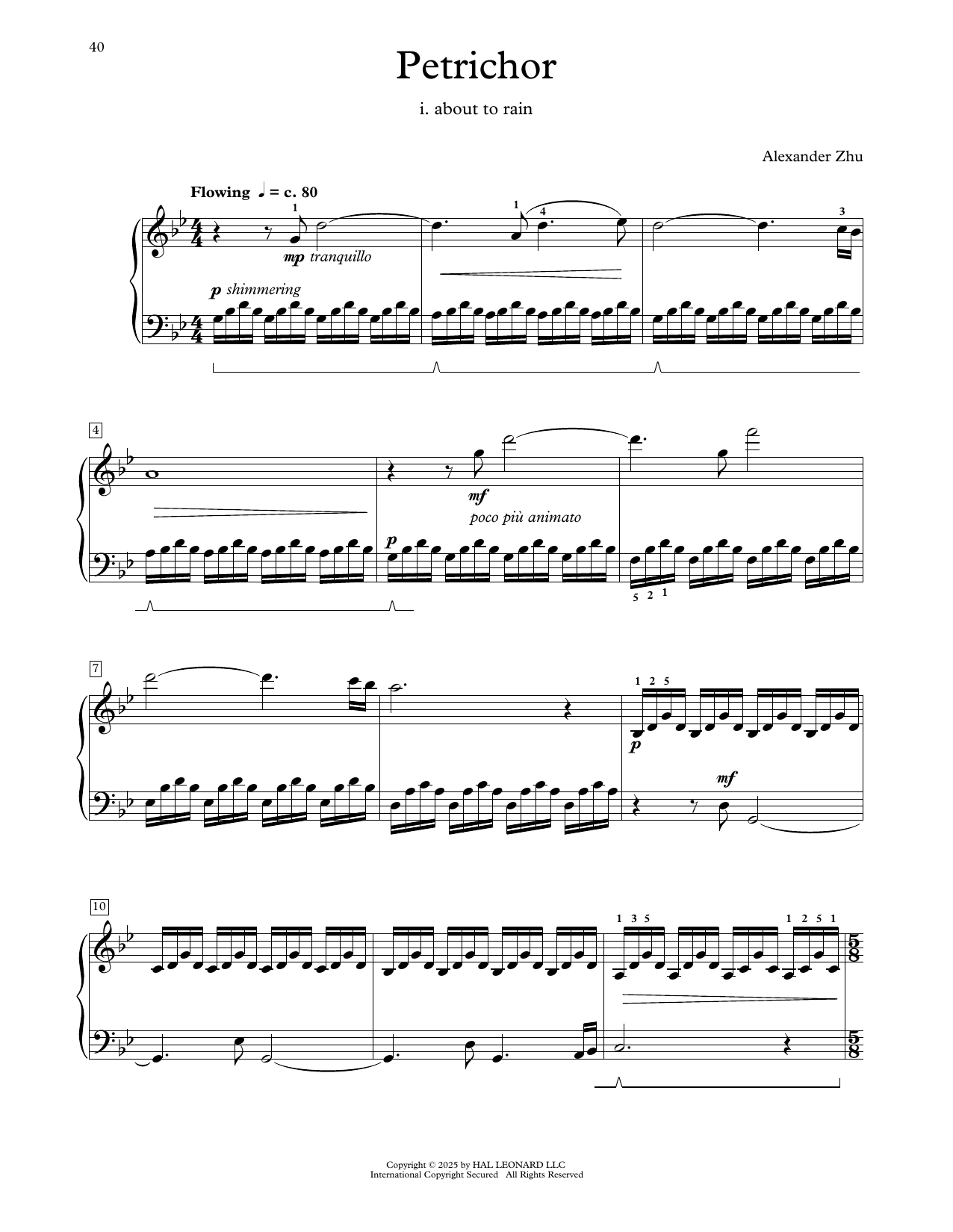
Petrichor captures that rare moment when a piece communicates something genuine without requiring virtuosic display. The ten pages unfold with architectural clarity, giving students space to develop musicianship rather than just technique. It sits comfortably in the educational repertoire where the writing serves the learning, not the other way around.
What to expect
Petrichor evokes quiet contemplation and natural imagery. The piece balances delicate textures with moments of genuine depth, creating an atmosphere that feels both reflective and grounded. It rewards patient listening and thoughtful interpretation.
Who it's for
Intermediate pianists looking for contemporary classical repertoire that engages intellectually without demanding show-off technique. This works well for students ready to move beyond early intermediate collections but still building the stamina and independence needed for standard concert repertoire.
How to get the most out of it
Pay attention to the sensory arc of the piece. Petrichor is named for the scent of rain on dry earth, so listen for moments where texture shifts from sparse to saturated and back again.
Work the pedal intentionally rather than automatically. Clarity matters as much as resonance in pieces this intimate.
Take time with the phrasing before worrying about tempo. Let the harmonic movement guide where breath happens.
How to use it
This fits naturally into recitals featuring contemporary works or thematic concerts exploring nature in music. A solo performance from a developing pianist creates impact without overshadowing colleagues, and the modest technical demands mean ensemble recitals remain balanced and cohesive.
Skills your students will build
Interpretive decision-making within a contemporary harmonic language
Pedal control and textural awareness
Sustaining musical focus across extended quieter passages
Understanding structure and phrasing without traditional tonal scaffolding
You May Also Like
Scan to Complete Your Purchase
Use your phone's camera to scan the code below
You'll log in on your phone and the order will be added to your account