

Petrichor: SATB Choral Octavo
Words and music by Christopher Alexander
Item: 00-PO-0007531
$2.40
Minimum order quantity: 20 copies
Pickup currently not available
Description
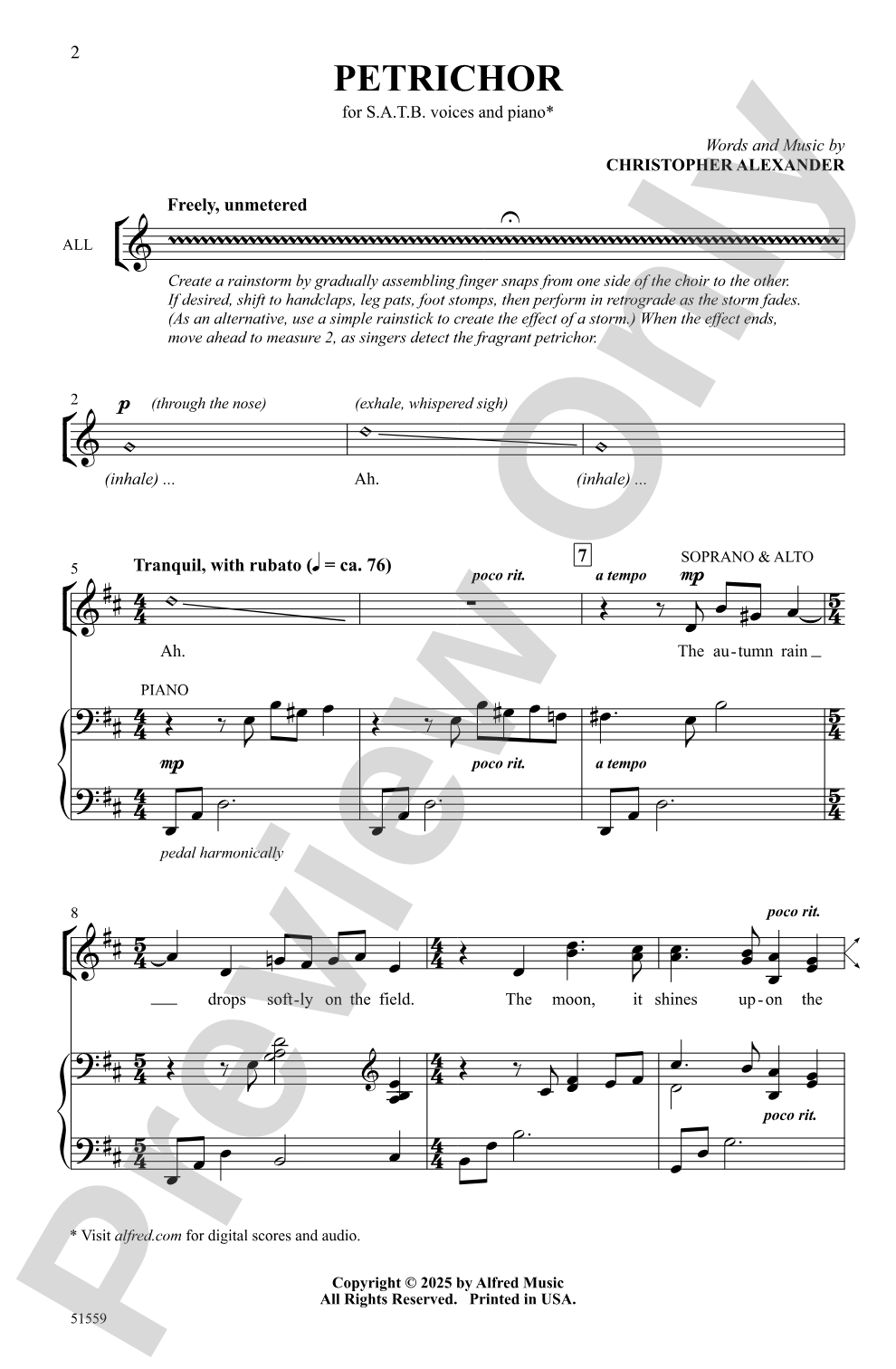
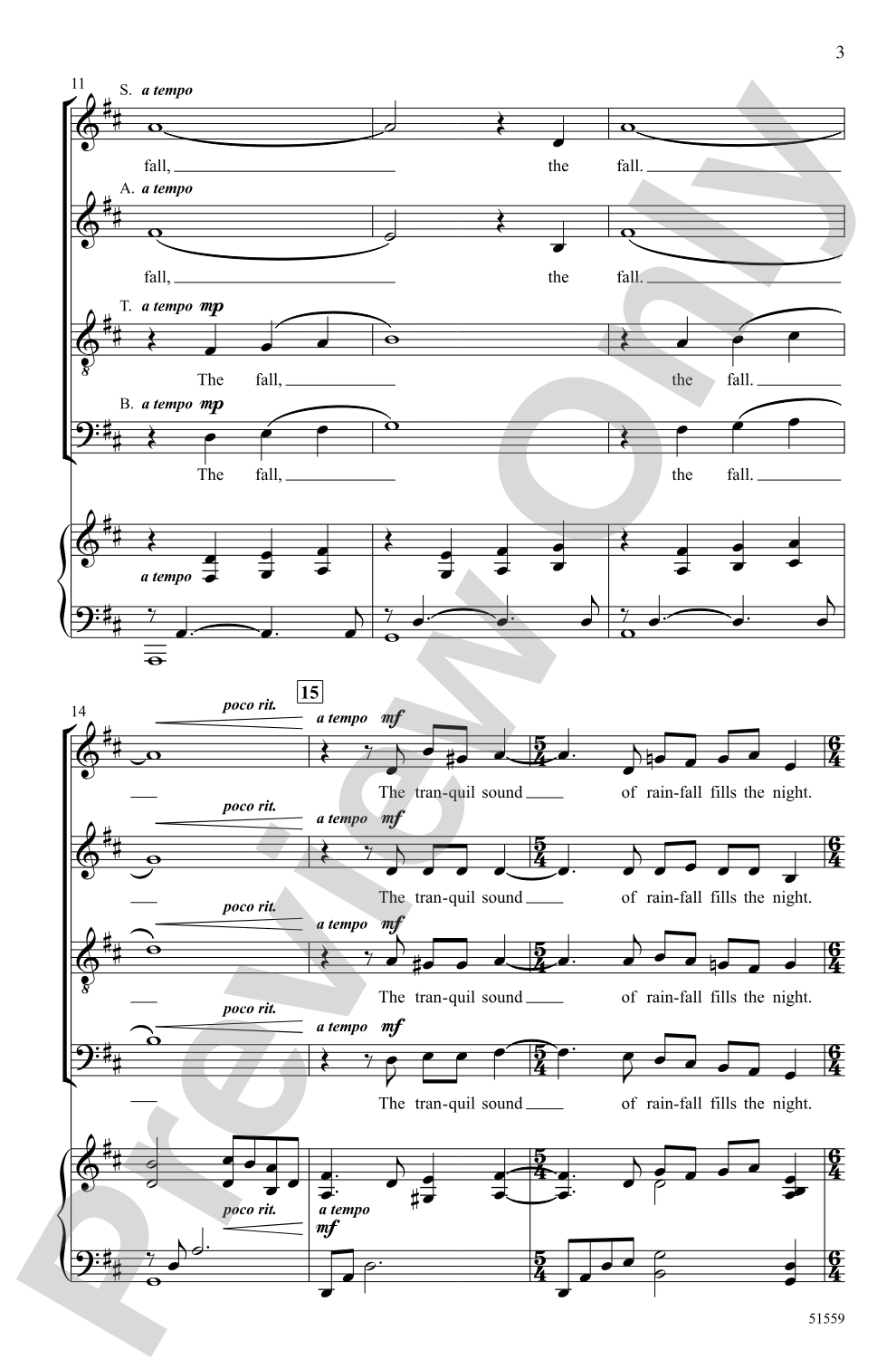
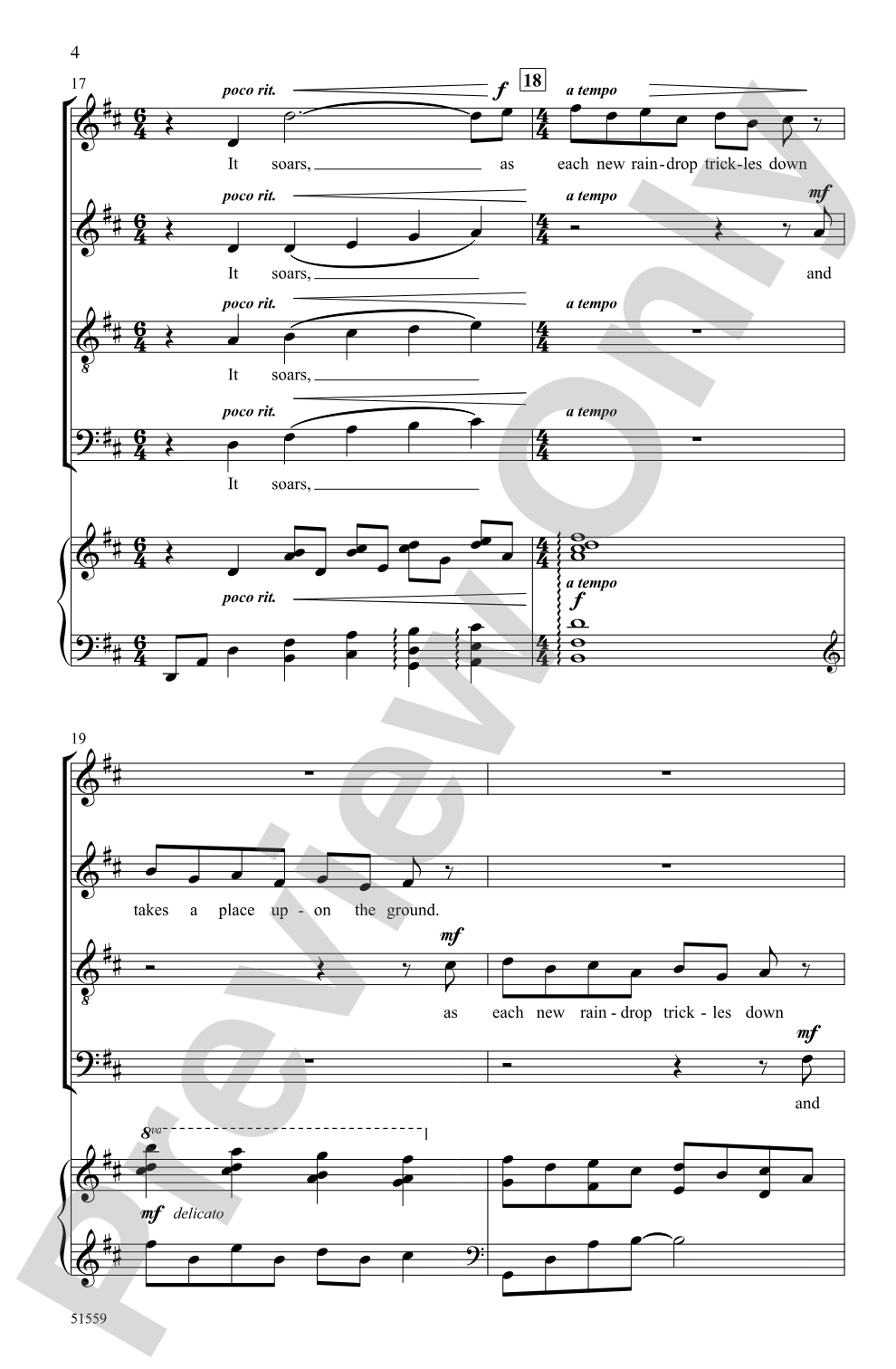
The pleasant, distinct smell of rainfall inspires this one-of-a-kind concert selection. Singers create an unaccompanied soundscape before the music begins---we hear a passing rainstorm followed by the sound of singers partaking in the aroma of petrichor. The piano then begins and introduces a tranquil, dream-like melody. Cascading entrances create a trickling effect, and layered voices imply a 360-degree sensory experience. Unique and unforgettable.


Discover MakeMusic Cloud: thousands of interactive titles your students can play along with today.
Sample Audio
1
Audio File
--:--
0:00
0:00
Sample Video
Additional Details
Series:
Lawson-Gould
Publisher:
Alfred Music
Page Count:
12
SKU:
00-PO-0007531
More about this title
About the Composer: Christopher Alexander
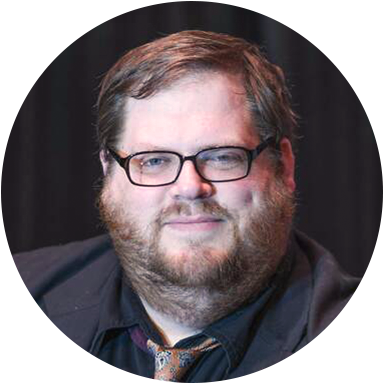
Christopher Alexander is a composer and arranger born in 1986 in St. Joseph, Missouri. He holds a Bachelor of Science in Vocal Music Education from Missouri Western State University and is a self-taught pianist whose output spans instrumental, vocal solo, and choral works. His compositions have been published by Alfred Music, GIA Music Publications, Hal Leonard, and Excelcia Music Publishing, and he has received multiple commissions from singing groups and church choirs throughout northwest Missouri and northeast Kansas.
Alexander serves as pianist and primary arranger for The New Generation Singers, a Christian youth ensemble based in St. Joseph, and remains active as a music director and accompanist in musical theatre. He holds membership in NAfME, ACDA, MCDA, and Phi Mu Alpha Sinfonia Fraternity. His work is available at cantareworks.com.
Why we love this
Petrichor stands apart from typical concert pieces because it treats sensory imagery as a structural tool rather than mere text painting. The unaccompanied opening and cascading entrances create genuine acoustic drama, while the cascading voice parts and 360-degree spatial layering engage singers in something genuinely collaborative and immersive. Directors will find a piece that challenges singers to listen across the ensemble while rewarding audiences with something genuinely fresh.
What to expect
Petrichor draws listeners into an intimate, almost meditative space. The opening unaccompanied moment creates anticipation before the piano emerges with a tranquil, almost dream-like melody. As voices cascade and layer, the piece envelops the listener in a 360-degree sonic experience that mimics the sensory richness of rain and its aftermath.
Who it's for
SATB choirs seeking a distinctive concert piece that rewards both singers and listeners. This work suits advanced high school ensembles and college choirs comfortable with unaccompanied singing and sensitive ensemble listening. It fits equally well in recital and festival settings where novelty and musicality matter.
How to get the most out of it
- Shape the unaccompanied opening with intention; singers should hear themselves as sound designers, not just voice players. Rehearse this section repeatedly so entries feel like natural phenomena rather than rehearsed cues.
- Emphasize the cascading entrances during the piano's introduction. Each voice part trickling in should create a sense of inevitability, as though the singers are responding to the piano's melody rather than entering on count.
- Balance the layered voice parts carefully in the dream-like sections. No single line should dominate; instead, voices should blend into a unified sonority that feels atmospheric rather than chordal.
- Work with your recorded accompaniment early and often so singers can hear how their unaccompanied sections sit against the full texture. This helps them understand their role in the larger sensory landscape.
How to use it
Program Petrichor as a concert centerpiece in a mixed program, where it can stand alone and command full attention. Its distinctive sound and modest page count (12 pages) make it an excellent choice for festival competitions where memorable programming sets ensembles apart. It also works beautifully as a closing piece, leaving audiences with a peaceful, contemplative final impression.
Skills your students will build
- Unaccompanied ensemble singing and independent pitch maintenance
- Listening to and blending with multiple voice parts simultaneously
- Shaping melodic and harmonic gestures in dream-like tempos
- Executing cascading entrances with rhythmic precision and musical intent
- Creating unified tone color across layered SATB textures