Petite Valse Cover Image

Petite Valse: String Orchestra Conductor Score & Parts

$45.00 USD
Sale price  $45.00 USD Regular price 
Skip to product information
Petite Valse Cover Image

Petite Valse: String Orchestra Conductor Score & Parts

By Loreta Fin

Grade: 1

Item: 76-30186

Need it now?

Buy Digital Version
$45.00
Shipped

One moment…

Description
A gentle, pretty waltz in D Major which would captivate students and audiences alike. There are interesting melodic parts for all. The piano is needed for the arrangement.

Petite Valse: String Orchestra Conductor Score & Parts isn't in MakeMusic Cloud just yet...but it could be. Let us know you'd like to see it, and you'll help shape what comes next. In the meantime, start a free trial and dive into thousands of interactive titles your students can play along with today.

Sample Pages

Sample Audio
No sample audio found.
Sample Video
Additional Details
Series: Wilfin String Orchestra: Young String Ensemble Series
Publisher: Wilfin Music
Page Count: 68
UPC: 038081327396
SKU: 76-30186

More about this title

About the Composer: Loreta Fin
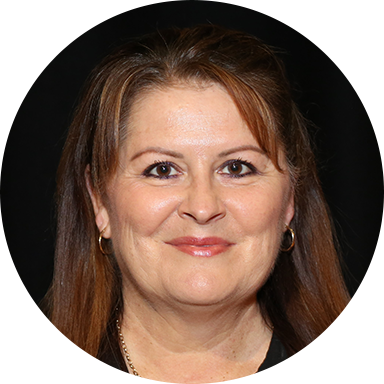
Loreta Fin

Loreta Fin brings four decades of string performance and teaching expertise to her compositions. A violinist trained at the Sydney Conservatorium of Music, she performed as concertmaster of the Sydney Youth Orchestra and has maintained an active chamber music career while serving as Principal Viola player with the Queensland Pops Orchestra. Her deep roots in Australian music education run equally deep: she has directed strings at Somerville House School in Brisbane since 1993, adjudicated at major national competitions, and served as both State and National President of the Australian Strings Association.

Fin's credential as a composer rests on over 100 published works for string orchestra, with her writing shaped by direct classroom experience and a passion for accessible, engaging repertoire. She has presented at the Australian National Music Conferences and two American National String Teachers' Conferences, examined for the Australian Music Examinations Board, and conducted the State and National Honours Ensembles Programs since 2015. In recognition of her sustained contributions to string education, she received the National Award for Services to Music and String Teaching in Australia.

Why we love this

Fin has written a waltz that respects the early orchestral experience without condescending to it. Every voice gets something melodically interesting to play, which keeps younger students engaged and invested in the ensemble sound. The D Major tonality sits comfortably for string players while the gentle, lyrical character makes this a natural choice for both festival competitions and community concerts where you need music that lands with audiences.

What to expect

Petite Valse captures the elegance of ballroom dance music scaled perfectly for young ears and hands. The D Major warmth and flowing melodic line create an atmosphere both lyrical and graceful, inviting the ensemble into the satisfaction of playing something that sounds complete and genuinely musical.

Who it's for

Beginning and early-intermediate string orchestras ready for their first waltz with full ensemble texture. This score also suits groups preparing for festival or competition play where you need music that sounds refined without demanding advanced technique from young musicians.

How to get the most out of it

  • Balance the melody through your first violin line while allowing the accompanying viola and cello voices to ring through. These inner parts carry harmonic weight in a Grade 1 piece, so resist the urge to pull back on them.
  • Establish the waltz pulse clearly in rehearsal using full count-offs in three. Many young orchestras rush the second and third beats of a waltz measure; anchor your tempo in the downbeat and let the dancers (real or imagined) feel the shape.
  • Work with your pianist on dynamic responsiveness. The piano provides harmonic foundation but also helps shape phrasing. Conduct clearly through phrase endings so the accompanist can breathe with you.
  • Shape each phrase toward its arrival point rather than playing note to note. Even at Grade 1, teaching students to hear and play toward musical goals builds ensemble musicianship that carries into more complex repertoire.

How to use it

Open a concert program with this piece to establish warmth and set an approachable tone, or program it as a palate-cleansing waltz between heavier contemporary works. It also serves beautifully in a spring recital or festival context where you want to showcase the ensemble's progress and melodic poise rather than technical fireworks.

Skills your students will build

  • Playing sustained melodic lines with shape and direction in D Major
  • Ensemble balance across four-part string texture (violin, viola, cello, bass)
  • Maintaining steady waltz pulse across three-beat meter
  • Following piano accompaniment while maintaining independence as an ensemble
  • Shaping phrases toward harmonic resolutions

You May Also Like