
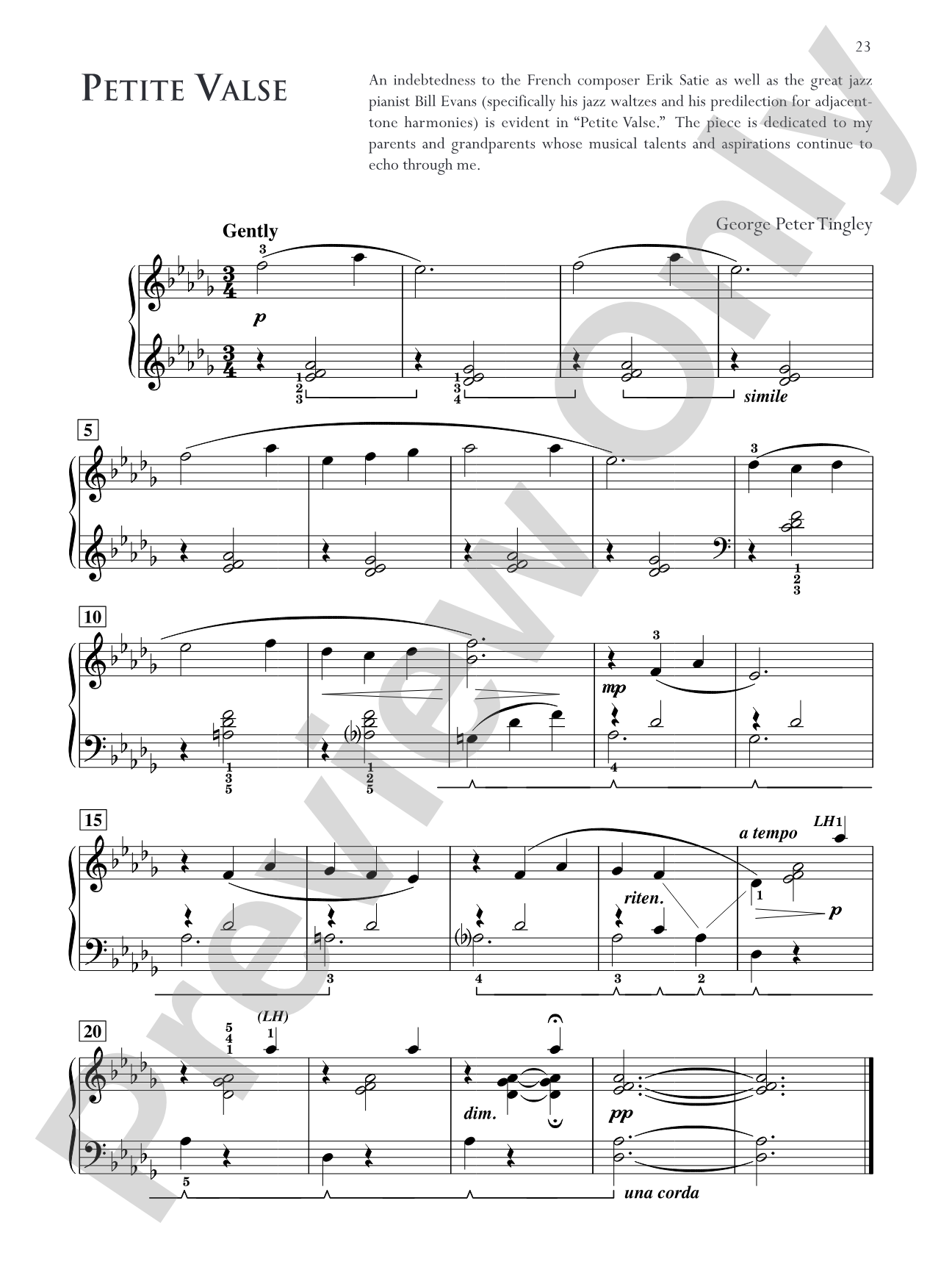

Petite Valse: Piano
7 Intermediate to Late Intermediate Piano Solos That Reflect and Celebrate Styles of Past Masters
By George Peter Tingley
Level: Intermediate / Late Intermediate
Item: 00-PS-0016693
$4.99
Pickup currently not available
Description
Reflect and celebrate the styles of past masters with these pieces ranging from early to late intermediate in level. One might hear echoes of such composers as Beethoven, Tchaikovsky and sounds suggestive of European folk music. Program notes are included explaining the construction of the solos and specific influences.


Petite Valse: Piano isn't in MakeMusic Cloud just yet...but it could be. Let us know you'd like to see it, and you'll help shape what comes next. In the meantime, start a free trial and dive into thousands of interactive titles your students can play along with today.
Request This Title
Tell us you want it.
Start Your Free Trial
Explore everything that's ready to play right now.
Sample Audio
No sample audio found.
Sample Video
No sample videos found.
Additional Details
Publisher:
Alfred Music
Page Count:
24
SKU:
00-PS-0016693
More about this title
About the Composer: George Peter Tingley
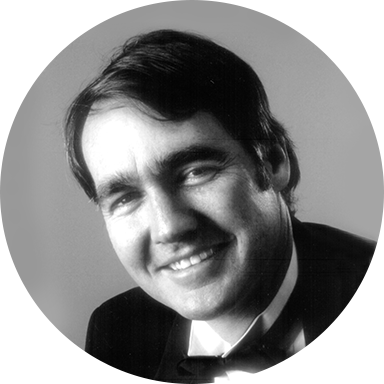
George Peter Tingley began musical life as a young violinist in Oakland, California, but discovered his true voice at the piano. His formal training spans performance and theory degrees from California State University, Hayward and the University of Southern California, followed by study with Nadia Boulanger in Paris during the 1970s. Since returning to California, he has built a prolific career as a private teacher and composer, publishing over 75 educational piano pieces.
Tingley's ear was shaped as much by listening as by formal instruction. During his teenage years, he spent countless hours playing along with Beatles recordings, developing an intuitive sense of arrangement and style that infuses his compositional voice. His works have reached beyond the studio into popular culture; his composition for Olympic figure skater Kristi Yamaguchi became a staple of her competitive and televised performances. Today he lives in Point Richmond, California, where he continues teaching and composing.
Why we love this
Tingley's ability to channel the spirit of historical masters without pastiche makes this collection genuinely rewarding to teach. The program notes elevate the learning experience by revealing compositional decisions and influences, turning performance into a study of how style works. Students at the intermediate level rarely encounter music this intelligent about its own construction.
What to expect
These pieces breathe with the elegance of the waltz form while drawing warmth from folk melody and the harmonic language of the great Romantic composers. There is an unforced simplicity to the writing that rewards thoughtful phrasing and allows the lyrical lines to speak naturally.
Who it's for
This collection suits intermediate and late intermediate pianists who are ready to engage with pieces that honor tradition while maintaining modern compositional clarity. Students working toward recital programs or those exploring European musical heritage will find these solos both musically satisfying and pedagogically rich.
How to get the most out of it
- Study the program notes before beginning work on each piece. Understanding the specific influences and construction techniques will inform your interpretive choices and help you find authentic phrasing.
- Listen for the subtle folk idioms woven throughout. These suggest a different harmonic vocabulary and rhythmic sensibility than the Romantic-era echoes; lean into those moments to create textural variety.
- Pay attention to dynamic and articulation markings as structural signposts. They often highlight where Tingley is referencing or departing from his compositional models.
How to use it
Program these solos for recitals exploring musical history and influence, perhaps pairing them with actual Beethoven or Tchaikovsky works to highlight Tingley's compositional dialogue with those masters. They work equally well as individual recital pieces or as a thematic set that showcases different European musical traditions within a single program.
Skills your students will build
- Recognizing compositional influences and stylistic markers from classical and Romantic-era music
- Interpreting folk-influenced melodic gestures and phrasing
- Understanding structural clarity in waltz forms
- Balancing multiple layers of musical reference within a single piece
- Using program notes and contextual information to inform interpretive decisions