
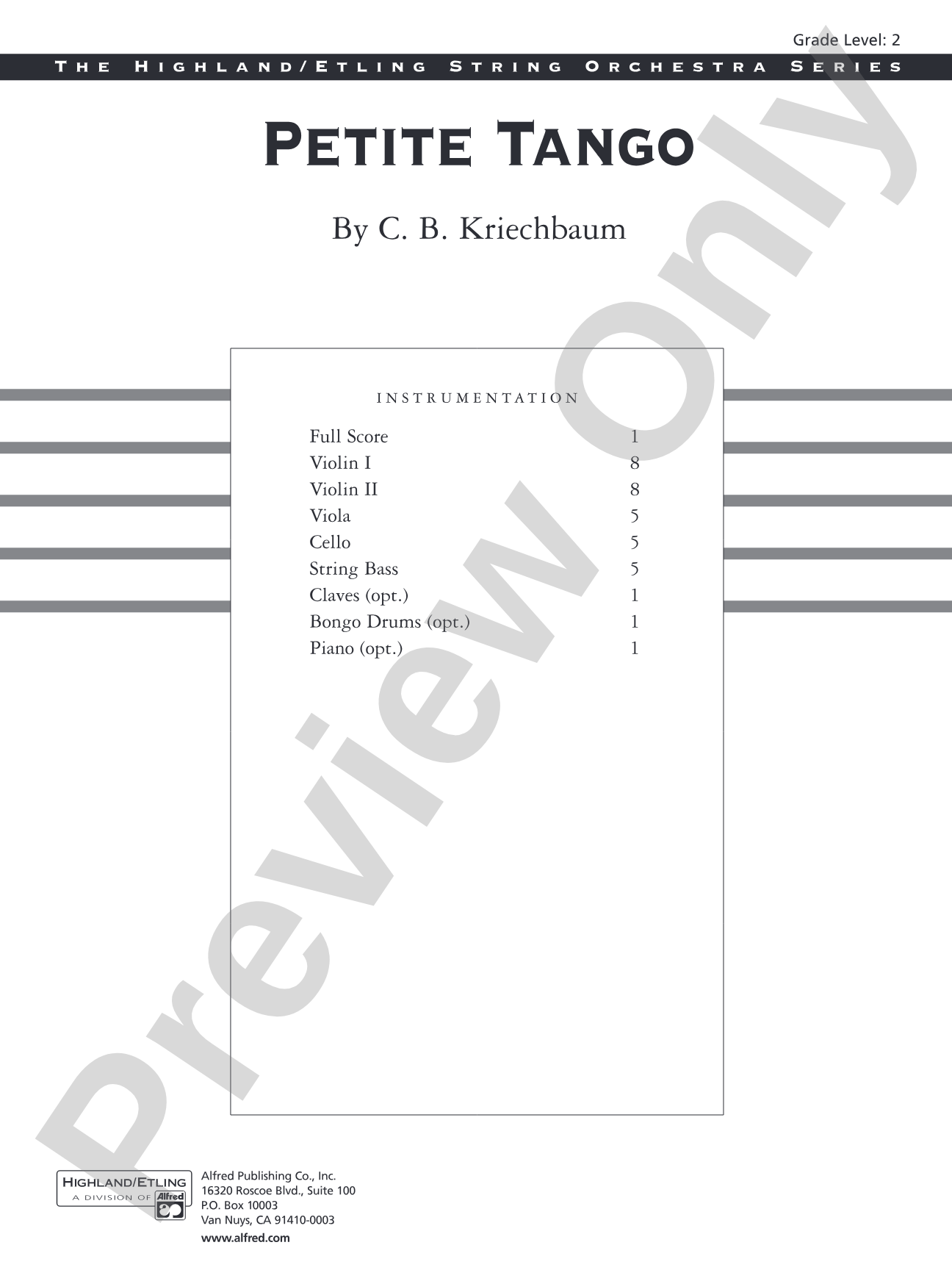
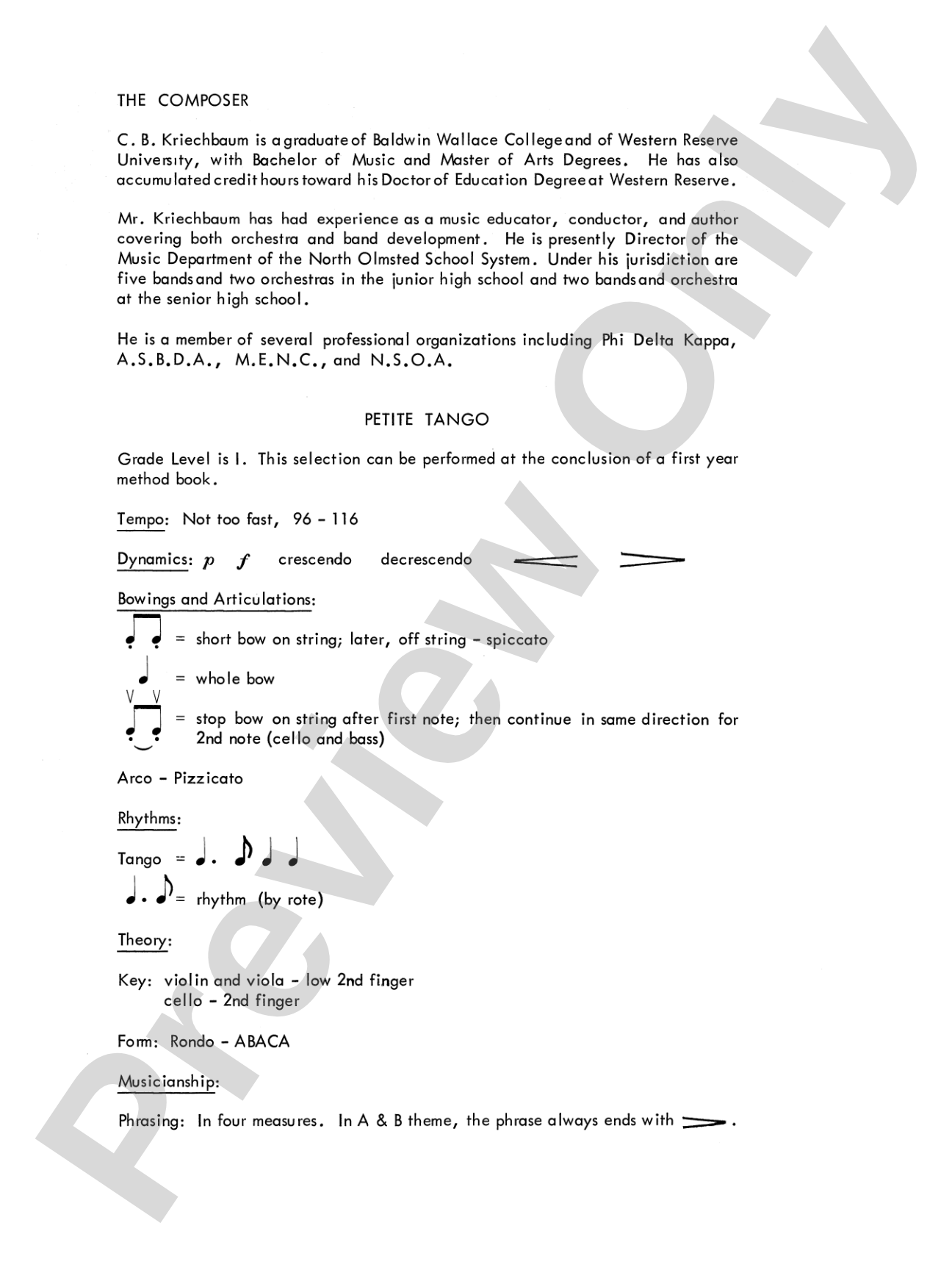
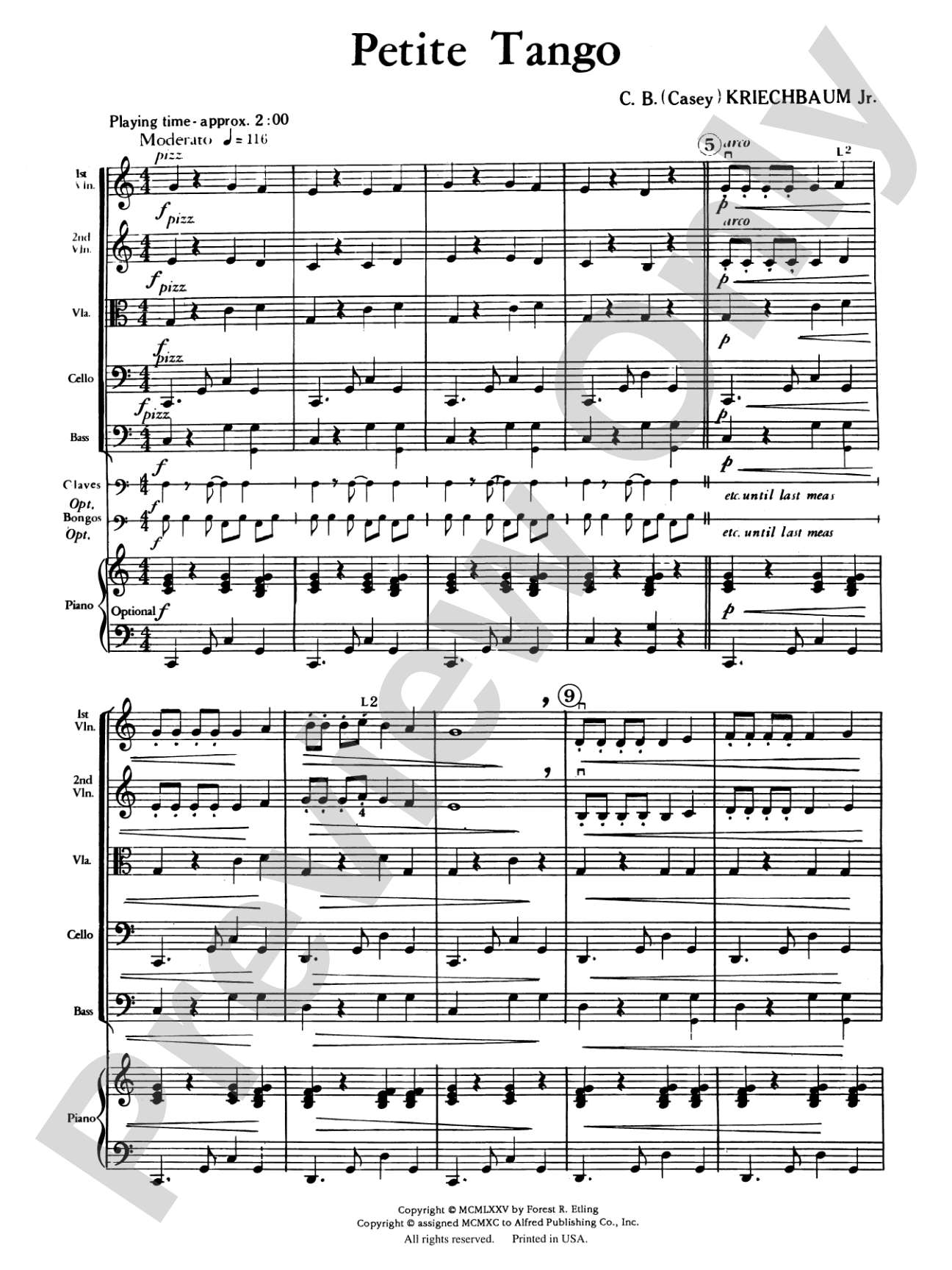
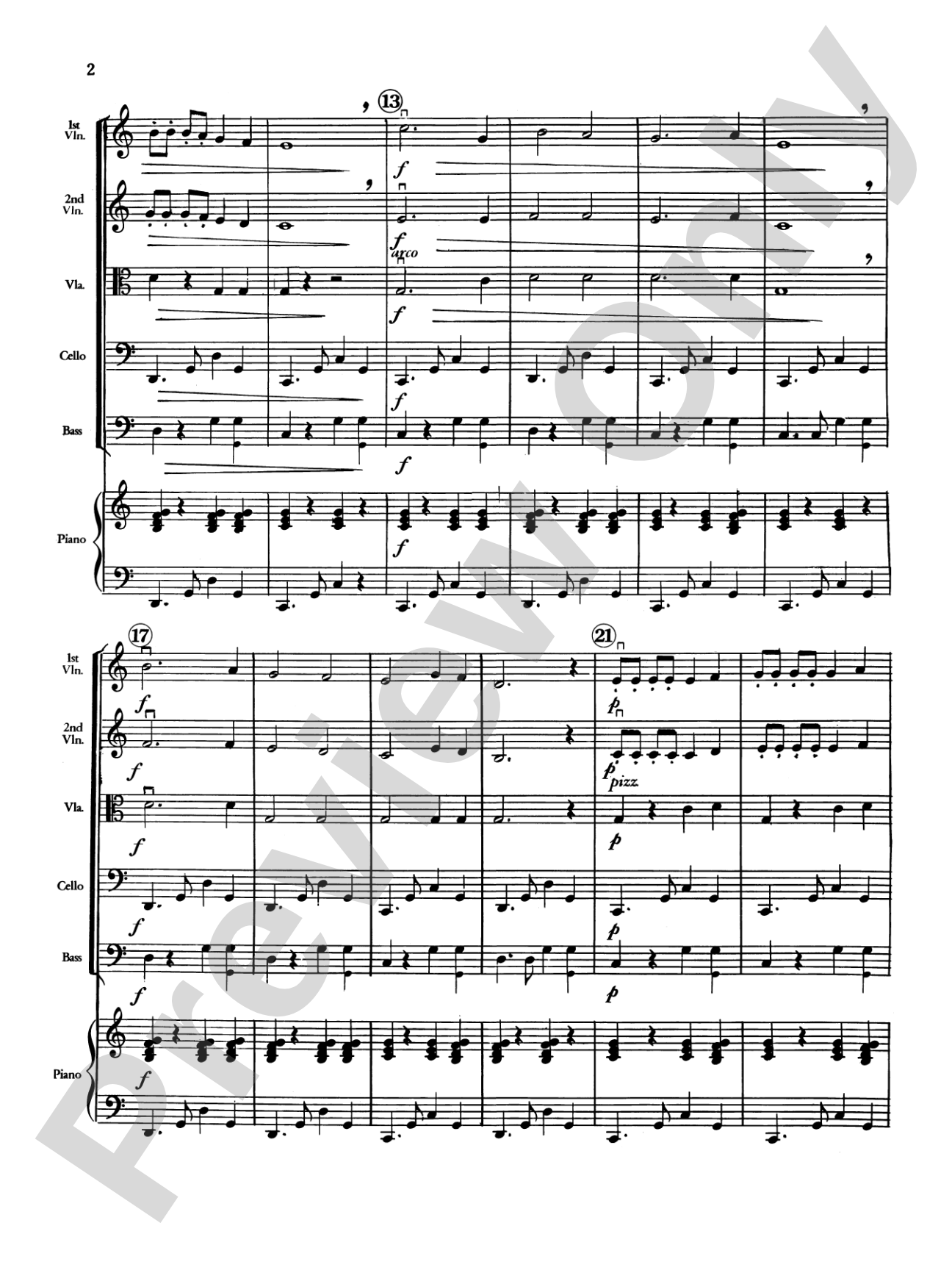
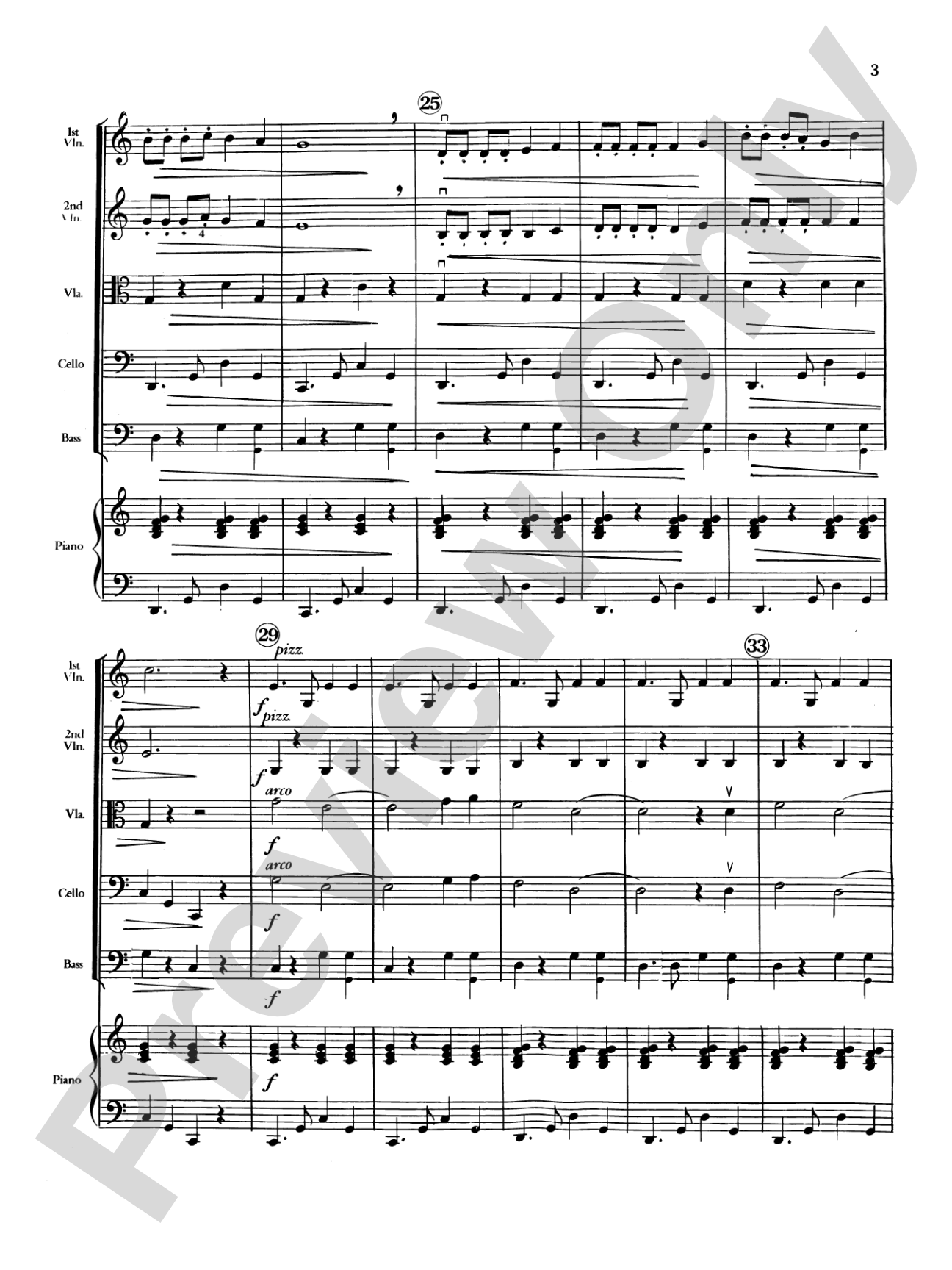
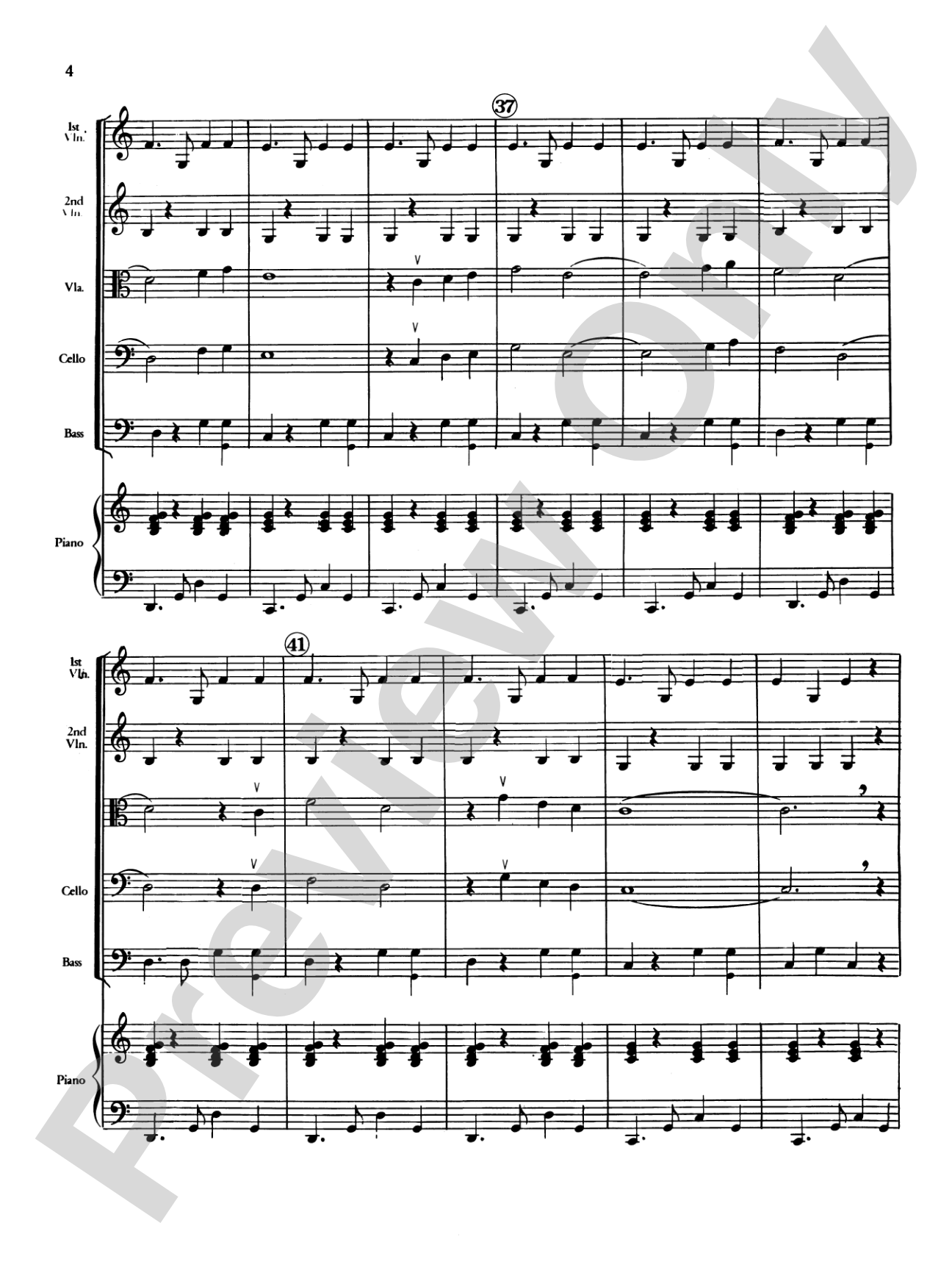
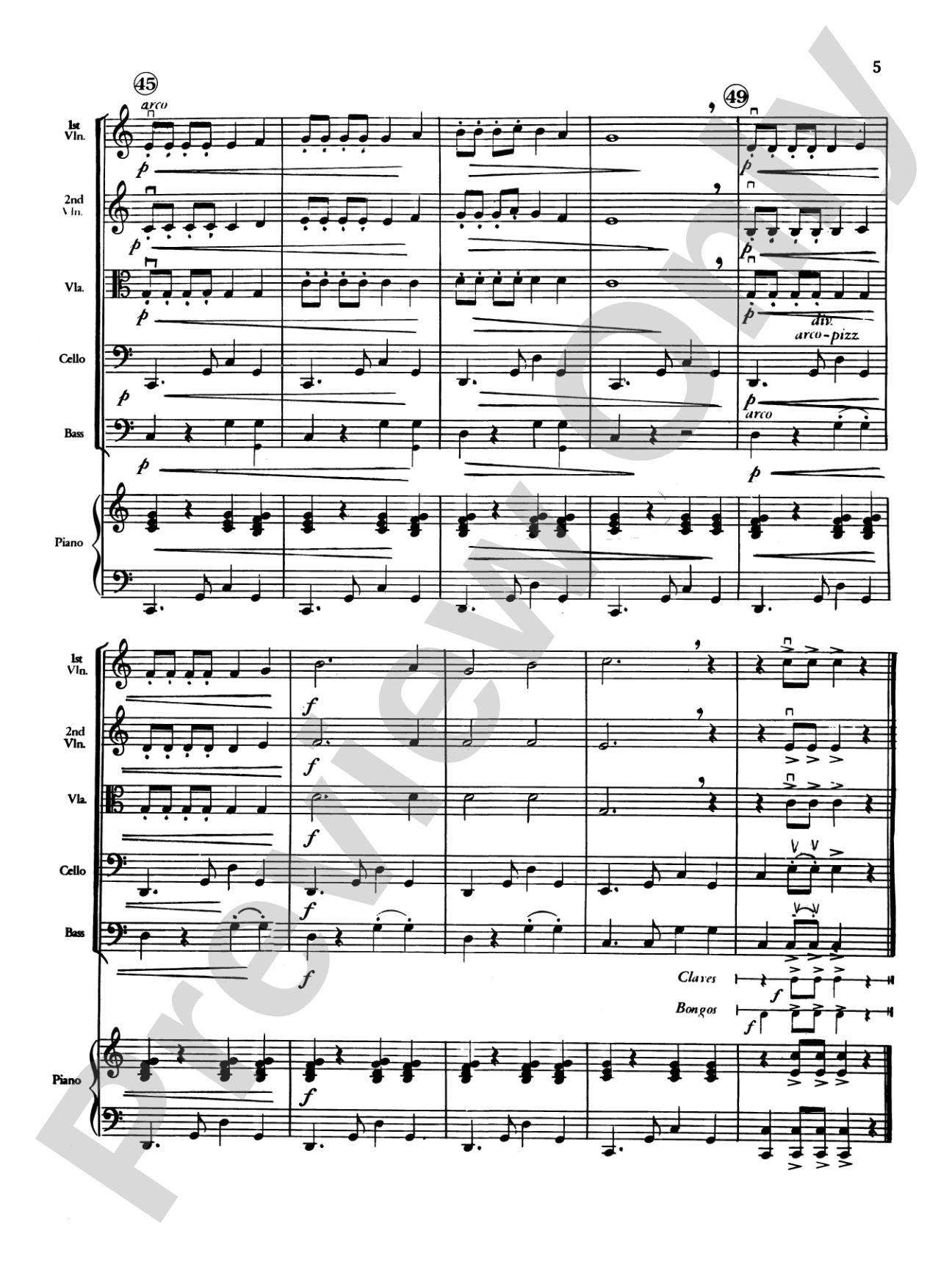


Petite Tango: String Orchestra Conductor Score & Parts
By Casey B. Kriechbaum
Grade: 2
Item: 00-PK-0000113

$48.00
Pickup currently not available
Buy Extra Parts (Digital PDF Download)
| Product | Price | Quantity |
|---|---|---|
| Petite Tango: Score | $9.00 | |
| Petite Tango: 1st Violin | $5.99 | |
| Petite Tango: 2nd Violin | $5.99 | |
| Petite Tango: Viola | $5.99 | |
| Petite Tango: Cello | $5.99 | |
| Petite Tango: String Bass | $5.99 | |
| Petite Tango: 1st Percussion | $5.99 | |
| Petite Tango: 2nd Percussion | $5.99 | |
| Petite Tango: Piano Accompaniment | $5.99 |
Parts Added to Cart!
Description
This title is available in MakeMusic Cloud.


Don't just read it, hear it, play along with it, and watch your students grow with it. In MakeMusic Cloud, Petite Tango: String Orchestra Conductor Score & Parts comes alive with professional accompaniment, adjustable tempo, and built-in practice tools that turn solo practice into real progress.
Open in the Player
Jump straight in and assign it today.
Start Your Free Trial
Open this title and explore the full library in minutes.
Sample Audio
No sample audio found.
Sample Video
No sample videos found.
Additional Details
Series:
Highland/Etling String Orchestra
Publisher:
Alfred Music
Page Count:
70
SKU:
00-PK-0000113
More about this title
Why we love this
Kriechbaum captures the infectious energy of tango without overwhelming a developing string orchestra. The piece swings with authentic rhythmic character while keeping technical demands manageable, so students can focus on style, articulation, and ensemble blend rather than wrestling with complexity.
What to expect
Petite Tango pulses with the sophisticated swagger of Buenos Aires, scaled for young players. Syncopated rhythms, lilting melodies, and a propulsive accompaniment create that characteristic tango lean without demanding professional-level technique.
Who it's for
Grade 2 string orchestras preparing contest or festival repertoire that combines authentic cultural style with accessibility. This works for ensembles ready to move beyond unison writing into structured arrangements with independent voice parts.
How to get the most out of it
- Shape the melody with natural rubato in the A sections; let the rhythm settle into the accompaniment figures rather than locking everything rigidly together.
- Mark the staccato bowings clearly in rehearsal and model them on a single instrument first; students often default to détaché when tango style calls for crisp, separated articulations.
- Balance the lower strings carefully in the rhythmic accompaniment patterns; they anchor the tango pulse but shouldn't overshadow the lyrical material above.
- Emphasize the syncopated figures in the B section by isolating them in sectional rehearsals, then gradually add surrounding parts so rhythmic confidence builds gradually.
How to use it
Program this as a contrasting encore or as part of a world music concert unit exploring Latin American traditions. At Grade 2 level and contest-eligible, it gives orchestras a culturally engaging piece that reads fresh on a spring festival program.
Skills your students will build
- Reading and executing syncopated rhythmic patterns in a tango idiom
- Distinguishing between legato and staccato articulations in style-appropriate contexts
- Playing independent rhythmic figures in accompaniment parts while tracking the melodic line
- Understanding tango as a cultural and musical tradition beyond classical ballet