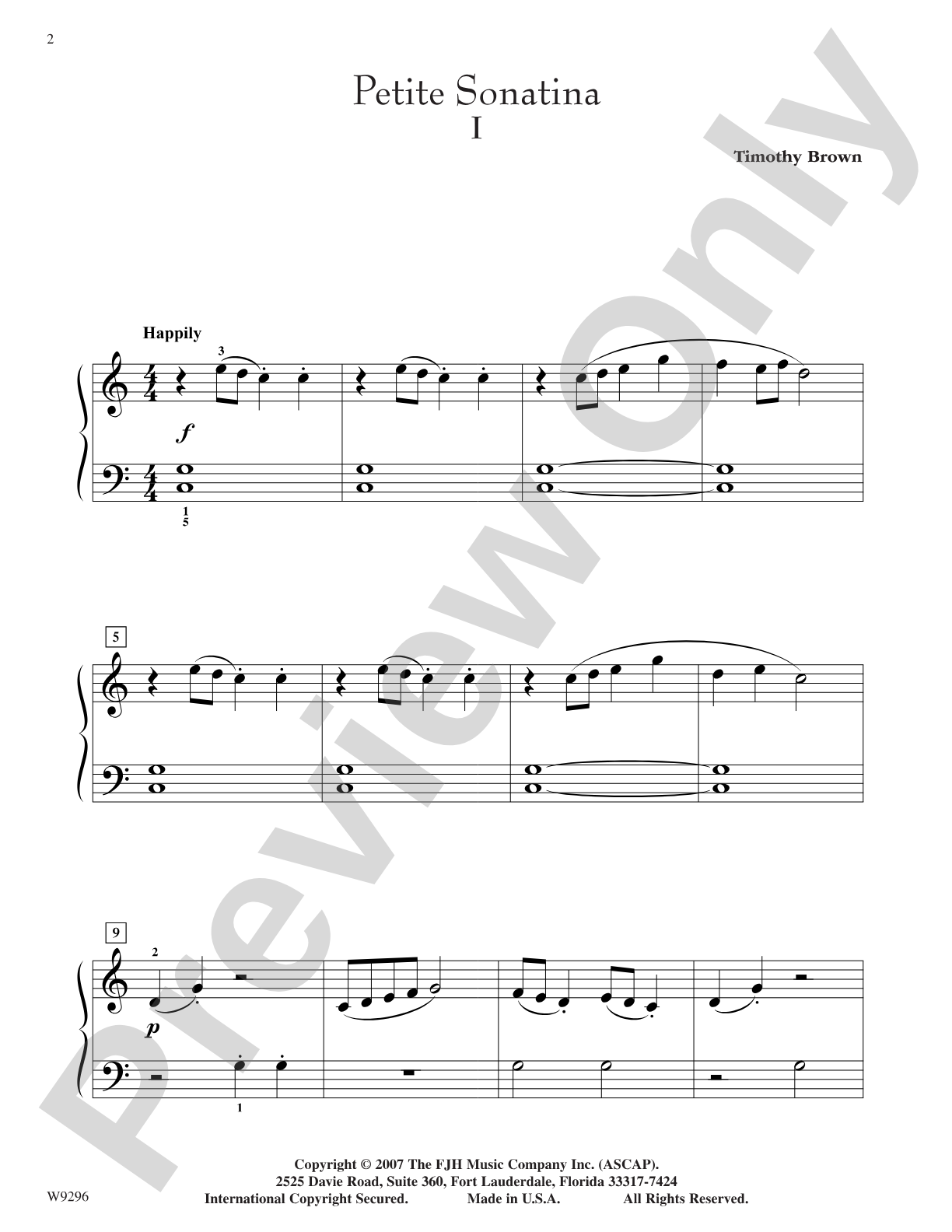
Petite Sonatina Sheet Music Preview

Petite Sonatina: Piano

By Timothy Brown

Item: 98-DW9296

Digital Download
$3.50
Description
Petite Sonatina is a "miniature sonata" for students that prepares them for future sonata playing. This late-elementary piece written in the key of C major consists of three short movements. Each movement is consistent with the classical tradition of the sonata form, but on a much smaller scale.

Petite Sonatina: Piano isn't in MakeMusic Cloud just yet...but it could be. Let us know you'd like to see it, and you'll help shape what comes next. In the meantime, start a free trial and dive into thousands of interactive titles your students can play along with today.

Sample Audio
No sample audio found.
Sample Video
Additional Details
Series: Written For You
Publisher: The FJH Music Company, Inc.
SKU: 98-DW9296

More about this title

Why we love this

Timothy Brown has designed this piece to do exactly what sonata form instruction should do: let students experience genuine classical structure without overwhelming them with length or complexity. Late-elementary pianists often jump from short character pieces straight into full sonatas, but Petite Sonatina bridges that gap with authentic three-movement architecture that respects both the form and the student's current abilities.

What to expect

Petite Sonatina captures the elegance and balance of 18th-century form in miniature. The three movements unfold with classical clarity, each moment purposeful and proportionate, creating a genuine sense of harmonic journey within a timeframe that keeps young pianists engaged and confident.

Who it's for

Late-elementary pianists ready to move beyond simple folk song arrangements and early character pieces. Students in this phase need exposure to sonata form before tackling full-length classical sonatas, making this piece an essential bridge in their technical and musical development.

How to get the most out of it

  • Identify the first and second themes in the opening movement before you begin; knowing where the key center shifts will help you shape the phrasing naturally.
  • Pay attention to the dynamic markings as structural signposts. They often reinforce where you are in the classical form, not just the mood.
  • Practice each movement separately until you can play it without stopping, then work on the full cycle as a unified recital experience.
  • Use a metronome during the learning phase, but allow slight rubato when repeating themes to reflect how the classical composers themselves performed.

How to use it

This works beautifully on a student recital as a solo performance piece that demonstrates formal understanding. It also pairs well with other late-elementary works in a themed program exploring classical structure, or as a standalone showcase of how a student has progressed into more sophisticated repertoire.

Skills your students will build

  • Understanding three-movement sonata form at an accessible scale
  • Playing consistent thematic material across different key centers
  • Managing repeat sections with musical intent rather than mechanical repetition
  • Interpreting dynamic and articulation markings as structural elements
  • Building stamina for multi-movement works

You May Also Like