Peter Gunn: E-flat Alto Saxophone Sheet Music Preview

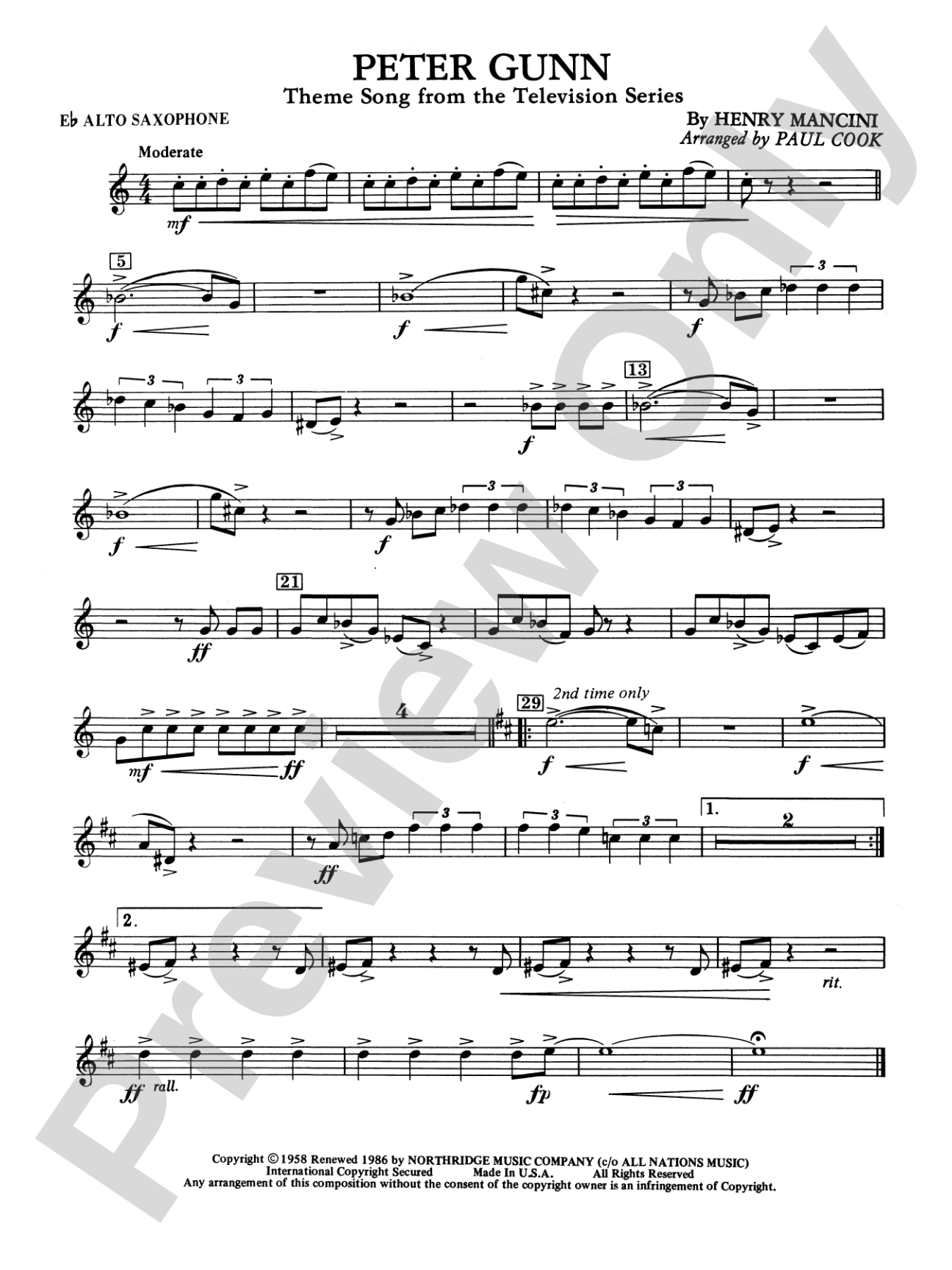
Peter Gunn: E-flat Alto Saxophone

By Henry Mancini / arr. Paul Cook

Grade: 2 (Easy)

Item: 00-PC-0000165_AX1

Digital Download
$3.00
Description
Having won an astounding 20 GRAMMY Awards®, four Academy Awards, and a Golden Globe---Henry Mancini was best known for his contribution to early television themes. Based on the 1958--1961 television series theme, build on a retro rock-and-roll foundation, this characteristic familiar melody is infused with a subtle jazz influence. This setting for developing band is sure to energize any young band concert!

Don't just read it, hear it, play along with it, and watch your students grow with it. In MakeMusic Cloud, Peter Gunn: E-flat Alto Saxophone comes alive with professional accompaniment, adjustable tempo, and built-in practice tools that turn solo practice into real progress.

Sample Audio
No sample audio found.
Sample Video
Additional Details
Series: Pop Young Band
Publisher: Alfred Music
Page Count: 128
SKU: 00-PC-0000165_AX1

More about this title

About the Composer: Henry Mancini

Henry Mancini (1924-1994) shaped the sound of American popular music through his prolific work in film and television. His gift for melody and orchestration earned him 20 Grammy Awards, four Academy Awards, and a Golden Globe, making him one of the most decorated composers of the 20th century. Mancini's ability to blend classical sophistication with accessible, memorable themes made his work instantly recognizable and enduringly popular across generations.

For music educators, Mancini's catalog offers a rare treasure: sophisticated compositional craft wrapped in melodies that students genuinely want to play. His television themes demonstrate how strong harmonic writing and clever orchestration can elevate a simple idea into something that resonates far beyond its original context. This makes his work invaluable for teaching young musicians that accessibility and artistry are not opposing forces.

Why we love this

Peter Gunn cuts through the typical concert band repertoire with genuine style and energy. Paul Cook's arrangement respects Mancini's original voice while building musical interest that keeps developing players engaged without overwhelming them, and the retro rock foundation gives your band permission to swing and settle into a groove rather than simply march through the music.

What to expect

The piece opens with cool, understated confidence and never loses that vibe. There's a retro television elegance here, flavored with just enough jazz attitude to feel sophisticated without pretension. From the first notes, it's clear that this is music written by someone who understood how to write something people actually want to hear.

Who it's for

This arrangement sits perfectly for developing concert bands working at Grade 2 level. Students who have moved beyond fundamentals but are still building ensemble blend and independent part security will find parts that challenge without frustrate, and the familiar melody gives them motivation to polish their playing.

How to get the most out of it

  • Establish the rhythmic pocket early in rehearsal. The rock-and-roll foundation works only if the band locks into a steady, slightly pushed pulse rather than playing metronomically straight.
  • Balance the melody against the rhythm section. The familiar theme needs room to breathe, so resist the urge to let supporting voices dominate.
  • Lean into the jazz inflections without overdoing them. Subtle articulation choices and gentle dynamic shaping will honor Mancini's style better than exaggerated swing feels.

How to use it

Program this as a concert opener to establish energy and audience engagement immediately, or use it as a palette cleanser between heavier symphonic works. Its television heritage and rock foundation make it an excellent bridge piece when you're mixing classical repertoire with contemporary sounds, and it works particularly well on family concerts where you want to reach listeners of all ages.

Skills your students will build

  • Rhythmic precision in rock and roll contexts
  • Balancing melody with rhythmic accompaniment
  • Jazz articulation and phrasing conventions
  • Ensemble cohesion across contrasting musical styles
  • Style-appropriate dynamics and tone shaping

You May Also Like