
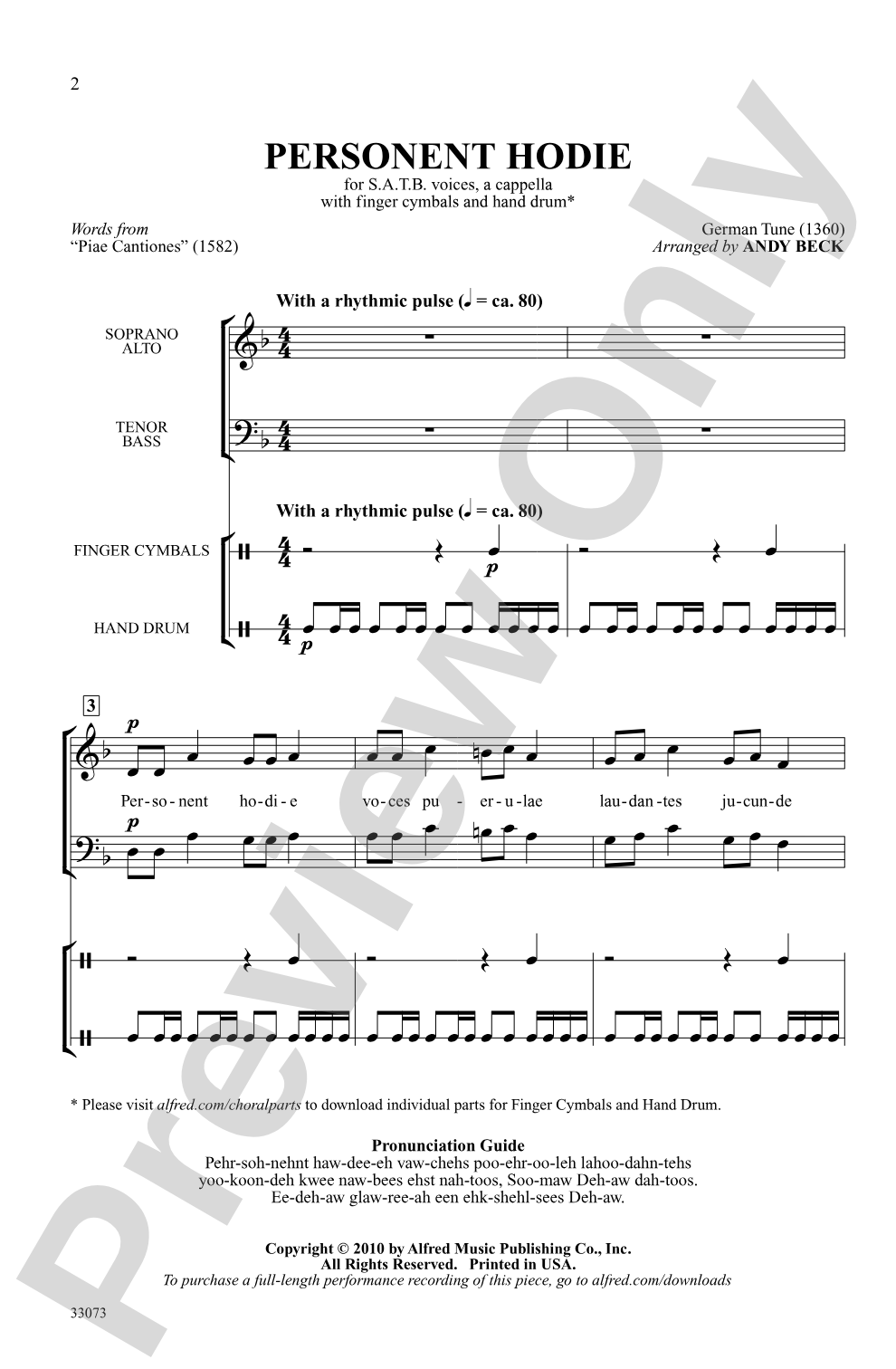
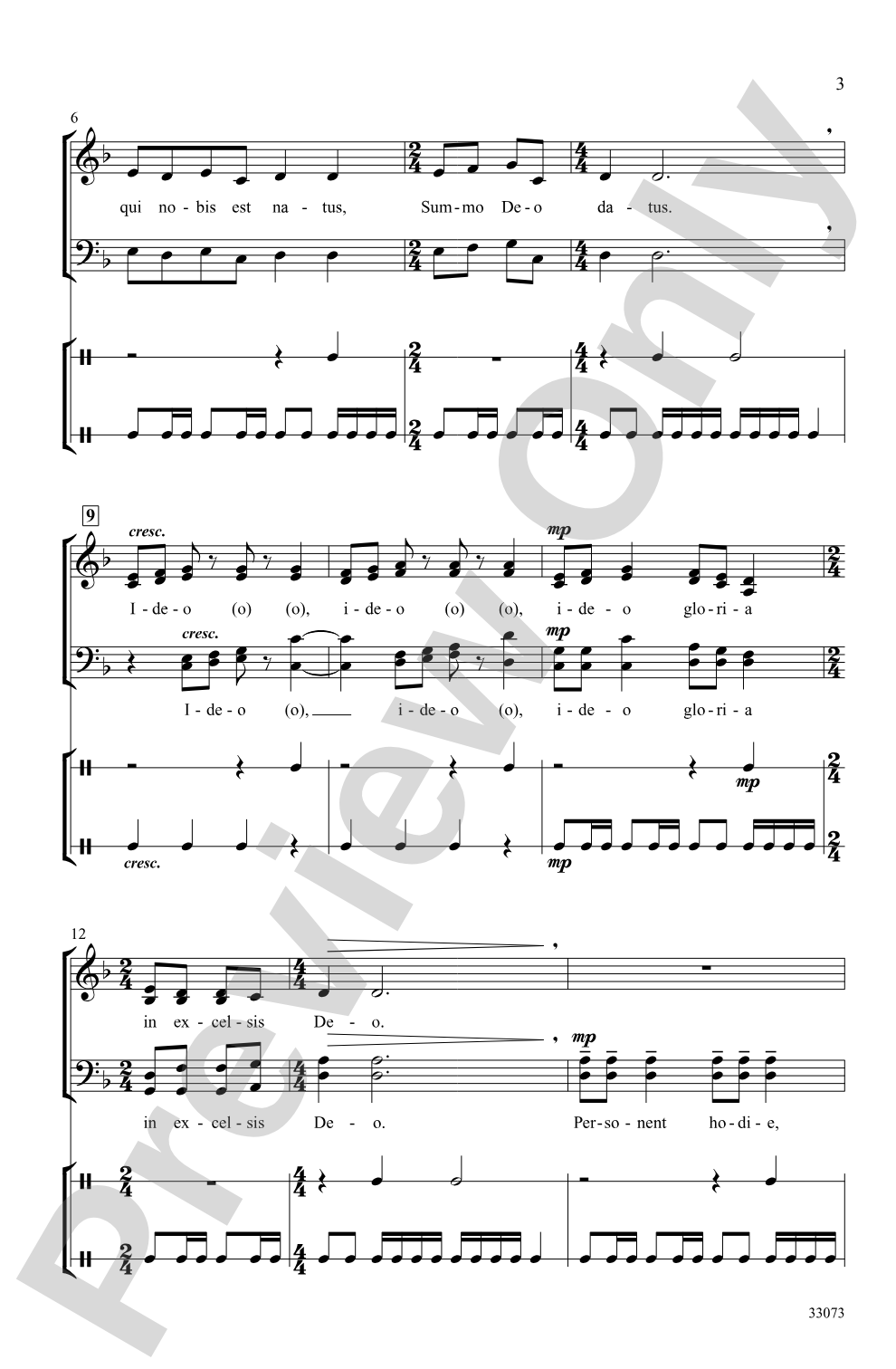

Personent Hodie: SATB a cappella Choral Octavo
Arr. Andy Beck
Item: 00-PO-0008021
$1.75
Minimum order quantity: 20 copies
Pickup currently not available
Related Items
Personent Hodie: SATB a cappella Choral Octavo |
$1.75
|
View |
Description
This sophisticated arrangement of the 16th century chant sounds very impressive while maintaining its accessibility. Would make a highly effective a cappella processional or SA vs.TB antiphonal feature for Christmas concerts.


Personent Hodie: SATB a cappella Choral Octavo isn't in MakeMusic Cloud just yet...but it could be. Let us know you'd like to see it, and you'll help shape what comes next. In the meantime, start a free trial and dive into thousands of interactive titles your students can play along with today.
Request This Title
Tell us you want it.
Start Your Free Trial
Explore everything that's ready to play right now.
Sample Audio
1
Audio File
--:--
0:00
0:00
Sample Video
No sample videos found.
Additional Details
Series:
Alfred Choral Designs
Publisher:
Alfred Music
Page Count:
8
SKU:
00-PO-0008021
More about this title
About the Arranger: Andy Beck

Andy Beck leads the choral publications division at Alfred Music, where he has cultivated a catalog of over 450 choral compositions, arrangements, vocal method books, and musicals that reach singers across the globe. His pedagogical resources, including Sing at First Sight and Vocalize! 45 Vocal Warm-Ups That Teach Technique, have become standards in many music programs. Beyond his work as a prolific arranger and composer, Beck maintains an active career as a guest conductor, clinician, and adjudicator for state honor choirs and all-state ensembles throughout the Southeast.
Beck brings real musicianship to his publications. Trained at Ithaca College (Bachelor's in Music Education) and Northwest Missouri State University (Master's in Music Education), he sings professionally as a tenor and directs musical theatre productions. His credentials as both a studio singer for Alfred since 1992 and a member of the North Carolina Master Chorale Chamber Choir ground his arrangements in practical vocal writing and deep understanding of what choirs can achieve.
Why we love this
Beck's arrangement respects the meditative character of this 16th century chant while building in modern harmonic language that creates impact without requiring advanced vocal technique. The antiphonal option (SA vs. TB) opens up creative staging possibilities for your Christmas concert, and the piece works just as effectively as a processional, giving you real programming flexibility. Eight pages of elegant writing that your singers will enjoy learning and performing.
What to expect
The arrangement has an unhurried, reverent quality that draws the listener inward. Sophisticated harmonies unfold beneath the familiar chant melody, creating moments of unexpected tenderness alongside passages of quiet strength. It feels less like a performance piece and more like an invitation to share something intimate.
Who it's for
SATB choirs seeking dignified, accessible a cappella repertoire for winter concerts. This works for high school, college, and community choirs with basic to intermediate vocal skills but benefits from singers who can blend and balance without instrumental support.
How to get the most out of it
- Treat the chant line as the emotional anchor. Even when it's doubled or harmonized, let it sing through; your sopranos need permission to carry it without apology.
- Lean into the antiphonal potential by using actual spatial separation if your venue allows it. Position SA on one side and TB on the other to let the call-and-response feel natural and textural.
- Balance is crucial in a cappella writing. Spend rehearsal time on dynamics that allow each voice part to blend while maintaining the piece's introspective quality.
- If performing as a processional, establish a tempo that allows singers to walk naturally without rushing the harmonic movement.
How to use it
Anchor your Christmas concert's first half with this as a processional entrance, or program it strategically between higher-energy seasonal pieces to reset the room's emotional temperature. Its formal elegance pairs well with both traditional carols and contemporary choral works, making it a sophisticated opener or interlude that doesn't demand virtuosity.
Skills your students will build
- Blending in unaccompanied harmonic settings
- Following a chant melody through varied textures
- Sustaining pitch accuracy without instrumental reference
- Responding to antiphonal cuing
- Shaping phrases with dynamic control rather than instrumental support